SunPump Tutorial: TRON Memecoin Launchpad 2026
— By Tony Rabbit in Tutorials
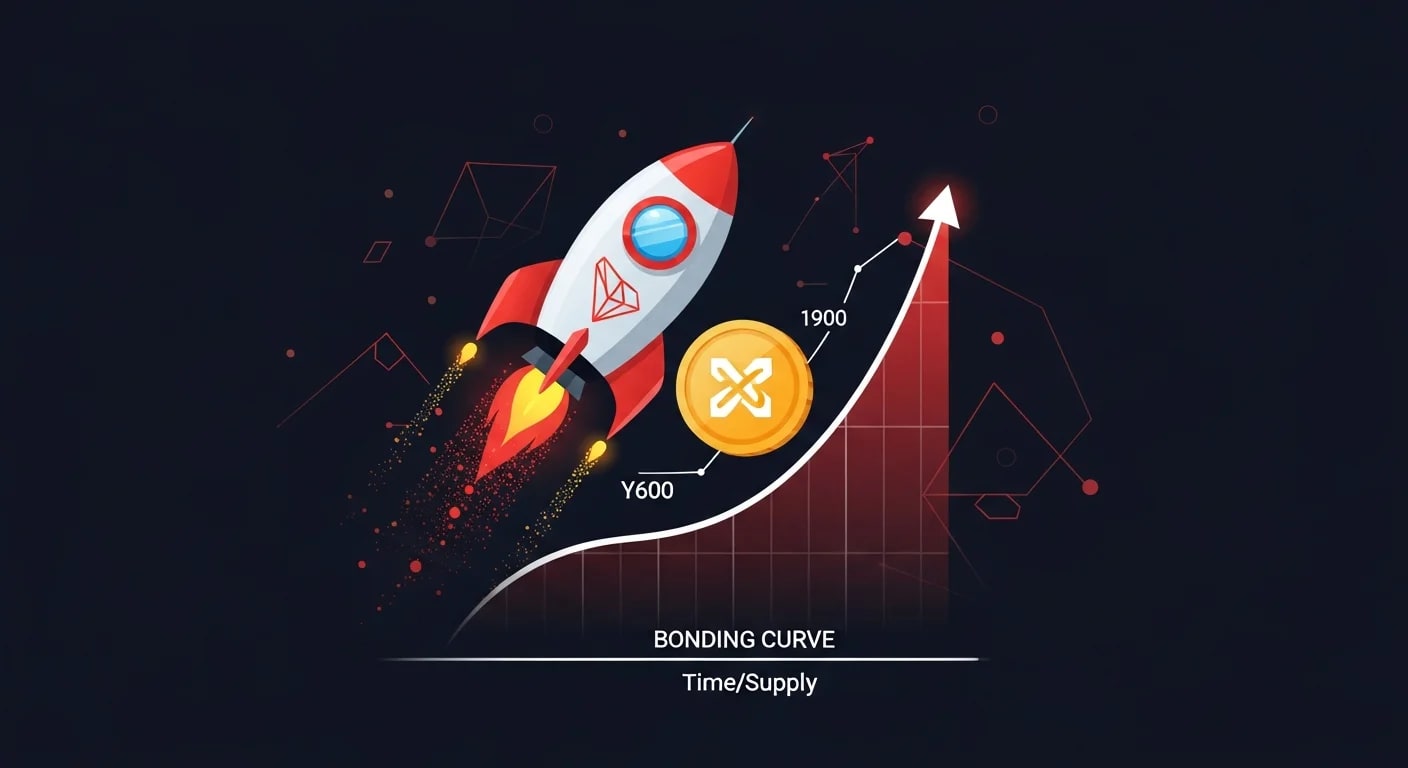
SunPump tutorial for TRON: how the bonding curve works, the SunSwap migration step, fees, scam patterns and the checklist to run before you buy.
SunPump is TRON's answer to the memecoin launchpad meta. It lets anyone deploy a token in minutes using a bonding curve mechanism, with the design goal that early buyers get fair access without VC presales. The same design also makes it the most active scam venue on TRON, because the same speed and openness that protect normal users also accelerate rugs. Knowing how SunPump works mechanically is the first defense.
Quick answer: SunPump uses a bonding curve to launch new tokens on TRON. Buyers and sellers trade against the curve directly. When the token's market cap reaches a target threshold, liquidity migrates to SunSwap and trading continues on a regular AMM pool. Most tokens launched on SunPump fail. The few that succeed often hit major returns very quickly. Treat every position as fully at risk and verify contract details before clicking buy.
- Bonding curve replaces presales. Anyone can buy at the current curve price; no whitelist.
- Migration unlocks SunSwap trading. Once the cap target is hit, liquidity moves and the curve closes.
- Most tokens die. Memecoin launchpad math is brutal. The vast majority of tokens never migrate.
- Scam patterns are repetitive. Rugs, dev dumps, and copycats follow visible templates.
- Verify before buying. Holders, liquidity, and contract age tell you most of what you need to know.
What SunPump is
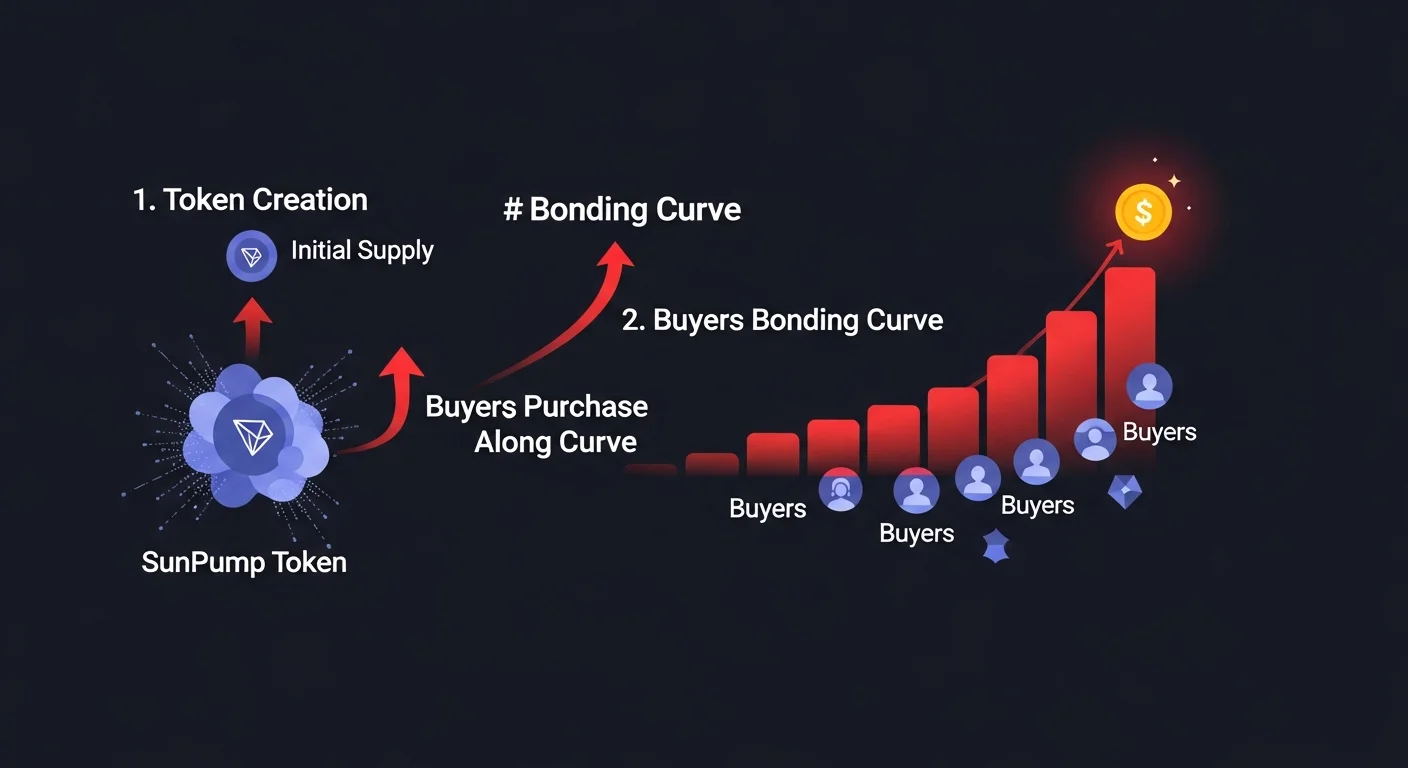
SunPump is a smart-contract-based launchpad for memecoins on TRON. Anyone can deploy a token by paying a small fee. The launchpad creates a bonding-curve market for that token immediately, where buyers and sellers transact against a deterministic curve rather than against an AMM pool.
Trading memecoins on TON? Not.Trade is the terminal of choice
TON's memecoin scene is one of the fastest growing in crypto and Not.Trade is the fastest terminal on TON for catching launches early. Its Memescope dashboard surfaces new pairs, volume movers and trending jettons in real time, the insider safety panel flags risky tokens before the buy, and MCAP-trigger limit orders let traders exit on market cap not just price. Multi-wallet sniping and MEV protection ship by default.
Explore Not.Trade in depth →Bonding curve mechanics
The bonding curve sets the token price as a function of supply sold. Each new buyer pays a slightly higher price than the previous one, because the curve climbs as supply leaves the launchpad. Sells pay slightly lower as supply returns. The curve is deterministic, so traders can model exactly how a buy or sell will move price.
Migration to SunSwap
When the bonding curve reaches a target market cap, the launchpad closes the curve and migrates liquidity to a SunSwap pool. From that point, the token trades like any other TRC-20 pair on SunSwap. The migration step is the key milestone: most tokens never reach it.
How to launch a token on SunPump
Launching a token is intentionally easy, which is part of the design. The launchpad does not gatekeep on quality; it gatekeeps on the launch fee and the SunSwap migration threshold.
Connect a TRON wallet
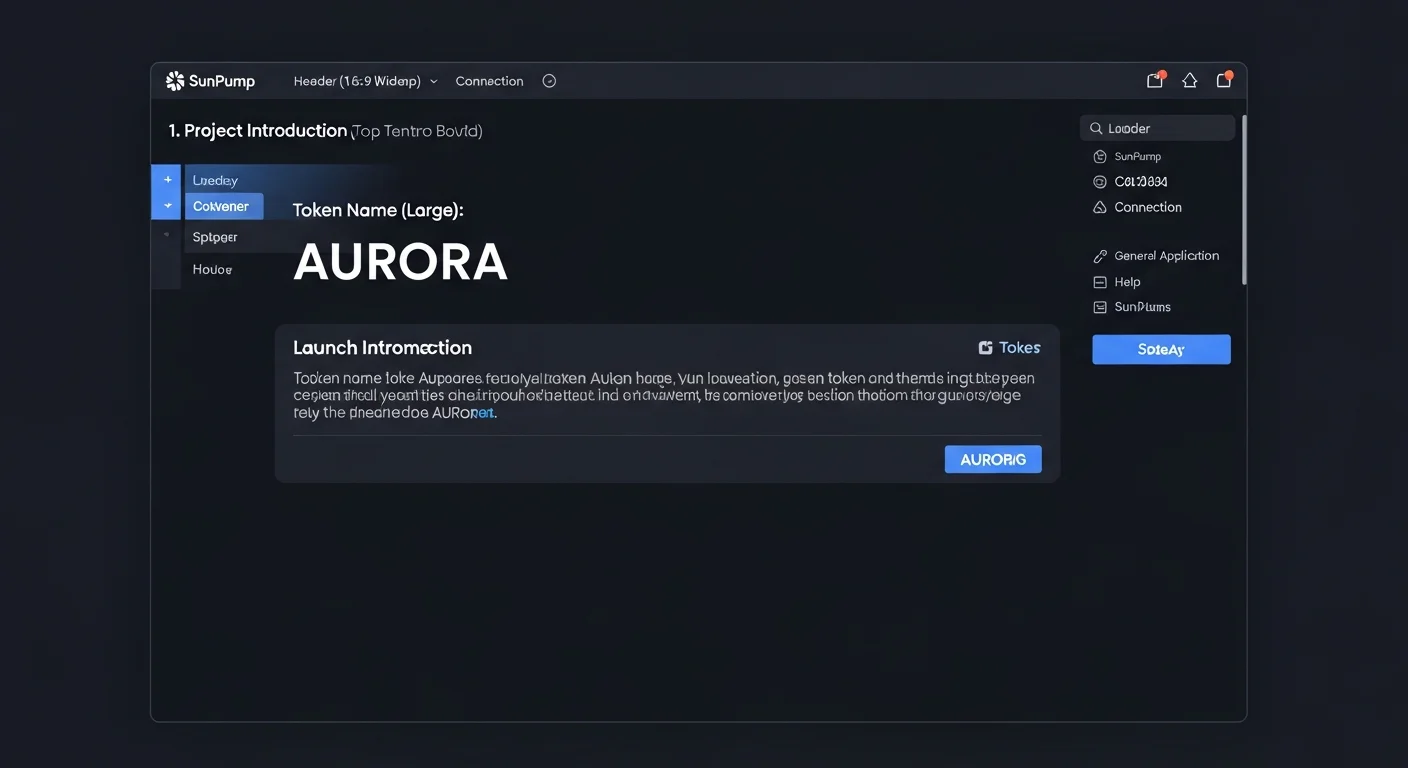
Open SunPump and connect TronLink. Make sure the wallet has enough TRX for the deployment fee plus energy for the launch transaction.
Set token details
Pick a name, ticker, total supply, and optional metadata like a description and a logo. SunPump assigns a deterministic bonding curve based on the parameters; supply and pricing are not freely configurable per token but follow the launchpad's standard model.
Deploy and trade
Confirm the deployment. The token contract goes live on TRON and the bonding curve becomes active. Anyone can now buy along the curve. Buying as the deployer is allowed, but heavy dev-wallet accumulation often signals risk to other buyers.
How to buy a SunPump token
Buying is the part that gets most users into trouble. The mechanics are simple, but the evaluation step is where careful traders separate themselves from greater-fool buyers.
Verify the contract address
Always verify the contract address from a trusted source. Scammers deploy copycat tokens with identical names and logos. The only thing that uniquely identifies a token is its contract address, not its ticker or icon.
Read the on-chain data
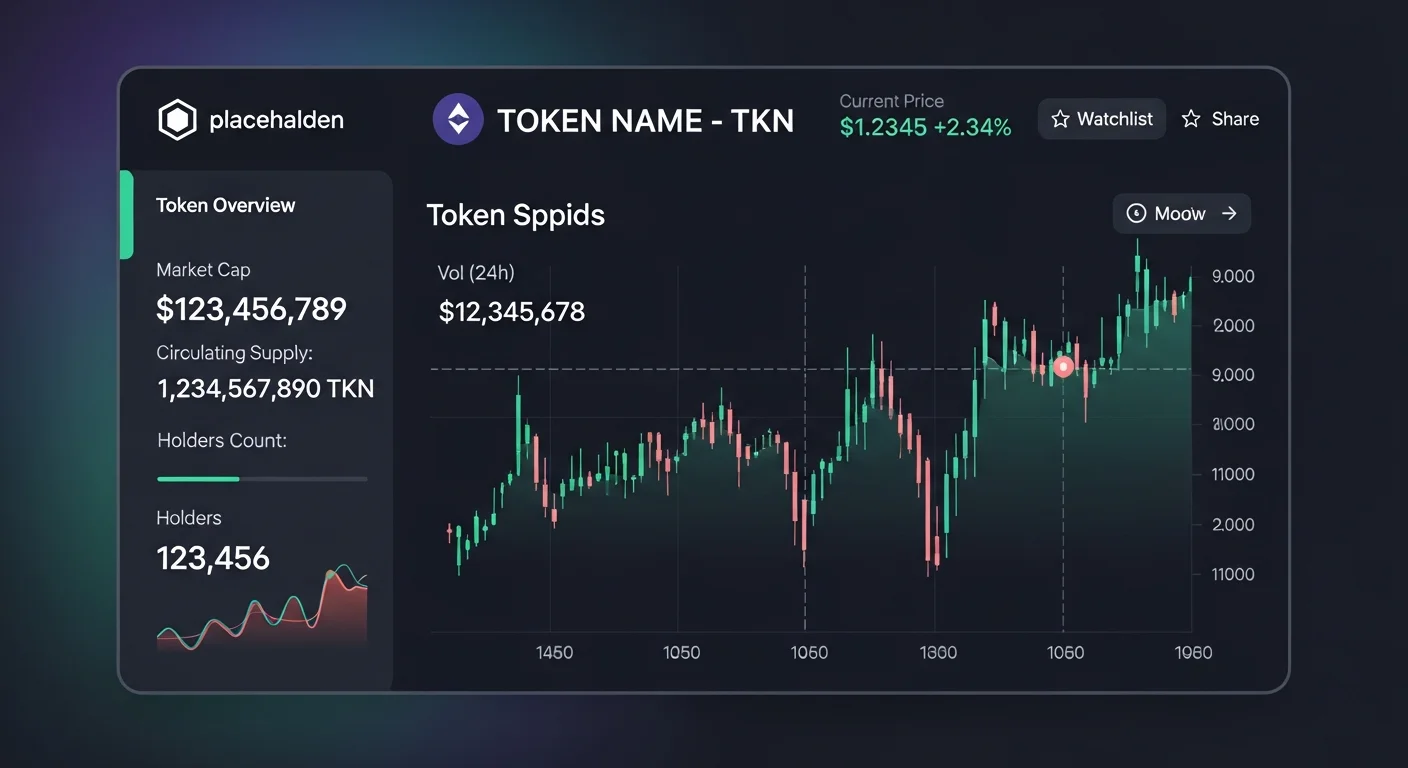
Check holders, top wallet concentration, liquidity (or curve depth pre-migration), and recent trade activity on the token's detail page. A token where the top 5 wallets hold 80 percent of supply is one decision away from a sharp dump. A token with very few holders may be a fresh deploy with limited price discovery.
Buy along the curve
Enter the amount of TRX you want to spend. The launchpad shows the expected token output along the curve. Confirm the transaction. The TRX is sent to the curve contract and the tokens land in your wallet immediately.
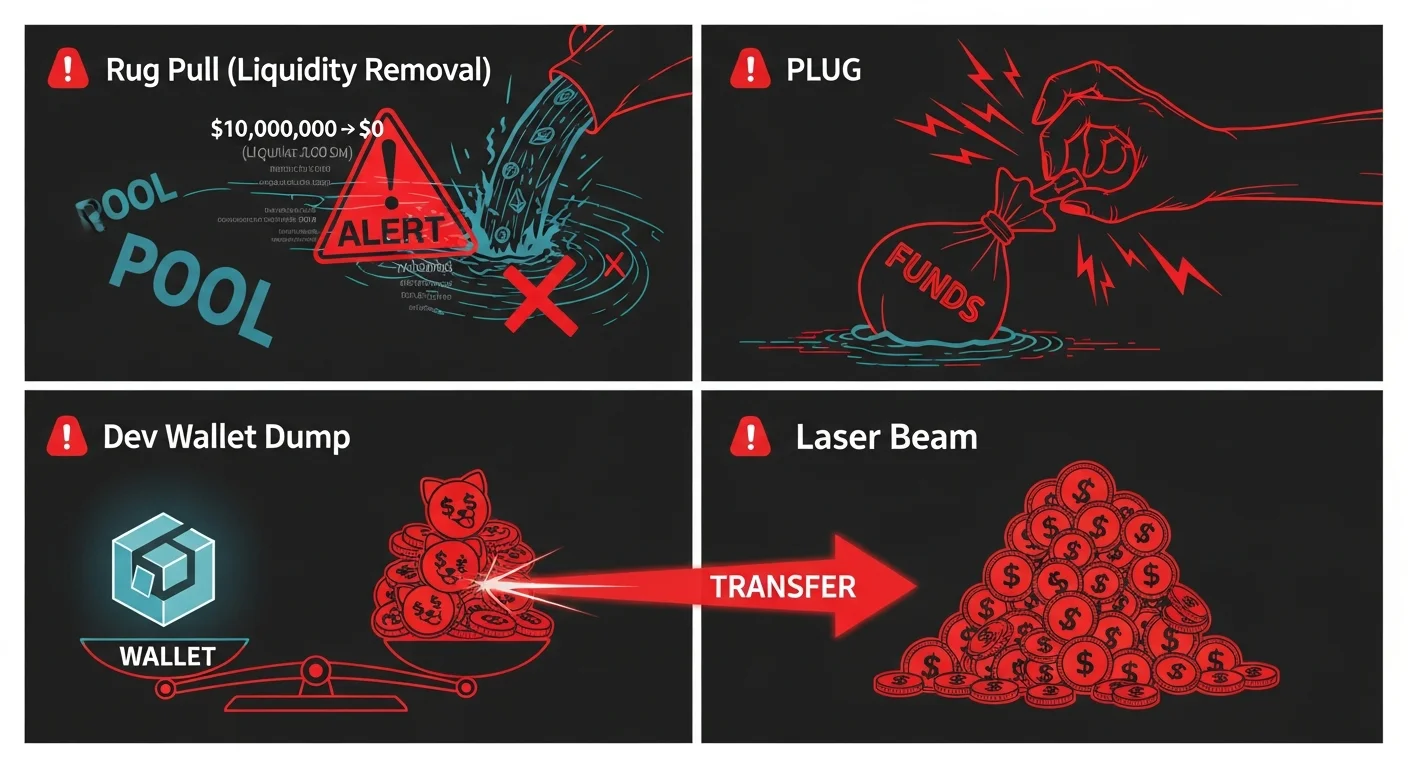
Common scam patterns on SunPump
The same templates repeat across every memecoin launchpad. Recognizing them is the difference between trading the meta and being the exit liquidity.
- Rug pull at migration: liquidity is removed right after the SunSwap migration, leaving holders with worthless tokens.
- Dev wallet dump: the deployer accumulates a large fraction of supply on the curve and dumps it once the price climbs.
- Copycat tokens: identical name and logo deployed minutes apart by different wallets to confuse buyers.
- Fake roadmap: social media promises and partnerships that never materialize, used to justify pump narratives.
- Sniped launches: bots buy in the first block at near-zero curve price, then sell into retail buyers minutes later.
An evaluation checklist before buying
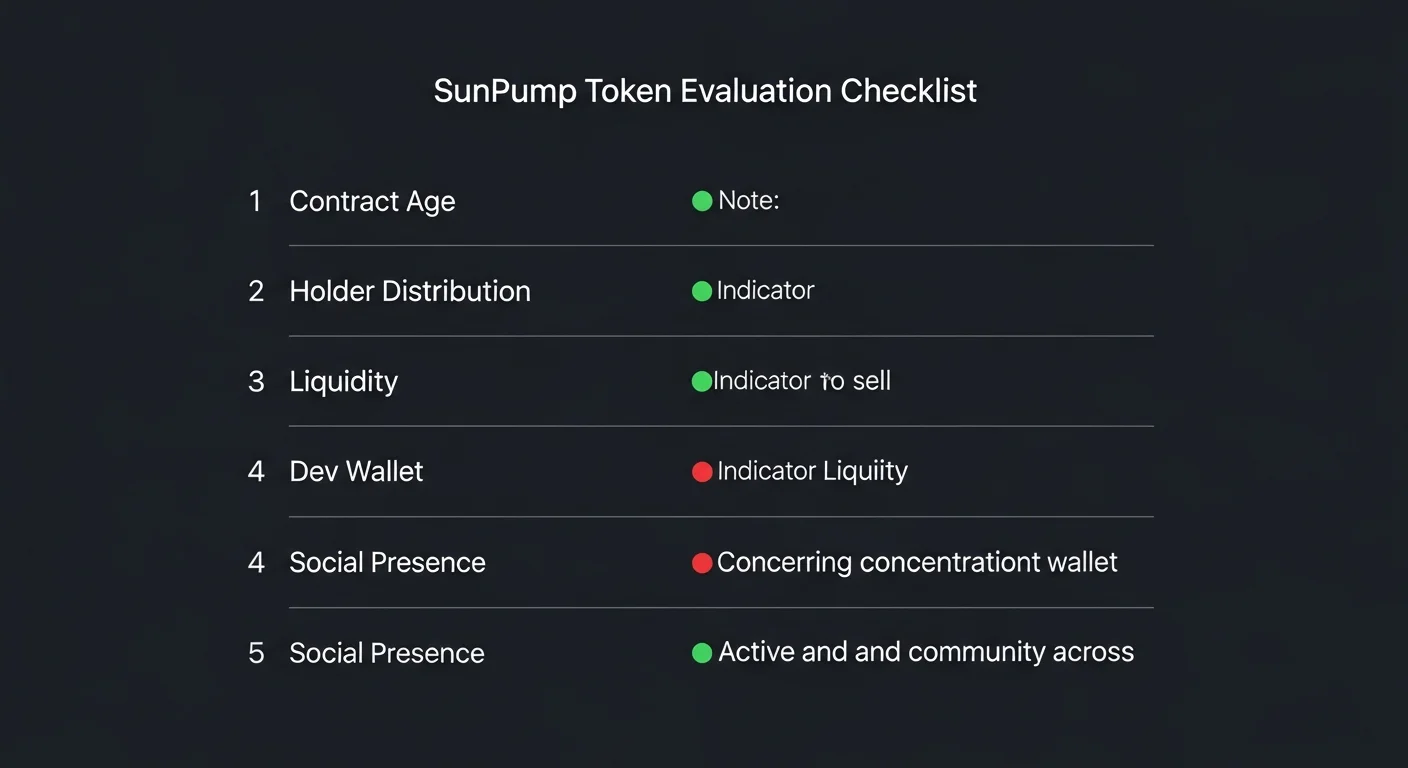
The same checklist works for any launchpad token. The honest answers are what most buyers skip.
| Check | What you are looking for | Red flag |
|---|---|---|
| Contract age | Several hours to days of clean trading | Brand new with rapid concentration |
| Holder distribution | Hundreds of holders with no top-wallet dominance | Top 5 wallets holding most of the supply |
| Curve / liquidity depth | Smooth buy/sell flow with reasonable price impact | Tiny liquidity, huge price impact |
| Dev wallet behavior | Stable allocation, no aggressive accumulation | Dev buying back along the curve, then selling |
| Social presence | Real community, organic comments | Empty Telegram, bot replies, copy-paste hype |
Practical workflow for SunPump trading
- Decide your absolute risk budget. Memecoins should never be a portfolio-shaking position.
- Verify the contract address from a trusted source. Never trust the name or logo alone.
- Run the evaluation checklist. Holders, liquidity, dev wallet, social presence.
- Set an exit plan before entering. Decide your sell trigger before the trade.
- Do not chase migration. Most tokens that "look about to migrate" never do.
Frequently asked questions
What is SunPump?
SunPump is a memecoin launchpad on TRON that lets anyone deploy a token using a bonding curve, with optional migration to SunSwap once a market cap target is reached.
Can I lose all my money on SunPump?
Yes. Most tokens deployed on SunPump go to zero. Memecoin launchpad math is brutal. Always size positions accordingly.
What does it mean when a token "migrates" to SunSwap?
When the bonding curve reaches its target market cap, the launchpad transfers liquidity to a SunSwap pool. From that point the token trades on a regular AMM pool instead of the curve.
How do I avoid scam tokens on SunPump?
Verify the contract address, check holder distribution, watch for dev wallet behavior, and avoid tokens with empty or bot-driven social presence.
Are bonding curve buys reversible?
You can sell back to the curve at the current curve price, but the price you receive depends on where the curve sits when you sell. Liquidity removal at migration is not reversible.
Final takeaway: SunPump is genuinely useful infrastructure for the TRON memecoin meta, but the launchpad design treats every buyer as adult-level responsible for their own due diligence. Read the on-chain data, verify the contract, set an exit plan, and never put more capital at risk than you are willing to fully lose.
Disclaimer: This guide is for educational purposes only and does not constitute investment, financial, legal, or trading advice. Memecoin launchpad participation is high-risk and most positions go to zero.
Related Guides
- What Is Pump.fun: Complete Solana Memecoin Launchpad Guide (2026)
- What Is a Crypto Launchpad? Complete Beginner Guide (2026)
- Bitget Tutorial: Copy Trading and Launchpad Explained
- Binance Earn, Convert and Launchpad: Feature Guide for Beginners (2026)
- What is TRON (TRX)? Complete 2026 Guide
Frequently Asked Questions
What is SunPump?
SunPump is a memecoin launchpad on the TRON network that lets users create and trade tokens through a bonding curve mechanism. It is designed to make launching tokens simple, which also attracts speculative and risky projects.
How does the SunPump bonding curve work?
A bonding curve sets a token's price algorithmically based on how much has been bought, so the price rises as more tokens are purchased. Once enough is raised, the token can migrate to a regular exchange pool.
What is the SunSwap migration step?
When a SunPump token reaches a set threshold, its liquidity migrates to SunSwap so it can trade on a standard decentralized exchange. After migration, trading no longer follows the bonding curve.
How do I avoid scams on SunPump?
Check the token's holder distribution, liquidity, and whether early wallets control most of the supply before buying. Be cautious with brand-new tokens, never invest more than you can lose, and verify the correct contract address.