How Token Teams Can Prepare for Their First Week on DEXTools
— By Whatsertrade in Tutorials

The first week after a token launch is critical. Traders are watching the chart, checking liquidity, reading transaction activity and looking for signs of trust
The first week after a token launch is critical. Traders are watching the chart, checking liquidity, reading transaction activity and looking for signs of trust or risk.
For token teams, this first week is not only about price. It is about credibility.
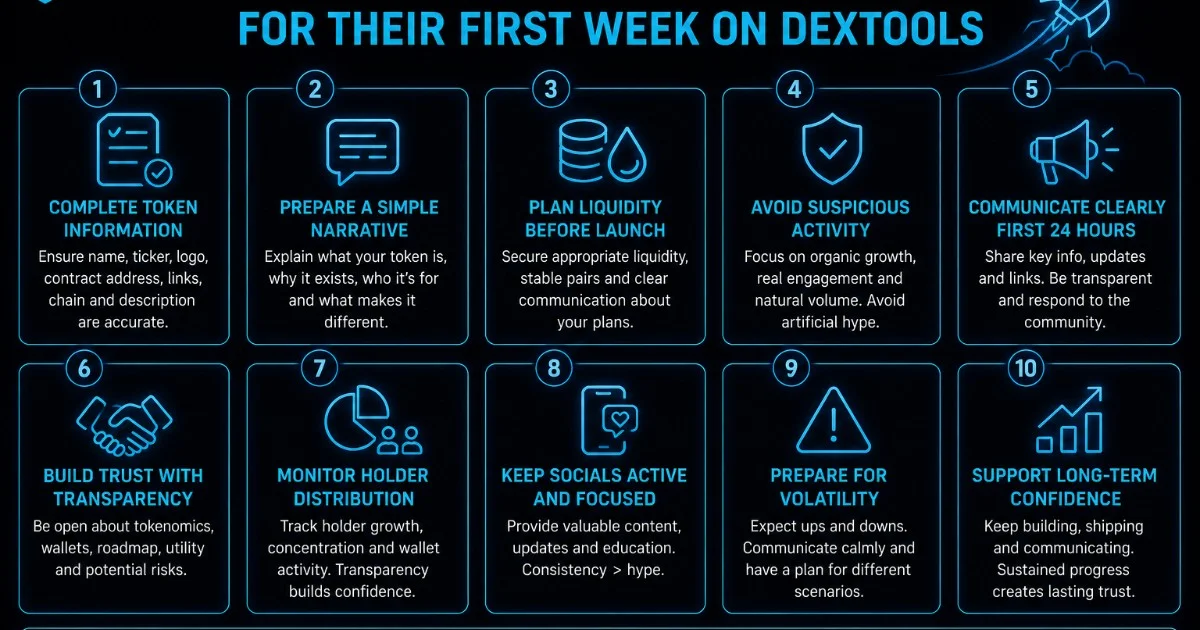
A project can have a strong idea and still lose momentum if the launch looks disorganized. Missing token information, unclear communication, weak liquidity, inactive socials or poor transparency can make traders hesitate.
A well-prepared first week can help teams build trust, reduce confusion and create a better experience for the community.
1. Make Token Information Clear and Complete
Before traders evaluate your project, they need to understand what they are looking at.
Token teams should make sure basic information is accurate and easy to find:
Token name
Ticker
Logo
Official website
Social links
Contract address
Chain
Project description
Community channels
A missing logo or incorrect link may seem small, but it can create doubt. In fast-moving DeFi markets, traders often make quick decisions. Clear information helps reduce friction.
2. Prepare a Simple Project Narrative
Many teams overcomplicate their message. Traders and community members should be able to understand the project quickly.
A strong project narrative answers:
What is the token?
Why does it exist?
Who is it for?
What makes it different?
What should the community expect next?
Avoid vague language. A simple, direct explanation is more effective than a long list of buzzwords.
For example, instead of saying “we are building the future of decentralized innovation,” explain the specific problem, audience or culture behind the token.
3. Think About Liquidity Before Launch
Liquidity is one of the first things traders check. If liquidity is too low, the chart may become unstable and trades may suffer from high slippage.
Token teams should plan liquidity carefully before launch.
Key questions:
Is initial liquidity appropriate?
Is liquidity stable enough for expected activity?
Is the paired asset suitable?
Is there a plan to communicate liquidity decisions?
Can traders enter and exit without extreme slippage?
Strong liquidity planning does not guarantee success, but poor liquidity can damage confidence quickly.
4. Avoid Creating Suspicious Market Activity
Some teams try to force attention through artificial activity. This can backfire.
Repetitive transactions, unnatural volume spikes or bot-like buying patterns may attract short-term attention, but they can also make experienced traders cautious.
Healthy activity is better than noisy activity.
A stronger launch focuses on:
Real community engagement
Transparent communication
Natural volume growth
Consistent updates
Clear information
Artificial momentum may create a temporary trend, but trust is harder to rebuild once lost.
5. Communicate Clearly During the First 24 Hours
The first 24 hours can be chaotic. Traders ask questions, community members look for updates and rumors can spread quickly.
Token teams should prepare communication in advance.
Useful updates include:
Launch confirmation
Correct contract address
Official links
Liquidity information
Safety reminders
Roadmap highlights
Community expectations
Avoid silence. Silence during launch week can create uncertainty, especially if price action becomes volatile.
A calm, professional tone can help the community stay informed.
6. Build Trust With Transparency
Traders want to know who is behind a project, how supply is structured and whether the team is behaving responsibly.
Transparency can include:
Clear tokenomics
Wallet explanations
Liquidity decisions
Team or community roles
Roadmap expectations
Utility or narrative
Known risks
Not every project needs to reveal everything, but unclear or inconsistent information can become a red flag.
If there are important details traders will ask about, prepare answers before launch.
7. Monitor Early Holder Distribution
Holder distribution can influence how traders perceive risk.
If supply is highly concentrated, traders may worry about large sells. If distribution improves over time, confidence may increase.
Token teams should understand how early distribution looks and be ready to explain relevant details when appropriate.
Important signals include:
Number of holders
Concentration among top wallets
Team wallet transparency
Treasury wallet clarity
Community allocation
Early buyer behavior
The market will analyze these signals whether the team talks about them or not.
8. Keep Social Channels Active but Focused
Launch week often brings high social activity. This is good, but it needs direction.
Teams should avoid flooding the community with empty hype. Instead, focus on clear and useful communication.
Good launch week content includes:
How to find official links
What the project is about
Community milestones
Educational posts
Security reminders
Development updates
Answers to common questions
Consistency is more important than shouting.
9. Prepare for Volatility
Even strong launches can be volatile. Early buyers may take profit, new traders may enter late and the chart may move sharply.
Teams should avoid reacting emotionally to every candle.
Instead, prepare messaging for different scenarios:
Strong price movement
Pullbacks
High community excitement
Fear or confusion
Questions about liquidity
Questions about large wallets
A team that communicates calmly during volatility looks more professional than one that only appears during green candles.
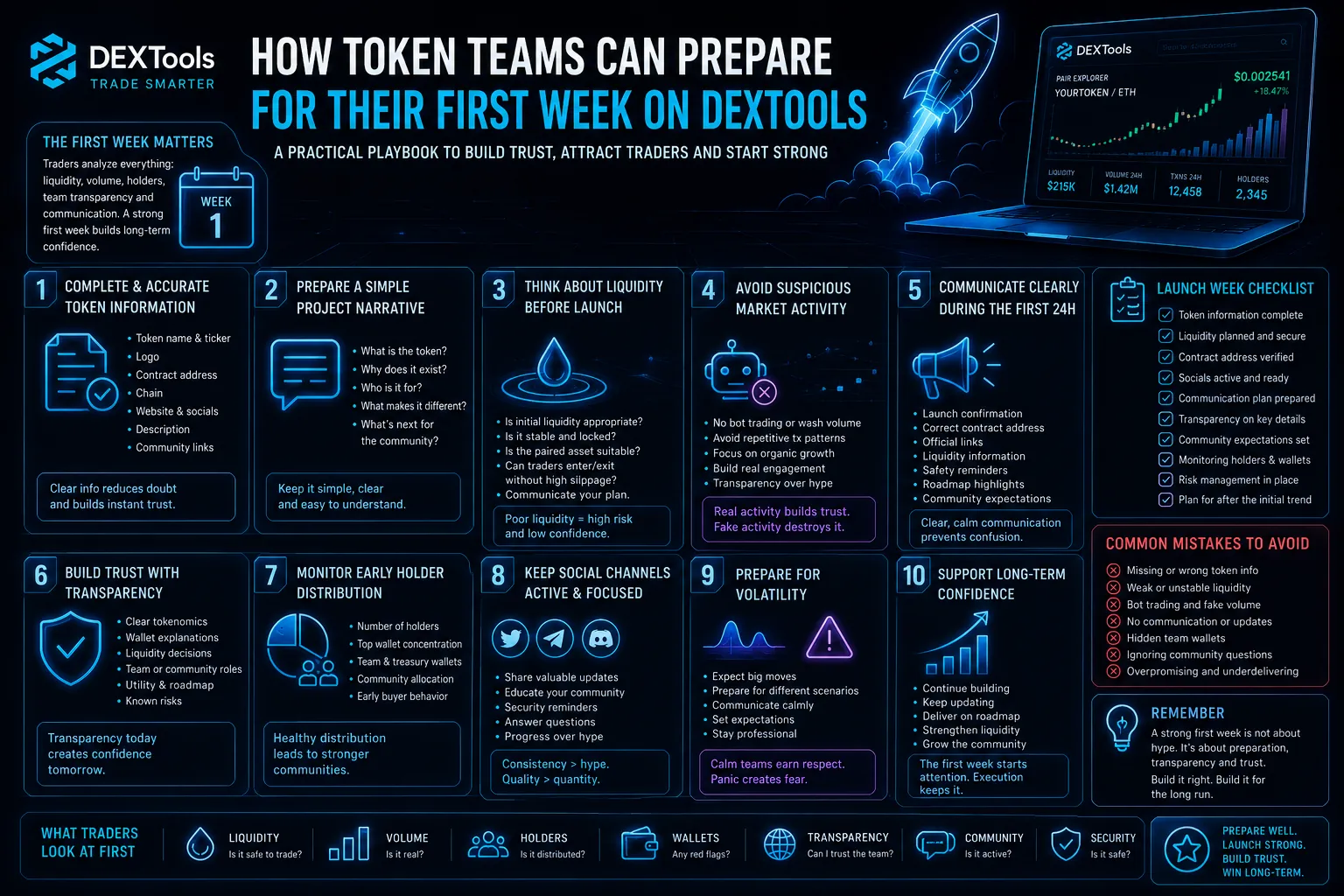
10. Support Long-Term Confidence After the Initial Trend
The first week should not be treated as the finish line. It is the start of market perception.
After the initial launch, traders will look for follow-through:
Continued updates
Community growth
Better information
Liquidity stability
Clear next steps
Product, utility or narrative development
A token that only focuses on launch hype may fade quickly. A token that builds structure after launch has a better chance of keeping attention.
First Week Checklist for Token Teams
Before and during launch week, review:
Is token information complete?
Are official links correct?
Is liquidity planned?
Is the contract address easy to verify?
Is the project narrative clear?
Are community channels prepared?
Are tokenomics explained?
Are key wallets understood?
Is launch communication ready?
Is there a plan after the first trend?
This checklist can help teams avoid common mistakes and build a stronger first impression.
Final Thoughts
A token’s first week is about more than price. It is about trust, clarity and execution.
Traders are not only watching candles. They are checking liquidity, holders, volume, communication and team behavior.
Teams that prepare properly can reduce confusion, improve transparency and create a stronger foundation for their community.
In DeFi, attention moves fast. Trust takes longer to build.
The best launch strategy is not just to trend. It is to look prepared when traders arrive.
FAQ
Why is the first week important for a token team?
The first week shapes market perception. Traders evaluate liquidity, communication, holder distribution, token information and team behavior.
What should token teams prepare before launch?
Teams should prepare accurate token information, official links, liquidity planning, clear messaging, community channels and answers to common questions.
Why does liquidity matter during launch?
Liquidity affects slippage, price stability and trader confidence. Weak liquidity can make trading risky and reduce trust.
Should token teams focus on hype?
Hype can attract attention, but clear communication, transparency and consistent updates are more important for long-term trust.
How can a token team build confidence after launch?
Teams can build confidence through transparency, active communication, liquidity stability, community engagement and clear next steps.
Healthy vs Unstable Token Launch Patterns: Key Insights When Not to Trade: 12 Red Flags Every DeFi Trader Should Know How to Verify Token Safety Before Buying: A Pre-Buy Crypto Checklist Community vs Hype: Spot Real Token SupportBeyond the Buzz: Cultivating Long-Term Trust
While the initial hype might drive significant volume, genuine long-term success on DEXTools hinges on building and maintaining trust with your community. This extends far beyond a clean chart and adequate liquidity. It involves consistent transparency, proactive communication, and a clear demonstration of your project's commitment to its roadmap and investors.
Traders are increasingly sophisticated. They look past the surface-level metrics to understand the team's ethos, their responsiveness to community concerns, and their ability to execute on promises. The first week is your opportunity to set this tone and differentiate your project from the countless others vying for attention.
Proactive Engagement Strategies
Establishing trust begins with how you interact with your community, especially during the crucial first week. Here are practical steps to solidify your project's integrity:
- Regularly update your DEXTools project page with accurate information and links to official channels.
- Actively monitor and engage with community discussions on Telegram, Discord, and X (formerly Twitter).
- Host AMAs (Ask Me Anything) or live streams to address questions and provide roadmap clarity.
- Publicly acknowledge and address any technical issues or market FUD (Fear, Uncertainty, Doubt) promptly and transparently.
- Share progress on development milestones, even small ones, to demonstrate ongoing work.
Related Guides
- DEXTools for Project Teams: A Pre Launch Visibility Checklist for New Tokens
- The First 60 Minutes After a Token Launch: What to Watch on DEXTools
- DEXTools Beginner Tutorial: Setup, Navigation and First Trade Checks (2026)
- How Stablecoins Keep Their Peg: Collateral Models, Depeg Risk and On-Chain Checks
- Top Solana Meme Coins Trending This Week: DEX Watchlist
Frequently Asked Questions
Why is the first week after a token launch so important?
The first week is when traders closely watch the chart, liquidity, and transaction activity to judge whether a token is trustworthy. Early impressions can strongly influence how a project is perceived going forward.
What do traders look for in a newly launched token?
Traders commonly check liquidity depth, holder distribution, transaction patterns, and signs of locked or secure liquidity. They also look for transparency from the team and any red flags that suggest manipulation.
How can a token team build trust early on?
Teams can build trust by being transparent about tokenomics, providing clear communication, and making information easy to verify on chain. Locking liquidity and avoiding suspicious activity also help reassure traders.
What information should a token page include?
A useful token page generally includes accurate links, social channels, a clear description, and verifiable contract details. Complete and consistent information makes it easier for traders to research the project.