Community vs Hype: Spot Real Token Support
— By Whatsertrade in News
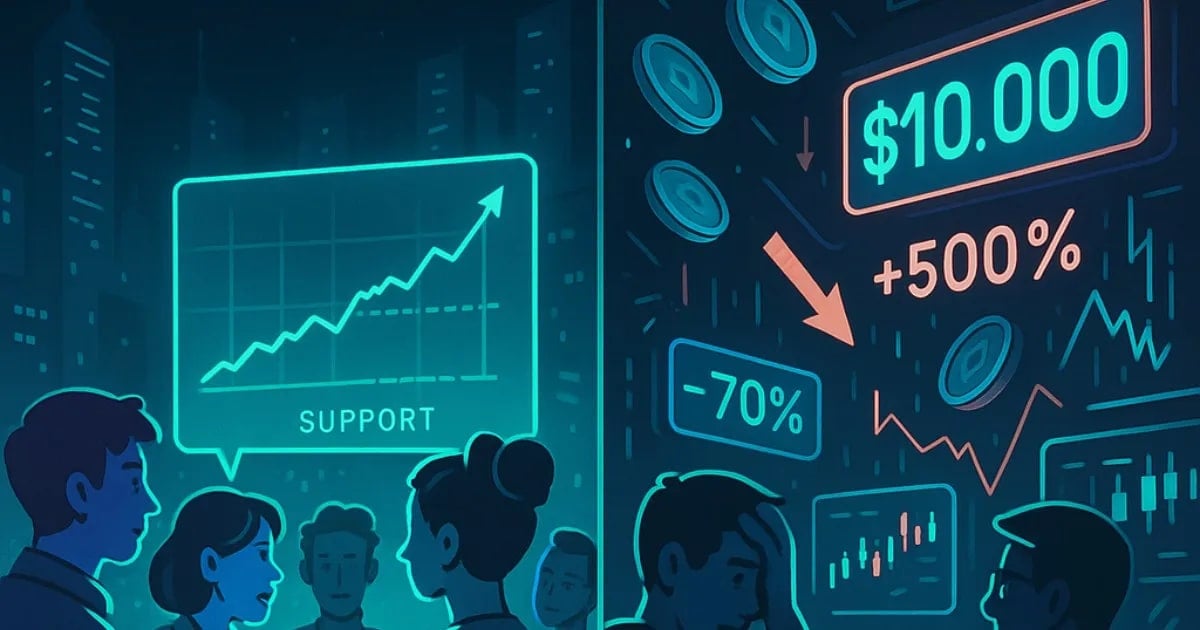
Learn to spot the difference between genuine crypto community growth and artificial hype by analyzing social signals and comparing them with on-chain activity, holder growth, and unique buying patterns.
In the fast-paced world of crypto, attention is cheap, but genuine traction isn't. Understanding how to spot the real deal can make all the difference.
Every week, new tokens pop up with soaring follower counts, buzzing chats, trending posts, and vocal communities that demand attention. At first blush, these signals might appear to be overwhelming proof of momentum. But remember, social noise alone is not a real indicator of whether a token is truly building demand or simply orchestrating a show.
Evaluating a project smartly means looking at the complete picture. Social signals have value, but they shine when juxtaposed with on-chain behavior. Genuine community growth leaves a measurable trace in wallet activity, expanding holder numbers, and distinct buying patterns. When hype is fabricated, those connections are weak or entirely missing.
The aim here is not to discount social momentum but to check if it's accompanied by authentic participation. In a market abundant with bloated engagement and manufactured stories, distinguishing community from theater might just be your secret weapon in identifying real traction versus pursuing empty noise.
Why Solely Relying on Social Growth is Flawed
A token might seem popular online for various reasons. Some projects bask in organic attention, potent branding, or an enticing narrative. Others lean on coordinated promotions, influencer endorsements, bot activity, recycled content, or fleeting hype. Though the social feeds might seem busy, the essence of that activity can be starkly different.
This is where many traders stumble. They equate visibility with conviction, and that’s a trap.
A project can generate thousands of mentions without sparking actual holder growth. It might boast an active chat but few unique buyers. It could trend for a day as its on-chain activity remains flat. In scenarios like these, social momentum is failing to translate into market involvement. The community may surface as robust, but the genuine demand lies weak beneath.
The Hallmarks of Real Token Traction
Real traction manifests across several layers simultaneously. Social chatter increases, alongside on-chain evidence. New wallets emerge. Holder counts grow. Unique buyers increase, while liquidity stays active, pointing to interest moving beyond visibility into notable participation.
This is crucial because sustainable growth isn't crafted on a single metric. Tokens with genuine communities draw in people who do more than just repost content. They engage deeply, research, buy, hold, and revisit. They become integral to the ecosystem rather than mere spectators of fleeting trends.
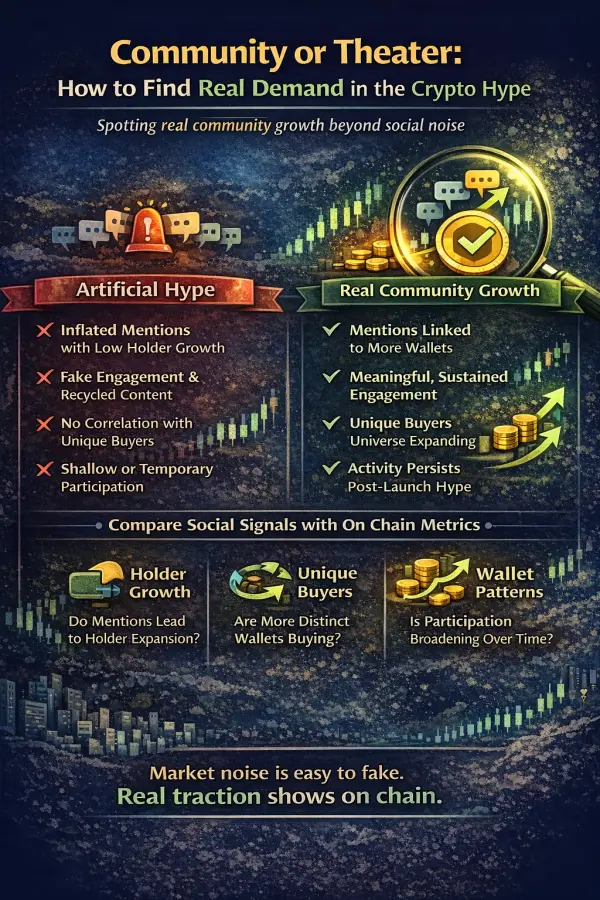
The key question to consider is simple: Are social signals prompting actual behavior, or are they merely floating above weak on-chain activity?
An effective way to scrutinize if a token has an actual community is to compare its social growth with holder growth over time.
As a project garners followers, mentions, and broad attention, you should generally see a matching rise in holders. Although not perfectly linear, a relationship should be evident. Genuine interest typically spawns increased participation.
If this relationship is weak, it's often a red flag. A token might generate social activity without converting that attention into real users. This often indicates one of several things: The audience isn’t persuaded, the engagement is artificially inflated, or the token is stirring curiosity without earning trust.
Healthy community growth reflects a more balanced pattern: Social visibility expands, and on-chain ownership follows. This doesn’t ensure long-term success, but it certainly beats relying solely on social growth.
Focusing on Genuine Over High Engagement
High engagement numbers can look impressive, but the real strength lies in the quality.
Artificial hype often results in monotonous interactions. You might notice repeated phrases across posts, shallow comments, generic excitement, or a large gap between view counts and substantive discussions. Such activity can give a project the appearance of vibrancy while conveying little about genuine conviction.
Genuine engagement tends to have more substance. People ask pointed questions, discuss token mechanics, compare potential risks, talk about market structures, and react to updates in uninfluenced, informed ways. Real communities, though rarely flawless, sound human-they show variation, curiosity, and continuity.
Consistency is often the strongest signal. If engagement stays active beyond the initial phases and maintains traction during quieter price periods, it's more meaningful than seeing a brief spike in low-quality interactions.
Correlating Mentions with Unique Buyers
One of the clearest methods to differentiate community from theater is to juxtapose social mentions with unique purchasing activity.
If a token is heavily discussed across platforms, you’d anticipate at least some growth in the number of distinct wallets entering the market. This crucial traction test asks, are more individuals genuinely choosing to participate, or is the project merely attracting attention with no follow-through?
A token demonstrating authentic traction usually shows a healthy link between mentions and unique buyers. As the conversation grows, so should buying activity, suggesting that the narrative isn't just spreading it's converting.
Conversely, a token with fabricated hype might attract an avalanche of mentions while seeing minimal changes in unique buyers. This discrepancy can indicate that attention is being manufactured or concentrated in a narrow audience rather than expanding naturally.
The market often appreciates tales, but stories failing to bring in new participants tend to lose their potency rapidly.
Monitoring Wallet Activity Patterns
Another significant indicator is wallet behavior. A token might register as active on-chain yet lack broad community support if a significant portion of its activity stems from a limited number of recurring participants.
This is why growth in unique buyers matters more than merely the transaction count. A flurry of trades might not denote market expansion it could represent repeated actions by the same wallets, short-term speculation, or narrow involvement driven by insiders or early adopters.
Real traction typically brings about diversification. More wallets join over time, participation becomes less concentrated, and the market starts to look broader rather than just louder. This fosters a robust base, diminishing the notion that activity is propped up by a limited clique.
Broader participation lends more credibility to the perceived community signal.
Endurance of Community Strength
Artificial buzz often peaks during early-stage launches, influencer pushes, or sudden narrative arcs. Genuine communities prove their mettle once those initial periods taper off.
This is a much-overlooked aspect in token analysis. What occurs when the initial wave diminishes? Does the project continue to stir discussions? Do holders continue to grow, albeit gradually? Are people still engaged even when price movements become less dramatic?
Tokens fostering real communities often sustain energy post initial spikes. Though the volume of conversation may dip, activities persist. Discussions around updates, market structures, use cases, and future expectations continue. There remains a reason to stay tuned.
When interest vanishes as momentum fades, the initial hype was likely more about theater than substantial traction.
The Added Value of On-Chain Data to Social Signals
Social analysis gains meaning when accompanied by on-chain metrics. Without this additional depth, it's easy to confuse noise with genuine conviction.
On-chain data addresses gaps social activity cannot fill alone. Are fresh users coming onboard? Is ownership spreading? Are buyers diversifying? Is engagement consistent or fleeting? Is growth broad or concentrated?
These considerations are pivotal because tokens don't thrive on branding alone. They flourish when attention translates into actions that forge a base of holders, liquidity, and sustained interest. Social momentum may ignite the spark, but on-chain data verifies whether the process is materializing.
This is why superior token analysis doesn't choose between social or on-chain it merges them.
Signs of Artificial Community Hype
Artificial hype often follows a recognizable pattern. The social aspect appears more robust than the market side. Mentions escalate quickly, but holder growth lags. Engagement seems high, yet the quality is superficial. Trading activity might appear frenzied, but participation remains limited. The project feels loud, yet its on-chain footprint is thin.
This doesn't always hint at malicious intent. It sometimes suggests that attention outpaced real conviction. But in other instances, it indicates promotion without substance, visibility without trust, or excitement unearned by real adoption.
The more these inconsistencies align, the more cautious a trader should be.
Indicators of a Genuine Token Community
A real token community usually displays more balance. Social visibility grows hand-in-hand with holder counts. Engagement is active and varied. Unique buyer numbers increase alongside mentions. Participation endures beyond the early days, ownership gradually broadens.
These patterns point to a token being truly adopted rather than just watched.
Again, none of this ensures a project's success. Crypto markets are volatile, and even strong communities can face significant downturns. But when social and on-chain signals align, the likelihood of genuine traction increases significantly.
A Stronger Framework for Token Evaluation
The most effective query is not whether a token is popular but whether its popularity translates into tangible participation.
This shift in analysis shifts focus from vanity metrics to structural signals. Instead of being wowed by noise, scrutinize for alignment. Are discussions about the token ongoing? Are new holders emerging? Are unique buyers growing? Is the engagement meaningful? Is the project thriving beyond the initial hype?
When those answers converge, the case for genuine traction mounts.
In crypto, raucousness doesn't equate to strength. A token might dominate social channels without architecting something sustainable. This is why the distinction between community and theater is critical.
Genuine traction leaves traces. It emerges in growing holder counts, broader wallet engagements, meaningful interactions, and a transparent bridge between social lure and on-chain happenings. Artificial hype often results in a gap between what's visible online and what is actually occurring in the market.
The savviest traders and analysts learn to observe both aspects. They neither dismiss social momentum nor embrace it without scrutiny. They measure it against behavior, involvement, and market structure.
In the end, the strongest communities aren't those making the loudest noise. They're the ones consistently proving, on-chain and over time, that the interest is truly substantial.
Why Some Crypto Tokens Thrive Over Time Why Crypto Tokens Maintain Momentum or Collapse Top Whale Wallet Tracking Tools for Memecoins in 2026 Spot Real Demand vs Frenzy With On-Chain Metrics What Drives Token Explosions: Supply, Hype, or Structure?