How to Launch a Crypto Token: Complete Creation Guide (2026)
— By Tony Rabbit in Tutorials

Launch your own crypto token. No-code (Pump.fun) and custom (ERC-20) methods, tokenomics planning, liquidity, and legal considerations.
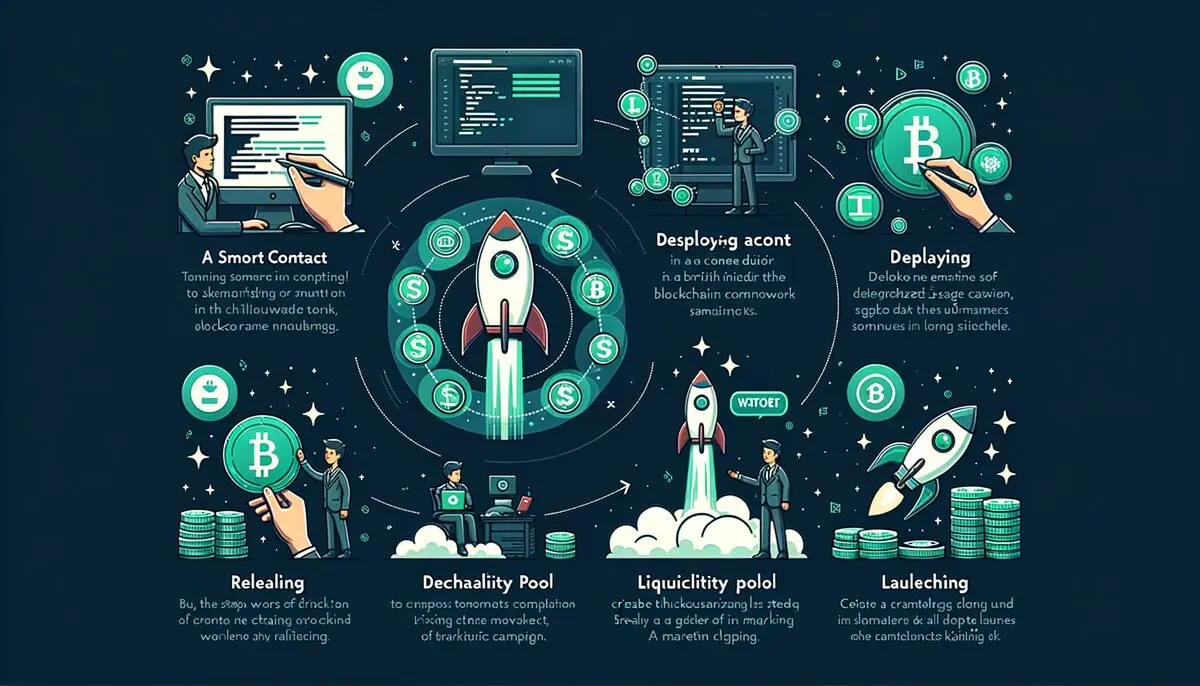
Launching your own cryptocurrency token has never been more accessible. Whether you want to create a meme coin, a utility token for your project, or a governance token for a decentralized community, 2026 offers a wide range of tools and platforms that make token creation possible for anyone. From no-code platforms like Pump.fun to fully custom smart contracts on Ethereum and Solana, the options span every skill level and budget.
This guide walks you through the entire process of launching a crypto token, from choosing the right blockchain and token standard to planning your tokenomics, adding liquidity, listing on decentralized exchanges, building a community, and staying on the right side of the law. Every section is designed to give you practical, actionable steps so you can go from idea to live token with confidence.
Before you begin, understand that launching a token is not just a technical task. It is a business decision with financial, legal, and reputational implications. Take the time to plan properly, and your token launch will have a much stronger foundation.
Quick answer
- Pick the chain and token standard based on your audience, fee budget, and launch style.
- Use no-code tools for speed, or a custom contract only if you really need custom logic.
- Plan tokenomics, liquidity, and trust signals before launch day, not after the chart is already live.
- Treat launch day as a workflow: deploy, add liquidity, lock LP, verify contract, publish links, and communicate fast.
Why Launch a Token in 2026?
The crypto landscape in 2026 looks very different from just a few years ago. Regulatory frameworks in major markets like the EU, the US, and parts of Asia have matured, giving legitimate projects clearer paths to compliance. At the same time, DeFi infrastructure has become more robust, with better tooling for liquidity management, token distribution, and community governance.
Here are some of the key reasons why launching a token now makes strategic sense:
- Lower barriers to entry: No-code platforms allow you to deploy a token in minutes without writing a single line of code. Transaction costs on Layer 2 networks and Solana have dropped dramatically.
- Mature DeFi ecosystem: Automated market makers like Uniswap and Raydium offer deep liquidity pools, while aggregators ensure your token gets maximum exposure from day one.
- Community-first culture: The crypto community in 2026 values transparency and fair launches more than ever. Projects that launch with clear tokenomics and open communication attract loyal holders.
- Real-world utility: Tokens are no longer just speculative assets. They power DAOs, grant access to services, enable cross-border payments, and serve as loyalty rewards across industries.
- Improved security tooling: Audit platforms, formal verification tools, and battle-tested contract templates have reduced the risk of smart contract exploits significantly.
Whether you are building a serious DeFi protocol or experimenting with a community-driven meme token, the infrastructure available today means your token can reach real users faster than ever before.
Token Standards Explained: ERC-20 vs SPL vs BEP-20
Choosing the right token standard is one of the first and most important decisions you will make. Each standard is tied to a specific blockchain, and your choice affects everything from transaction costs to the ecosystem of DeFi tools available to your token.
ERC-20 (Ethereum)
ERC-20 is the original and most widely adopted token standard. It runs on Ethereum and is supported by virtually every wallet, exchange, and DeFi protocol in the space. If you want maximum compatibility and credibility, ERC-20 is a strong choice. The tradeoff is higher gas fees compared to other chains, though Layer 2 solutions like Arbitrum and Base have made Ethereum-based tokens much cheaper to interact with.
SPL (Solana)
SPL tokens run on the Solana blockchain and benefit from extremely fast transaction speeds (under 1 second finality) and very low fees (fractions of a cent per transaction). Solana has become the go-to chain for meme coins and community tokens thanks to platforms like Pump.fun, and its DeFi ecosystem continues to grow rapidly.
BEP-20 (BNB Smart Chain)
BEP-20 tokens run on BNB Smart Chain (formerly Binance Smart Chain). This chain offers a middle ground between Ethereum and Solana in terms of fees and speed. It has a large user base, particularly in Asian markets, and strong integration with the Binance exchange ecosystem.
| Feature | ERC-20 (Ethereum) | SPL (Solana) | BEP-20 (BNB Chain) |
|---|---|---|---|
| Transaction Speed | 12-15 seconds | ~0.4 seconds | 3 seconds |
| Average Gas Fee | $1-$15 (L1), $0.01-$0.10 (L2) | $0.0005-$0.005 | $0.05-$0.30 |
| DeFi Ecosystem | Largest (Uniswap, Aave, Compound) | Fast-growing (Raydium, Jupiter, Orca) | Mature (PancakeSwap, Venus) |
| Wallet Support | MetaMask, all major wallets | Phantom, Solflare, Backpack | MetaMask, Trust Wallet |
| Smart Contract Language | Solidity | Rust / Anchor | Solidity |
| Best For | DeFi protocols, serious utility tokens | Meme coins, high-frequency trading tokens | Budget-friendly launches, Asian markets |
| Token Creation Cost | $50-$500 (L1) | $0.50-$5 | $5-$50 |
For most new creators in 2026, Solana and Ethereum Layer 2 networks offer the best combination of low cost, speed, and ecosystem support. If you are building something with complex DeFi integrations, Ethereum L1 or an L2 like Base or Arbitrum is often the better choice. For quick community tokens or meme coins, Solana is hard to beat.
Which launch path fits your project?
No-Code Token Launch Platforms
You do not need to be a developer to launch a token. Several platforms now offer streamlined, no-code interfaces that handle all the technical complexity for you. These tools let you define your token's name, symbol, supply, and features through a simple web interface, then deploy directly to the blockchain.
Pump.fun
Pump.fun has become the dominant platform for launching tokens on Solana. It uses a bonding curve mechanism where the token price increases as more people buy in, and once the curve fills, liquidity is automatically migrated to Raydium for open trading. The entire process takes minutes and costs less than $2.
Pump.fun is ideal for meme coins and community-driven tokens. Its built-in social features, including comment sections and creator profiles, help new tokens gain visibility quickly. However, it is important to understand that the vast majority of tokens launched on Pump.fun never reach the Raydium migration threshold, so your marketing and community building efforts matter enormously.
Other No-Code Platforms
Several other platforms offer no-code token creation across different blockchains. Here is a comparison of the most popular options in 2026:
| Platform | Blockchain | Cost | Key Feature | Best For |
|---|---|---|---|---|
| Pump.fun | Solana | ~$2 | Bonding curve + auto Raydium migration | Meme coins, viral tokens |
| Token Factory (Ethereum) | Ethereum / L2s | $50-$300 | Verified contract templates | ERC-20 utility tokens |
| Smithii | Solana | ~$1-$3 | Custom metadata, authority management | SPL tokens with custom settings |
| PancakeSwap Token Deployer | BNB Chain | $10-$50 | Direct PancakeSwap integration | BEP-20 tokens for BNB ecosystem |
| Clanker | Base | ~$5-$20 | AI-assisted token creation | Base ecosystem tokens |
When choosing a no-code platform, consider the blockchain ecosystem you want to be part of, the level of customization you need, and how the platform handles liquidity provisioning. The cheapest option is not always the best if it limits your token's functionality or growth potential.
What to decide before you hit deploy
Building a Custom Smart Contract
If you need features beyond what no-code platforms offer, such as custom tax mechanisms, reflection rewards, vesting schedules, or multi-signature controls, you will need to write or commission a custom smart contract. This path gives you maximum control over your token's behavior but requires more technical knowledge and a larger budget.
Solidity for Ethereum and EVM Chains
Solidity is the programming language used for smart contracts on Ethereum, BNB Chain, Polygon, Arbitrum, Base, and all other EVM-compatible chains. A standard ERC-20 token contract can be written in under 50 lines of code using the OpenZeppelin library, which provides audited, battle-tested contract templates.
For a basic ERC-20 token, you would use Hardhat or Foundry as your development framework, write your contract inheriting from OpenZeppelin's ERC20 base contract, add any custom functionality you need, write comprehensive tests, deploy to a testnet first, then deploy to mainnet. The entire development cycle for a simple token typically takes a few days to a week.
Rust for Solana
Solana smart contracts (called programs) are written in Rust, typically using the Anchor framework. The Anchor framework simplifies Solana program development significantly, providing macros and abstractions that reduce boilerplate code. Creating an SPL token with custom logic on Solana requires familiarity with Rust and the Solana programming model, which is different from the EVM model.
Security Best Practices for Custom Contracts
Security should be your top priority when deploying a custom smart contract. Here are essential steps to follow:
- Use established libraries: OpenZeppelin for Solidity, Anchor for Rust. Never reinvent standard functionality.
- Write comprehensive tests: Aim for 100% code coverage. Test edge cases, overflow conditions, and access control.
- Get an audit: For any token with significant value at stake, a professional smart contract audit is essential. Firms like Trail of Bits, OpenZeppelin, and Halborn provide thorough audits. Budget $5,000 to $50,000+ depending on contract complexity.
- Deploy to testnet first: Always test on Sepolia (Ethereum), Devnet (Solana), or the relevant testnet before mainnet deployment.
- Use a multisig for admin functions: Never let a single wallet control critical contract functions. Use Gnosis Safe or Squads Protocol for multi-signature governance.
- Renounce ownership when appropriate: If your token does not need ongoing admin control, renouncing contract ownership signals trustworthiness to your community.
Tokenomics Planning
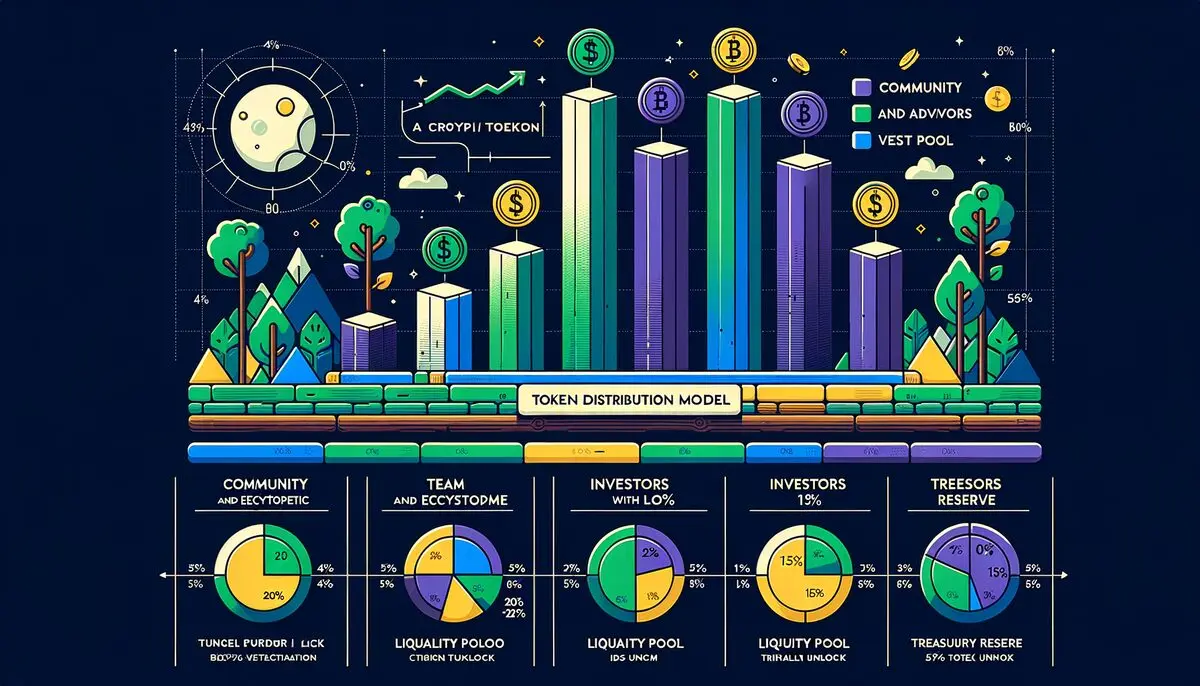
Tokenomics is the economic design of your token. It encompasses supply, distribution, utility, and incentive structures. Poor tokenomics is one of the most common reasons token projects fail, so this section deserves careful attention. For a deeper exploration of this topic, check out our complete tokenomics guide.
Total Supply
Your total supply is the maximum number of tokens that will ever exist. Common approaches include:
- Fixed supply: A set number of tokens minted at launch with no ability to create more. This creates scarcity and is the simplest model. Most meme coins use this approach with supplies ranging from 1 million to 1 billion tokens.
- Inflationary supply: New tokens are minted over time, typically as rewards for staking, liquidity provision, or network participation. This model is common for DeFi protocols and requires careful calibration to avoid excessive dilution.
- Deflationary supply: Tokens are burned through transaction fees or buyback mechanisms, reducing supply over time. This can create upward price pressure but needs sustainable volume to be effective.
Token Allocation
How you distribute your tokens at launch signals your project's intentions to the market. A well-balanced allocation builds trust, while heavy insider holdings raise red flags. Here is a general framework for allocation:
- Public sale / fair launch: 40-60% of supply. This is the portion available for the community to purchase at launch.
- Liquidity pool: 15-25% of supply. Tokens paired with SOL, ETH, or stablecoins to create trading liquidity on DEXs.
- Team and advisors: 10-15% of supply, with a 12-24 month vesting schedule and cliff period.
- Development fund: 5-10% of supply, used for ongoing development, partnerships, and ecosystem grants.
- Marketing and community: 5-10% of supply, for airdrops, rewards programs, and promotional activities.
The key principle is that no single wallet or small group of wallets should control enough supply to crash the price. Concentration of holdings is one of the first things experienced traders check before investing in a new token.
Utility and Value Accrual
For your token to maintain value beyond initial speculation, it needs to serve a purpose. Consider what your token enables holders to do: governance voting, access to services, staking rewards, fee discounts, or participation in a revenue-sharing model. Tokens with clear utility tend to attract longer-term holders and more stable price action.
Adding Liquidity
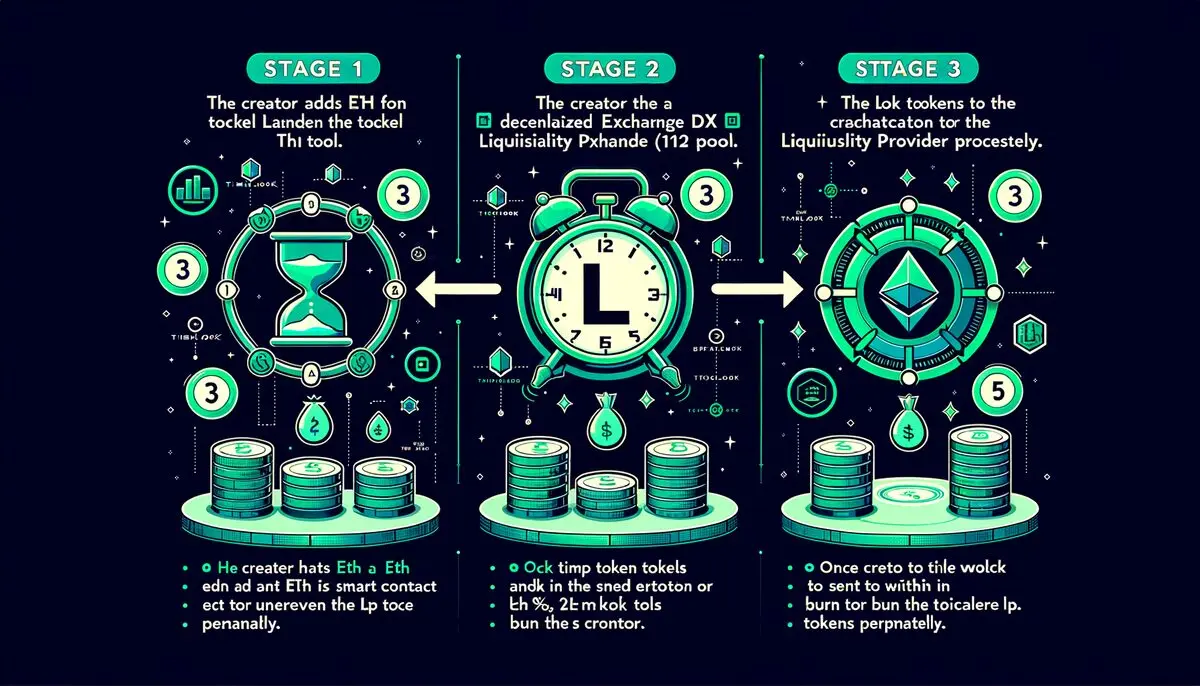
Liquidity is what allows people to buy and sell your token on decentralized exchanges. Without adequate liquidity, even a small trade can cause massive price swings, scaring away potential buyers. Understanding how to properly add and manage liquidity is critical to your token's success.
How Liquidity Pools Work
On automated market makers like Uniswap and Raydium, liquidity is provided through pools that contain two tokens in a pair. For example, a YOUR-TOKEN/ETH pool would contain equal dollar value of your token and ETH. When someone buys your token, they add ETH to the pool and remove your token, and vice versa for selling.
Setting Your Initial Price
The ratio of tokens to base currency (ETH, SOL, USDC) in your initial liquidity pool determines your token's starting price. For example, if you add 1,000,000 tokens and 10 ETH to a pool, and ETH is worth $3,000, your token starts at $0.03 each. Plan this carefully based on your total supply and target initial market cap.
Locking Liquidity
One of the most important trust signals for a new token is locked liquidity. When you add liquidity to a pool, you receive LP (Liquidity Provider) tokens representing your share of the pool. By locking these LP tokens in a time-locked contract, you guarantee to the community that you cannot remove liquidity and disappear with the funds (a common rug pull technique).
Popular liquidity locking services include Unicrypt, Team Finance, and UNCX for EVM chains, and Raydium's built-in lock mechanism for Solana. A minimum lock period of 6-12 months is generally expected by the community, with longer locks being viewed more favorably.
How Much Liquidity to Add
The amount of liquidity you provide directly impacts your token's trading experience. Too little liquidity means high slippage and volatile price action. As a general guideline:
- Minimum viable liquidity: $5,000-$10,000 for a small community token.
- Recommended for serious projects: $25,000-$100,000 to enable smooth trading and attract attention from traders and aggregators.
- Large-scale launches: $100,000+ for projects expecting significant trading volume.
DEX Listing Strategy
Getting your token listed and visible on decentralized exchanges is essential for growth. Your listing strategy should be planned well before launch, not as an afterthought.
Choosing Your Primary DEX
Your choice of DEX depends on your blockchain. For Ethereum, Uniswap is the standard choice with the deepest liquidity and widest aggregator integration. For Solana, Raydium and Jupiter are the primary venues. For BNB Chain, PancakeSwap dominates. For Base, Aerodrome has become the leading DEX.
Getting Listed on Token Aggregators
Aggregators like DEXTools, DEXScreener, and GeckoTerminal automatically detect new trading pairs, but you can improve your token's visibility by:
- Updating your token information: Submit your logo, description, website, and social links to aggregator platforms. Most have free submission forms.
- Verifying your contract: Verify your smart contract source code on the blockchain explorer (Etherscan, Solscan, BSCScan) so traders can review it.
- Getting a trust score: Platforms like DEXTools assign trust scores based on factors like liquidity locks, contract verification, and holder distribution. Aim for the highest score possible.
Multi-Chain Strategy
As your token grows, you may want to expand to additional blockchains. Bridge protocols and wrapped token standards allow you to create representations of your token on multiple chains, expanding your addressable market. However, this adds complexity and should only be pursued once your primary chain has established solid traction.
Marketing and Community Building
The best token with zero community is worth nothing. Marketing and community building are not optional activities but core functions of any successful token launch. Here is how to approach them strategically.
Pre-Launch Marketing
Start building awareness before your token goes live. A pre-launch campaign creates anticipation and ensures you have buyers ready on day one:
- Social media presence: Create accounts on X (Twitter), Telegram, and Discord at minimum. Start posting content about your project's vision, team, and progress at least 2-4 weeks before launch.
- Website: Build a professional website with clear information about your token, team, roadmap, and tokenomics. A poorly designed website is an immediate red flag for potential investors.
- Whitepaper or documentation: Even for meme coins, having a clear document explaining your project's goals and mechanics adds credibility.
- Influencer outreach: Connect with crypto influencers who align with your project's niche. Authentic endorsements from respected figures can drive significant initial interest.
Launch Day Strategy
Your launch day is your biggest marketing moment. Coordinate across all channels:
- Announce the exact launch time across all social platforms.
- Have your Telegram and Discord moderators ready to handle the influx of new members.
- Provide clear instructions on how to buy (which DEX, contract address, slippage settings).
- Monitor the launch in real-time and address any technical issues immediately.
- Share the DEXTools and DEXScreener links so traders can track the chart.
Post-Launch Community Management
The work does not stop after launch. Sustaining interest requires consistent effort:
- Regular updates: Share development progress, partnership announcements, and roadmap milestones weekly at minimum.
- Engagement: Respond to community questions, host AMAs (Ask Me Anything) sessions, and create interactive content like polls and contests.
- Transparency: Be open about challenges and setbacks. Communities respect honest communication far more than hype and empty promises.
- Holder rewards: Consider airdrops, staking rewards, or exclusive access for loyal token holders to incentivize long-term holding.
Legal Considerations
Legal compliance is not optional, even in the decentralized world. Ignoring legal considerations can result in regulatory action, fines, or criminal charges. Here is what you need to be aware of when launching a token.
Securities Classification
The most critical legal question for any token is whether it qualifies as a security under applicable laws. In the United States, the SEC uses the Howey Test to determine if a token is a security. A token is likely a security if buyers purchase it with an expectation of profit derived from the efforts of others. This is why many projects emphasize decentralization and utility over investment returns in their marketing.
If your token is classified as a security, you must either register with the SEC or qualify for an exemption. This is an area where professional legal counsel is essential.
KYC and AML Compliance
If you are conducting a token sale (rather than a fair launch on a DEX), many jurisdictions require Know Your Customer (KYC) and Anti-Money Laundering (AML) compliance. This means collecting identity information from purchasers and screening against sanctions lists. Several services like Sumsub and Jumio offer crypto-specific KYC solutions.
Tax Obligations
Token creators have tax obligations in most jurisdictions. Revenue from token sales, trading fees, and any income derived from the token may be taxable. Keep detailed records of all transactions and consult with a tax professional who understands cryptocurrency taxation in your jurisdiction.
Global Regulatory Landscape
Regulations vary dramatically by country. The EU's MiCA (Markets in Crypto-Assets) framework provides comprehensive rules for token issuers. The UK has its own Financial Conduct Authority guidelines. Asian markets like Singapore and Japan have specific licensing requirements. If your token will be available globally, understand the regulatory requirements in your primary markets and consider geo-blocking restricted jurisdictions.
Common Mistakes to Avoid
Learning from others' failures is one of the most efficient ways to improve your own launch. Here are the mistakes that derail the most token projects:
1. Insufficient Liquidity
Launching with too little liquidity creates a poor trading experience. High slippage discourages buyers and makes your token look unprofessional. Calculate the minimum liquidity needed for your expected trading volume and add a comfortable buffer.
2. Concentrated Token Holdings
If the top 10 wallets hold 80% of your supply, experienced traders will avoid your token entirely. Use vesting schedules, fair launch mechanisms, and transparent allocation to distribute tokens broadly. Tools like BubbleMaps make wallet concentration immediately visible to anyone researching your token.
3. No Liquidity Lock
Failing to lock your liquidity is the biggest red flag in crypto. It signals that you could pull the rug at any time. Always lock liquidity for a meaningful period and share the lock proof publicly.
4. Overpromising and Underdelivering
Grand roadmaps with unrealistic timelines destroy credibility when deadlines are missed. Set achievable milestones and consistently deliver on them. Under-promise and over-deliver.
5. Ignoring Security
Launching an unaudited contract with complex custom logic is inviting disaster. Even simple errors can lead to exploits that drain your liquidity pool or allow unauthorized minting. Use audited templates for simple tokens, and get a professional audit for anything custom.
6. Poor Communication
Going silent after launch is a death sentence for community trust. Even when there is no major news, regular updates and active engagement keep your community invested and loyal.
7. Copying Without Innovation
Launching yet another fork of an existing token with no unique value proposition will not attract lasting interest. Identify what makes your project different and communicate that clearly.
8. Neglecting Legal Compliance
Assuming that decentralization protects you from legal liability is a dangerous misconception. Regulators are increasingly sophisticated and have successfully pursued action against anonymous teams. Budget for legal counsel from the start.
Post-Launch Checklist
After your token is live, use this checklist to ensure you have covered all the essential bases for a successful launch:
- Liquidity verified: Confirm your liquidity pool is active with the correct token-to-base-currency ratio and adequate depth for smooth trading.
- Liquidity locked: Lock LP tokens and share the lock transaction link publicly on your website and social channels.
- Contract verified: Verify your smart contract source code on the relevant blockchain explorer (Etherscan, Solscan, BSCScan).
- Token info updated: Submit your logo, description, and links to DEXTools, DEXScreener, CoinGecko, and CoinMarketCap.
- Social channels active: Ensure Telegram, Discord, and X accounts are being monitored and moderated.
- Contract ownership handled: Either renounce ownership or transfer to a multisig wallet, depending on whether ongoing admin functions are needed.
- Holder distribution checked: Review top holder wallets to ensure no single wallet has disproportionate control.
- Trading tested: Execute test buys and sells to confirm the trading experience is smooth with acceptable slippage.
- Tax functions verified: If your contract includes buy/sell taxes, confirm they are working correctly and at the advertised rates.
- Community notified: Announce the launch with contract address, DEX links, chart links, and step-by-step buying instructions.
- Monitoring set up: Use tools like DEXTools alerts, Etherscan notifications, or Solana FM to monitor unusual activity on your contract.
- Documentation published: Ensure your website, whitepaper, and tokenomics breakdown are publicly accessible.
What traders check in the first 60 seconds
Pro Tips for Launch Day
Keep your contract address ready to share the moment liquidity goes live. Have pre-written messages for all your social channels. Assign team members to specific tasks: one person monitors the contract, another handles social media, another manages community chat. Speed and organization in the first few hours set the tone for everything that follows.
Visual Launch Map
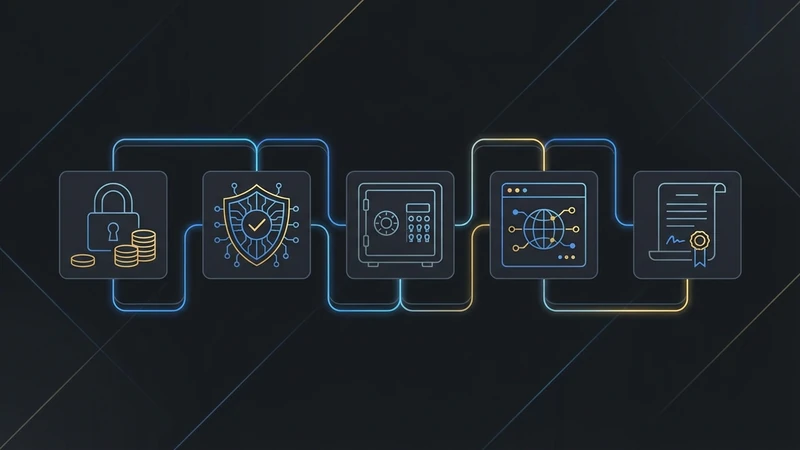
If you want the whole token launch workflow in one view, this is the version worth remembering. A good launch is not one big click. It is a chain of small decisions that need to happen in the right order, with enough clarity that traders and early holders do not get confused on day one.
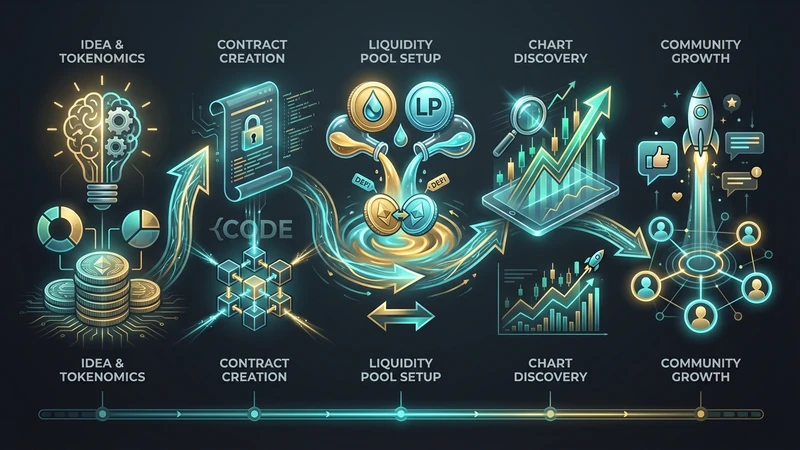
The five-stage launch sequence
Frequently Asked Questions
How much does it cost to launch a crypto token?
The cost varies dramatically based on your approach and blockchain. On Solana using Pump.fun, you can launch a token for under $2 in transaction fees. On Ethereum Layer 1, deploying an ERC-20 contract typically costs $50-$500 in gas fees. If you commission a custom smart contract with a professional audit, expect to spend $5,000-$50,000+. Beyond deployment costs, you should budget for liquidity ($5,000-$100,000+), marketing ($1,000-$50,000+), and legal counsel ($2,000-$20,000+).
Do I need to know how to code?
No. Platforms like Pump.fun, Token Factory, and Smithii allow you to create and deploy tokens through a web interface without writing any code. However, if you want custom features like transaction taxes, reflection mechanisms, or complex vesting schedules, you will either need coding skills or a developer you trust.
Which blockchain should I choose for my token?
It depends on your goals. Solana is ideal for meme coins and community tokens due to its low fees and fast transactions. Ethereum (including Layer 2s like Base and Arbitrum) is best for DeFi protocols and projects that need maximum ecosystem compatibility. BNB Chain works well for budget-conscious launches targeting Asian markets. Consider where your target audience is most active and which DeFi ecosystem aligns with your project's needs.
How do I prevent my token from being called a scam?
Transparency is your strongest defense. Lock your liquidity and share proof publicly. Verify your smart contract source code on the blockchain explorer. Use a multisig wallet for any admin functions. Publish clear tokenomics showing fair distribution. Maintain active, honest communication with your community. Get a smart contract audit if you are using custom code. Avoid anonymous launches if possible, as doxxed teams (where the team's identities are publicly known) build significantly more trust.
What is a fair launch vs. a presale?
A fair launch means all participants have equal opportunity to buy the token at the same time with no pre-allocated discounts. Platforms like Pump.fun facilitate fair launches through bonding curve mechanisms. A presale, on the other hand, offers early buyers discounted access before the public launch. While presales can raise capital for development, they create price advantages for insiders and can damage community trust if not handled transparently.
How important is a smart contract audit?
For simple tokens created through no-code platforms using established templates, an audit may not be necessary since the underlying contracts have already been audited by the platform. For custom smart contracts with unique logic, an audit is strongly recommended. Exploits in smart contracts have resulted in billions of dollars in losses across the crypto space. An audit costs a fraction of what you could lose from an exploit.
Can I launch a token anonymously?
Technically yes, but it comes with significant trade-offs. Anonymous launches face more skepticism from the community and often receive lower trust scores on platforms like DEXTools. In some jurisdictions, launching a token that is classified as a security while remaining anonymous could constitute securities fraud. If privacy is important, consider a pseudonymous approach where your identity is known to a trusted third party or held in escrow.
How do I get my token listed on CoinGecko or CoinMarketCap?
Both CoinGecko and CoinMarketCap accept free listing applications. To qualify, your token needs to be trading on a supported DEX with verifiable on-chain data, have a working website with project information, and show genuine trading activity (not wash trading). The review process typically takes 1-4 weeks. Having accurate token information already submitted to your blockchain explorer and DEX aggregators speeds up the process.
What happens if my token fails?
Most tokens do not achieve long-term success, and that is a reality every creator should accept. If your token fails to gain traction, you are not legally obligated to maintain it (assuming no securities violations), but ethical best practices include being honest with your community about the situation, not dumping your holdings on remaining buyers, and keeping your liquidity locked for the promised duration. Many successful crypto entrepreneurs have multiple failed projects before finding one that works.
Final Thought: Launching a token is the beginning of a journey, not the destination. The projects that succeed are the ones that combine solid technical foundations with genuine community value, transparent operations, and relentless execution. Take the time to do it right, learn from the resources linked throughout this guide, and build something that people actually want to hold.
Frequently Asked Questions
What is a crypto token launch?
A crypto token launch is the process of creating, distributing, and making a new digital asset available to the public. It typically involves smart contract deployment, liquidity provision, and marketing.
What are the initial steps to launch a crypto token?
Initial steps include defining the token's purpose and utility, choosing a blockchain, designing the tokenomics, and developing the smart contract.
What is tokenomics and why is it important?
Tokenomics refers to the economic model of a crypto token, including its supply, distribution, and utility. It's crucial for the token's long-term sustainability and value proposition.
How do I choose the right blockchain for my token?
Choosing a blockchain depends on factors like transaction speed, cost, security, developer tools, and the target audience. Popular choices include Ethereum, Binance Smart Chain, and Polygon.
What is the role of a smart contract in a token launch?
A smart contract is a self-executing contract with the terms of the agreement directly written into code. It automates the creation, distribution, and management of the crypto token.
Related Guides
- What Is a Fair Launch in Crypto? Complete Beginner Guide (2026)
- What Is a Stealth Launch in Crypto? Risks and Checks (2026)
- What Is a Launch Wallet in Crypto? Explained 2026
- The First 60 Minutes After a Token Launch: What to Watch on DEXTools
- Second Chance Tokens: Reviving Failed Crypto Launches
- Healthy vs Toxic Token Launch