Does the Wash Sale Rule Apply to Crypto? (2026)
— By Tony Rabbit in Tutorials

Does the wash sale rule apply to crypto in 2026? Learn the current US treatment, why crypto is property, and what it means for tax loss harvesting.
If you have ever sold a coin at a loss and bought it back the next day, you have probably wondered whether the tax man will allow that loss. The question of whether the wash sale rule applies to crypto is one of the most common in digital asset taxation, and the answer in the United States as of 2026 still surprises many investors. This guide explains what the rule is, why crypto sits in a different bucket, and what it all means for your tax loss harvesting plans.
Before we go further: this article is general information, not tax or financial advice. Tax law changes, and your situation is unique, so always consult a qualified tax professional before acting.
What is the wash sale rule?
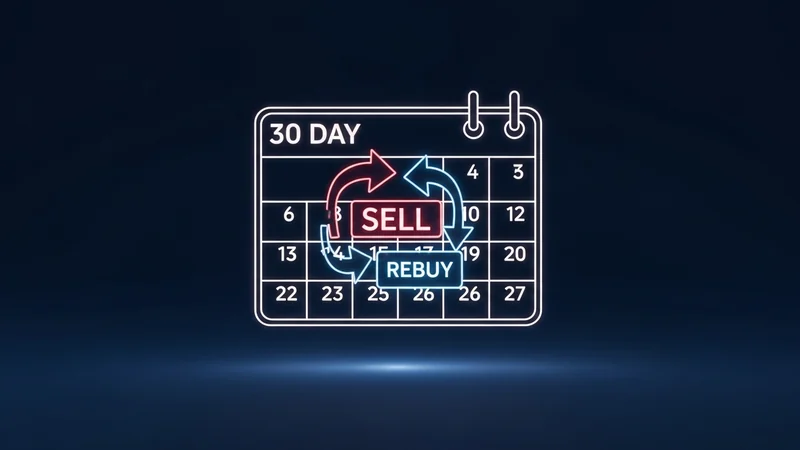
The wash sale rule is a US tax provision found in Internal Revenue Code Section 1091. It is designed to stop investors from claiming a tax loss while keeping essentially the same investment position. In plain terms, if you sell a stock or security at a loss and buy a substantially identical one within 30 days before or after the sale, the loss is disallowed for that year.
The disallowed loss is not lost forever. It is added to the cost basis of the newly purchased shares, which defers the benefit until you eventually sell that new position in a clean transaction. The window covers a 61 day period in total: 30 days before the sale, the day of the sale, and 30 days after.
- It applies to stocks and securities, not to property in general.
- The trigger is buying a substantially identical asset inside the window.
- A disallowed loss is deferred, not deleted, through a cost basis adjustment.
Why crypto's "property" classification matters
Here is the crux of the whole topic. Since 2014, the IRS has treated cryptocurrency as property rather than as a stock or security. Section 1091 specifically targets stocks and securities. Because crypto does not carry that statutory classification, the technical conditions that trigger the wash sale rule do not apply to most digital assets.
That single classification decision is why the answer to "do wash sale rules apply to crypto" has been no in the US. You can, in principle, sell Bitcoin at a loss on Monday, repurchase it on Tuesday, and still claim the full capital loss, something a stock investor cannot do.
Current US treatment in 2026
As of mid 2026, the wash sale rule still does not apply to cryptocurrency held directly. Lawmakers have proposed closing this gap several times since 2021, but no bill extending Section 1091 to digital assets has been enacted. The most recent effort, a discussion draft known as the Digital Asset PARITY Act circulated in late 2025, would rewrite the rules to cover actively traded digital assets, yet it remains a draft and has not become law.
There is an important exception worth flagging. If you hold crypto exposure through a security such as a spot Bitcoin exchange traded fund, those shares are securities, so the wash sale rule can apply to them. The exemption is about owning the coins directly, not about every product that tracks them.
What it means for crypto tax loss harvesting
Because the rule does not apply to coins held directly, crypto tax loss harvesting is more flexible than the stock version. Investors can realize a loss to offset gains and then re establish their position quickly, without waiting out a 30 day window. This is one reason year end loss harvesting is popular in volatile markets.
Keeping clean records is the part most people underestimate. Every sale, swap, and repurchase needs an accurate cost basis and date, especially across wallets and decentralized exchanges. Tools like DEXTools help here, because you can look up tokens, review trading history, and follow on chain activity for the assets in your wallet, which supports the paper trail your accountant will want.
| Asset type | Tax classification (US) | Wash sale rule applies? |
|---|---|---|
| Stocks and securities | Security | Yes, Section 1091 applies |
| Crypto held directly | Property | No, not currently in 2026 |
| Spot crypto ETF shares | Security | Yes, ETF shares are securities |
A caution: this can change
The current treatment is a function of how the law is written today, not a permanent feature. Congress has shown clear and repeated interest in closing the loophole, and proposals keep returning. If a bill ever passes, the flexibility crypto investors enjoy today could narrow significantly, possibly with little lead time.
Even now, aggressive and purely mechanical loss harvesting could attract scrutiny under broader tax doctrines such as economic substance. The absence of an explicit rule does not mean zero risk, so a thoughtful, well documented approach is wise.

How other countries treat it
The US position is not universal. Several major jurisdictions already have rules that function much like a wash sale for crypto, so the global picture is mixed.
- United Kingdom: HMRC applies share matching rules to crypto. A same day rule comes first, then a 30 day rule often called bed and breakfasting, where a disposal is matched against any reacquisition of the same token within 30 days. Anything left over goes into a pooled cost.
- Canada: The CRA enforces a superficial loss rule. If you, your spouse, or a corporation you control repurchase the identical asset within 30 days before or after a sale, the loss is denied for the year and added to the cost basis of the new units.
| Country | Rule | Effect on a quick rebuy |
|---|---|---|
| United States | No wash sale rule for direct crypto (2026) | Loss generally still allowed |
| United Kingdom | Same day plus 30 day matching rules | Loss matched to the rebuy, deferred |
| Canada | Superficial loss rule, 61 day window | Loss denied, added to new cost basis |
Practical takeaways
The headline is simple, but the details deserve care. Treat the current US exemption as a planning tool, not a loophole to abuse, and stay alert for legislative change.
- In the US, the wash sale rule does not currently apply to crypto held directly.
- It can apply to crypto held through securities such as ETFs.
- Other countries, including the UK and Canada, already restrict quick rebuy losses.
- Keep precise records of dates, amounts, and cost basis across every wallet.
- Use research tools like DEXTools to verify token details and on chain history that back up your filings.
- Confirm the latest status with a tax professional, since proposals to change the rules keep appearing.
To sum up, in 2026 the wash sale rule still does not apply to cryptocurrency held directly in the United States, thanks to crypto's classification as property. That gives investors real flexibility for tax loss harvesting, but it is a window that lawmakers may eventually close. Stay informed, keep clean records, and lean on a qualified advisor so your strategy holds up no matter how the rules evolve.
Beyond the Letter: The Spirit of the Wash Sale Rule and Crypto
While the IRS has clarified crypto's status as property, making it subject to wash sale considerations, understanding the underlying intent of the rule is crucial for sophisticated traders. The wash sale rule was designed to prevent taxpayers from artificially creating losses by selling an asset and immediately repurchasing it, thereby manipulating their taxable income without a substantive change in their economic position. For crypto, this means a superficial transaction that lacks genuine market exposure change will likely be scrutinized, even if a direct "stock" or "security" label isn't applied.
The evolving nature of decentralized finance (DeFi) and various crypto instruments further complicates this. Consider liquid staking derivatives (LSDs) or wrapped tokens. If you sell ETH at a loss and immediately acquire stETH, which is pegged 1:1 to ETH and offers similar economic exposure, is that truly a different asset in the spirit of the wash sale rule? The IRS's stance often leans on economic substance over pure form. Traders should anticipate a broad interpretation that aims to prevent tax abuse, rather than a narrow, literal application that could be easily circumvented by slightly different, but economically identical, crypto assets.
Navigating Economic Substance in Crypto Tax Loss Harvesting
For DEXTools users looking to optimize their tax strategies, a proactive approach considering economic substance is paramount. Here are practical considerations:
- Diversify your portfolio genuinely: If harvesting losses on one asset, consider reinvesting in a different asset with distinct underlying fundamentals or use cases, not just a wrapped or derivative version of the same asset.
- Wait for market fluctuations: Allow a reasonable period to pass before re-entering a similar position. The 30-day window for traditional securities serves as a useful benchmark for demonstrating a change in market exposure.
- Document your rationale: Maintain clear records explaining why a new purchase is economically distinct from the asset sold at a loss. This can be crucial in an audit.
- Consider different blockchain ecosystems: Selling a token on Ethereum and buying an equivalent token on Solana, if the underlying projects are distinct, offers a stronger argument for a non-wash sale.
- Consult with a tax professional: Given the complexity and evolving guidance, personalized advice from a crypto-savvy tax advisor is invaluable.
Related Guides
- What Is a Fork Choice Rule? How Blockchains Resolve Competing Chains
- What Is Wash Trading in Crypto? Beginner Guide (2026)
- Wash Trading in Crypto: Red Flags Explained
- Detect Wash Trading on DEXTools Easily
Frequently Asked Questions
What is the wash sale rule?
The wash sale rule is a tax rule in some jurisdictions that disallows claiming a loss if you sell an asset and buy back a substantially identical one within a short window. It is designed to prevent selling purely to capture a tax loss while keeping the same position.
Why is crypto often treated as property for taxes?
In many jurisdictions crypto is classified as property rather than a security or currency, which means general capital asset rules apply to it. This classification affects how gains, losses, and certain rules are handled.
What is tax loss harvesting in crypto?
Tax loss harvesting is selling assets at a loss to offset capital gains and potentially reduce a tax bill. The way crypto is classified in a jurisdiction can affect how and when these losses can be claimed.
Should I rely on general guides for crypto wash sale rules?
Tax rules vary by country and can change over time, so general guides should not be treated as personalized advice. It is best to confirm current local rules and consult a qualified tax professional for your situation.