DeFi Security Routine: Weekly Checklist for Safer Trading
— By Whatsertrade in Tutorials

Use this DeFi security routine to check approvals, connected apps, browser hygiene, wallet activity, and scam exposure before active trading weeks.
This page is a practical DeFi security routine for active traders. It is an operational checklist, not a general wallet primer.
Most DeFi traders spend time looking for the next token, the next trend, or the next entry. Far fewer traders spend time checking whether their setup is safe before they trade. Establishing a weekly DeFi security routine can greatly help in minimizing risks.
That is a problem. In decentralized finance, your security habits matter as much as your market analysis. A good chart can still become a bad outcome if you connect to a fake website, sign the wrong approval, leave unlimited permissions open, or trade from a compromised browser.
A weekly DeFi security routine helps you reduce avoidable risk. It does not need to be complicated. The goal is to create a repeatable process that you complete before trading, especially if you are active in new pairs, memecoins, liquidity pools, airdrops, bridges, or experimental dApps.
This guide gives you a practical weekly routine for checking approvals, connected apps, browser extensions, bookmarks, wallet activity, contracts, phishing links, and trading habits before entering the market.
Building a DeFi Security Discipline
DeFi moves quickly. Traders often jump between charts, Telegram groups, X posts, bridge pages, token sites, DEXs, and portfolio tools. Every click can create a new risk.
A weekly routine helps you slow down and review the parts of your setup that can expose your funds. It also helps you build discipline. Instead of reacting to every new opportunity, you trade from a cleaner and safer environment.
A security routine can help you remove old token approvals, detect suspicious connected apps, avoid fake websites, clean up browser extensions, review wallet activity, reduce phishing risk, improve trading discipline, protect profits after active trading, and avoid rushing into unsafe contracts.
No routine can remove every risk, but it can reduce many common mistakes.
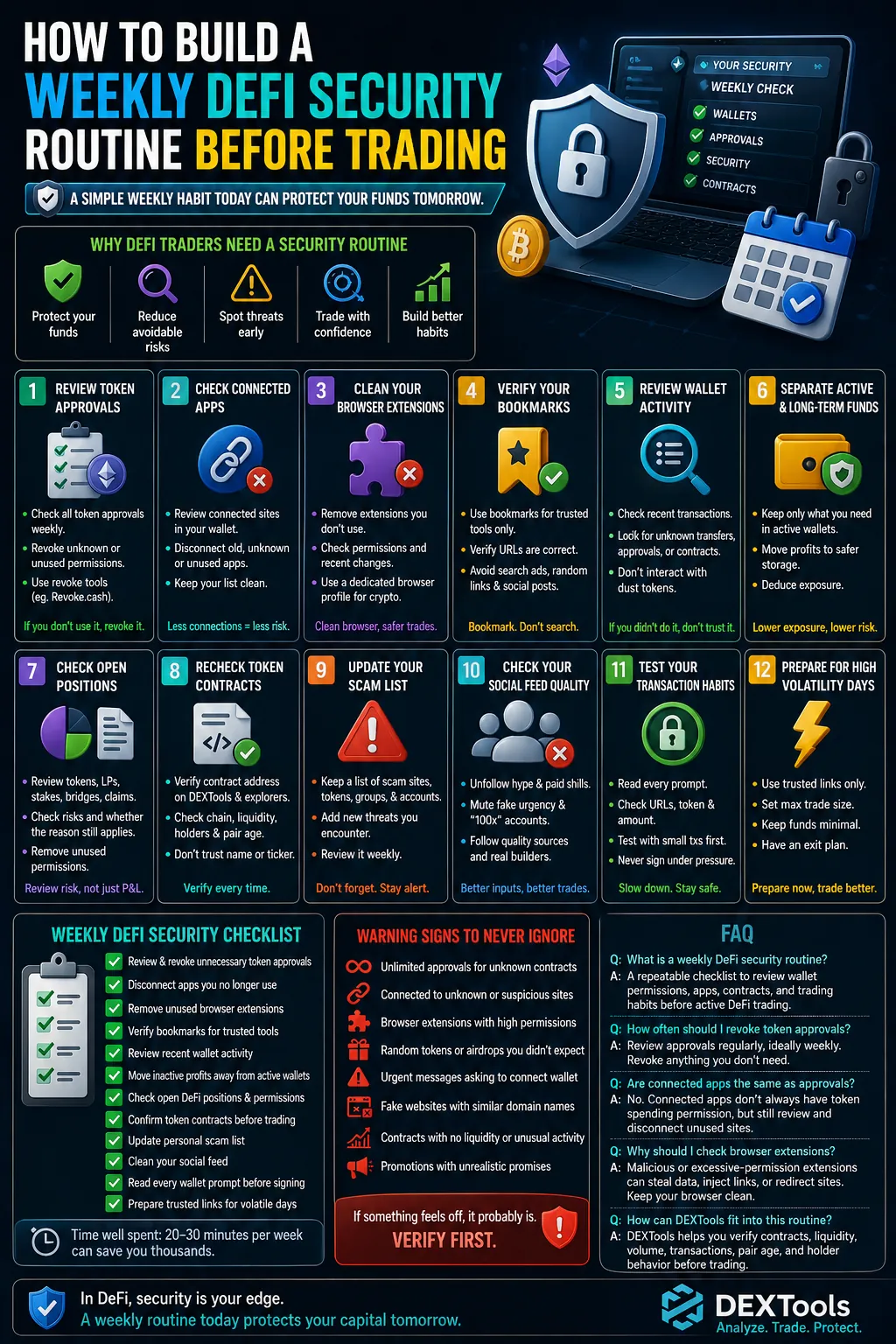
1. Evaluate Token Approvals
Token approvals allow smart contracts to move specific tokens from your wallet. They are required for many DeFi actions but can be dangerous if you leave unlimited approvals active for contracts you no longer use.
Once a week, review approvals for your active wallets. Look for approvals connected to unknown dApps, old swaps, token claim pages, bridges you no longer use, experimental protocols, or tokens you do not recognize.
If an approval is no longer needed, revoke it. This is especially important after trading new tokens, testing new protocols, or connecting to pages shared in social channels.
A simple rule: if you do not use it anymore, remove permission.
2. Inspect Connected Apps
Many wallets show a list of connected sites. A connected site does not always mean the site can move your funds, but it is still good hygiene to disconnect apps you no longer use.
Review connected apps and remove unknown domains, old trading pages, claim websites, mint pages, test dApps, duplicate domains, and sites you visited only once.
This helps reduce clutter and makes it easier to notice suspicious connections later.
3. Clean Browser Extensions
Browser extensions can create serious security risk. A malicious or compromised extension may monitor activity, inject links, redirect pages, or interfere with wallet interactions.
Once a week, check your extensions and ask whether you still use them, whether you trust the developer, whether they have unnecessary permissions, and whether they've changed recently.
Remove extensions you do not need. Keep your trading browser as clean as possible. Some traders use a separate browser profile only for crypto activity to reduce exposure.
4. Verify Bookmarks
Phishing websites often copy the design of real crypto tools. One wrong letter in a domain can lead to a fake page that drains wallets or steals approvals.
Instead of searching for important tools each time, use bookmarks for platforms you trust. Once a week, review those bookmarks to confirm that the URLs are correct.
Check bookmarks for DEXs, DEXTools, block explorers, bridges, portfolio trackers, approval management tools, and official project pages.
Avoid clicking sponsored links, random social links, or URLs posted in comments. A bookmark routine can prevent many phishing mistakes.
5. Monitor Wallet Activity
Your wallet history can reveal problems before they become worse. Once a week, review recent transactions for each wallet you actively use.
Look for transactions you do not recognize, unexpected token transfers, unknown approvals, failed transactions to strange contracts, tokens you did not buy, dust tokens sent to your wallet, and interactions with sites you forgot about.
Do not interact with random tokens sent to your wallet. Some dust tokens are designed to lure users into malicious websites.
6. Distinguish Trading and Holding Wallets
Even if you do not use a complex wallet structure, your weekly routine should include one question: are you holding too much in the wallet you use for active trading?
Active wallets interact with more contracts and websites, carrying more exposure. If your trading wallet has grown, consider moving part of the balance to more protected storage.
Ask whether you need this full balance for active trades, whether you have left profits in a high exposure wallet, and whether funds are too easy to access.
Security is not only about avoiding scams. It is also about reducing the amount exposed to routine activity.
7. Review Open Positions
A weekly security routine should include your open DeFi positions. This is different from checking profit and loss. You are checking risk.
Review tokens you still hold, liquidity pool positions, staked assets, bridge transactions, pending claims, vesting positions, airdrop eligibility interactions, and contracts with active permissions.
For each position, ask whether the original reason still applies. If a token has changed contract, lost liquidity, or become inactive, your risk profile may have changed.
8. Validate Token Contracts
Before making new trades, confirm that you are looking at the correct contract. This is especially important for tokens with migrations, rebrands, or multiple chain deployments.
Use DEXTools and block explorers to check contract address, chain, pair age, liquidity, volume, recent transactions, holder behavior, and official links.
Never trade a token only because the name or ticker looks familiar. Contract verification should be part of your weekly trading preparation and every high risk entry.
9. Compile a Scam List
Every active trader sees suspicious links, fake tokens, impersonators, and shady projects. Instead of forgetting them, create a simple personal scam list.
Your list can include fake domains, scam Telegram groups, impersonator accounts, suspicious token contracts, fake claim pages, wallet drain attempts, and projects you decided to avoid.
This list helps you recognize repeated patterns. Scammers often reuse similar language, designs, and tactics.
10. Assess Social Feed
Your information environment affects your trading decisions. A feed full of hype, paid shills, and fake urgency can push you into bad trades.
Once a week, review your crypto information sources. Remove or mute accounts sharing fake urgency, unrealistic targets, or only paid promotions.
A cleaner feed helps you make better decisions. Security is not only technical; it's also psychological.
11. Test Trading Habits
Before you enter a busy trading week, review how you sign transactions.
Good habits include reading wallet prompts, checking site URLs, confirming token and amount, avoiding blind signatures, and testing with small transactions first.
If you feel rushed, stop. Many wallet drains happen because users sign quickly while distracted.
12. Brace for High Volatility
Security mistakes are more common during hype. When a token is trending, a new listing is announced, or a market narrative is moving fast, traders click faster and verify less.
Before high volatility periods, open trusted tools, confirm official links, decide maximum trade size, and use test transactions for risky tokens.
A prepared trader is less likely to make emotional security mistakes.
DeFi Security: Your Checklist
Use this checklist before active trading: review and revoke unnecessary token approvals, disconnect apps you no longer use, remove unused browser extensions, verify bookmarks for trusted crypto tools, review recent wallet activity, move inactive profits away from high exposure wallets, check open DeFi positions, confirm token contracts before trading, update your personal scam list, clean your social feed, read every wallet prompt before signing, and prepare trusted links before volatile trading sessions.
This process can take 20 to 30 minutes, but it can prevent mistakes that cost much more.
Staying Ahead in DeFi
DeFi rewards speed, but it punishes carelessness. A weekly security routine gives you a simple way to reduce risk before trading.
Review approvals, clean connected apps, remove risky extensions, verify bookmarks, check wallet activity, and confirm contracts before you enter new positions. Use DEXTools to support your token analysis, but also protect the environment from which you trade.
The best traders do not only ask, "What should I buy?" They also ask, "Is my setup safe enough to trade today?"
What is a weekly DeFi security routine?
It is a repeatable checklist used to review wallet permissions, connected apps, browser safety, token contracts, and trading habits before active DeFi trading.
How often should I revoke token approvals?
Active traders should review approvals regularly, often weekly. Revoke permissions that are no longer needed.
Are connected apps the same as token approvals?
No. A connected app does not always have token spending permission, but it is still good practice to disconnect sites you no longer use.
Why should I check browser extensions?
Extensions can create security risks if they are malicious, compromised, or have excessive permissions. A clean browser reduces exposure.
How can DEXTools fit into a security routine?
DEXTools can help you verify token contracts, liquidity, volume, transactions, pair age, and market behavior before trading.
How to Bridge Crypto Between Chains: Complete Cross-Chain Tutorial 2026 How to Use 1inch: Complete DEX Aggregator Swap Tutorial (2026) How to Use OKX Web3 Wallet: Multi-Chain DeFi Hub Guide (2026)Frequently Asked Questions
Q: What is a routine security check for DeFi?
A: A routine security check for DeFi involves regularly reviewing smart contract audits, monitoring transaction history, and verifying wallet permissions to mitigate risks.
Q: How often should I review my DeFi wallet permissions?
A: It is recommended to review DeFi wallet permissions weekly. This helps identify and revoke any outdated or unnecessary approvals that could pose a security risk.
Q: What role do smart contract audits play in DeFi security?
A: Smart contract audits are crucial for DeFi security as they identify vulnerabilities and potential exploits before deployment. Regular re-audits are important for updated contracts.
Q: How can I monitor for suspicious activity in my DeFi transactions?
A: Monitoring for suspicious activity involves regularly checking transaction history on block explorers and setting up alerts for unusual outflows or approvals from your connected wallets.
Q: What is the importance of diversifying DeFi protocols for security?
A: Diversifying across multiple reputable DeFi protocols can enhance security by reducing single points of failure. This strategy helps limit potential losses if one protocol experiences an exploit.
Related Guides
- Wallet Security Checklist: 10 Must-Do Steps Before Holding
- How to Analyze Solana Meme Coins Before Trading: On-Chain Risk Checklist (2026)
- Rabby Wallet Pre-Sign Simulator: Safer EVM Signing Explained (2026)
- Top Solana Meme Coins Trending This Week: DEX Watchlist
- How Memecoins Are Created in Minutes (and Why It Matters)