DeDust vs STON.fi: Complete TON DEX Comparison Guide (2026)
— By Tony Rabbit in Tutorials
DeDust and STON.fi are the two leading DEXs on TON. This comparison covers liquidity depth, fees, AMM design choices, supported pools, and the practical question of which DEX to pick for any given swap.
STON.fi and DeDust are the two largest decentralized exchanges on TON. Together they host the vast majority of TON-native swap volume, including most stablecoin pairs, memecoins, LST trades, and longer-tail tokens. The two protocols overlap heavily but make different design choices that show up in slippage, supported pool types, and which trades feel cleaner. This comparison walks through the practical differences for users picking between them.
Quick answer: STON.fi is generally the largest TON DEX by TVL and is often the default for major pairs (TON/USDT, TON/STON, blue-chip Jettons). DeDust is the second-largest and typically wins on certain memecoin pairs and specialized pool types. For most everyday swaps, both work fine and you can compare quotes side by side. For larger size, the protocol with deeper depth on your specific pair wins on slippage.
- Both are AMM DEXs on TON. Same general model as Uniswap-style protocols.
- STON.fi has the largest TVL. Default for major pairs and the deepest blue-chip pools.
- DeDust has strong specialty pools. Often better on certain memecoins and niche pairs.
- Compare quotes before swapping. Same pair can quote differently across the two.
- Aggregators exist. Some routers split your swap across both DEXs for best execution.
AMM design and pool types
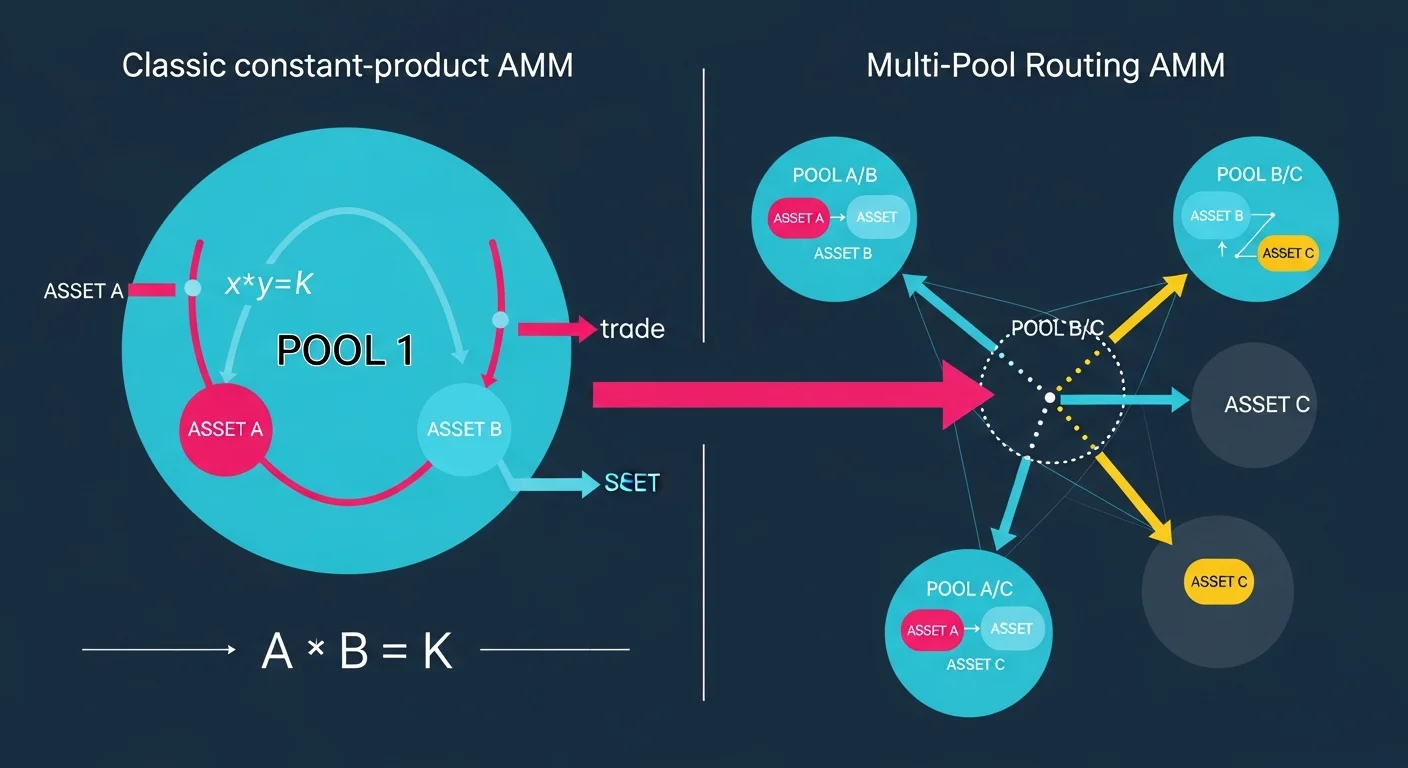
Both DEXs run automated market makers, but the specific pool implementations differ in details that matter for traders.
Trade TON with Not.Trade, the fastest terminal on TON
Not.Trade is purpose built for TON traders: real-time on-chain charts for every jetton, insider safety scoring (Top 10 wallets, snipers, dev movement, bundlers, LP lock), MCAP-trigger limit orders, multi-wallet sniping, MEV protection and one-click swaps routed across STON.fi and DeDust. It runs natively inside Telegram and as a fast web terminal, with TON Connect non-custodial wallet support.
Read the full Not.Trade guide →STON.fi
STON.fi runs a classic constant-product AMM with additional pool types layered on top, including stablecoin-friendly pools that use a curve optimized for low slippage on near-pegged pairs. The protocol's STON token rewards LPs in selected pools.
DeDust
DeDust offers similar core mechanics with its own pool variants. It tends to support a wider variety of pool configurations, including some that target specific use cases like volatile memecoin pairs. The flexibility shows up most in the pool list for newer or niche tokens.
What this means in practice
For TON/USDT or TON/STON, both DEXs quote almost identically and you can pick whichever has the better UI for you on the day. For long-tail tokens, one DEX often has materially better depth than the other; checking both before swapping is worth the extra ten seconds.
Liquidity, depth and slippage
The single most important factor for any active trader is depth on the pair you actually trade.
Major pairs (TON/USDT, TON/STON, TON/USDD)
STON.fi typically wins on these by raw TVL. The slippage gap is small for everyday-size swaps; it gets noticeable only at larger sizes where the constant-product math starts to bite.
LST pairs (tsTON, stTON, hTON)
Both DEXs host meaningful liquidity for the leading LSTs. Specific pools may have different depth at different times based on incentive programs, so comparing on the day matters.
Memecoin and long-tail pairs
This is where the two DEXs diverge most. Some tokens prefer one over the other based on where the project decided to seed liquidity. Aggregators or simple side-by-side checks save a meaningful amount of slippage on the long tail.
Fees and rewards
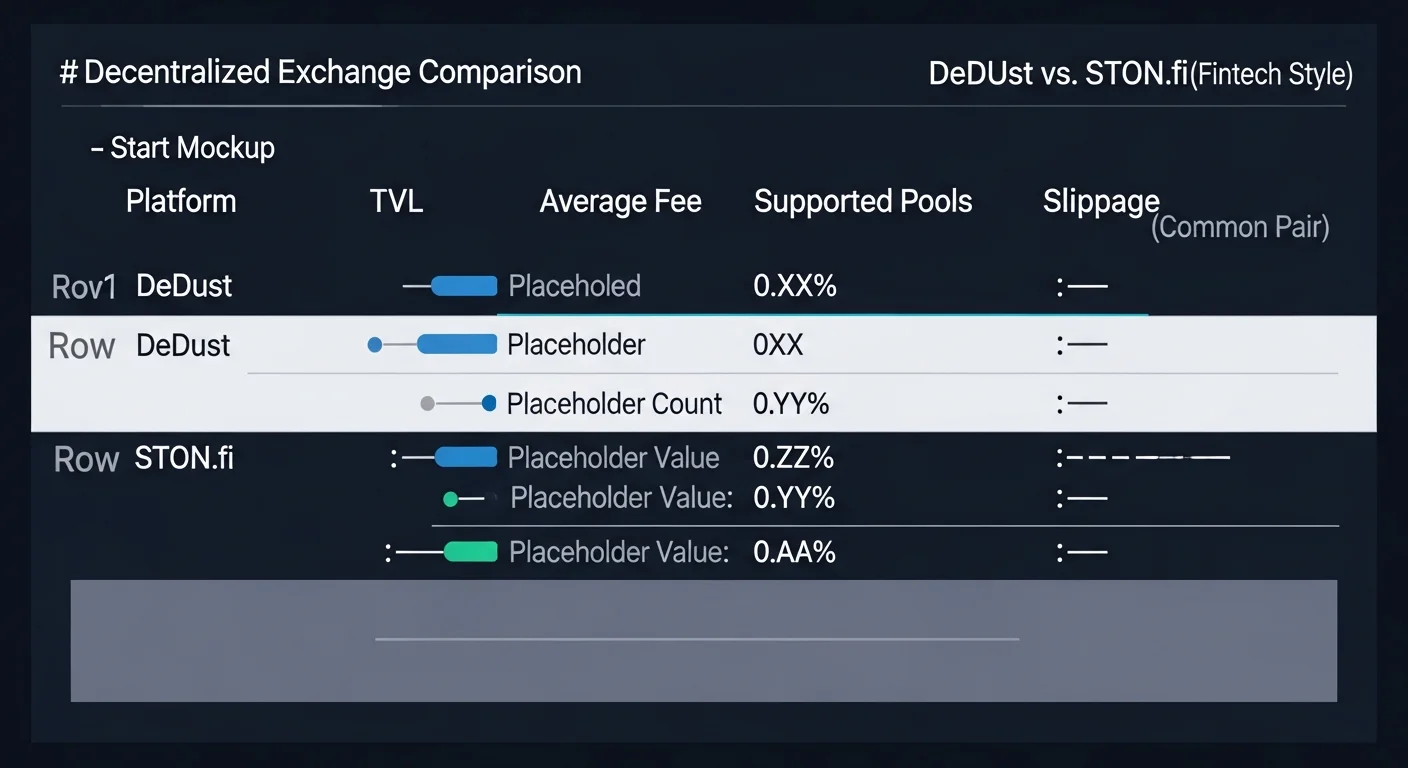
Both DEXs charge swap fees in the same general range as mainstream AMMs.
Pool fees
Default pool fee on either DEX is usually 0.3 percent, with stablecoin-friendly pools at lower numbers and some specialty pools higher. The fee is paid to LPs as part of swap revenue.
Reward programs
Both protocols run reward programs that pay LPs additional tokens (STON for STON.fi, similar for DeDust) on selected pools. These rewards rotate based on incentive policy. They can shift the most-attractive LP target between the two DEXs week by week.
Aggregator and router fees
Aggregators that route across both DEXs add a small fee on top, but they often save more in slippage than they charge.
Swap flow on each DEX
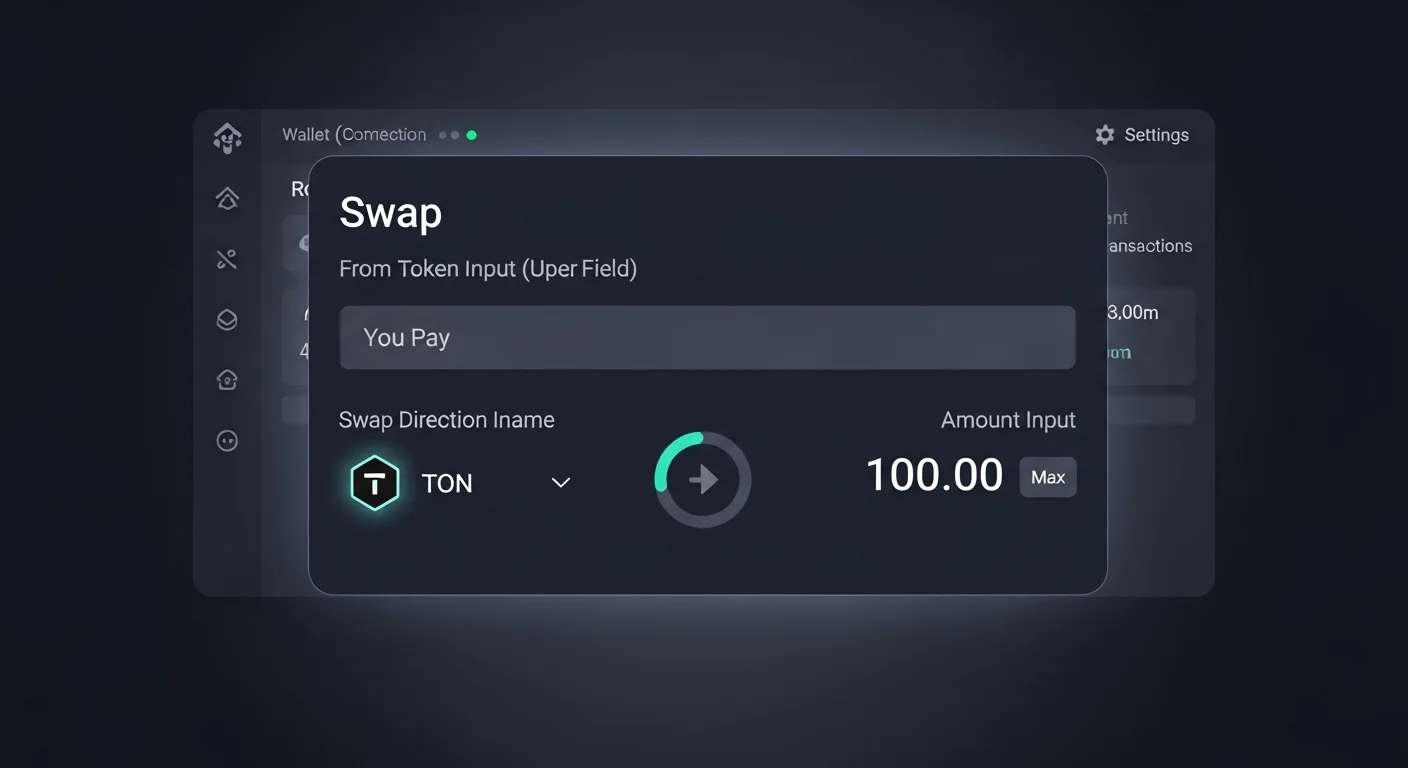
The user flow is nearly identical on both.
Step 1: connect wallet
Open the DEX site and connect Tonkeeper or another TON Connect wallet. Always verify the domain.
Step 2: pick tokens and amount
Select the input and output tokens. For new tokens, paste the master contract address. Always verify the address against an official source.
Step 3: set slippage and review price impact
For TON/USDT, 0.1 to 0.5 percent slippage is plenty. For thinner pairs, 1 to 3 percent may be needed. Anything above 3 percent should make you reconsider whether the trade is sized appropriately.
Step 4: confirm
The wallet pops up a TON Connect prompt. Confirm. The swap settles within seconds.
Common risks on either DEX
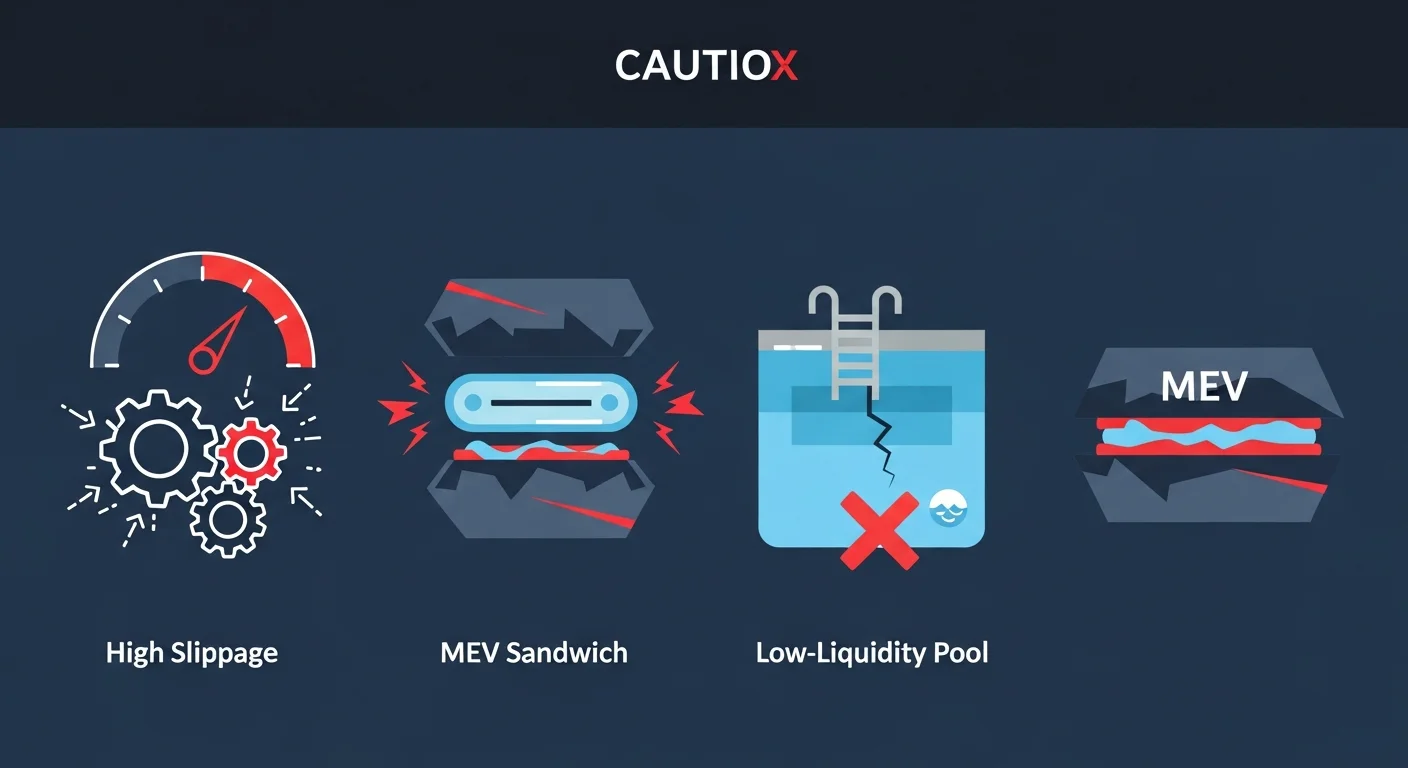
- Fake token pairs: always verify the master contract address before swapping.
- High price impact on thin pairs: small swaps can move price meaningfully on low-liquidity pools.
- MEV sandwich attacks: wide slippage tolerance can be exploited.
- Stale token approvals: revoke unused approvals through TONScan or TON-aware tools.
- Phishing clones: always start from the official URL or a trusted bookmark.
Which DEX for which user
| User profile | Recommendation | Reason |
|---|---|---|
| Stablecoin trader | STON.fi (often) | Largest TVL on stable pairs |
| Memecoin trader | Compare both | Long-tail pools differ widely |
| LP provider | Whichever has incentives that week | Reward programs rotate |
| Large-size trader | Aggregator or both | Splitting reduces slippage |

Practical workflow
- Open both DEXs in separate tabs for the pair you want to trade.
- Compare quotes side by side. Pick the better one for your size.
- Verify the contract address regardless of which DEX you use.
- Set tight slippage on liquid pairs; only loosen if you understand why.
- Audit approvals monthly. Revoke anything you no longer use.
Frequently asked questions
Which is bigger, STON.fi or DeDust?
STON.fi is typically the larger TON DEX by TVL, but the gap can shift based on rewards and ecosystem activity.
Are fees the same on both DEXs?
Default pool fees are similar (often 0.3 percent), with variations for stablecoin and specialty pools.
Can I LP on both DEXs at the same time?
Yes. Many LPs split capital across both protocols based on where the rewards or fee revenue is best at the moment.
Are there aggregators on TON?
Yes. A growing number of aggregators route swaps across STON.fi, DeDust, and other liquidity venues for best execution.
Which DEX is safer?
Both have been audited and operating for years. Smart contract risk applies to either; user-side risk (verifying contracts, reading approvals) matters more in practice.
Final takeaway: STON.fi and DeDust are complementary, not interchangeable. For most blue-chip swaps, either works. For large size or long-tail tokens, comparing the two before swapping consistently saves money. Aggregators close the gap further by splitting orders.
Disclaimer: This guide is for educational purposes only and does not constitute investment, financial, legal, or trading advice.
Related Guides
- Top 3 TON Trading Terminals 2026: Not.Trade vs STON.fi vs DeDust
- How to Use STON.fi on TON Safely: Swaps, Liquidity, and Slippage Guide (2026)
- How to Use DeDust on TON Safely: Swaps, Pools, and Routing Guide (2026)
- TON vs Solana: Complete Network Comparison Guide (2026)
- TON vs Ethereum: Complete Network Comparison Guide (2026)
Frequently Asked Questions
What is the difference between DeDust and STON.fi?
Both are decentralized exchanges built on the TON blockchain that let users swap Jettons through liquidity pools. They differ in their AMM design choices, supported pools, fee structures, and user interfaces.
Which TON DEX has better liquidity?
Liquidity depth varies by trading pair and changes over time, so the better venue depends on the specific tokens you want to swap. Checking the pool size for your pair on each DEX before trading helps reduce slippage.
Do DeDust and STON.fi charge different fees?
Each DEX sets its own swap fee structure, which is typically a percentage of the trade shared with liquidity providers. Comparing the quoted output for the same swap is the most direct way to see the effective cost.
How do I choose between DeDust and STON.fi for a swap?
Compare the quoted output, available liquidity, and fees for your specific pair, since the best option can differ from trade to trade. Many traders simply check both and take the better quote.