US Regulatory Shift Gives Altcoins a Boost
— By Whatsertrade in News

New SEC framework narrows digital securities definition, boosting altcoins by clarifying regulations.
The recent shift in U.S. crypto regulations is a potential game-changer for altcoins. Not because regulators started loving every digital asset, but they've now narrowed down what falls under traditional securities laws. Under the new SEC guidelines, backed by the CFTC, crypto is divided into five categories: digital commodities, collectibles, tools, stablecoins, and securities. And only digital securities face the usual federal scrutiny.
For altcoins, this clearer distinction reduces a major pain point regulatory ambiguity. For ages, uncertainty shrouded altcoins as traders, developers, and investors grappled with the fear that any token could suddenly be tagged as a security. That fear affected valuations, product design, and even exchange listings. Though the latest guidance isn't a complete legal shield, it does offer a clearer taxonomy starting point.
This new clarity isn't just a win for Bitcoin and Ether; it opens doors for a slew of other tokens that were once in a murky grey area. Think utility tokens, governance coins, meme coins, and diverse stablecoin architectures. The key isn't about certifying these assets as "safe," but in offering a regulatory framework that's easier to decipher.
Here's the kicker: market confidence relies not just on token value but regulatory transparency. When laws surrounding a token remain unclear, risks compound. It impacts exchange listings, market making, institutional access, and investor confidence. Now, thanks to a narrower definition of securities, altcoins enjoy a different lens it's about fit rather than assumption. Do you want guilt by association, or do you actually fall under the digital securities category?
Still, don't get too comfy. Even if a crypto asset isn't a security, how it's marketed or packaged can land it back under the securities umbrella. The SEC insists that if issuers promote it as an investment where profit is expected, it becomes a securities matter. So, while the framework offers relief, it also maintains a check on issuers.
Meme coins, notorious for their speculative nature, find new breathing room here. Just because they're popular or volatile doesn't automatically make them securities. This shift turns the focus on those running the show rather than the asset itself.
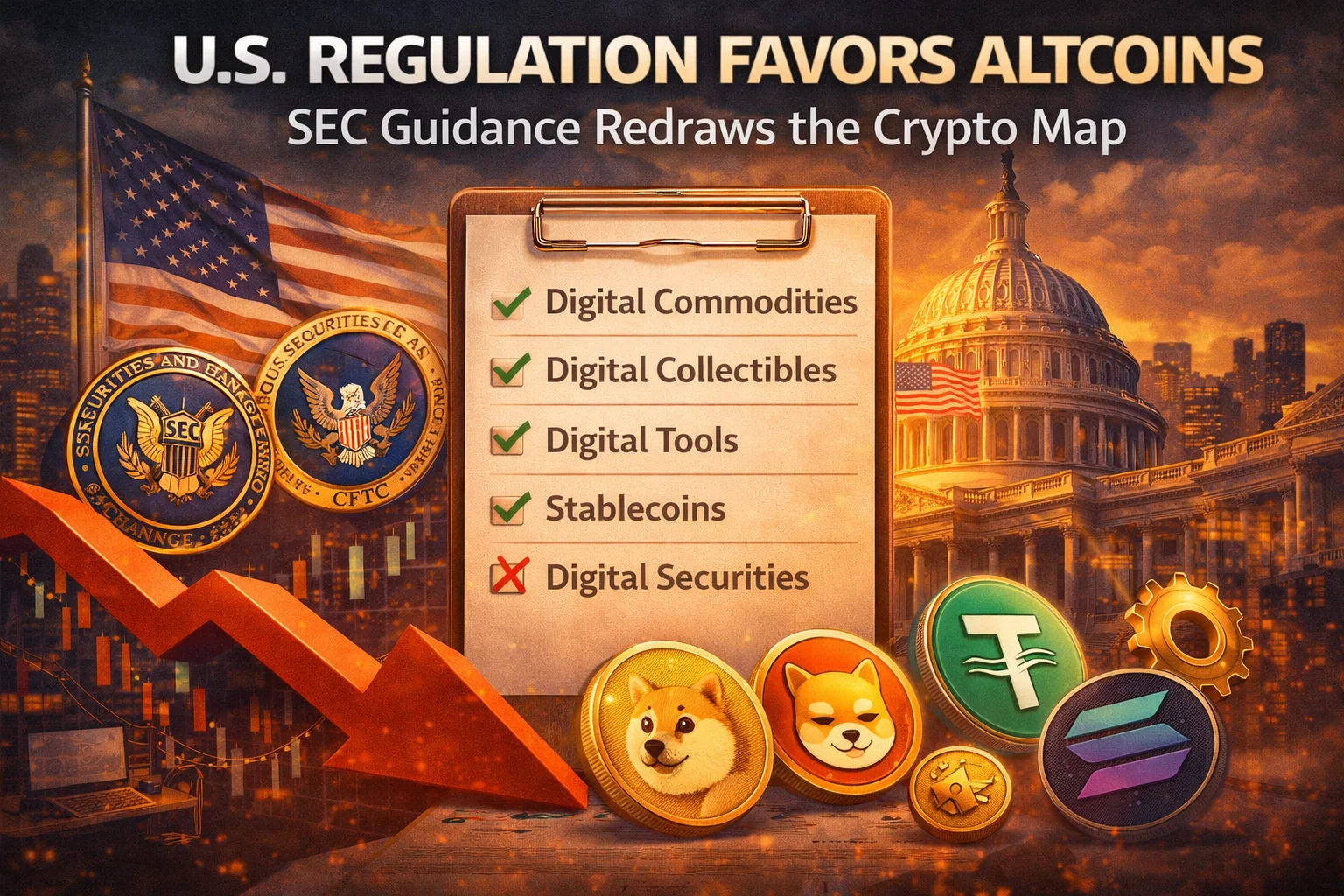
Stablecoins are also poised to benefit. Long seen in awkward regulatory light neither as commodities nor securities, they're now recognized as their own category. That clarity matters for issuers, exchanges, and institutions eyeing blockchain-based dollars without fear of misclassification.
Then there are utility tokens. Projects centered on participation now have stronger ground to argue against being labeled as securities. Though there aren't guarantees, having a structured regulatory framework helps distinguish real network tokens from capital-raising schemes.
The broader market reflection shows a shift from blanket suspicion toward more precise classification. Previously, uncertainty was a bearish factor. Now, the burden shifts: prove why something is a security rather than defaulting everything under that cloud. This regulatory turn can alter market behavior and sentiment significantly.
The clarity also brings a potential second outcome. With clear rules, tokens might get priced with better accuracy. While some assets might shine as digital commodities or utilities, others face scrutiny if their promotional tactics lean toward securities.
However, note that this guidance isn't legislation. It's an interpretation to complement ongoing efforts for a standardized market structure. While the direction seems favorable, only congressional action can provide full regulatory permanence.
Regardless, this offers one of the clearest signals for altcoins in the United States. Though risks remain, the altered map changes how capital might perceive the territory. For altcoins, this fresh regulatory landscape might be the bigger narrative here.
SEC's New Crypto Classification SEC and CFTC Sign Historic Agreement to Jointly Regulate Crypto Clarity Act Stalls: Banks Resist Stablecoin Rewards Senators Strike Deal on Crypto Clarity Act US Regulators Open Door for Tokenized Securities