Raydium Explained: Trading, Liquidity, and Risks on Solana

What Is Raydium on Solana? Raydium is a leading decentralized finance (DeFi) protocol on the Solana blockchain. It acts as a key platform for token swapping, liquidity provision, yield farming, and new token launches.
What Is Raydium on Solana?
Raydium is a leading decentralized finance (DeFi) protocol on the Solana blockchain. It acts as a key platform for token swapping, liquidity provision, yield farming, and new token launches. Launched in 2021, it leverages Solana's high-speed and low-cost transactions, making it ideal for frequent trading and yielding strategies.
With its unique hybrid model blending automated market maker (AMM) mechanics and Solana's order-book infrastructure (like OpenBook), Raydium offers users access to deep liquidity and better price execution.
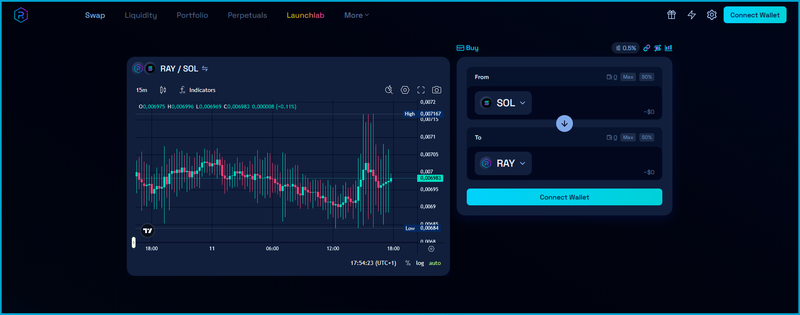
Core Features of Raydium
Decentralized Exchange and Token Swaps
Raydium enables users to swap tokens seamlessly on the Solana blockchain. By connecting a non-custodial Solana wallet (e.g., Phantom or Solflare), users can execute token trades in seconds, benefiting from Solana's minimal transaction costs.
With integration into Solana's order-book ecosystem, Raydium ensures low slippage and optimal pricing, even for larger trades.
Liquidity Provision and Farming
Raydium's liquidity pools allow users to earn trading fees by depositing tokens. There are two types of pools:
Constant Product Pools: Traditional pools with liquidity distributed across all price points.
Concentrated Liquidity Pools: Providers can target specific price ranges to earn higher fees, as long as asset prices stay within the chosen range.
In return, users receive LP tokens representing their share of the pool, which can be staked in "Fusion Pools" for additional rewards, often in RAY tokens or other platforms' native tokens.
LaunchLab: New Token Launch Platform
Raydium's LaunchLab is a permissionless mechanism that allows projects to launch new tokens and bootstrap liquidity. This supports startups in integrating their tokens into the Raydium ecosystem effortlessly.
Getting Started with Raydium
Set Up a Wallet: Use a non-custodial Solana wallet like Phantom or Solflare and ensure you have a small amount of SOL for network fees.
Connect to Raydium: Visit Raydium's official app and link your wallet.
Swap Tokens: Navigate to the "Swap" tab, choose your token pairs, set slippage tolerance, and confirm the transaction.
Add Liquidity: Go to "Pools," select a token pair, deposit equal values of both tokens, and confirm.
Earn Rewards: Use LP tokens to stake in farms and collect additional rewards.
Tip: Always verify token contract addresses and use official sources to avoid scams.
Costs and Fees on Raydium
Raydium charges a swap fee of approximately 0.25% per trade, with most of the fee distributed to liquidity providers. Network fees for transactions on Solana are negligible, usually less than a cent.
Liquidity provision has no direct protocol fees, but depositing or withdrawing assets might incur minor Solana network costs.
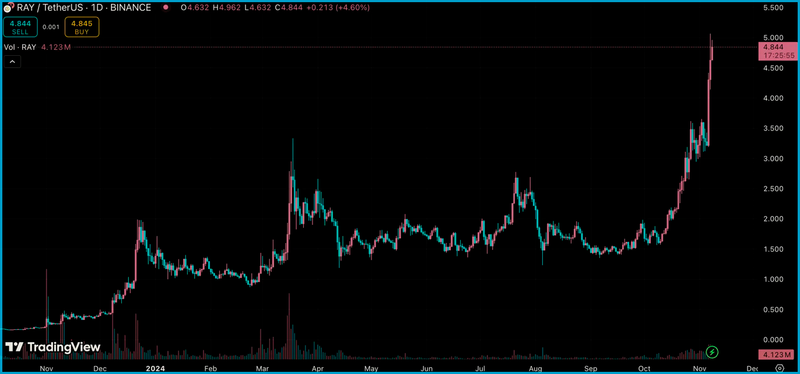
Potential Risks of Using Raydium
Impermanent Loss
Liquidity providers are exposed to impermanent loss when token prices fluctuate. This occurs when holding the tokens outside the pool would have been more profitable than providing liquidity.
Smart Contract Risk
Although Raydium has undergone multiple security audits and offers a public bug bounty program, smart contract vulnerabilities remain a potential risk. A major exploit in late 2022 highlighted the importance of vigilance.
Low Liquidity and High Slippage
For pools with low liquidity, large trades may result in high slippage. Users are advised to always check the "minimum received" value before completing swaps.
User-Specific Risks
As a non-custodial DeFi platform, Raydium offers no customer support for lost funds. Users must safeguard their wallets, use official links, and verify token contracts to avoid phishing attacks and scams.
Final Thoughts on Raydium
Raydium is a powerful decentralized exchange and AMM on Solana, offering fast swaps, high liquidity, and competitive fees.
Its integration with order-book mechanisms ensures efficient price execution while minimizing slippage.
Users can earn rewards by providing liquidity, farming, and participating in token launches.
Despite its benefits, risks like impermanent loss and smart contract vulnerabilities must be carefully considered.
Always prioritize safe practices by verifying links and token addresses before interacting with any DeFi platform.
Explore Raydium's official platform here for more information and start leveraging its innovative tools for DeFi trading and earning.
You can also trade Solana tokens on DEXTools here.
Disclaimer: This content is for informational and educational purposes only and is not financial advice. Cryptocurrency and DeFi trading carry significant risks, including potential loss of capital. DEXTools provides data and tools but does not guarantee protection against market or project risks.
Related: DeFi Trends | Solana Scanner
Related Guides
Frequently Asked Questions
What is Raydium?
Raydium is an automated market maker (AMM) and liquidity provider on the Solana blockchain. It allows users to swap tokens, provide liquidity, and earn yield.
How does Raydium facilitate trading?
Raydium integrates with Serum's central limit order book, enabling fast and low-cost trades. It provides an on-chain order book for various token pairs.
What are the liquidity risks on Raydium?
Liquidity risks include impermanent loss for liquidity providers, where the value of deposited assets changes relative to holding them outside the pool. There is also the risk of insufficient liquidity for large trades, leading to price impact.
Are there smart contract risks associated with Raydium?
As with any DeFi protocol, Raydium carries smart contract risks. Vulnerabilities in the code could be exploited, potentially leading to loss of funds.
What role does Solana play in Raydium's operations?
Solana's high throughput and low transaction fees enable Raydium to offer efficient and cost-effective trading and liquidity provision. It provides the underlying blockchain infrastructure.