How to Use BonkBot: Solana Trading Bot Guide 2026
— By Tony Rabbit in Tutorials
Complete BonkBot tutorial for 2026: setup, sniping, fees, anti-MEV, copy trading, Pump.fun migrations, security warnings and a quick bot comparison.
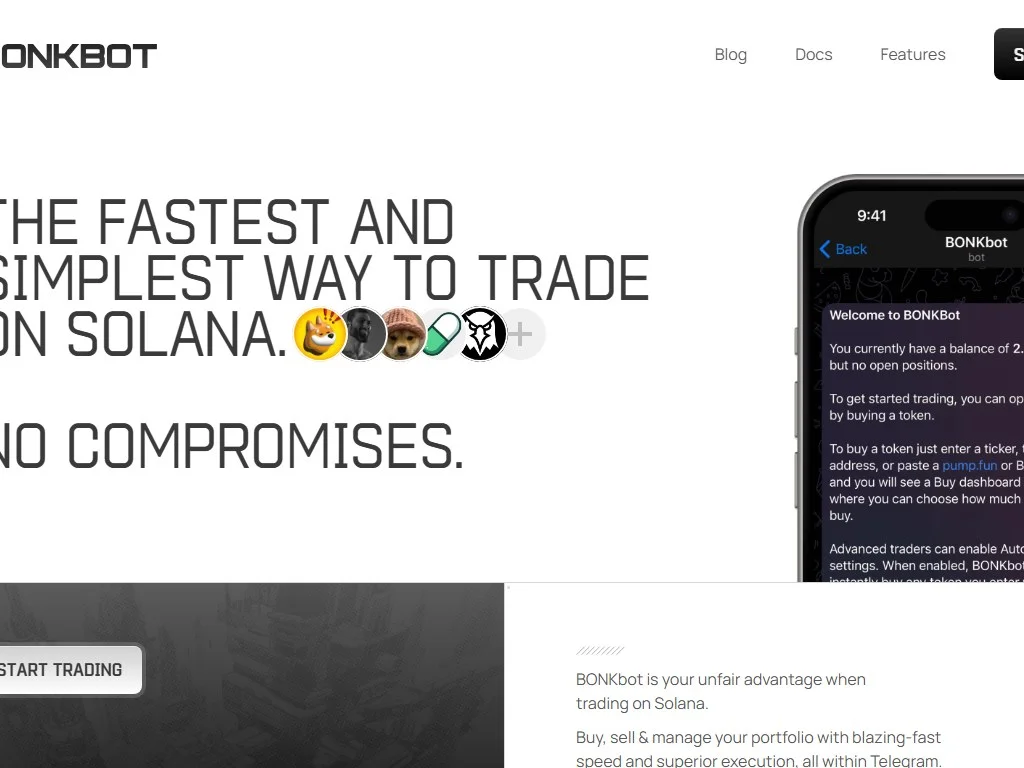
BonkBot is a Solana trading bot integrated with Telegram, designed to simplify memecoin trading and sniping new launches. It facilitates interactions with platforms like Raydium, Jupiter, Meteora, and Pump.fun, making Solana trading accessible directly through messaging. By 2026, it remains a leading tool for traders in the Solana ecosystem.
If you have spent any time trading Solana memecoins on Telegram, you have almost certainly heard of BonkBot. Born out of the BONK community in 2023, it became one of the first Telegram bots to make Solana sniping feel as easy as sending a message. By 2026, BonkBot is still one of the most used Telegram trading bots on Solana, sitting next to heavyweights like Trojan, Photon, MevX, Maestro, and Banana Gun in nearly every memecoin trader's stack.
This guide is a complete walkthrough of how to use BonkBot in 2026: the setup flow, how the bot interacts with Raydium, Jupiter, Meteora, and Pump.fun, what every menu actually does, the real risks of running a hot wallet on someone else's server, and the tactical playbook for sniping new launches in the Pump.fun migration era. It also covers honest comparisons with rival bots, fee math, copy trading, anti-MEV behavior, and the small details that separate disciplined users from the people who blow up a wallet on day one.
BonkBot is not magic, and it is not safe just because the BONK brand sits on top of it. It is a sharp tool that needs respect. Used carefully, it gives you faster execution than any UI swap on Solana. Used carelessly, it speeds up bad decisions and parks a hot wallet in front of every memecoin trap the chain has to offer.
BonkBot is a Solana Telegram trading bot, launched in 2023 with the BONK community, that lets users buy and sell tokens on Raydium, Jupiter, Meteora, and Pump.fun directly inside a Telegram chat. It uses tap-to-trade buttons, supports sniping, limit orders, copy trading, anti-MEV routing, and charges a 1 percent fee on each transaction.
What is BonkBot in 2026?
BonkBot is a non-custodial style Telegram bot that runs server-side wallets so users can trade Solana tokens with simple button presses. Its core promise is speed: instead of opening a browser, connecting Phantom, signing a transaction, and waiting for a Jupiter quote, you tap a button labeled Buy 1 SOL and the trade fires through routed liquidity across Solana's major DEXs.
The TON-native answer: Not.Trade
If the bots compared here serve Solana, Ethereum or Base, the equivalent on TON is Not.Trade, a Telegram-native terminal positioned as the fastest on TON. It brings the same workflow that traders expect from BonkBot, Trojan or GMGN (sniper, copy trade, limit orders, multi-wallet) plus features Solana bots typically lack: MCAP-trigger limit orders and a built-in insider safety panel covering Top 10 holders, snipers, dev wallet movement, bundlers and LP lock status.
Open the Not.Trade complete guide →The bot lives at @bonkbot_bot on Telegram and was built by a team aligned with the BONK community during the 2023 Solana memecoin season. That positioning matters. While Trojan, Photon, MevX, and Banana Gun chased raw feature depth, BonkBot leaned into a stripped down trader experience, with fewer menus and faster execution paths. Its user base ballooned during the 2024 to 2025 Pump.fun migration era and has stayed sticky into 2026.
It is important to understand what BonkBot is not. It is not a self-custody wallet like Phantom or Solflare. It is not an exchange. It does not hold your long-term Solana stack. It is a server-side execution layer that controls a hot wallet you generate inside Telegram, designed to be funded with size you can lose. That single sentence will save more capital than any feature comparison ever could.
One useful mental model is to think of BonkBot as a high speed teller window. You walk up, drop in working capital, place fast orders, and walk back out with profit at the end of the session. You do not move in and live there. You do not keep your savings on the counter. The window is built for transactions, not storage. That framing applies equally to Trojan, Photon, MevX, and every other server-hosted Telegram bot on Solana.
A short history of BonkBot and the Solana bot stack
To make sense of BonkBot in 2026, you have to understand the wave that produced it. In late 2023, Solana fees collapsed, BONK launched, and a flood of new memecoins started spawning on Raydium pools every minute. The UI swap experience was too slow for that pace. Traders wanted Telegram-speed entries and Telegram-speed exits. BonkBot, Trojan, and Banana Gun showed up to fill that gap, with BonkBot quickly capturing the BONK-aligned crowd.
By mid 2024, Pump.fun had changed the game again. Tokens launched on a bonding curve, migrated to Raydium at a specific market cap, and the sniping window collapsed into seconds. BonkBot adapted, adding support for Pump.fun pre-migration tokens, limit orders that triggered on migration, and anti-MEV routing to reduce sandwich attacks. By 2026, it sits in a mature category where every serious bot supports Pump.fun, Raydium, Jupiter, and Meteora, and the differentiation has shifted to UX, fees, copy trading depth, and trust.
The shared infrastructure across these bots is also worth flagging. Most of them rely on premium Solana RPC providers, DAS-style data feeds, Jito bundles for MEV protection, and priority fee logic that scales with network congestion. BonkBot is no exception. When you press a button, your trade is composed, prioritized, routed, and bundled in milliseconds by a server you do not control. That trust assumption is the heart of every bot decision you will make.
How BonkBot actually works under the hood
When you start BonkBot, the server generates a fresh Solana keypair and stores it associated with your Telegram ID. The public address is shown in chat. The private key is exposed once as a recovery option, then kept server-side for execution. Every time you press a button, the bot constructs a transaction, signs it with the server-held key, attaches priority fees, and submits it through high tier RPC endpoints.
Routing is the second layer. For a buy, BonkBot pulls quotes through Jupiter style aggregation across Raydium pools, Meteora dynamic vaults, and OKX DEX paths. For Pump.fun pre-migration tokens, it talks directly to the bonding curve contract. For migrated tokens, it lands on the newly created Raydium pool. This is why a single buy button can hit different venues depending on token age, and why understanding the destination matters.
The third layer is protection. BonkBot offers anti-MEV routing that uses Jito bundles to keep transactions opaque to the public mempool, reducing sandwich risk on noisy pairs. It also offers anti-rug logic that watches for sudden liquidity removal or freeze authority changes and tries to fire an exit. Neither feature is a guarantee, and both depend on Solana's mempool behavior continuing to work the way it does today.
Step by step: setting up BonkBot from zero
The setup flow is intentionally short. The first time you talk to the bot is also when you commit to the most important decision: how much Solana you are comfortable parking on a server-controlled hot wallet. Treat that decision like the only decision that matters.
Step 1: Open the right Telegram bot
Search Telegram for @bonkbot_bot and confirm the username exactly. Telegram bot phishing is rampant, and bots with names like @bonkb0t_bot or @bonkbot_io_bot have drained wallets by impersonating the real thing. Cross check via the official site bonkbot.io or the official BonkBot Twitter handle @bonkbot_io before you press a single button. If anything about the chat name feels off, exit immediately. You can read more about this attack class in our guide to crypto address poisoning scams.
Step 2: Run /start and generate or import a wallet
The first command is always /start. The bot will respond with a welcome panel and ask whether you want to generate a fresh wallet or import an existing one. For most users, the right answer is generate. Importing an old wallet that already holds funds you care about is asking for trouble. Make this wallet dedicated to BonkBot and nothing else.
When the wallet is generated, the bot will display the private key once and ask you to confirm you have backed it up. Do not skip this step. Copy the key into a password manager, write it on paper, or store it inside an encrypted note. If the bot ever changes infrastructure, gets paused, or has a security event, that key is the only way to recover whatever is left on chain. Treat it like any other Solana seed: never paste it into a website, never share it with a support DM, never store it in plaintext on a synced cloud drive.
Step 3: Fund the wallet with a small amount of SOL
Send a small, dedicated amount of SOL from your main wallet to the BonkBot deposit address. Start with something you would be comfortable losing entirely. For most retail traders that means an amount between 0.2 and 2 SOL. Aggressive snipers may load more, but the rule does not change: the wallet is hot, sits on a server you do not control, and is one bad click or one infrastructure incident away from being inaccessible.
Step 4: Buy a token by pasting a mint or DEXscreener link
Paste the token's mint address or a DEXScreener link into the chat. BonkBot detects it, opens a trade panel, and shows price, market cap, liquidity, top holders, and tax flags. From there you tap a preset buy size, type a custom amount, or set a limit order. The transaction lands in seconds with confirmation in chat. For a deeper view of the broader sniping workflow that powers tactics like this, see our guide on burner wallets for airdrops and memecoins.
Step 5: Manage open positions with /positions
The /positions command shows every active token in the wallet with current PnL, average entry, market cap delta, and quick action buttons. From here you sell 25 percent, 50 percent, 100 percent, or a custom percentage. Limit and trigger sells can also be attached to a position so the bot exits automatically at a target price or stop level.
Step 6: Withdraw to cold storage when you are done
This is the step most users skip. After a successful trading session, the discipline is to sweep profit to a self-custody wallet you control with a hardware device. Keep only working capital on BonkBot. If you build a habit of letting profits stack on the hot wallet, you are not trading anymore, you are warehousing risk for the convenience of avoiding three button presses.
Key BonkBot features in 2026
Feature parity across Solana bots is high now. BonkBot's edge is execution speed and a clean tap flow, but the menu under the hood still covers most of the toolkit you would expect from any serious bot. These are the features that matter most.
Pre-position on Pump.fun migrations or new Raydium pools. Fires the buy as soon as a pool is open and meets your filters.
Set buy and sell triggers at specific prices or market caps. Useful for laddered exits and pre-set entries on watchlist tokens.
Mirror a target wallet's buys and sells with size limits, blacklist filters, and configurable delay or instant mode.
Routes through Jito bundles to reduce sandwich risk on volatile pairs. Not a guarantee, but a meaningful reduction.
Monitors liquidity removal, freeze authority changes, and large insider sells. Tries to trigger an automatic exit if patterns match.
One-tap aggressive setup with high slippage and priority fees baked in. Designed for chaotic Pump.fun launches.
Slippage, priority fees, and the hidden cost of speed
Two settings drive most of the silent loss on BonkBot trades: slippage and priority fees. Slippage is the maximum price drift you accept between quote and execution. Priority fees are tips paid to validators to push your transaction higher in the queue. Both scale with congestion, and both can quietly eat the profitability of a trade you thought went well. The same dynamic appears in gas price markets on Ethereum, just in a different shape.
On Solana, when a new Pump.fun token migrates or a coordinated launch hits, priority fees can spike from a fraction of a cent to several dollars per transaction. BonkBot's auto mode raises them when needed, but it does so silently. If you are not watching, you may pay 0.05 SOL in fees on a 1 SOL buy and not realize until later. The discipline is to inspect the explorer link after high-pressure trades and add up the real costs before celebrating a green PnL number in chat.
Slippage gets even more dangerous on thin pools. A 25 percent slippage tolerance on a Pump.fun pre-migration token might fill at a price that already destroys your edge. Lower slippage means more failed transactions, especially in the first seconds of a new pool. Higher slippage means you may get filled at a worse number than the quote suggested. There is no clean answer. Most BonkBot users settle on slippage between 5 and 15 percent for medium volatility memecoins, with auto degen mode reserved for moments where they accept the risk consciously.
Supported DEXs and how routing actually picks a venue
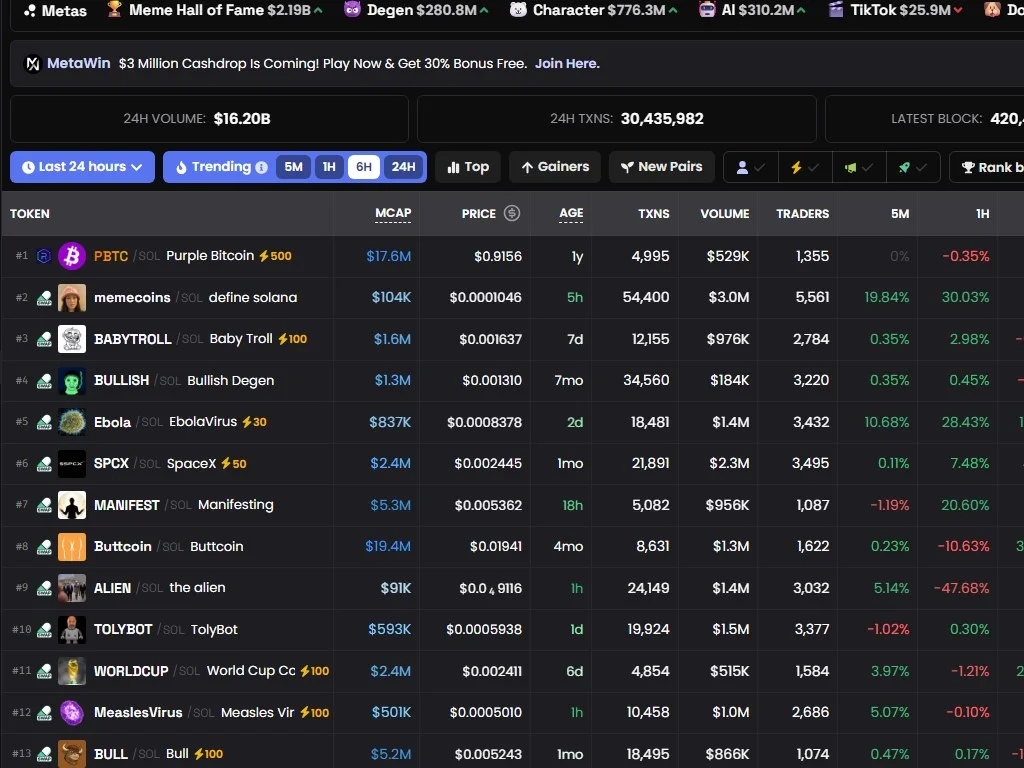
BonkBot ties into the major Solana liquidity sources: Raydium, Jupiter for aggregated routing, Meteora dynamic vaults, the Pump.fun bonding curve, and OKX DEX paths. For most tokens, Jupiter style aggregation handles the routing. For Pump.fun tokens in their bonding curve phase, the bot interacts directly with the curve contract. For migrated tokens, the trade lands on the newly created Raydium AMM pool.
This matters because the venue determines both the price impact and the failure mode. Pump.fun bonding curve trades are deterministic, so slippage is mostly an issue of front-running. Raydium pool trades can suffer real price impact if the pool is shallow. Meteora vault trades can route differently depending on liquidity concentration. Knowing which venue your trade is hitting is part of the trader's job, not the bot's.
It is also worth knowing that BonkBot pulls market data through DAS style feeds. Token metadata, holders, taxes, and freeze authority flags all come from these sources. They are usually accurate but not infallible. Cross-checking with a chart explorer like DEXTools, or with on-chain data via Solscan, is the difference between catching a faked liquidity number and finding it out after the rug. The same skill applies in every chart context, including spotting fake volume in crypto charts.
Fees: what you actually pay on BonkBot
BonkBot charges a flat 1 percent fee on each transaction. That is the line item users see and remember. There are three other costs that quietly stack on top, and ignoring them is the most common reason a trader feels like they are bleeding capital despite winning the chart calls.
On a calm day, total round trip cost can sit around 2.5 to 3 percent. On a chaotic Pump.fun launch with a taxed token, you can lose 8 to 12 percent before price even moves. That is the math edge that separates traders who keep their wallets healthy from those who burn out in a week. The principle generalizes to any high frequency trading environment, including the one explored in our piece on VWAP and cost-aware execution.
BonkBot vs Photon, Trojan, MevX, Maestro, and Banana Gun
Every serious memecoin trader cycles through these tools at some point. They are not interchangeable. They have different fee schedules, different UX, different copy trading depth, and different cultural reputations. The honest comparison matters because the wrong pick can cost you both money and time.
The honest read: BonkBot is the easiest entry point for Solana memecoin trading, Photon is the power user dashboard, Trojan is the deepest Telegram experience, MevX is the upstart, Maestro and Banana Gun are stronger on EVM than on Solana. Most serious traders run more than one and rotate based on what they are doing that day. For broader Telegram bot ranking context, see our overview of DEX aggregators and how routing logic compares across ecosystems.
Sniping tactics for the Pump.fun migration era
The big change in 2024 to 2026 was the rise of Pump.fun as the launch venue for almost every Solana memecoin. The bonding curve mechanic is now baked into trader behavior. Bots like BonkBot adapted by adding filters and triggers tuned to that lifecycle. Sniping in 2026 is less about being first to a Raydium pool and more about being correctly positioned across three phases.
Phase 1: bonding curve accumulation
Buy on the Pump.fun curve below a target market cap, with a hard exit if the curve does not reach migration. Set a max position size, a stop level, and a take profit at a defined market cap. BonkBot can fire all three.
Phase 2: migration moment
Use a migration-triggered limit order to land on the new Raydium pool the instant it opens. Expect heavy sniper competition. Use anti-MEV mode and a sober slippage cap, not auto degen.
Phase 3: post migration trend
Trade the breakout or fade structure on the new Raydium pool. This is where trend logic and exits matter more than entry speed. Limit sells, partial exits, and a clear invalidation level beat any further sniping.
This three phase model maps cleanly to standard market thinking. Pre migration is accumulation, migration is launch, post migration is trend. Most BonkBot users overweight the first phase and ignore the last. That is also where most of their PnL leaks. A patient post migration exit with laddered sells through BonkBot's limit orders often outperforms a faster but emotional manual exit. The same principle of pre-set rules wins in any high pressure environment, including the patterns covered in our guide to liquidation zones.
A practical sniping checklist looks like this. Set a max position size for any new launch, never above one percent of your total trading bankroll. Confirm the Pump.fun creator wallet does not hold an outsized pre buy. Check that the token has no freeze authority or mint authority active, both of which are red flags. Look at the first ten holders inside DEXTools or Solscan and confirm none of them control more than ten percent. If any of those checks fail, do not press buy regardless of how loud the call channel is. The discipline is in the boring filters, not in the speed of the click.
Trigger orders are another underused part of the toolkit. BonkBot lets you set a take profit at multiples of your entry market cap and a stop loss at a downside threshold. Stacking three take profits at two, four, and ten times entry, with the bulk of the size on the first level, is a classic asymmetric setup. It locks in capital fast, leaves a meaningful tail for the moonshot scenario, and stops you from selling everything on the first green candle. The bot fires these without your intervention, which removes the most expensive variable in memecoin trading: your own emotional state during a fast move.
Copy trading without losing your shirt
Copy trading is one of BonkBot's most used and most dangerous features. The pitch is simple: pick a wallet you trust, set a maximum size per trade, and mirror everything they do. The reality is harder. Wallets you find on leaderboards are often farmed, fee-stacked, or running strategies you cannot follow at your size.
The discipline is the same as in backtesting a strategy in crypto: study a wallet for at least a few weeks before you mirror it. Verify win rate is not skewed by one outlier. Confirm the wallet is not buying its own bags. Set a strict size cap, a blacklist for tokens with high tax or freeze authority, and a delay if you want time to manually veto a copy fill. BonkBot supports all of this, but it does not enforce common sense.
Always remember that copy trading on a hot wallet doubles your exposure to bot risk. You are trusting the bot to execute, the target wallet to be honest, and the network to route cleanly. That is three trust assumptions stacked on the same capital.
Security: what nobody likes to say out loud
BonkBot is a hot wallet on a server you do not control. That is not a flaw, it is the design. Every server-side Telegram bot has the same property. The honest framing is that you are paying for execution speed with a real custody downgrade. If the server is breached, paused, or shut down, your funds are exposed to whatever the bot's incident response can handle. The single best defense is to keep the wallet small, sweep profits, and never treat the BonkBot wallet as savings.
The second big risk is social engineering. Most BonkBot users get rugged not by smart contract exploits but by clicking phishing links in Telegram groups, importing fake bot lookalikes, or pasting their private key into a "support" DM. The official BonkBot team will never ask for your key. No legitimate bot ever does. For a foundational primer, see our crypto wallet security tips guide.
- Only ever interact with the verified
@bonkbot_bothandle. - Backup the wallet private key offline before funding it.
- Fund with size you can lose without flinching.
- Sweep profits to cold storage at the end of every session.
- Never paste the key into any website, chat, or screenshot.
- Verify each token on a chart explorer before buying.
- Run a separate BonkBot wallet for copy trading.
Why people choose Telegram bots over UI swaps
If a Phantom plus Jupiter setup works, why use a bot at all? The honest answer is three words: speed, mobility, automation. Telegram bots remove the wallet popup, batch the priority fee logic, and let you trade from a phone in seconds. They run limit orders and trigger sells while you are away. They keep your buy and sell flow inside a chat where you also read alpha.
The tradeoff is custody. UI swaps with Phantom keep your keys in your control. Telegram bots move execution to a server in exchange for the speed gain. For active memecoin trading where every second counts, that tradeoff is often worth it. For everything else, including long term holdings, it never is. Treating each wallet for its actual job is the single biggest predictor of long term Solana survival.
There is also a behavioral dimension. Trading from a chat window puts you closer to alpha sources, group conversations, and meme momentum. That proximity is part of the value, and part of the risk. The same Telegram environment that delivers timely calls also delivers FOMO, fake screenshots, and pump groups. Treat each call with the same checklist no matter how loud the room sounds. The bot will execute either way, so the filter has to live in your head before your finger ever touches the buy button.
Pros and cons of BonkBot
- Fast tap-to-trade UX inside Telegram
- Direct support for Pump.fun migration trading
- Built in limit orders, copy trading, anti-MEV
- Trusted BONK community lineage and brand
- Routes through Raydium, Jupiter, Meteora, OKX DEX
- Simple onboarding, low friction first trade
- Server side hot wallet, custody is shared
- Flat 1 percent fee on every transaction
- Less feature depth than Trojan or Photon
- Priority fees can stack silently during congestion
- Phishing lookalikes are common in search
- Anti rug logic is not a guarantee
Best practices that actually keep you trading next year
The traders who survive on BonkBot for more than a season share a small set of habits. They are not glamorous, and none of them require deep technical chops. They are the discipline pieces that separate a tool from a trap.
- Use BonkBot only as an execution layer, never as research.
- Validate every token on a chart explorer before pressing buy.
- Set slippage based on liquidity, not based on FOMO.
- Read the explorer link after every meaningful trade to see real fees.
- Sweep profits to cold storage every session.
- Keep copy trading on a separate wallet with a strict size cap.
- Pre commit exits before entering a position, not after.
- Walk away from any "support" DM that asks for keys.
If the discipline becomes habit, BonkBot starts to look like exactly what it is: a useful speed layer. Without the discipline, the same tool becomes a wallet drain that runs faster than your judgment.
Frequently Asked Questions
Q Q What is BonkBot and who built it?
BonkBot is a Solana Telegram trading bot launched in 2023 with the BONK community. It lets users buy and sell tokens on Raydium, Jupiter, Meteora, OKX DEX, and Pump.fun directly from a Telegram chat using tap-to-trade buttons, with built in support for limit orders, copy trading, anti-MEV routing, and anti-rug logic.
Q Q How do I start using BonkBot?
Search Telegram for the verified handle @bonkbot_bot, run /start, generate a fresh wallet, back up the private key offline, fund the address with a small amount of SOL, paste a token mint address or DEXScreener link, pick a buy size, confirm the trade, and manage positions through the /positions menu.
Q Q What fees does BonkBot charge?
BonkBot charges a flat 1 percent fee on every transaction. On top of that, every trade pays the underlying DEX swap fee, a Solana network priority fee that scales with congestion, and any token level tax set by the contract. Total round trip cost typically lands between 2.5 and 12 percent depending on conditions.
Q Q Is BonkBot safe to use?
BonkBot is a server side hot wallet, which means your private key is held on infrastructure you do not control. It is reasonably safe for active trading capital but should never be used as long term storage. The biggest risks are phishing lookalike bots, social engineering for private keys, and infrastructure incidents. Only fund the wallet with size you can afford to lose.
Q Q Which DEXs does BonkBot support?
BonkBot routes through Raydium, Meteora dynamic vaults, OKX DEX paths, and Pump.fun's bonding curve, with Jupiter style aggregation handling most multi venue routing. The specific venue depends on the token's age and liquidity profile, so a Pump.fun pre migration trade and a mature Raydium pool trade follow different paths under the hood.
Q Q How does BonkBot compare to Trojan, Photon, MevX, Maestro, and Banana Gun?
BonkBot is the easiest entry point with clean UX. Trojan offers deeper menus and stronger copy trading. Photon is a web first power user dashboard. MevX is a newer Pump.fun focused product. Maestro and Banana Gun are stronger on EVM than on Solana. Most active traders rotate between two or three depending on the task.
Q Q Can I snipe Pump.fun tokens with BonkBot?
Yes. BonkBot supports trading directly on the Pump.fun bonding curve and offers migration triggered limit orders that fire when a token migrates to Raydium. Sniping in 2026 is more about smart positioning across the three phases of bonding curve, migration, and post migration trend than about pure speed.
Q Q Does BonkBot have anti-MEV protection?
BonkBot offers anti-MEV routing that submits transactions through Jito bundles to reduce sandwich attack risk. This is a meaningful reduction but not a guarantee. On chaotic launches, sandwich and front running risk still exists, especially with high slippage settings.
Q Q What slippage should I use on BonkBot?
For medium volatility memecoins, most traders set slippage between 5 and 15 percent. For volatile Pump.fun launches, slippage can be higher, but every percent over 10 is a real trading cost. For larger or more liquid tokens, 1 to 3 percent slippage is often enough and produces fewer surprise fills.
Q Q How do I sell with BonkBot?
Use the /positions command to list every active token. Each position has buttons for partial sells (25 percent, 50 percent, 75 percent, 100 percent) and a custom percentage option. You can also attach a limit sell or trigger sell at a specific price or market cap so the bot exits automatically while you are away.
Q Q Can I copy trade with BonkBot?
Yes. BonkBot supports copy trading with size limits, blacklists, optional delay, and an instant mode. The key discipline is to study a wallet for weeks before mirroring it, run copy trading on a separate hot wallet with a strict cap, and never mirror a wallet that you have not verified is not buying its own bags.
Q Q What is the BonkBot referral system?
BonkBot has a multi level referral system that pays a percentage of trading fees from invited users back to the referrer in SOL. The exact rates are tiered and viewable inside the bot's referral menu. It is functional, but the volume needed to generate meaningful referral income is high, so it is best treated as a small kicker rather than a primary revenue source.
Q Q Should I keep my main Solana stack on BonkBot?
No. BonkBot is a hot wallet on infrastructure you do not control. Long term holdings belong on a hardware wallet like Ledger or in a self custody wallet you alone control. Use BonkBot for active trading capital and sweep profits regularly to cold storage to keep the exposure surface small.
Conclusion: speed is the feature, discipline is the moat
BonkBot earns its place in the Solana trader stack by collapsing the friction between a chart idea and a filled order. Tap, confirm, in. That speed is real. So is the cost: a server side hot wallet, a flat 1 percent fee, hidden priority fees during congestion, and a phishing surface that grows every month. The bot is honest about what it is. Users are the ones who often forget.
If you size sensibly, verify every token on a real chart explorer, set slippage with the pool in mind, and sweep profits to cold storage at the end of every session, BonkBot can be a sharp execution layer for memecoin trading in 2026. If you let convenience replace process, the same tool that gives you speed gives you exit velocity in the wrong direction. The choice is always yours, never the bot's.
Start small, verify everything, and treat BonkBot the way a professional treats a trading terminal: a high performance tool used inside a strict rulebook. That is how you keep trading next year instead of becoming someone else's exit liquidity.
Related Guides
- How to Use Banana Gun on Ethereum and Solana: Setup, Sniping and Safe Execution (2026)
- How to Use Unibot: EVM Telegram Trading Workflow (2026)
- How to Use Shuriken Telegram Trading Bot: Guide 2026
- How to Use Maestro: Multi-Chain Telegram Trading Workflow (2026)
- Trojan Bot Tutorial 2026: Snipe & Copy Trade Solana Easily