What Is Wrapped SOL (wSOL) and When to Use It (2026)
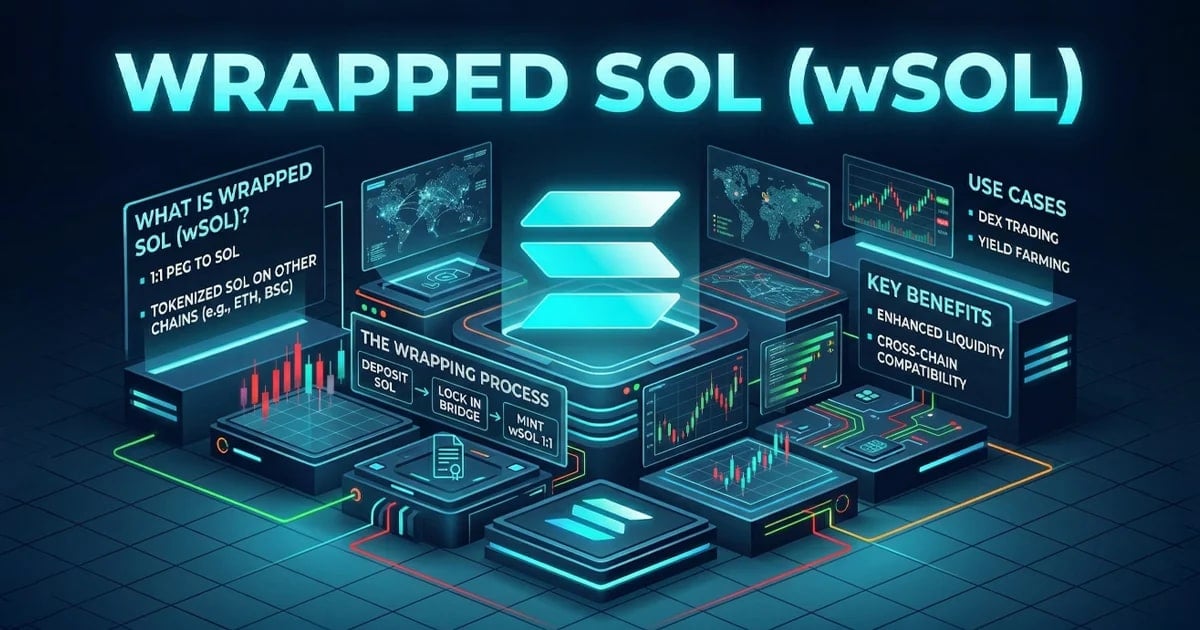
What is wrapped SOL (wSOL), how does it differ from SOL, and when do you need it? A 2026 guide to wrapping, unwrapping and using wSOL in DeFi.
Wrapped SOL: Powering Solana DeFi
- The Solana ecosystem has reached a level of maturity that few could have predicted just a few years ago. With the full implementation of the Firedancer validator client and the widespread adoption of the Token-2022 standard, Solana has solidified its position as the premier blockchain for high-frequency trading and institutional-grade decentralized finance (DeFi). However, even in this advanced landscape, one fundamental tool remains essential for every participant: Wrapped Solana (wSOL).
- While native SOL is the lifeblood of the network, used for paying transaction fees and securing the chain through staking, it often lacks the flexibility required by complex smart contracts. This is where Wrapped Solana comes into play. To navigate the current DeFi landscape effectively, it is crucial to understand what wSOL is, how it functions in the 2026 economy, and exactly when you should make the switch from your native tokens.
Understanding the Difference Between Native SOL and wSOL
- To understand Wrapped Solana, you must first understand the distinction between a native currency and a token standard. On the Solana blockchain, SOL is the native currency. It exists at the protocol level. However, most decentralized applications (dApps), especially decentralized exchanges (DEXs) and lending protocols, are built to interact with tokens that follow the Solana Program Library (SPL) standard.
- The SPL standard is a set of rules that allows tokens to interact seamlessly with one another within the ecosystem. Because native SOL was created before the SPL standard was finalized as the universal language for dApps, it does not naturally "speak" the same language as the other tokens in your wallet, such as USDC or JUP. Wrapped Solana is essentially a version of SOL that has been "packaged" into an SPL-compliant shell. This packaging allows it to be treated like any other token on the network, enabling it to participate in automated market makers (AMMs) and complex financial logic.
The Mechanics of Wrapping and Unwrapping
- The process of creating wSOL is straightforward and mathematically pegged at a 1:1 ratio. When you wrap your SOL, you are effectively sending your native coins to a specific smart contract that locks them away. In exchange, the contract mints an equivalent amount of wSOL tokens and sends them to your wallet.
- Because the native SOL is held in a verifiable, transparent smart contract, the wSOL token always maintains its value relative to the original asset. If you have 10 SOL and you wrap them, you receive 10 wSOL. In 2026, most modern wallets like Phantom or Solflare handle this process in the background. When you trade on a DEX, the platform might wrap your SOL automatically to complete a trade and then unwrap it before the tokens settle in your wallet.
- Unwrapping is the reverse process. You send your wSOL back to the contract, which burns the tokens (removes them from circulation) and releases the original native SOL back to your address. This ensures that the supply of wSOL is always perfectly collateralized by native SOL.
When You Should Use wSOL in 2026
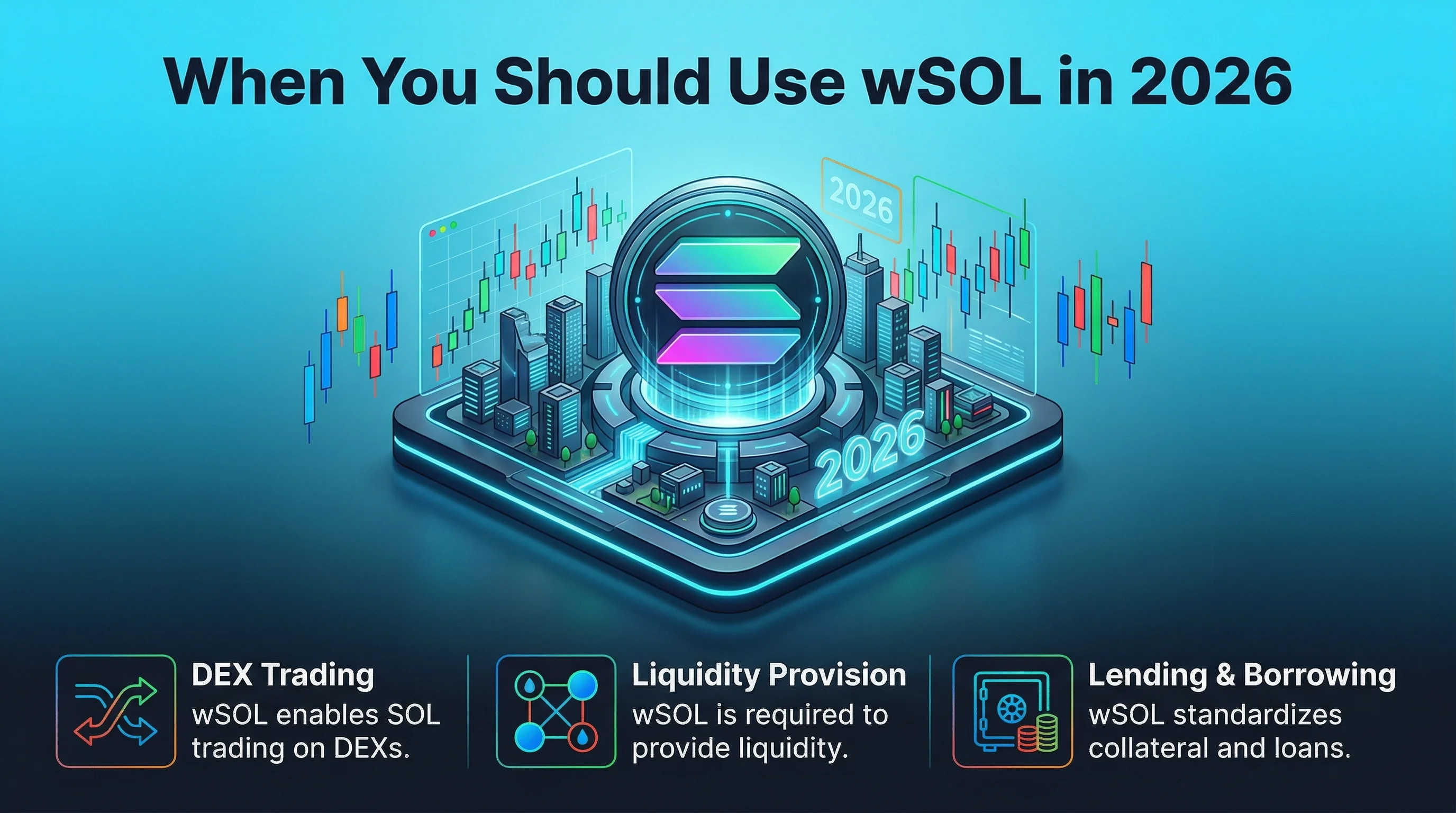
There are several specific scenarios where using wSOL is not just beneficial but required. In the current 2026 DeFi environment, these are the primary use cases:
1. Trading on Decentralized Exchanges (DEXs)
Most DEXs on Solana, such as Jupiter or Raydium, utilize liquidity pools. These pools are designed to exchange one SPL token for another. If you want to trade SOL for a newer meme coin or a Real-World Asset (RWA) token, the smart contract needs to interact with an SPL version of your SOL. While many aggregators now "hide" this step from the user, the underlying transaction almost always involves wSOL to ensure the trade can be routed through multiple liquidity sources efficiently.
2. Providing Liquidity to Earn Yield
If you are looking to earn passive income by providing liquidity, you will almost certainly need wSOL. For example, if you want to contribute to a SOL/USDC pool on a concentrated liquidity platform like Meteora, you cannot deposit native SOL directly. You must provide wSOL so that the automated market maker can manage the constant rebalancing of the pool. By holding wSOL in a liquidity pool, you earn a share of the transaction fees generated by other traders.
3. Complex Lending and Borrowing
Platforms like Kamino Finance and Drift Protocol have become the backbone of Solana’s 2026 credit market. When you use SOL as collateral to borrow stablecoins, the protocol often wraps your SOL to track your position more accurately within its internal accounting system. This allows the protocol to liquidate positions or calculate interest rates using standardized SPL logic.
wSOL vs. Liquid Staking Tokens (LSTs)
- It is important to distinguish wSOL from Liquid Staking Tokens (LSTs) like jitoSOL or mSOL, which have seen explosive growth throughout 2025 and 2026. While wSOL is a 1:1 representation of SOL used for technical compatibility, LSTs are yield-bearing versions of SOL.
- When you hold jitoSOL, you are holding a token that represents staked SOL plus the rewards earned from securing the network. Consequently, 1 jitoSOL is usually worth more than 1 native SOL. Wrapped Solana, on the other hand, does not earn staking rewards. If you hold 1 wSOL in your wallet for a year, you will still have exactly 1 wSOL at the end. Use wSOL for short-term trading and DeFi interactions, but consider LSTs if your goal is long-term exposure combined with staking yield.
A Practical Example: The Arbitrage Opportunity
- Imagine a scenario where a new institutional RWA (Real-World Asset) token is launched on Solana. This token represents a share in a high-yield real estate fund. The primary liquidity for this token is paired against wSOL on a specialized exchange.
- As a trader, you notice that the price of the RWA token is slightly lower on this DEX than it is on a secondary marketplace. To capitalize on this, you would wrap your native SOL into wSOL, execute the buy order on the DEX, and then move the RWA tokens to the other market. Without wSOL, you would be unable to interact with the initial liquidity pool, and the opportunity would pass you by. In the high-speed world of 2026 trading, having wSOL ready in your wallet can be the difference between catching a move and missing it.
Risks and Considerations
- While wSOL is a fundamental building block of the ecosystem, it is not entirely without risk. The primary concern is "smart contract risk." Because your native SOL is held within a program to mint the wSOL, any bug or vulnerability in that program could theoretically put the underlying assets at risk.
- However, by March 2026, the wSOL contract is considered one of the most audited and battle-tested pieces of code in the entire crypto industry. It is a core part of the Solana protocol's repository. Another consideration is the "opportunity cost." As mentioned earlier, wSOL does not earn staking rewards. If you keep large amounts of SOL wrapped for long periods without deploying them into a yield-generating DeFi strategy, you are effectively losing out on the 7% to 8% annual percentage yield (APY) offered by native staking or LSTs.
Summary of Key Points
Definition: Wrapped Solana (wSOL) is an SPL-compliant version of the native SOL coin, allowing it to interact with smart contracts.
Purpose: It bridges the technical gap between the native protocol layer and the decentralized application layer.
Ratio: It is always pegged 1:1 with native SOL, backed by a transparent "mint and burn" mechanism.
Trading: Essential for DEX trading, liquidity provision, and advanced lending protocols.
Staking: Unlike native SOL or LSTs, wSOL does not earn staking rewards while sitting in a wallet.
Automation: In 2026, most wallets and platforms handle the wrapping and unwrapping process automatically for the user.
Ready to put your Solana strategy into action? Head over to the DEXTools dashboard here. It is the premier spot to track pairs, analyze liquidity, and trade with the confidence that comes from professional-grade data tools.
Disclaimer: This article is for informational purposes only and does not constitute investment advice, financial advice, trading advice, or any other kind of advice. DEXTools does not recommend buying, selling, or holding any cryptocurrency or token. Users should conduct their own research and consult with a qualified financial advisor before making any investment decisions. Cryptocurrency investments are volatile and high-risk. DEXTools is not responsible for any losses incurred.
Related Guides
- How to Avoid Rug Pulls on Solana: Red Flags Every Trader Should Know
- What Is Wrapped Bitcoin (WBTC)? Uses, Risks and WBTC vs BTC (2026)
- What Is Wrapped Asset Risk in Crypto? Guide 2026
- What Is a Wrapped Token: Complete Crypto Guide (2026)
- How Wrapped ETH Works in DeFi: WETH Guide for 2026
Frequently Asked Questions
What is Wrapped Solana (wSOL)?
Wrapped Solana (wSOL) is a version of the native SOL token that has been packaged into an SPL-compliant format, allowing it to interact seamlessly with decentralized applications (dApps) on the Solana blockchain.
How do you create Wrapped Solana?
To create wSOL, you send your native SOL to a smart contract that locks it away, and in return, you receive an equivalent amount of wSOL tokens, maintaining a 1:1 value ratio.
When should I use wSOL?
You should use wSOL when trading on decentralized exchanges (DEXs) or providing liquidity to earn yield, as these platforms require SPL-compliant tokens for transactions.
What is the difference between native SOL and wSOL?
Native SOL is the original currency of the Solana blockchain, while wSOL is a wrapped version that conforms to the SPL standard, allowing it to be used in various dApps and DeFi protocols.
Can I unwrap wSOL back to native SOL?
Yes, you can unwrap wSOL by sending it back to the smart contract, which will burn the wSOL tokens and release the equivalent amount of native SOL back to your wallet.