What Is SocialFi: Complete Guide to Crypto Social Media (2026)
— By Tony Rabbit in Tutorials
Learn what SocialFi is, how tokenized social media works, top platforms like Farcaster and Lens Protocol, creator economics, and how to get started in this complete 2026 guide.
Social media changed how billions of people communicate, share ideas, and build communities. But the centralized model that powers platforms like Instagram, X (formerly Twitter), and TikTok has a fundamental problem: the value created by users flows almost entirely to the platform owners and their advertisers. Creators produce the content, users generate the engagement, yet shareholders reap the financial rewards.
On the practical side, if you want to share your own clips, videos or images off-chain, a free file and video host like Savedly gives you instant shareable links with no registration and no size limits.
SocialFi is the blockchain-powered answer to this imbalance. By merging social media functionality with decentralized finance (DeFi) primitives, SocialFi platforms give users true ownership over their content, data, and social connections while enabling direct financial participation in the social ecosystem. In 2026, the SocialFi sector has matured significantly, with platforms processing millions of daily transactions and supporting vibrant creator economies.
This comprehensive guide covers everything you need to know about SocialFi: how it works under the hood, how it compares to traditional social media, the leading platforms you can use today, and practical steps to get started.
What Is SocialFi?
SocialFi (Social Finance) refers to a category of decentralized applications that combine social media features with financial tools built on blockchain technology. Instead of relying on a centralized company to host your content and manage your social connections, SocialFi platforms use smart contracts, token economics, and decentralized storage to create social experiences where users maintain control.
At its core, SocialFi rests on three foundational pillars:
Think of SocialFi as what would happen if you merged Twitter's social features with Uniswap's financial infrastructure and gave users the ownership rights of a cooperative. The result is a social media experience where every participant has skin in the game.
Key Insight: SocialFi is not just about adding crypto payments to social media. It represents a fundamental redesign of how social platforms create, distribute, and capture value. The goal is to align the economic incentives of users, creators, and platform developers.
How SocialFi Works: The Technical Foundation
Understanding SocialFi requires looking at the technical layers that make decentralized social media possible. While each platform implements these differently, the core architecture follows a common pattern.
Decentralized Identity and Social Graphs
In traditional social media, your identity exists as a row in a company's database. If the company bans your account, your followers, content history, and reputation vanish instantly. SocialFi solves this through on-chain identity.
When you create a SocialFi profile, you receive an NFT or on-chain record that represents your social identity. This identity is linked to your wallet address and contains metadata about your social graph (who you follow, who follows you). Because this data lives on a blockchain or decentralized storage network like IPFS or Arweave, it persists regardless of which application you use to access it.
Lens Protocol, for example, mints each user profile as an ERC-721 NFT on Polygon. Your followers are recorded as on-chain connections. If a front-end app built on Lens disappears tomorrow, you can switch to any other Lens-compatible app and your entire social identity comes with you.
Token Economics and Incentive Layers
The financial layer is what transforms a decentralized social network into SocialFi. Tokens serve multiple functions within these ecosystems:
Content Storage and Moderation
SocialFi platforms handle content storage through a hybrid approach. Short text posts and metadata are typically stored on-chain (directly on the blockchain), while larger media files like images and videos are stored on decentralized networks such as IPFS, Arweave, or Filecoin, with only the reference hash recorded on-chain.
Content moderation in SocialFi is handled at the application layer rather than the protocol layer. The underlying protocol stores all content neutrally, but individual front-end applications can apply their own moderation filters. This means that while content cannot be deleted from the protocol, individual apps can choose what to display. Users who disagree with one app's moderation can switch to another with different policies while keeping their content and followers.
SocialFi vs Traditional Social Media
The differences between SocialFi and traditional social media extend far beyond just adding cryptocurrency. The two models operate on fundamentally different architectures, incentive structures, and philosophies about user rights. The following comparison breaks down the key distinctions.
| Feature | Traditional Social Media | SocialFi |
|---|---|---|
| Data Ownership | Platform owns all user data | Users own their data via cryptographic keys |
| Monetization | Ad revenue shared minimally with top creators | Direct token rewards and social token economics |
| Content Portability | Locked to platform; export is limited | Fully portable across compatible applications |
| Algorithm Control | Opaque, platform-controlled algorithms | Transparent, user-selectable feed algorithms |
| Censorship | Platform decides what content stays or goes | Protocol-level censorship resistance; app-level filtering |
| Account Recovery | Email/phone recovery through the platform | Self-custody via seed phrases or social recovery |
| Revenue Model | Advertising and data selling | Protocol fees, token appreciation, and direct user payments |
| Governance | Board of directors and executives | Token-weighted community governance (DAOs) |
| Interoperability | Walled gardens with limited APIs | Open protocols with permissionless building |
| Entry Barrier | Free; requires email or phone | Requires crypto wallet; some platforms have onboarding fees |
The most significant shift is philosophical. Traditional social media treats users as the product, selling their attention to advertisers. SocialFi treats users as stakeholders, giving them economic participation in the platform they help build. This alignment of incentives creates a fundamentally different dynamic between platforms and their communities.
Top SocialFi Platforms in 2026
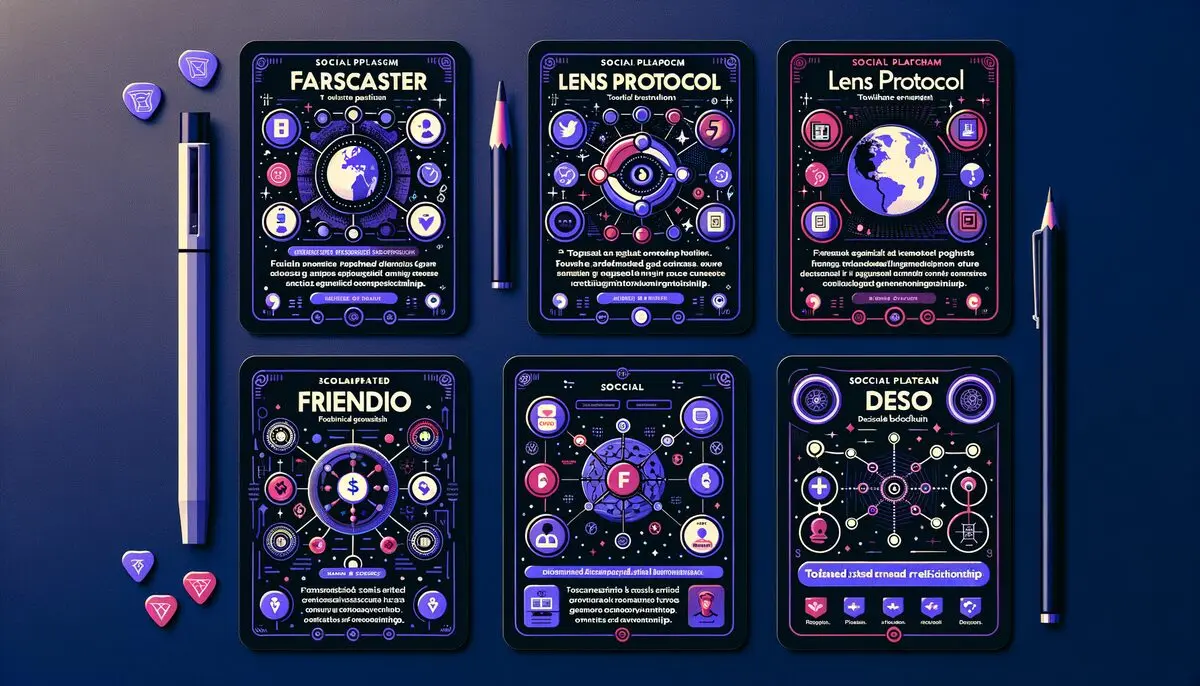
The SocialFi landscape has evolved considerably since the early experiments of 2021-2022. Several platforms have emerged as category leaders, each taking a distinct approach to decentralized social media. Here is a detailed comparison of the top SocialFi platforms available in 2026.
| Platform | Blockchain | Key Feature | Active Users (2026) | Best For |
|---|---|---|---|---|
| Farcaster | Ethereum / Optimism | Frames (interactive mini-apps in feed) | 800K+ | Crypto-native communities, developers |
| Lens Protocol | Polygon / ZK Chain | Composable social graph as NFTs | 500K+ | Developers building social apps |
| Friend.tech | Base (Coinbase L2) | Tokenized access to creator chatrooms | 300K+ | Influencers, speculative traders |
| DeSo | DeSo (custom L1) | Built-in creator coins and social tipping | 200K+ | Content creators, social trading |
Farcaster: The Crypto-Native Social Network
Farcaster has established itself as the leading SocialFi platform for crypto-native users. Built on a sufficiently decentralized protocol, Farcaster uses Ethereum for identity (via Farcaster IDs) and a network of decentralized hubs for message storage.
The platform's breakthrough innovation is Frames, which are interactive mini-applications that run directly inside social feed posts. A Frame can be anything from a simple poll to a complete DeFi swap interface, an NFT mint button, or even a game. This turns every post into a potential application, blurring the line between social media and decentralized applications.
Warpcast serves as the primary client application for Farcaster, offering a polished user experience that rivals traditional social media apps. However, because Farcaster is an open protocol, alternative clients like Supercast, Nook, and dozens of specialized apps offer different experiences on the same social graph.
Lens Protocol: The Social Graph Layer
Lens Protocol takes a different approach by positioning itself as infrastructure rather than a consumer product. Created by the team behind Aave (one of DeFi's largest protocols), Lens provides a composable social graph that any developer can build applications on top of.
Every Lens profile is an NFT, and every follow, post, comment, and mirror (re-share) is recorded on-chain. This creates a rich, portable social graph that applications can read from and write to. The result is an ecosystem of over 100 different social applications, all sharing the same underlying user data.
In 2026, Lens migrated to its own ZK-powered chain built on the Lens Network, significantly reducing transaction costs and increasing throughput. This has enabled gasless social interactions while maintaining the security guarantees of Ethereum.
Friend.tech: Tokenized Social Access
Friend.tech popularized the concept of "keys" (originally "shares") that represent tokenized access to creator chatrooms. When you buy a creator's keys, you gain access to their private group chat and potentially benefit from price appreciation as more people buy keys from the same creator.
The platform operates on Base (Coinbase's Layer 2 network) and uses a bonding curve pricing model, meaning each additional key purchase increases the price. This creates strong speculative dynamics but also genuine utility for creators who want to monetize exclusive access to their insights and community.
Friend.tech V2 introduced clubs, enabling community-owned social spaces with shared treasuries and governance. While the platform has faced criticism for its speculative nature, it demonstrated that tokenized social access can generate significant economic activity.
DeSo: The Purpose-Built Social Blockchain
DeSo (Decentralized Social) takes the most ambitious technical approach by building an entire Layer 1 blockchain optimized specifically for social media operations. Rather than adapting a general-purpose blockchain for social use cases, DeSo's architecture is designed from the ground up to handle the high-throughput, low-cost requirements of social interactions.
The platform features built-in creator coins, social tipping, NFT functionality, and on-chain messaging. Every user profile automatically gets a creator coin that others can buy and sell, creating a native social token economy without requiring any additional setup.
Pro Tip: When choosing a SocialFi platform, consider what matters most to you. If you want the best developer ecosystem and crypto-native community, start with Farcaster. If you are a developer looking to build social apps, Lens Protocol offers the most composable infrastructure. If you want to speculate on creator popularity, Friend.tech is purpose-built for that use case.
How to Get Started with SocialFi
Getting started with SocialFi is simpler than most people expect. While the underlying technology is complex, modern SocialFi platforms have invested heavily in user experience, making onboarding accessible even for users who are new to crypto. Follow these steps to set up your SocialFi presence.
Step 1: Set Up a Crypto Wallet
Before joining any SocialFi platform, you need a cryptocurrency wallet. This wallet serves as your universal login, identity, and payment method across all SocialFi applications. For most users, a browser extension wallet is the best starting point.
Write down your seed phrase on paper (never digitally) and store it in a secure location. This phrase is the master key to your entire SocialFi identity and any associated funds.
Step 2: Fund Your Wallet
Most SocialFi platforms require a small amount of cryptocurrency for account creation and initial interactions. Typically, you will need between $5 and $20 worth of ETH (Ethereum) to get started. You can purchase ETH directly within MetaMask or Coinbase Wallet using a debit card or bank transfer.
If you plan to use platforms on Layer 2 networks (like Farcaster on Optimism or Friend.tech on Base), you will also need to bridge some ETH to those networks. Most wallets now offer built-in bridging functionality that handles this in a few clicks.
Step 3: Create Your Profile
With your wallet funded, visit your chosen platform and connect your wallet to create an account. On Farcaster, this involves registering a Farcaster ID (FID) and setting up your profile through the Warpcast app. On Lens, you can claim a Lens profile through the official website or any Lens-compatible application.
Fill out your profile completely with a clear photo, bio, and relevant links. In SocialFi, your on-chain reputation is valuable, and a complete profile signals legitimacy to potential followers and collaborators.
Step 4: Start Engaging
Begin by following thought leaders, joining relevant communities, and engaging with content through likes, comments, and shares. Unlike traditional social media, your engagement in SocialFi often carries financial weight. Quality comments can earn token rewards, and early engagement with rising creators can be financially beneficial.
Spend at least two weeks observing and participating before making any significant financial commitments. Understanding the culture and norms of each platform will help you make informed decisions about which creator tokens to support or which communities to join.
Tokenized Social Interactions: The Economics of Engagement
The most transformative aspect of SocialFi is how it assigns economic value to social interactions. In traditional social media, a like is just a vanity metric. In SocialFi, a like can be a micro-transaction that transfers value from the liker to the content creator.
How Social Tokens Work
Social tokens are cryptocurrencies that represent a stake in a person, community, or brand. They operate on bonding curves or automated market makers, meaning their price automatically adjusts based on supply and demand. When more people buy a social token, the price increases. When people sell, the price decreases.
Creators can issue their own social tokens to monetize their audience directly. Token holders might receive benefits like exclusive content access, direct messaging privileges, early access to drops, or even a share of the creator's future earnings. The specific utility depends on how each creator structures their token economy.
Tipping and Micro-Payments
SocialFi platforms enable frictionless tipping and micro-payments between users. On Farcaster, users can tip DEGEN tokens or other currencies to reward quality posts. On DeSo, the built-in diamond system allows tiered tipping directly within the feed.
These micro-payments create a positive feedback loop: creators produce quality content, users reward them with tips, and the financial incentive encourages more quality content. This stands in stark contrast to traditional social media, where the algorithm often rewards engagement bait over genuine quality.
NFTs as Social Objects
Non-fungible tokens play a significant role in SocialFi ecosystems. Posts can be minted as NFTs, allowing fans to collect and own memorable moments. Profile pictures serve as identity markers and community signals. Achievement badges and reputation credentials are issued as soulbound tokens (non-transferable NFTs).
The intersection of NFTs and social media creates new forms of expression and community building. Collecting a creator's post NFT is a stronger signal of support than simply clicking a heart button, and it carries real economic value that both parties can benefit from.
Content Creator Economics in SocialFi
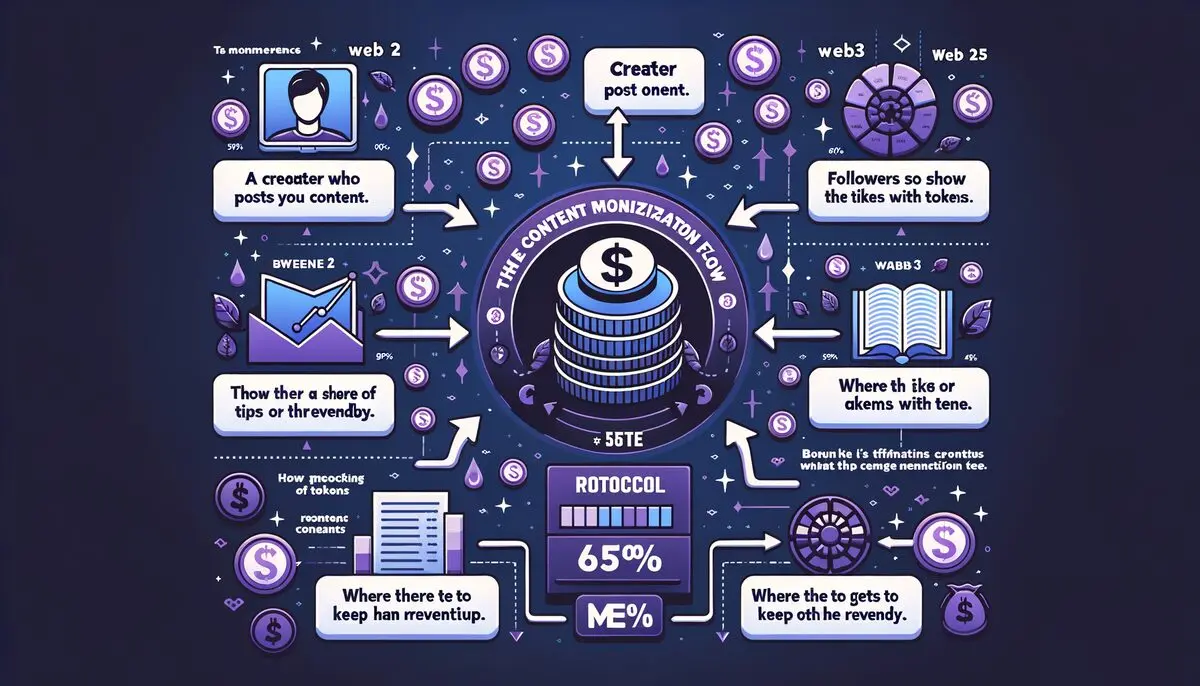
SocialFi fundamentally restructures how content creators earn revenue. Instead of relying on a platform's ad revenue sharing program (where creators typically receive a small fraction of the advertising revenue their content generates), SocialFi enables multiple direct monetization channels.
Direct Fan Monetization
Creators in SocialFi can earn directly from their audience without any intermediary taking a cut. Revenue streams include tips on individual posts, subscription fees paid in tokens, exclusive content gated behind token ownership, and merchandise sales through decentralized commerce integrations.
The absence of a middleman means creators keep 90-100% of their revenue, compared to the 45-55% typical on platforms like YouTube. For a creator earning $100,000 annually on YouTube, switching to SocialFi could mean an additional $45,000 to $55,000 in retained earnings.
Social Token Appreciation
When a creator issues a social token, early supporters benefit from price appreciation as the creator gains popularity. This creates an investor-like relationship between creators and their most dedicated fans. Supporters are incentivized to help promote the creator because doing so increases the value of their token holdings.
This model has been particularly effective for emerging creators who lack the audience size needed to earn significant ad revenue on traditional platforms. A creator with just 1,000 dedicated supporters who each hold their social token can generate more income through token dynamics than a creator with 100,000 passive followers on Instagram.
Cross-Platform Earnings
Because SocialFi profiles are portable, creators can earn across multiple applications without rebuilding their audience each time. A creator's Lens profile works on Lenster, Orb, and dozens of other apps. Their Farcaster identity carries over to every Farcaster client. This portability also means that if one platform changes its monetization rules, creators can seamlessly migrate to alternatives without losing their audience or content.
SocialFi and DAOs: Community-Governed Social Spaces
Decentralized Autonomous Organizations (DAOs) represent the governance layer of SocialFi. While traditional social media platforms are governed by corporate boards making decisions behind closed doors, SocialFi communities can implement democratic governance through DAOs.
How SocialFi DAOs Operate
A SocialFi DAO typically functions by issuing governance tokens to community members. Token holders can submit proposals and vote on decisions ranging from content moderation policies to treasury spending, feature development priorities, and community guidelines. The voting power is usually proportional to token holdings, though many DAOs are experimenting with quadratic voting and other mechanisms to prevent plutocratic outcomes.
For example, a SocialFi community might vote to allocate treasury funds for developer grants, decide on the criteria for content curation rewards, or approve changes to the token distribution model. These decisions are executed through smart contracts, ensuring transparency and eliminating the possibility of executives overriding community decisions.
Community Treasury Management
SocialFi DAOs often manage community treasuries funded through protocol fees, token sales, or revenue sharing. These treasuries can grow to significant sizes, and the community collectively decides how to deploy capital. Common treasury expenditures include developer grants for building new features, marketing budgets for community growth, liquidity mining programs to incentivize platform usage, and educational content creation to onboard new users.
The transparency of on-chain treasury management stands in sharp contrast to traditional social media companies, where financial decisions are opaque and users have zero input on how platform revenue is spent.
Real-World DAO Governance Examples
Several SocialFi communities have demonstrated effective DAO governance in practice. Farcaster's ecosystem includes community DAOs like Purple DAO, which funds public goods and ecosystem development through collective decision-making. Lens Protocol's governance includes community input on protocol upgrades and feature development. These examples show that community governance can work at scale when properly designed.
Risks and Challenges of SocialFi
While SocialFi offers compelling advantages over traditional social media, it is important to understand the risks and challenges before committing significant time or capital. No technology is without drawbacks, and SocialFi is still in its early stages of development.
Financial Risks
The tokenized nature of SocialFi introduces financial risks that do not exist in traditional social media. Social token prices can be extremely volatile, with some creator tokens losing 80-90% of their value during market downturns. New users should approach social token investments with the same caution they would apply to any speculative crypto investment.
Rug pulls remain a concern, particularly on smaller platforms. A creator could issue a social token, build hype to inflate the price, and then sell their holdings to extract value from supporters. Due diligence on creators, platform reputation, and token mechanics is essential before purchasing any social tokens.
Technical Barriers
Despite improvements in user experience, SocialFi platforms still have higher technical barriers than traditional social media. Users need to understand wallet management, gas fees, token bridging, and basic blockchain concepts. These requirements exclude a significant portion of potential users who may not have the technical knowledge or desire to learn these skills.
Smart contract vulnerabilities also pose risks. SocialFi platforms rely on smart contracts for critical functions like token management and content storage. If a smart contract contains a bug or is exploited, users could lose funds or data. While established platforms undergo regular security audits, the risk is never zero.
Regulatory Uncertainty
The legal classification of social tokens, creator coins, and SocialFi governance tokens remains unclear in many jurisdictions. Some regulators may classify certain social tokens as securities, which would impose significant compliance requirements on platforms and users. The regulatory landscape is evolving rapidly, and SocialFi users should stay informed about legal developments in their jurisdiction.
Content Quality Concerns
Ironically, the financial incentives in SocialFi can sometimes undermine content quality. When posting is financially rewarded, there is a risk of mercenary behavior where users prioritize engagement farming over genuine contribution. Some platforms have experienced floods of low-quality content from users trying to earn token rewards. Effective curation and reward mechanisms are essential to maintain content quality as SocialFi scales.
Important: Never invest more than you can afford to lose in social tokens or SocialFi platforms. Start small, learn the ecosystem, and gradually increase your involvement as you develop a better understanding of the risks and opportunities.
The Future of SocialFi
SocialFi is positioned at the intersection of two massive trends: the ongoing decentralization of internet services and the financialization of creator economies. Looking ahead to the rest of 2026 and beyond, several developments are likely to shape the evolution of this sector.
AI Integration
Artificial intelligence is beginning to merge with SocialFi in powerful ways. AI-powered content recommendation engines that run on decentralized infrastructure give users transparent control over what they see in their feeds. AI agents that operate within SocialFi platforms can manage community engagement, content curation, and even trading strategies on behalf of users. The combination of AI and blockchain-based social media could create entirely new interaction paradigms that are impossible on centralized platforms.
Cross-Chain Social Identity
The fragmentation of SocialFi across multiple blockchains is gradually being resolved through cross-chain identity solutions. Protocols like Ethereum Name Service (ENS) and cross-chain messaging bridges are enabling users to maintain a unified social identity across Ethereum, Solana, Cosmos, and other ecosystems. By late 2026, users will likely be able to carry a single social identity across all major SocialFi platforms regardless of the underlying blockchain.
Mainstream Adoption Triggers
Several factors could drive mainstream SocialFi adoption in the near future. Account abstraction technology is eliminating the need for users to manage seed phrases and gas fees. Fiat onramps are enabling credit card payments for platform access. Mobile-first SocialFi apps are matching the polish and performance of traditional social media.
The most significant adoption trigger may be a major traditional social media scandal or policy change that drives users to seek alternatives. History has shown that user migration events (like the Twitter-to-Mastodon movements) can happen rapidly. SocialFi platforms that are ready with seamless onboarding will capture these migration waves.
Institutional Participation
Brands, media companies, and traditional institutions are beginning to explore SocialFi as a way to build more direct relationships with their audiences. Companies that issue branded social tokens can create loyalty programs with real economic value, and the transparency of blockchain-based engagement metrics provides more trustworthy data than traditional social media analytics.
As institutional participation grows, we expect to see SocialFi platforms develop enterprise features, compliance tools, and professional-grade analytics that bridge the gap between decentralized social media and corporate communication needs.

Frequently Asked Questions
What is SocialFi in simple terms?
SocialFi combines social media with decentralized finance (DeFi). It lets users own their data, earn crypto for creating content, and participate in tokenized social interactions without relying on centralized platforms like Facebook or Twitter. Think of it as social media where you are a stakeholder rather than just a user.
How do you make money with SocialFi?
There are several ways to earn through SocialFi. You can create quality content that gets tipped or rewarded with tokens. You can buy and trade creator tokens or social tokens early and benefit from price appreciation. You can provide liquidity in social token pools. You can participate in governance and earn DAO rewards. You can also build a following that appreciates the value of your own social token over time.
Is SocialFi safe to use?
SocialFi platforms carry typical crypto risks including smart contract vulnerabilities, token volatility, and potential rug pulls on smaller platforms. To stay safe, stick to established platforms like Farcaster and Lens Protocol, use hardware wallets for significant holdings, never invest more than you can afford to lose, and always research a platform's security audit history before committing funds.
What is the best SocialFi platform in 2026?
Farcaster leads the SocialFi space in 2026 with over 800,000 active users, a strong developer ecosystem, and seamless Ethereum integration. Lens Protocol is a close second, especially for developers building social applications. Friend.tech is best for speculative social trading, and DeSo offers the most complete built-in creator economy. The best choice depends on your specific goals and preferred blockchain ecosystem.
Do I need crypto to use SocialFi platforms?
Most SocialFi platforms require a small amount of cryptocurrency for initial setup. For example, creating an account on Farcaster requires a small ETH fee for registering your on-chain identity. However, many platforms are introducing gasless transactions and fiat onramps in 2026 to lower the entry barrier. Once onboarded, basic social interactions like posting and liking are often free or nearly free on Layer 2 networks.
What is the difference between SocialFi and regular social media?
The key differences are: data ownership (you own your content and social graph instead of the platform owning it), monetization (direct crypto rewards instead of ad revenue going to platforms), governance (community voting on platform rules instead of corporate decisions), censorship resistance (no single entity can ban you from the protocol), and interoperability (your profile works across multiple apps instead of being locked to one platform).
Can SocialFi replace Twitter or Instagram?
SocialFi is unlikely to fully replace mainstream platforms in the near term due to the learning curve and crypto requirements. However, it offers a compelling alternative for creators who want ownership, direct monetization, and censorship resistance. As user experience improves and account abstraction eliminates wallet complexity, SocialFi could capture a significant share of social media users. Many people currently maintain a presence on both traditional and SocialFi platforms.
What are social tokens and how do they work?
Social tokens are cryptocurrencies tied to a creator, community, or brand. They can represent access to exclusive content, voting rights in community decisions, or a share of a creator's future earnings. Most social tokens use bonding curves, which means the price automatically increases as more people buy and decreases as people sell. When a creator's popularity grows, their social token typically increases in value, rewarding early supporters who believed in them.
Related Guides
- What Is Lens Protocol? The Decentralized Social Graph by Aave Founders Explained in 2026
- What Is Farcaster? Decentralized Social Protocol Guide 2026
- What Is Argent Wallet? Smart Contract Wallet with Social Recovery (2026 Guide)
- How to Participate in DEXTools Social Boost: The Community Buyback Pilot
- How Meme Coins Work: Social Liquidity in 2026