What Is Polygon POL, CDK and AggLayer? Explained (2026)
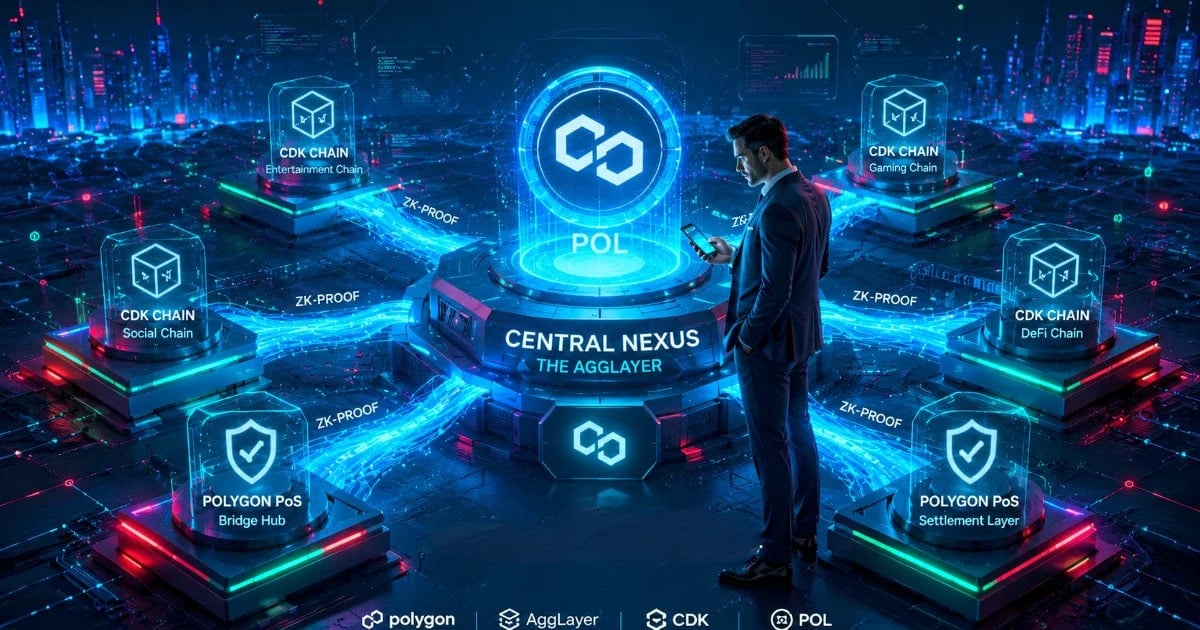
Polygon POL, CDK, and AggLayer form Polygon's unified ZK-powered ecosystem, enabling scalable, interoperable, and liquid Web3 applications.
Polygon POL, CDK, and AggLayer represent the core pillars of Polygon's ambitious 2.0 architecture, transforming it from a singular Ethereum sidechain into a unified network of ZK-powered blockchains. POL is the new multi-chain staking token, enabling holders to secure multiple chains simultaneously. The CDK (Chain Development Kit) is an open-source framework for developers to launch custom ZK L2s. The AggLayer (Aggregated Layer) is a groundbreaking protocol designed to unify liquidity and state across these diverse ZK chains, aiming to provide a seamless, single-chain user experience while maintaining the scalability of a multi-chain ecosystem.
Understanding the Polygon 2.0 Vision: An Aggregated Network
As of May 2026, Polygon has fundamentally transformed its identity. It has evolved beyond its original role as a simple Ethereum sidechain into a sophisticated, aggregated network of ZK-powered blockchains. This multi-year Polygon 2.0 roadmap has culminated in a restructured ecosystem designed to tackle the fragmentation and scalability challenges inherent in the broader Layer 2 (L2) landscape.
The core idea is to create an internet of blockchains, where individual chains can retain their sovereignty and specialization, yet collectively benefit from shared security, liquidity, and interoperability. This ambitious vision relies heavily on three interconnected components: the POL token, the AggLayer, and the Polygon CDK.
The Token Evolution: From MATIC to POL Explained
The transition from MATIC to POL (Polygon On-chain Liquidity) is far more than a simple rebranding; it represents a fundamental shift in tokenomics and utility. Launched in May 2026, POL is designed as a "hyper-productive token," meaning it offers enhanced utility and earning potential compared to its predecessor.
Key Features of POL:
- Multi-Chain Staking: Unlike MATIC, which primarily secured the Polygon PoS chain, POL allows holders to stake and secure multiple chains within the Polygon ecosystem simultaneously. This significantly increases the token's utility and potential for earning rewards across various Polygon-powered L2s.
- Enhanced Validator Roles: Validators staking POL can perform multiple roles, such as validating the Polygon PoS chain, the Polygon zkEVM, and various CDK-built app chains. This creates a more robust and decentralized security model for the entire network.
- Sustainable Emission Model: POL introduced a 2% annual emission rate. This is split, with 1% allocated for staking rewards to incentivize validators and maintain network security, and 1% directed to a community treasury for ecosystem development and growth initiatives. While this ensures long-term sustainability, it also introduces a constant sell pressure that the ecosystem must offset through increased adoption and burn mechanisms.
- Migration Reality: While the majority of the transition from MATIC to POL is complete, some legacy applications and smaller integrations may still be grappling with compatibility issues. This highlights the inherent friction and complexity involved in large-scale network upgrades within a decentralized ecosystem.
The AggLayer: Unifying Fragmented Liquidity Across ZK Chains
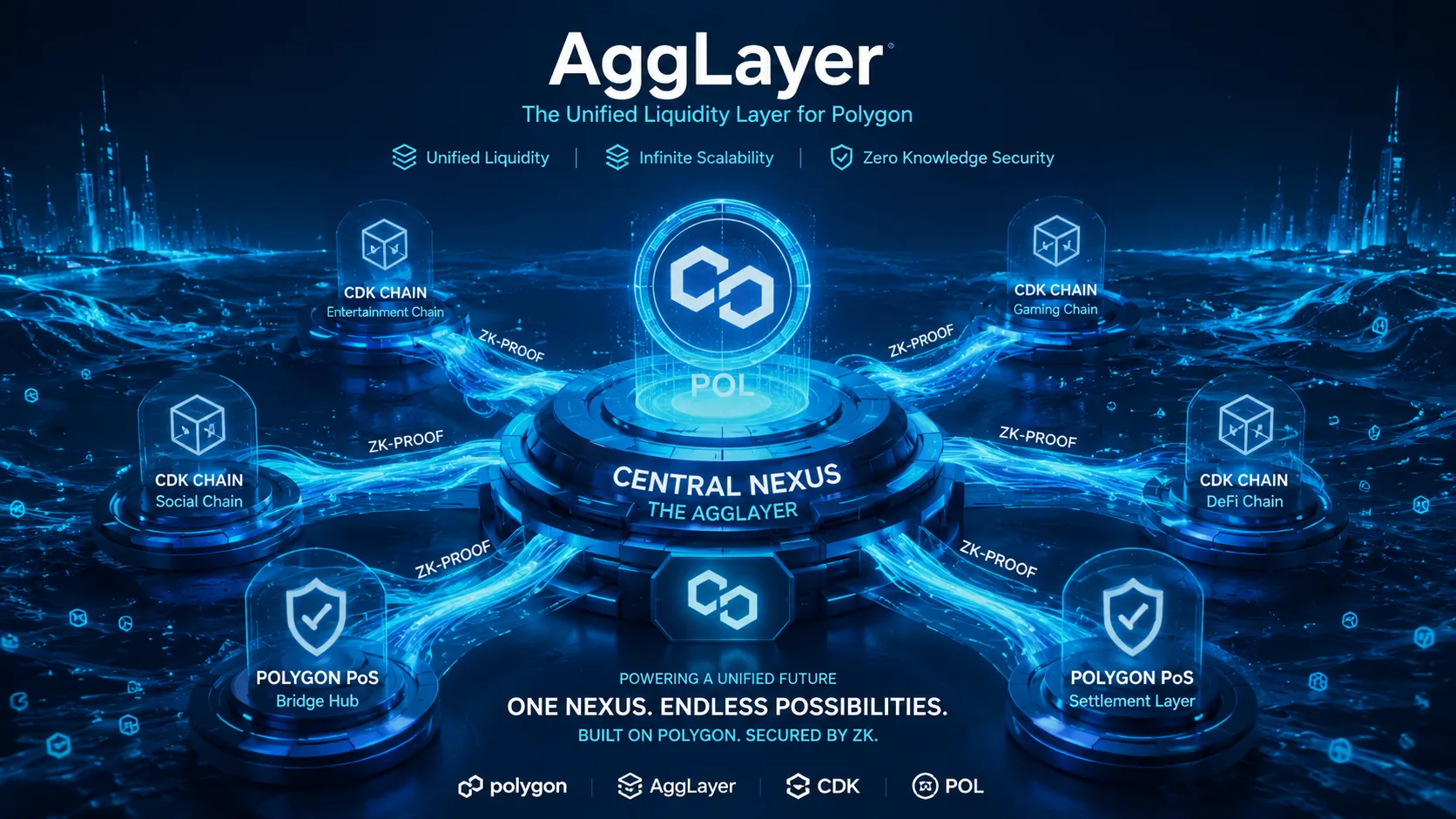
The AggLayer (Aggregated Layer) is Polygon's most innovative solution to the pervasive "liquidity silo" problem that plagues the current L2 environment. In a fragmented landscape, assets and user activity are often trapped on individual chains, necessitating complex, time-consuming, and often costly bridging operations to move them. The AggLayer aims to eliminate this friction.
How the AggLayer Works:
- Connective Tissue: The AggLayer acts as a universal connective tissue, linking different Polygon chains (including Polygon PoS, zkEVM, and CDK-built app chains) and potentially even non-Polygon chains in future pilots.
- Aggregating ZK Proofs: At its core, the AggLayer aggregates Zero-Knowledge (ZK) proofs from all connected networks. When a transaction occurs on one connected chain, a ZK proof of its validity is generated. The AggLayer then combines these proofs, ensuring that the transaction is instantly recognized as valid across all other connected chains.
- Shared State and Liquidity: By aggregating proofs, the AggLayer enables a shared state across chains. This means that an asset held on one chain is effectively recognized and usable on any other connected chain without requiring a physical bridge. This creates a unified liquidity pool, allowing users to seamlessly interact with applications and assets across the entire aggregated network as if it were a single blockchain.
Benefits and Challenges of the AggLayer:
- The Benefit: It aims to provide the user experience of a single, highly liquid chain while preserving the scalability and sovereignty benefits of multiple specialized chains. This translates to instant finality across chains, reduced bridging costs, and a significantly improved user experience for dApps that span multiple L2s.
- The Challenge: Integrating existing chains into the AggLayer requires significant technical overhead and a commitment from chain operators. Its success is entirely dependent on widespread adoption; without a large network of connected chains, the benefits of shared liquidity and state are diminished.
Polygon CDK: The Modular Toolkit for Custom ZK L2s
The Polygon Chain Development Kit (CDK) is an open-source, modular framework that empowers developers and enterprises to launch their own customized, ZK-powered Layer 2 blockchains. It's akin to a WordPress for blockchains, offering flexibility and powerful tools to build tailored solutions.
Key Aspects of the CDK:
- Modularity and Customization: Developers have extensive control over their CDK chains. They can choose their preferred virtual machine (e.g., EVM for compatibility, or others for specialized use cases), select data availability layers (e.g., Ethereum, Celestia, or a custom solution), define their own gas tokens, and implement specific governance models.
- ZK-Powered Security: All chains built with the CDK leverage ZK-rollup technology, inheriting strong security guarantees from Ethereum while achieving high transaction throughput and low fees.
- Ecosystem Adoption: The CDK has seen significant adoption, particularly among large-scale gaming, DeFi, and fintech projects. These entities are building "AppChains" tailored to their specific throughput, latency, and economic needs, creating specialized environments for their users.
Trade-offs and Responsibilities:
- Sovereignty vs. Shared Services: While the CDK offers high customizability and sovereignty, managing a sovereign L2 comes with responsibilities. This includes maintaining a validator set (if not opting for Polygon's shared validator services), ensuring consistent security updates, and managing the chain's economic model.
- Integration with AggLayer: A key advantage for CDK chains is their ability to seamlessly connect to the AggLayer, immediately benefiting from shared liquidity and interoperability with other Polygon ecosystem chains.
The Core Chains: Polygon PoS and Polygon zkEVM
The 2026 Polygon landscape still utilizes two primary public environments, though their roles have specialized and evolved within the new aggregated network architecture.
- Polygon PoS (zkPoS): The legacy chain that brought Polygon to prominence has been significantly upgraded. It now functions as a "zkPoS" chain, meaning it leverages ZK technology for enhanced security and efficiency while maintaining its Proof-of-Stake consensus. It continues to serve as a high-throughput, low-cost environment for a vast array of dApps and users, and is a crucial component of the AggLayer, acting as a major liquidity hub.
- Polygon zkEVM: This is Polygon's flagship ZK-rollup, offering full EVM equivalence. It allows developers to deploy existing Ethereum smart contracts with minimal changes, benefiting from the security of Ethereum and the scalability of ZK-rollups. The zkEVM is designed for high-value applications and those requiring the strongest security guarantees, and it also plays a central role in the AggLayer's unified liquidity vision.
How the AggLayer Unifies Liquidity: A Step-by-Step Flow
Understanding the AggLayer's mechanism is key to appreciating its impact. Here's a simplified flow of how it unifies liquidity across disparate ZK chains:
- User Initiates Transaction: A user on Chain A (e.g., a Polygon CDK AppChain) wants to interact with a dApp or asset residing on Chain B (e.g., Polygon zkEVM).
- Transaction Execution and ZK Proof Generation: The transaction is executed on Chain A. Simultaneously, a ZK proof of this transaction's validity is generated by Chain A's prover.
- Proof Submission to AggLayer: Chain A's ZK proof is submitted to the AggLayer. Other connected chains (like Chain B) also submit their respective ZK proofs for their transactions.
- AggLayer Aggregates Proofs: The AggLayer collects and aggregates these individual ZK proofs into a single, compact proof that attests to the validity of all included transactions across the connected chains.
- Shared State Update: Once the aggregated proof is validated (either by the AggLayer itself or by a designated verifier on Ethereum), the state of all connected chains is effectively updated simultaneously. This means that Chain B instantly recognizes the state change that occurred on Chain A.
- Seamless Interaction: The user on Chain A can now interact with the dApp or asset on Chain B without any bridging delays or additional steps, as if both chains were part of a single, unified environment. The liquidity is shared, and the state is consistent.
Comparison: Polygon 2.0 vs. Other Scaling Solutions
The blockchain scaling landscape is highly competitive. Polygon's AggLayer approach offers a distinct strategy compared to other prominent solutions.
Costs, Risks, and Considerations for Polygon 2.0
While Polygon 2.0 presents a compelling vision, it's essential to consider the associated costs, risks, and ongoing challenges.
Costs:
- Development & Integration: For projects building custom CDK chains or integrating with the AggLayer, there are significant development costs, including engineering resources, auditing, and ongoing maintenance.
- Transaction Fees: While generally lower than Ethereum L1, transactions on Polygon's ZK chains and the AggLayer still incur gas fees, which can fluctuate based on network congestion.
- Validator Costs: For those running validators with POL, there are hardware, operational, and potential slashing risks to consider.
Risks:
- Adoption Risk: The success of the AggLayer hinges on widespread adoption by various L2s and dApps. Without a critical mass of connected chains, its benefits will be limited.
- Technical Complexity: ZK technology is cutting-edge and complex. While robust, potential undiscovered vulnerabilities or implementation bugs could pose risks.
- Competition: The L2 space is intensely competitive, with other ecosystems (e.g., Cosmos, Avalanche subnets, other ZK rollup providers) offering alternative scaling and interoperability solutions.
- Centralization Concerns: While Polygon aims for decentralization, the initial phases of complex infrastructure like the AggLayer may involve some degree of centralized coordination or specific entities playing key roles.
The Future of Polygon: Key Areas to Watch
As Polygon 2.0 continues to evolve, several key areas will dictate its long-term success and impact:
- AggLayer Adoption: The number and diversity of chains that connect to the AggLayer will be the primary metric for its success. Watch for major dApps, gaming studios, and enterprise solutions to announce their integration.
- Developer Experience (DX): Simplifying the process of building and deploying CDK chains, and integrating with the AggLayer, will be crucial for attracting a broad developer base.
- Cross-Ecosystem Interoperability: While the AggLayer focuses on Polygon's internal ecosystem, its ability to eventually connect with non-Polygon L2s or other blockchain networks will be a significant differentiator.
- Decentralization Progress: Monitoring the decentralization of the AggLayer's proof aggregation and verification mechanisms, as well as the validator set for POL, will be important.
- POL Tokenomics Stability: The balance between POL emissions, staking rewards, and burn mechanisms will influence its long-term value proposition.
How DEXTools Helps Navigate the Polygon Ecosystem
For traders, investors, and developers looking to engage with the evolving Polygon ecosystem, DEXTools provides essential tools to stay informed and make data-driven decisions.
- Real-time Data: DEXTools offers real-time price charts, liquidity data, and trading volumes for tokens across Polygon PoS, zkEVM, and other connected chains. This allows users to track the performance of POL and other assets within the Polygon universe.
- New Token Discovery: As more projects launch on Polygon CDK chains and integrate with the AggLayer, DEXTools can help identify emerging tokens and trading opportunities within this expanding ecosystem.
- Liquidity Analysis: By providing insights into liquidity pools, DEXTools helps users understand where liquidity is concentrated within the aggregated network, which is crucial for efficient trading and asset management.
- Market Sentiment: Tools like DEXTools' social sentiment analysis and trending pairs can offer a pulse on community interest and adoption of projects building on Polygon 2.0.
Conclusion: A Unified Future for Polygon
Polygon's transition to its 2.0 architecture, centered around POL, CDK, and the AggLayer, represents a monumental shift towards a more scalable, interoperable, and user-friendly Web3. By unifying liquidity and state across a network of ZK-powered chains, Polygon aims to deliver a seamless experience that mirrors a single blockchain, while leveraging the power of horizontal scaling. While the journey is complex and competitive, the vision of an aggregated network positions Polygon as a leading contender in the race to onboard the next billion users to Web3.
Frequently Asked Questions
What is Polygon POL?
POL (Polygon On-chain Liquidity) is the new native token of the Polygon 2.0 ecosystem. It replaces MATIC and enables multi-chain staking, allowing holders to secure multiple ZK-powered chains within the Polygon network simultaneously, earning rewards across them.
What is Polygon CDK?
The Polygon CDK (Chain Development Kit) is an open-source framework that allows developers to launch their own custom, ZK-powered Layer 2 blockchains. It offers modularity, letting projects choose their VM, data availability layer, and gas token, while benefiting from Ethereum's security.
What is the Polygon AggLayer?
The AggLayer (Aggregated Layer) is a protocol designed to unify liquidity and state across all connected ZK-powered chains within the Polygon ecosystem. It aggregates ZK proofs from these chains, enabling seamless, instant cross-chain transactions and shared liquidity without traditional bridging.
How does the AggLayer solve liquidity fragmentation?
The AggLayer solves fragmentation by aggregating ZK proofs from connected chains, effectively creating a shared state. This allows assets and dApps on one chain to be instantly recognized and interacted with on another, eliminating the need for costly and time-consuming bridges and creating a unified liquidity pool.
What are the main components of Polygon 2.0?
The main components of Polygon 2.0 are the POL token (for staking and governance), the Polygon CDK (for building custom ZK L2s), and the AggLayer (for unifying liquidity and state across these chains). The core public chains, Polygon PoS and Polygon zkEVM, are also integral.
Is MATIC still used in Polygon 2.0?
As of May 2026, the ecosystem has largely transitioned from MATIC to POL. While some legacy applications might still have MATIC compatibility, POL is the operational 'hyper-productive token' for staking and securing the Polygon 2.0 network.
What are the benefits of using Polygon CDK?
Benefits of using Polygon CDK include high customizability for specific dApp needs, strong security guarantees inherited from Ethereum via ZK-rollups, and the ability to seamlessly connect to the AggLayer for shared liquidity and interoperability within the Polygon ecosystem.
How does Polygon 2.0 compare to other L2 solutions?
Polygon 2.0's AggLayer distinguishes itself by offering unified liquidity and instant cross-chain finality through ZK proof aggregation, contrasting with the siloed liquidity and challenge periods often found in Optimistic Rollups. It emphasizes horizontal scaling via specialized ZK L2s.
What are the risks associated with Polygon 2.0?
Key risks include the challenge of achieving widespread AggLayer adoption, the inherent technical complexity of ZK technology, intense competition from other scaling solutions, and potential centralization concerns during initial implementation phases.