What Is Dogecoin (DOGE)? From Joke to Top 10 (2026)
— By AliceOnChain in Tutorials
Dogecoin (DOGE) explained: learn how it grew from a joke into a serious transactional layer and why its Scrypt-based PoW model keeps it in the Top 10.
Dogecoin (DOGE) Explained: From Joke to Top 10
The cryptocurrency market is full of projects vying for dominance through complex technology and high-throughput promises. In this landscape, one asset stands out not for its modular architecture, but for its unparalleled community strength and cultural impact. If you are researching Dogecoin (DOGE), you are looking at the original meme-based currency-a project that started as a satire and evolved into one of the most recognizable digital assets in the global economy.
By mid-2026, dogecoins have moved past their purely speculative phase, cementing their role as a peer-to-peer (P2P) transactional layer. For the DEXTools community, this coin represents more than just a historical artifact; it is a highly liquid asset that serves as a cornerstone of retail adoption and decentralized culture.
The Origins: A Cultural Critique on Code
To understand the protocol's success, one must appreciate its satirical foundation. It was created in late 2013 by engineers Billy Markus and Jackson Palmer.
The Satire: The founders wanted to create a currency so widely accessible and abundant that it could never be taken seriously by the early Bitcoin maximalists.
The Brand: They chose the "Doge" meme-a Shiba Inu dog-as the face of the project, ensuring it was immediately unthreatening and viral.
Technically, the network is based on Luckycoin, which was a fork of Litecoin (LTC). This means DOGE is a Proof-of-Work (PoW) coin utilizing the Scrypt algorithm. Unlike Bitcoin's hard cap, dogecoins were designed with a soft cap that disinflates by a fixed amount each year. This abundance is a key part of its design philosophy: it is meant to be used, not just held.
The Narrative Shift: Beyond the Meme
If you ask a beginner what defines this asset in 2026, the answer is inseparable from the narrative shift that began in 2021. This was the era when the coin transitioned from a community tipping tool into a global financial phenomenon.
Viral Adoption: Early communities were known for charitable acts, such as funding clean water projects. This altruistic culture solidified a loyal base.
The Musk Factor: The involvement of Elon Musk was a critical catalyst. Supportive commentary from high-profile figures influenced the market narrative, shifting perception toward a legitimate, low-cost asset for everyday payments.
This effect established the entire "meme coin" asset class on DEXTools, proving that social consensus is as powerful as technical innovation.
Technology and Utility in 2026
While often dismissed by purists, the infrastructure has proven resilient and has evolved to meet the needs of a modern digital economy.
The GigaWallet Upgrade: The rollout of this initiative in 2025 significantly reduced integration barriers for businesses. This allows online retailers to accept DOGE payments natively.
Core Development: The development team, supported by the Foundation, has consistently improved the Scrypt protocol, focusing on transaction fee optimization and network speed.
The Rise of DRC-20: A major milestone was the emergence of DRC-20 tokens (often called "Doginals"). This protocol allows developers to create inscription-style assets directly on the chain, mirroring the Ordinals standard on Bitcoin.
When researching the ecosystem, it is essential to look beyond the jokes and see a secure, fast, and low-fee decentralized ledger used by millions for daily micro-transactions.
The Top 10 Thesis: Why It Survives
The asset's presence in the Top 10 by market cap for nearly five consecutive years (2021-2026) defies traditional analysis. Its survival is driven by several unique factors:
Unmatched Accessibility: It is the ultimate "gateway drug" to crypto. It is friendly and widely available on every major exchange and payment processor.
Decentralization Through Distribution: Because of its history of tipping and micro-payments, the coin is one of the most widely distributed in existence, reducing the risk of single-party market manipulation.
Real-World Integration: Large online retailers and tech platforms natively accept the currency for merchandise or subscriptions by 2026, creating a fundamental floor for utility.
Trading with DEXTools
For traders, the environment is unique. It is a highly liquid macro asset that can still experience volatility driven by sentiment. By using the DEXTools Pair Explorer, users can access real-time data for these markets:
Sentiment Tracking: Due to its community nature, DEXTools analytics are essential for identifying shifts in the social narrative.
DRC-20 Explorer: In 2026, DEXTools has integrated explorers for inscription tokens on the network, allowing users to track liquidity for assets that act as leveraged bets on the ecosystem.
Micro-payment Pairs: Many decentralized platforms utilize these pairs for stablecoin or settlement, all of which are trackable via our platform.
Security and Community Risks
One must also respect the Proof-of-Work security model.
Merged Mining: The network utilizes "merged mining" with Litecoin. This means miners who secure LTC can simultaneously secure the DOGE network, providing robust protection against 51% attacks.
Soft Inflationary Supply: Users must understand the model. While the rate of inflation decreases every year, the nominal amount of coins added is fixed. This encourages spending over long-term hoarding.
Sentiment Risk: Short-term price action remains highly correlated to social media and retail market cycles.
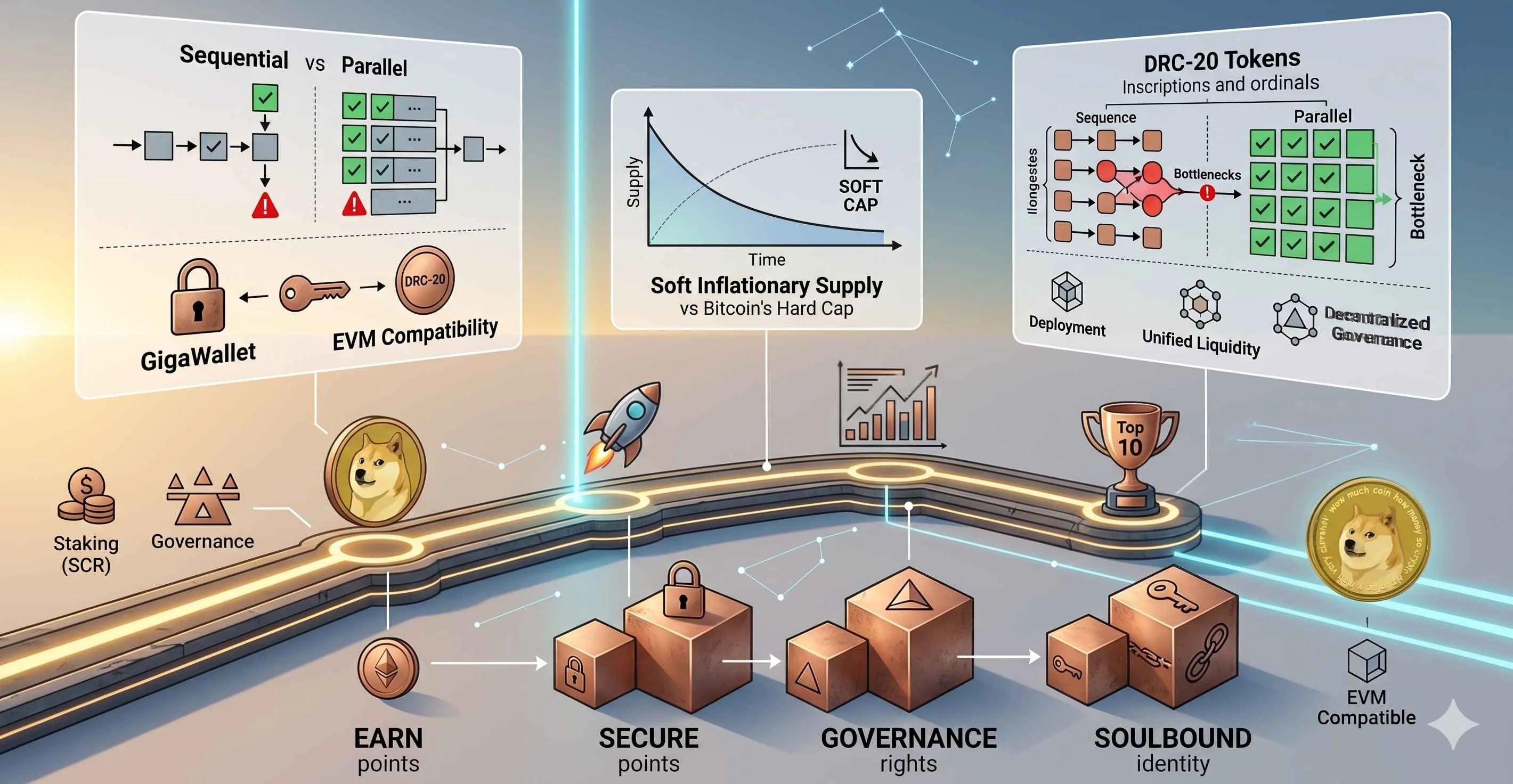
Understanding this asset requires looking past the Shiba Inu and seeing a unique socioeconomic experiment. It is the original cultural layer of the cryptocurrency ecosystem. By maintaining its identity as a fun, low-cost asset while steadily improving its core payment infrastructure through initiatives like GigaWallet, it has moved beyond the "joke" phase. As we navigate through 2026, the resilience of its community ensures it remains a Top 10 asset that cannot be ignored by any serious DeFi participant or retail trader on DEXTools.
--
- How to Bridge Crypto Between Chains: Complete Cross-Chain Tutorial 2026
- How to Use 1inch: Complete DEX Aggregator Swap Tutorial (2026)
- How to Use OKX Web3 Wallet: Multi-Chain DeFi Hub Guide (2026)
- How to Bridge Crypto Between Chains: Complete Cross-Chain Tutorial 2026
- How to Use 1inch: Complete DEX Aggregator Swap Tutorial (2026)
- How to Use OKX Web3 Wallet: Multi-Chain DeFi Hub Guide (2026)
Disclaimer: This article is for informational purposes only and does not constitute investment advice, financial advice, trading advice, or any other kind of advice. DEXTools does not recommend buying, selling, or holding any cryptocurrency or token. Users should conduct their own research and consult with a qualified financial advisor before making any investment decisions. Cryptocurrency investments are volatile and high-risk. DEXTools is not responsible for any losses incurred.
Related Guides
- DOGE to USD: Dogecoin Price Today | Live Converter
- What Is Baby Doge Coin (BabyDoge)? BSC Reflection Memecoin Guide 2026
- What Is Neiro (NEIRO)? The Memecoin Inspired by Dogecoin Kabosu's Successor Explained in 2026
- Is Dogecoin A Meme Coin? Let's take a closer look
Frequently Asked Questions
What is Untitled?
Dogecoin (DOGE) Explained: From Joke to Top 10The cryptocurrency market is full of projects vying for dominance through complex technology, high-throughput promises, and sophisticated decentralized finance (DeFi).
What should readers know about Dogecoin (DOGE) Explained: From Joke to Top 10?
The cryptocurrency market is full of projects vying for dominance through complex technology, high-throughput promises, and sophisticated decentralized finance (DeFi).
What is The Origins: A Cultural Critique on Code?
To understand Dogecoin, one must appreciate its satirical foundation. It was created in late 2013 by engineers Billy Markus and Jackson Palmer.
What is The "Doge Effect": The Role of Elon Musk and the Narrative Shift?
If you ask a beginner what is Dogecoin in 2026, the answer is inseparable from the narrative shift that began in 2020/2021. This was the era when Dogecoin transitioned from a fun community tipping tool into a global financial phenomenon.
What should readers know about Dogecoin's Technology and Utility in 2026?
While often dismissed by technical purists, this infrastructure has proven incredibly resilient and has evolved to meet the needs of a modern digital economy by 2026.