What Is Block Time in Crypto? Speed Explained 2026
— By Tony Rabbit in Tutorials
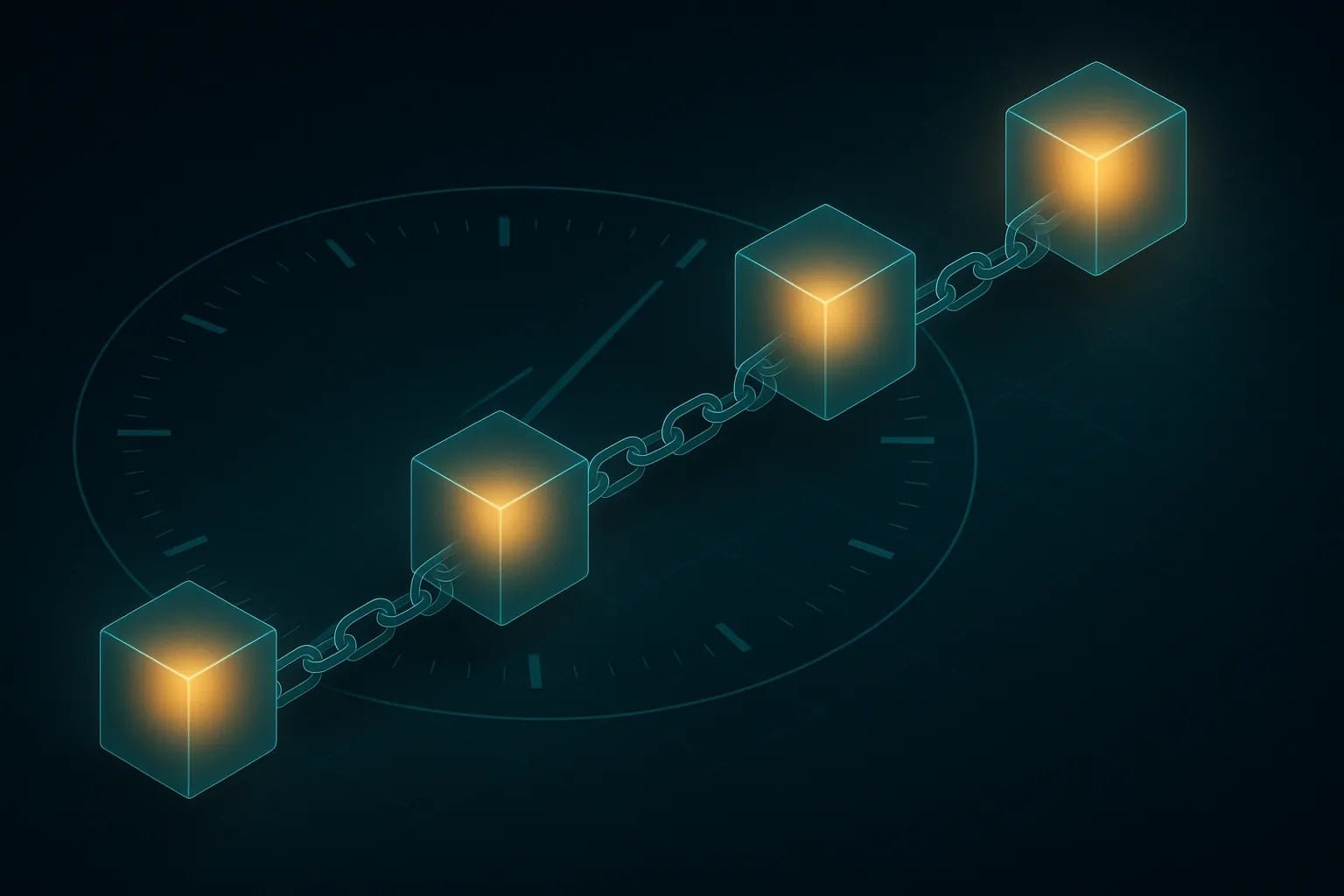
Block time in crypto explained: learn how it affects confirmations and user experience, and why block time is not the same thing as finality.
Block time is one of those crypto metrics people repeat without always using correctly. Fast chains brag about it, slow chains get mocked for it, and beginners often assume it tells the full story. It does not. Block time matters, but it is only one part of how fast and reliable a blockchain actually feels.
Block time in crypto is the average time it takes for a network to produce the next block. In practical terms, it shapes how often new transactions can begin receiving on-chain confirmation, but it is not the same thing as final settlement or guaranteed irreversibility.
Quick take
- Block time tells you how often the chain produces blocks on average.
- It affects responsiveness, but it does not equal finality.
- Short block times can feel fast, yet users may still need multiple confirmations before a payment is trusted.
- The real trader question is how block time interacts with congestion, confirmation depth, and settlement confidence.
Block time vs related metrics
Why block time matters in the real world
- User experience: faster blocks make wallets and explorers feel more responsive.
- Exchange deposits: block time influences how long exchanges wait for confirmations.
- Trading and arbitrage: fast inclusion matters when prices move quickly or bridges and transfers are time sensitive.
- Congestion perception: even a chain with short blocks can feel slow if blocks are full and fees spike.
What block time does not tell you
- It does not guarantee cheap fees: fee pressure depends on demand and block capacity too.
- It does not guarantee finality: a fast chain can still require extra waiting before funds are truly safe to treat as settled.
- It does not prove better security: security depends on consensus design, validator assumptions, and attack costs.
- It does not tell you how often transactions fail: application logic, gas settings, and congestion still matter.
How to interpret it properly
- Use block time as a baseline speed metric: it helps you compare responsiveness.
- Pair it with confirmation depth: one block is not always enough.
- Look at real congestion conditions: short theoretical block times can still feel bad in practice.
- Match the metric to the use case: paying a merchant, bridging funds, and trading a perp do not all need the same confidence level.
Common mistakes when people use block time
- ✘ Assuming a 1-second or 2-second block time means the chain is instantly final.
- ✘ Comparing block times across networks without considering different confirmation rules.
- ✘ Ignoring throughput and fee pressure during high-demand periods.
- ✘ Treating average block time as if every block arrives on a perfect schedule.
How traders and wallet users should use block time
- ✔ Check the target block time and the real observed block cadence.
- ✔ Know how many confirmations your exchange or venue actually requires.
- ✔ Pair block time with congestion conditions before assuming a transfer will be quick.
- ✔ Treat block time as a speed hint, not a complete safety guarantee.
- ✔ Use extra caution when time-sensitive moves depend on cross-chain transfers.
Final takeaway
Block time matters because it shapes the rhythm of a blockchain. It tells you how frequently the network gets another chance to include and confirm activity.
But serious users should never stop there. The full picture is block time plus throughput plus confirmation requirements plus finality assumptions.
Related reads on DEXTools
FAQ
What is block time in crypto?
Block time is the average time it takes for a blockchain network to produce the next block.
Why does block time matter?
It affects how quickly new transactions can start being included, how fast confirmations arrive, and how the network feels from a user perspective.
Is block time the same as finality?
No. Block time tells you how often blocks arrive. Finality is about how confidently a transaction can be treated as irreversible.
Does a faster block time always mean a better chain?
Not automatically. Faster blocks can improve responsiveness, but network design, throughput, security, and finality still matter.
Disclaimer: This content is for informational purposes only and does not constitute financial advice. Crypto investments carry risks, including loss of capital.
Related Guides
- What Is a Block Reward: Complete Bitcoin Mining Reward Guide (2026)
- Understanding Block Reorgs: Temporary Blockchain Changes
- Basescan Tutorial 2026: Base Block Explorer Master Guide
- TRON vs Solana: Speed, Fees and Use Cases Compared (2026)
- Top 5 Crypto Mixers in 2026: Privacy, Fees and Speed Compared
Frequently Asked Questions
What is block time in crypto?
Block time is the average amount of time it takes a blockchain network to produce a new block of transactions. Different networks have different target block times, which influences how quickly transactions begin to be recorded.
How does block time affect transaction confirmations?
Shorter block times generally mean transactions get their first confirmation faster, while longer block times mean you wait longer for a transaction to be included. The number of confirmations you wait for can affect how settled a transaction is considered.
Is block time the same as finality?
No, block time is how often blocks are produced, while finality is the point at which a transaction is considered irreversible. A network can have a fast block time but still require additional time or confirmations before a transaction is treated as final.
Why does block time matter for users?
Block time affects the user experience because it influences how long you may wait for a payment or trade to begin confirming. It is one of several factors, along with fees and finality, that shape how responsive a network feels.