What Is Ankr (ANKR): Web3 Infrastructure, RPCs and Liquid Staking Guide (2026)
— By Whatsertrade in Tutorials

What is Ankr? Learn how the project combines Web3 infrastructure, RPC services, staking products and the ANKR token narrative in 2026.
Intent check: If you only want ANKR price speculation, this is not that article. This guide focuses on Ankr as a Web3 infrastructure business, its RPC layer, staking products and the role of the ANKR token.
Ankr is one of the more interesting evergreen crypto education topics because it sits across multiple categories at once. It is not just a token, not just an RPC brand and not just a staking product. It is an infrastructure business with a broader ecosystem story attached to it.
That mix is exactly why the search intent stays alive. Some users search Ankr because they want infrastructure context. Others want to understand the ANKR token. Others care about liquid staking or node services. A good explainer has to separate those layers instead of blending them into one vague paragraph.
Why Ankr is more than a token explainer topic
A weak Ankr article would collapse everything into token basics. A stronger one explains the business and the token separately. Ankr provides infrastructure services such as blockchain connectivity and node access, while also operating in staking and ecosystem tooling. That makes the brand more durable than a one-cycle token story.
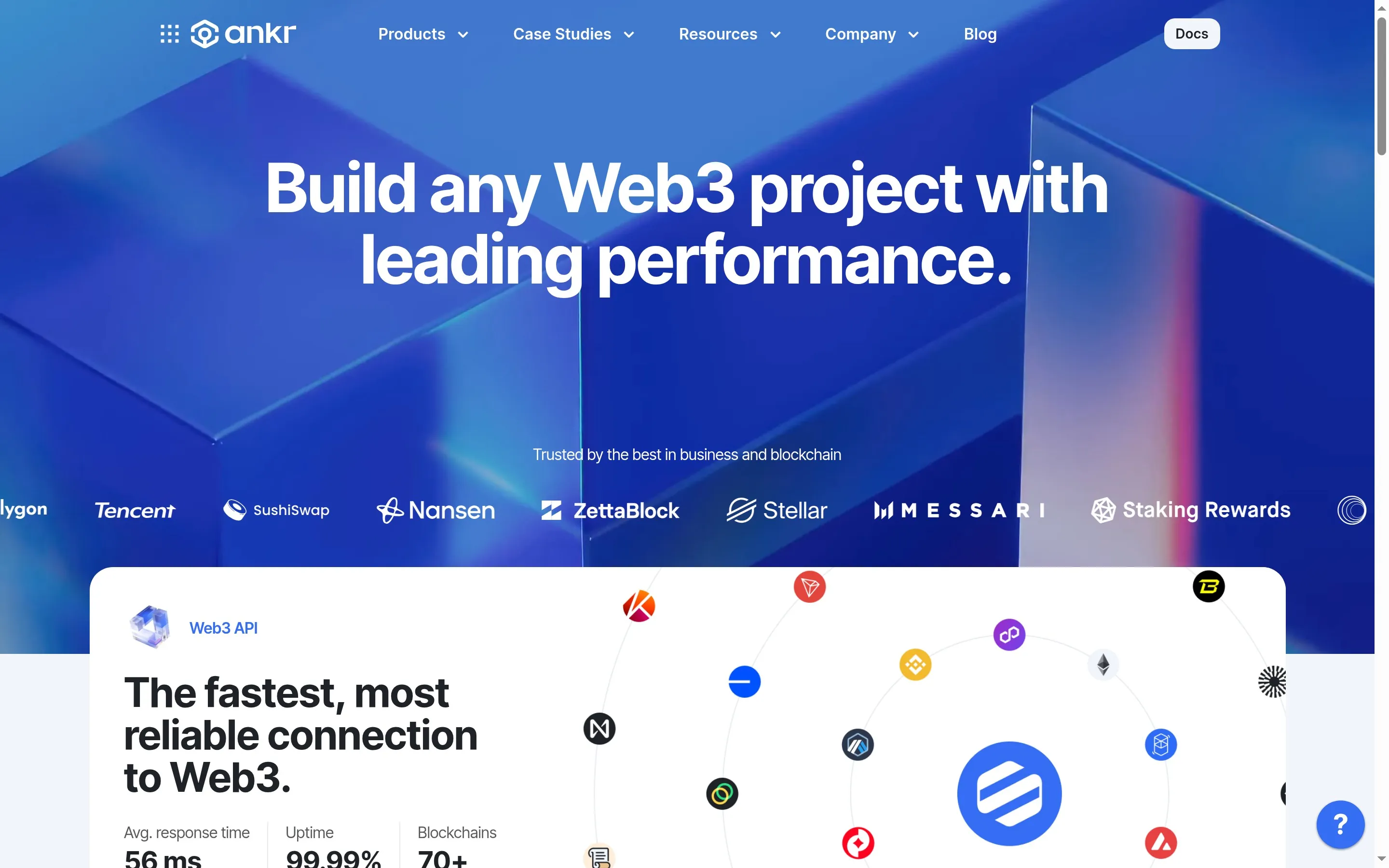
According to Ankr’s current positioning, the company emphasizes high-performance Web3 APIs, scaling services, staking solutions and a globally distributed infrastructure footprint. That framing matters because it tells you which layer of the stack the business wants to own.
What users and builders actually use Ankr for
For builders, the obvious use case is RPC access and infrastructure reliability. For ecosystem operators, the appeal can extend to scaling services or node support. For users closer to the asset side of crypto, staking and liquid staking products are often the hook.
That breadth is what makes Ankr a little different from a narrow provider profile. It is not only “how do I connect to a chain?” but also “how does this company monetize Web3 infrastructure and where does staking fit into the picture?”
How Ankr fits next to our existing RPC and node content
We already cover category-level questions in our RPC providers roundup, plus explainers on nodes and RPC endpoints. So this page should not drift into “what are nodes?” for 1,000 words.
The right angle is branded and blended: what Ankr is, why the company spans both infrastructure and staking narratives, and how to think about the token in the context of the business.
How this article avoids cannibalization
Externally, the SERP mixes official infrastructure positioning with token explainers. Internally, the overlap risk is with our general RPC and node education pages. So the safest editorial choice is to keep this article anchored on the brand and the combined infrastructure-plus-staking identity.
That is also what makes it stronger for search. A user typing “what is ankr” is often not looking for a pure node tutorial or a pure token price call. They want the map.
What to watch when researching Ankr
The key question is whether you are evaluating the infrastructure business, the staking products, the token or all three. Most confusion comes from mixing those layers. If you separate them, the story gets cleaner: infrastructure quality, product breadth, staking relevance and token role are related, but not interchangeable.
That framing also helps investors and users ask better questions. A good infrastructure business can still have a weak token narrative, and a popular token can still sit on top of a business model you do not fully understand. The only fix is separation.
Final take
Ankr deserves evergreen coverage because it sits at the intersection of several durable crypto education themes: infrastructure, nodes, staking and token utility. The cleanest way to understand it is not to ask “is ANKR good?” first, but “what problem does the Ankr ecosystem actually solve?”
FAQ
Related Guides
- What Is QuickNode: RPC Infrastructure, Elastic APIs and Web3 Build Workflows (2026)
- What Is Chainstack: Managed Blockchain Nodes, Dedicated RPC and Web3 Infrastructure (2026)
- MEV-Protected RPCs Compared: Flashbots, MEVBlocker 2026
- What Is QuickNode: Managed RPC Infrastructure, APIs and Blockchain Access (2026)
- What Is NodeReal: BNB Chain Infrastructure, RPC and Data APIs (2026)
Frequently Asked Questions
What is Ankr (ANKR)?
Ankr is a Web3 infrastructure project that provides RPC services and staking products across multiple blockchains. ANKR is the project's native token associated with its ecosystem.
What is liquid staking?
Liquid staking lets users stake their tokens to help secure a network while receiving a tradable token that represents the staked position. This keeps the value liquid so it can be used elsewhere in DeFi while still earning staking rewards.
How does Ankr provide Web3 infrastructure?
Ankr offers RPC endpoints and node services that let applications connect to various blockchains without running their own nodes. This supports developers building decentralized applications across multiple chains.
What are the risks of liquid staking?
Risks include smart contract vulnerabilities, the staked-token derivative trading below the value of the underlying asset, and potential validator penalties. Users should understand how a specific liquid staking product handles these risks.