Support and Resistance in Crypto Trading: Guide 2026
— By Tony Rabbit in Tutorials

Support and resistance in crypto explained: learn zones vs lines, polarity flips, confluence, and real BTC, ETH, and SOL setups in this 2026 guide.
Support and resistance in crypto trading are zones where buyers and sellers have historically transacted aggressively, making future price reactions statistically more likely. These concepts are crucial for understanding potential price movements, especially in crypto's volatile, liquidation-driven markets, and predate Bitcoin by over a century.
Ask ten crypto traders what they look at first on a chart and at least eight will say the same thing: support and resistance. These two concepts predate Bitcoin by more than a century, yet in the 24/7, liquidation-driven world of crypto they remain the single most important framework for understanding where price might react. Get them right and every other tool you layer on top becomes sharper.
Most beginner guides treat support and resistance like fixed walls. They are not walls. They are zones of collective memory where buyers and sellers have transacted aggressively in the past and are statistically more likely to do so again. In crypto, where order books reset every weekend and liquidation cascades can vaporize ranges in minutes, you also need crypto-native overlays: liquidation heatmaps, perpetual order book walls, and funding context.
This 2026 guide is built for the way crypto actually trades today. We cover classical theory, the psychology that makes levels work, multi-timeframe confluence, drawing zones with wicks versus bodies, the polarity flip, and crypto-specific tools (Coinglass, perp order books, anchored VWAP). Real BTC, ETH and SOL examples are included, along with entry, exit and risk frameworks.
What Is Support and Resistance in Crypto Trading?
Support is a price level where historical buying pressure has been strong enough to halt or reverse a downtrend. Resistance is a price level where historical selling pressure has been strong enough to halt or reverse an uptrend. In crypto they are usually treated as zones a few percent wide rather than razor-thin lines, because volatility, liquidations and 24/7 trading make exact pixel-perfect reactions rare.
The simplest way to picture it: every horizontal level on a chart is a place where someone, somewhere, decided that price was either too cheap to sell or too expensive to buy. When price returns to that level, those memories are reactivated. Some traders defend their original entry. Others want a second chance. Many bots are programmed to react to those exact zones. The result is a self-fulfilling cluster of orders, and that cluster is what you see as support or resistance.
This is why support and resistance work across every asset, every timeframe and every market regime. They are not a magic indicator. They are a map of collective decision making, drawn in price.
The Psychology Behind Every Level
Levels persist because humans (and the algorithms humans build) have memory. Three behavioral biases drive most of what you see at support and resistance: anchoring, regret aversion, and herd confirmation.
Anchoring is the tendency to fixate on a number that has personal meaning, like the price you bought at, the round figure of a recent high, or a previous all-time high. When BTC trades back to $69,000 (the 2021 ATH), thousands of traders who got stuck there for two years finally exit at break-even, creating supply. That is anchoring in action.
Regret aversion is the urge to fix a past mistake. Traders who sold ETH at $1,800 and watched it run to $4,000 promise themselves they will buy if it ever returns. When price approaches $1,800 again, their bids appear, creating support. Their personal regret becomes the market's structural floor.
Herd confirmation is the simplest of the three: when a level holds once, more traders notice. When it holds twice, news threads call it support. By the third test, every chart on Crypto Twitter has the same horizontal line and every bot is programmed to bid into it. The level becomes real because everybody believes it is real.
Horizontal vs Trendline Support and Resistance
There are two families of static support and resistance: horizontal and diagonal. Both work but they behave differently and you should treat them differently when sizing risk.
Horizontal support and resistance are flat price levels drawn from previous highs and lows. Examples include the $20,000 floor BTC held in late 2022, the $4,000 ceiling ETH respected for months in 2024, or the $0.50 level XRP keeps revisiting. Horizontal levels are the strongest type because they map directly to historical transactions at that exact price.
Trendlines (diagonal support and resistance) connect rising or falling swing highs and lows. They define the slope of a trend rather than a single price. A rising trendline beneath higher lows is dynamic support. A falling trendline above lower highs is dynamic resistance. The catch in crypto is that trendlines age out quickly: a line drawn three weeks ago may be irrelevant after one news-driven move. Treat trendlines as suggestions, horizontals as the structure.
How to Identify Support and Resistance on a Crypto Chart
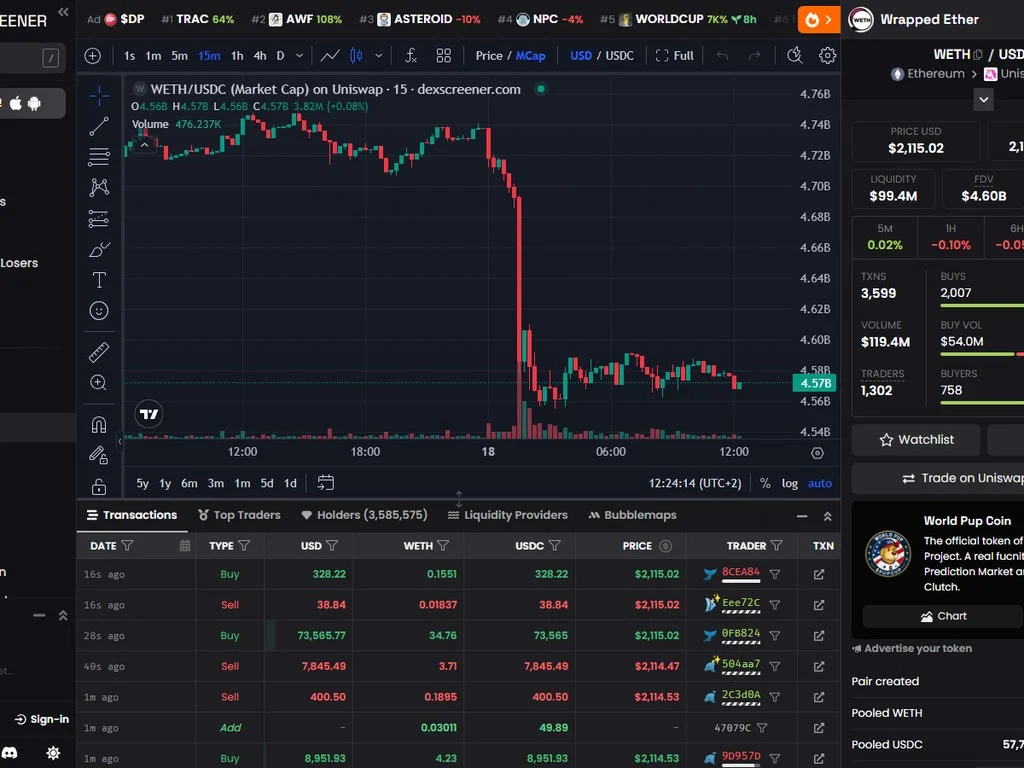
There are five repeatable signals you can scan for in roughly the order of importance: swing highs and lows, prior consolidation ranges, round psychological numbers, previous all-time highs and lows, and gap zones from CME futures.
Swing highs and lows are the most basic level. Every time price made a clear pivot, that pivot is a candidate. Mark the obvious ones on the higher timeframe (daily, weekly), then look for clusters of pivots at similar prices. Three or more pivots inside a narrow band is the textbook definition of strong support or resistance.
Prior consolidation ranges are even more powerful than single pivots. When price sat sideways for days or weeks, hundreds of millions in volume changed hands inside that range. Every participant inside has a memory. When price returns, that memory becomes a magnet for two-way trade. The top of a former range often becomes resistance. The bottom often becomes support.
Round psychological numbers matter disproportionately in crypto: $10,000, $50,000, $100,000 for BTC; $1,000, $2,000, $4,000 for ETH; $1.00 for stablecoin pegs and altcoin parity targets. Humans like round numbers, retail bots are coded around them, and exchanges often place liquidation engines and stop hunts at those exact prices.
Previous all-time highs and lows are the strongest psychological anchors of all. BTC's old $69,000 cycle top spent two years above price, then was reclaimed in March 2024 and turned into support during every subsequent dip. ATHs and ATLs print into headlines, and headlines drive memory.
CME gap zones are unique to crypto. The CME Bitcoin futures market closes weekends and reopens with a gap when spot moves meaningfully. Those gaps fill the majority of the time, so unfilled CME gaps above or below current price act as price magnets and pseudo-resistance or support.
What Makes a Level Strong: Touch Count, Time, and Volume
Not every level is equal. Three factors decide whether a level deserves serious risk: the number of clean touches, how long the level has existed, and the volume that has traded into it.
Touch count is the easiest filter. A level tested once is a guess. Tested twice is a hypothesis. Tested three or more times is a confirmed zone. Each additional defense recruits more believers. But touch count cuts both ways: every defense weakens the supply or demand behind the level, because some of the orders are absorbed each time. A level tested seven times without breaking is statistically closer to breaking than one tested twice.
Time matters because older levels carry more memory. A weekly support that has held for two years is far stronger than a 4-hour support that formed yesterday. The longer a level has been respected, the more bots, traders and algorithms have indexed it. When it eventually breaks, the move tends to be larger because so many positions need to be unwound.
Volume at the level is the truth serum. If you stack a horizontal volume profile under the chart, the levels that sit on top of high-volume nodes are real. Levels at low-volume areas are weak: price will pass through them with little resistance because no one transacted there. The single most useful concept here is the Point of Control (POC), the single price with the most traded volume in a period. POCs are magnets and frequently act as support or resistance themselves.
| Factor | Weak | Average | Strong |
|---|---|---|---|
| Touches | 1 | 2 | 3+ clean reactions |
| Age | Hours | Days to weeks | Months on the weekly |
| Volume | Low-volume node | Mid-range node | High-volume node / POC |
| Timeframe | 5m / 15m | 4h / 1d | Weekly / monthly |
| Confluence | Standalone level | +1 tool | 3+ tools agreeing |
The Support and Resistance Flip (Polarity)
The most important behavior in technical analysis is the flip. Once support breaks and price closes meaningfully below it, that former support tends to become resistance. The same is true in reverse: once resistance breaks and price closes above, the former ceiling often becomes the new floor.
Why does this happen? Because of the trapped traders. When BTC fails $30,000 support, every long entered at that level is now underwater. The moment price climbs back toward $30,000, those trapped longs sell at break-even just to escape the pain. That selling pressure creates the resistance. The level that was a floor is now a ceiling for one simple reason: a new generation of sellers has been created there.
The cleaner the original break, the cleaner the flip. A break with high volume, a strong impulsive candle and follow-through usually produces a strong flip. A break that immediately reclaims the level (a fakeout) usually produces no flip at all, because the trapped sellers exit quickly and price continues in the original direction.
BTC reclaiming the $69,000 cycle high in March 2024 is a textbook flip. That price was hard ceiling for two years. Once reclaimed and held, the next two dips bounced almost exactly off $69,000, turning the former resistance into immaculate support all the way until the next leg higher. Recognizing flips early is one of the highest-leverage skills in the game. For more on what happens at extreme levels, see our guide on liquidation zones in crypto.
Drawing Support and Resistance Correctly: Wicks vs Bodies
One of the oldest debates is whether to draw levels from candle wicks or from candle bodies. The honest answer is that both matter, and you should usually draw a zone bounded by both.
Wicks represent the extremes: the price at which buyers or sellers ultimately rejected the move. They show liquidity sweeps and stop runs, which are very real in crypto where market makers actively hunt obvious stops. Drawing from wick-to-wick captures the full intent of the reaction.
Bodies represent where price agreed to close, which has more conviction. A level defended at the body level is being defended on a closing basis, which institutional and algorithmic flows respect more than intrabar noise.
The professional workflow is to draw a zone from the wick high (or low) to the body close. That gives you a visual band a few percent wide. Reactions inside the band are normal. A clean close beyond the band counts as a real test. If the close fails to hold the far edge, the level is in danger of flipping. This zone approach is also far more honest than pretending a single horizontal line is meaningful in a market that moves 5 percent on a CPI print.
Zones Beat Lines: Why This Matters More in Crypto
Crypto markets are louder than traditional markets in three ways: they trade 24/7 with no closing print, they have shallower order books, and they are dominated by leverage and liquidation engines. All three reasons argue for zones over lines.
The 24/7 nature means there is no clean daily candle close like equities have. Whales and bots regularly exploit thin weekend liquidity to sweep stops and pierce obvious levels. A line drawn at $42,000 BTC may get pierced to $41,850 on a Saturday morning sweep and then immediately reclaimed. If you were stopped out on the line, you lost. If you were trading the $41,800 to $42,200 zone, you survived.
Shallow order books mean a single large market order can punch through a price by several percent in seconds, only for the move to retrace just as fast. Zones absorb that noise. Lines do not.
Leverage and liquidations are the third reason. Crypto exchanges have liquidation engines that target stop clusters at obvious round numbers. A line at $50,000 is essentially an invitation for somebody bigger to hunt it. Drawing a $49,500 to $50,500 zone forces you to wait for a real reaction rather than getting trapped by every wick.
Multi-Tool Confluence: The Real Edge
The single best upgrade you can make to your support and resistance reading is to stop trading isolated levels and start trading confluence. A level becomes high-conviction when three or more independent tools agree on the same price.
The five most valuable confluence tools in 2026 are: horizontal historical levels, Fibonacci retracements (especially 0.5 and 0.618), the 50, 100 and 200 moving averages, volume profile (Point of Control and Value Area edges), and anchored VWAP from significant pivots. When three or more of these stack within a percent or two of each other, you have a high-probability reaction zone.
A worked example: imagine ETH pulling back to $3,200. On its own, $3,200 is just a horizontal. But if $3,200 also coincides with the 0.618 retracement of the prior swing, sits exactly on the 200-day moving average, lines up with the volume profile POC of the last three months, and aligns with the anchored VWAP from the cycle low, you no longer have one signal. You have five tools pointing at the same number. The probability of a meaningful reaction is dramatically higher. To go deeper on one of those tools, read our explainer on VWAP in crypto trading.
Volume Profile, POC and Value Area as S/R
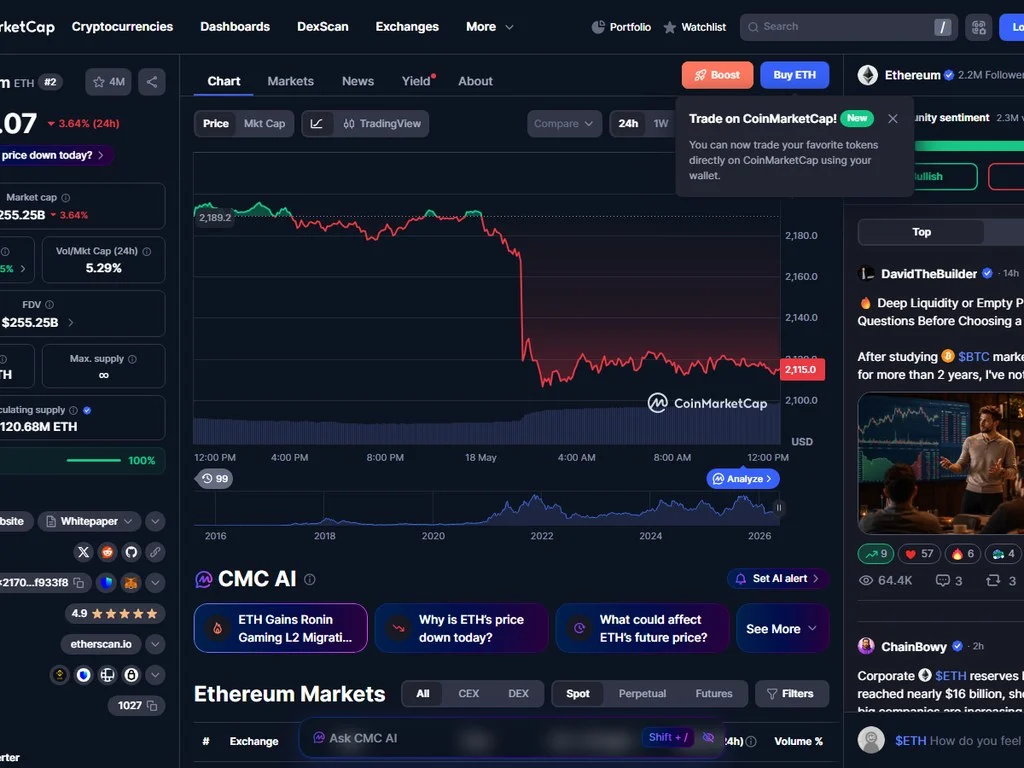
Volume profile is arguably the most underused tool by retail crypto traders. Instead of looking at volume per time unit, it stacks volume horizontally across price, showing exactly how much was traded at each level over a chosen period.
Three readings matter most: the Point of Control (the single price with the most volume), the Value Area High (VAH), and the Value Area Low (VAL). The Value Area typically contains 70 percent of all traded volume in the period. Together these three create natural support and resistance that exchanges, market makers and algorithms all watch.
The trading edge: price entering a value area from outside often reverts toward the POC, while price rejecting a value area edge from outside often continues in the rejection direction. POCs frequently act as gravitational supports during ranges and as resistance when price is trending below them. If you do nothing else, add a fixed-range volume profile to your daily BTC chart spanning the last 90 days. The POC and value area will explain reactions that pure horizontals miss.
Liquidation Levels and Heatmaps as Crypto-Native S/R
This is where crypto departs hard from traditional TA. Because crypto markets are dominated by leveraged perpetual futures, large clusters of pending liquidations create their own support and resistance, and they show up nowhere on a normal price chart.
Tools like Coinglass and Hyblock publish real-time liquidation heatmaps that show estimated liquidation prices and sizes for open positions on major exchanges. Where the heat is dense, price tends to be magnetized. A massive long liquidation cluster below current price acts as a hidden magnet pulling price down: market makers and aggressive traders often push price into that liquidity to fill their own orders, then reverse violently once the liquidations cascade.
The practical use is twofold. First, treat dense liquidation clusters as hidden support and resistance: a level with a billion dollars of long liquidations stacked just below is more vulnerable than the chart alone suggests. Second, fade extreme cluster sweeps: when price aggressively sweeps a major liquidation pocket and immediately reclaims, the reversal is often violent because the leveraged fuel has been burned. Combine this with classic horizontal S/R and you have a much more complete picture of where reactions are likely.
Order Book Walls and Heatmaps
The order book is the live ledger of pending limit orders on each exchange. Large limit orders, often called walls, can act as instantaneous support or resistance. A 500 BTC bid wall sitting just below price is offering to absorb supply. A 500 BTC ask wall just above is offering to absorb demand.
The catch is that walls can be spoofed (placed without intent to fill, then pulled before they execute). Real walls persist. Spoofed walls vanish the moment price approaches them. Tools like Bookmap and the live order book panels on Binance, Bybit and OKX let you watch this in real time. If a large wall holds through repeated tests and refreshes after each touch, treat it as genuine support or resistance. If it disappears the second price gets close, it was decoration.
Persistent walls at perpetual futures exchanges are particularly informative because perps are where most leveraged volume actually trades. A real bid wall on Binance perps at $40,000 BTC is a more useful support signal than the same wall on a low-volume spot exchange. Understanding how this layer interacts with directional positioning is easier if you have read our guide on long vs short positioning in crypto.
Multi-Timeframe Analysis: The Top-Down Workflow
The single biggest mistake retail traders make with support and resistance is drawing on one timeframe in isolation. Levels on the 15-minute chart are noise compared to levels on the daily or weekly. You should always work top-down: start on the highest timeframe and add detail as you zoom in.
A clean top-down workflow looks like this. Start on the weekly: identify the dominant ranges, key swing highs and lows, and any all-time highs or lows. Drop to the daily: refine those zones, mark consolidation ranges, note the most-recent flip levels. Drop to the 4-hour: identify mid-term swing pivots and the current trend structure. Finally, drop to the 1-hour or 15-minute for execution timing once price is already near a higher-timeframe zone.
The discipline is to never enter on a low-timeframe level that does not align with the higher-timeframe map. A perfect bullish reaction on the 5-minute chart inside a clean bearish daily structure is usually a brief relief bounce, not a trade. The higher timeframe wins. Always.
Trading Strategies Using Support and Resistance
There are three core strategies that every trader should know: the bounce, the breakout, and the fakeout (or stop hunt). Each has its own entry trigger, stop placement and target.
1. The Bounce
The bounce strategy buys support and sells resistance, with the trend on your side. The trigger is not just price reaching the level, it is price showing a reaction at the level: a rejection wick, a bullish engulfing candle, a clear hammer, or a divergence in momentum.
Entry is on confirmation of the reaction, not on the touch itself. Stop loss goes just beyond the zone (not at the line, beyond the zone). Take profit can be the next opposing level, or scaled out using a 1:2 or 1:3 risk-to-reward ratio. The cleanest bounces happen when the level has high confluence and the broader trend supports the direction. To complement this with discipline, see our guide on backtesting in crypto.
2. The Breakout
Breakout trading enters in the direction of the breach: buying once price closes convincingly above resistance, or selling once it closes below support. The classic mistake is buying the candle that pokes through. A poke is not a breakout. A breakout requires a strong close beyond the zone, ideally on above-average volume.
The cleanest breakout entries are not on the breakout candle itself but on the retest. Price often returns to the broken level (which is now flipped) and either holds or fails. Holding the flip is the high-probability entry: tight stop just back into the original zone, target the next major opposing level. If price fails the retest and falls back inside, the breakout was a fakeout and you stay out.
3. The Fakeout / Stop Hunt
The fakeout is when price pierces a level, triggers stops, and then immediately reverses. In crypto these are especially common because market makers actively target stop clusters above obvious resistance and below obvious support. Liquidation engines amplify these moves by forcing leveraged positions to close at the worst possible moment.
Trading the fakeout means waiting for the sweep, then entering in the reversal direction once price reclaims the level on a strong close. Stops go just beyond the sweep extreme. Targets are the opposite side of the range that price was trying to leave. This is one of the most profitable patterns in crypto if you have the patience to wait for it instead of front-running the breakout.
| Strategy | Trigger | Stop | Target |
|---|---|---|---|
| Bounce | Rejection wick / engulfing | Just beyond the zone | Next opposing level |
| Breakout | Strong close + retest hold | Back inside the zone | Next major level |
| Fakeout | Sweep + reclaim close | Beyond the sweep extreme | Opposite range edge |
Real Examples: BTC, ETH and SOL in 2026
Theory only goes so far. Let us walk through three contemporary examples that illustrate how these concepts play out.
BTC: the $69,000 flip. The 2021 cycle high of $69,000 acted as iron resistance from November 2021 through March 2024. When BTC finally reclaimed it, every dip throughout the rest of 2024 bounced inside the $67,000 to $69,500 zone. That entire zone was a textbook polarity flip, a perfect example of a multi-year ceiling becoming an immaculate floor once volume confirmed acceptance above it.
ETH: the $4,000 ceiling. ETH spent most of 2024 and early 2025 capped at $4,000. The level was reinforced by the previous all-time high, by the round number, by repeated rejections on the weekly, and by a stacked volume profile node from the prior cycle. When ETH finally broke through and held above on a high-volume daily close, the breakout entry on the first retest of $4,000 as new support delivered one of the cleanest setups of the cycle.
SOL: the $20 to $25 range bottom. Through the FTX aftermath, SOL formed a multi-month accumulation between roughly $9 and $13, then a higher range between $20 and $25 once trust returned. That higher band became durable support throughout subsequent corrections because it contained the highest volume node of the recovery phase. Traders who treated $20 as a line got wicked out repeatedly. Traders who treated $20 to $25 as a zone, with a stop beneath $19, captured every rally back to the $30 to $40 range.
Support and Resistance vs Moving Averages
Beginners often ask whether they should use horizontal support and resistance or moving averages. The answer is both, because they measure different things.
Horizontal levels measure historical transaction memory at a fixed price. Moving averages measure the average price over a recent window, so they slope with the trend. The 50-day MA, the 100-day, and the 200-day are widely watched dynamic supports during uptrends and dynamic resistances during downtrends, simply because so many traders and bots use them.
The professional approach is to layer both. When a horizontal level happens to coincide with the 200-day MA, you have a confluence zone. When they diverge, the horizontal is usually the more important reference for swing trades while the MA is more useful for trend-following systems. The 21-EMA and 50-MA are particularly responsive for short-term traders in crypto's high-volatility environment.
Crypto-Specific Considerations: 24/7 and Funding
Two things distinguish crypto from any other asset class and both affect how support and resistance behave.
The market is open 24/7 with no daily close. This changes how candles form (the daily close on Binance is an arbitrary UTC convention, not a real session close), how weekend liquidity behaves (thin, easy to manipulate), and how news shocks propagate (no halt circuit breakers). Practically, you should weight weekly closes more heavily than daily, and you should expect more frequent wick-based sweeps of obvious levels during low-liquidity hours.
Funding rates on perpetual futures continuously redistribute money between longs and shorts. When funding is heavily positive, longs are paying shorts, meaning the market is leveraged long, and major support breaks tend to cascade. When funding is heavily negative, shorts are paying longs, meaning the market is leveraged short, and resistance breaks tend to squeeze upward violently. Read every support and resistance level in the context of current funding. A bullish bounce at support during deeply positive funding is statistically less reliable than the same bounce during neutral or negative funding.
Common Support and Resistance Mistakes
Most retail traders lose money on support and resistance not because the concept is wrong but because of execution errors. These are the seven most common.
Tools That Make This Easier
You do not need a Bloomberg terminal. The professional crypto stack in 2026 looks like this:
TradingView for charting, horizontal levels, Fibonacci, volume profile and anchored VWAP. Coinglass for liquidation heatmaps, open interest and funding rates. Bookmap or native order book panels on Binance, Bybit, OKX and Hyperliquid for real-time depth and walls. DEXTools for on-chain price action on smaller-cap tokens. Velo Data for aggregated derivatives metrics.
Build a workflow: TradingView for chart and levels, Coinglass for liquidation context, exchange order book for execution timing. That covers 95 percent of what pros need. If you trade smaller tokens, see our guide on detecting fake volume on crypto charts.
Risk Management Around Support and Resistance
The best level in the world means nothing without disciplined risk. Three rules separate professionals from gamblers.
First, never risk more than 1 to 2 percent of your account on a single S/R trade. Even a 70 percent win rate produces losing streaks. Position sizing is what keeps you in the game long enough to let the edge play out. Tools that calculate position size based on your stop distance and account equity are non-negotiable. If you do not have one, build it in a spreadsheet today.
Second, define invalidation before you enter. The level is your hypothesis. The stop is the price that proves the hypothesis wrong. If you enter without knowing exactly where you are wrong, you do not have a trade, you have a prayer.
Third, scale out. The high-conviction part of an S/R trade is the first move away from the level. Lock in partial profit at 1R or 2R, move the stop to break-even, and let the runner go. This converts a 50 percent win-rate strategy into a profitable one even when individual trades go against you.
Putting It All Together: A 10-Step Checklist
- Open the weekly chart first and mark the dominant range, ATH, ATL.
- Drop to the daily and refine the highest-conviction zones.
- Add volume profile to confirm POC and value area edges.
- Layer Fibonacci retracements from the last major swing.
- Add the 50, 100 and 200 moving averages.
- Open Coinglass and overlay the liquidation heatmap context.
- Identify zones with 3+ confluences.
- Wait for price to reach a zone, then read the reaction candle.
- Pre-set entry, stop, and at least two take-profit targets.
- Size the position so the stop equals 1 to 2 percent of account.
Frequently Asked Questions
Q Q Q What is support and resistance in crypto?
Support is a price level where historical buying pressure has been strong enough to halt downtrends. Resistance is a level where historical selling pressure has been strong enough to halt uptrends. In crypto, both are treated as zones a few percent wide because 24/7 trading and leverage create more noise than traditional markets.
Q Q Q How do I identify support and resistance on a chart?
Mark swing highs and lows, prior consolidation ranges, round psychological numbers, previous all-time highs and lows, and CME futures gaps. Levels touched three or more times with high volume on higher timeframes are the strongest.
Q Q Q Should I draw support and resistance as lines or zones?
Zones, especially in crypto. Volatility, leveraged liquidations and thin weekend liquidity make exact lines unreliable. Draw a band from the wick extreme to the body close to capture both the rejection extreme and the agreed-upon close.
Q Q Q What is the support and resistance flip?
When a support level breaks and price closes meaningfully below, that former support tends to become resistance. The reverse is also true: broken resistance often becomes support. This happens because trapped traders create new supply or demand at the level when given a chance to exit at break-even.
Q Q Q How can I tell a real breakout from a fakeout?
A real breakout closes convincingly beyond the zone on above-average volume and survives a retest. A fakeout pokes through, fails to close beyond, and reclaims the level quickly. The safest entry is on the successful retest, not on the initial breakout candle itself.
Q Q Q Are liquidation levels really a form of support and resistance?
Yes, in a crypto-specific way. Dense clusters of pending liquidations on perpetual futures act as hidden magnets. Tools like Coinglass and Hyblock visualize these levels. Price often gravitates toward large liquidation pockets and then reverses violently once the cascade fires.
Q Q Q What is confluence in technical analysis?
Confluence is when several independent tools agree on the same price. A high-conviction zone usually combines a horizontal level, a Fibonacci retracement (often 0.618), a major moving average, the volume profile POC, and an anchored VWAP all within a narrow band.
Q Q Q Which timeframe is best for drawing support and resistance?
Always start on the weekly and daily and work down. Higher-timeframe levels outrank lower-timeframe levels in nearly every case. Use lower timeframes (1-hour, 15-minute) only for execution timing once price is already at a higher-timeframe zone.
Q Q Q How does the 24/7 nature of crypto affect support and resistance?
Crypto never closes, so daily candle closes are an arbitrary UTC convention rather than a real session close. Weekend liquidity is thin, making obvious levels easier to wick through. Weight weekly closes more heavily and expect more frequent sweeps of single-line levels.
Q Q Q What is the biggest mistake beginners make with support and resistance?
Treating every level as a guaranteed turning point and entering without confirmation. Levels are probabilities, not promises. Always wait for the reaction candle and combine the level with confluence, volume context and a pre-defined stop loss.
Conclusion: Make Levels Your Map, Not Your Oracle
Support and resistance will not make you rich on their own, but you will not last in crypto without them. They are the structural skeleton of every chart, the framework that turns a wall of green and red candles into a navigable map of decision points. The traders who consistently make money are not the ones with the best secret indicator. They are the ones who draw fewer levels, weight the obvious ones, layer confluence, respect higher timeframes, and execute with hard-coded risk.
Start with the basics from this guide on one chart this week. Mark the weekly highs and lows on BTC. Add the volume profile POC. Open Coinglass on a second monitor. Watch one zone for three days before you take a trade. The discipline of waiting for confluence is, by itself, an edge bigger than any indicator. Combine that with the crypto-native overlays (liquidation heatmaps, perpetual order books, funding context) and you have a framework that competes with anything used by professional desks.
For your next step, pair this guide with our deeper writeups on liquidation zones, VWAP, long versus short positioning, backtesting, market makers, detecting fake volume and how cryptocurrencies work. Together they form a complete reading kit for the modern crypto market.
Disclaimer: This article is for educational purposes only and does not constitute investment, legal, tax, or financial advice. Markets can overshoot, undercut, and invalidate levels quickly, especially in high-volatility crypto conditions. Always do your own research and manage risk accordingly.