How to Use Kamino Finance on Solana (2026 Tutorial)
— By Tony Rabbit in Tutorials

Learn how to use Kamino Finance for lending, borrowing and automated liquidity on Solana. A step-by-step 2026 Kamino tutorial.
Kamino Finance is one of those products that looks simple from the outside and becomes much more interesting once you understand what it is actually trying to bundle together. It is not just a single-button yield app. It is a broader Solana DeFi surface where users can lend, borrow, manage automated liquidity strategies, and generally try to put idle capital to work more efficiently.
That breadth is exactly why the keyword matters. When users search how to use Kamino Finance, what they usually need is not a vague product description. They need help deciding where to start, what each part of the product is for, and how to avoid treating every yield number on screen like free money.
Quick answer
- Fund a Solana-compatible wallet first and keep enough SOL for network activity.
- Choose the Kamino product surface that matches your goal, such as lending, borrowing, or automated vaults.
- Review the risk model behind the yield before depositing, especially if you are using liquidity strategies or leverage.
What Kamino Finance Is Best Used For
Kamino is best understood as a decision layer inside Solana DeFi. Some users come for lending and borrowing. Others come for automated liquidity vaults. The docs explain the liquidity side especially clearly: Kamino vaults automate concentrated liquidity management, rebalancing, compounding, and single-sided deposit or withdrawal mechanics that would otherwise be much more hands-on for users.
That means Kamino can be useful for beginners, but only if they start with the right expectations. The beginner move is not to use everything. The beginner move is to choose the narrowest feature that solves the immediate goal, then learn the next layer only after the first one makes sense.
How to decide where to start on Kamino
What to Prepare Before You Deposit Into Kamino
Preparation is simple but non-negotiable. You need a funded wallet on Solana, a clear sense of what asset you are depositing, and a plan for what success looks like. Are you chasing base yield? Trying to borrow? Testing a vault with a small amount? Kamino becomes easier the moment you define the objective first instead of wandering the UI looking for the highest APY tile.
What to review before you use Kamino
How to Use Kamino Finance Step by Step
Open Kamino and start from the product surface that fits your goal. For many users, that means beginning with a simpler lending or deposit workflow rather than jumping straight into the most aggressive strategy on screen. If you want to explore liquidity vaults, the docs explain why those vaults exist in the first place: they automate the hard parts of concentrated liquidity, including range management and auto-compounding.
As you review any product page, slow down at the metrics. APY, utilization, borrow cost, rewards, and vault mechanics all tell different stories. A smart user reads them together rather than reacting to one number in isolation. Kamino becomes much easier to use when you stop asking what pays the most and start asking what matches my objective with a risk profile I actually understand.
A cleaner Kamino workflow for beginners
How Kamino Generates Yield Across Its Main Products
One reason Kamino deserves a longer tutorial is that “yield” means different things depending on which product surface you are using. In a lending market, the return comes from borrowers paying to access liquidity. In a liquidity vault, the return comes more from trading fees, incentives, and the strategy logic of concentrated liquidity management. In more advanced surfaces, the output may depend on leverage, reward structures, or moving collateral conditions.
That distinction matters because a smart user does not compare every APY tile as if the risk behind it were interchangeable. Two numbers can look close on screen and still represent completely different kinds of exposure. Kamino becomes easier the moment you stop reading yield as one category and start reading it as a byproduct of a specific product design.
What each Kamino product is really doing
What to Monitor After You Deposit
A common beginner mistake is thinking the hard part ends at deposit. On Kamino, that depends on what you opened. A simple lend position may need relatively light attention. A borrow position or a more dynamic strategy deserves much more monitoring. The point is not to stare at the app every hour. The point is to know which metrics matter for the type of position you actually hold.
For example, lenders may care most about base yield stability and whether the asset still belongs in that strategy. Borrowers should care much more about collateral health and downside scenarios. Vault users need to remember that automation reduces work, but it does not remove market risk or the possibility that the strategy behaves differently from what they casually expected.
Common Kamino Mistakes to Avoid
The biggest Kamino mistake is treating every product like the same kind of opportunity. A lending market is not the same as a liquidity vault. A vault is not the same as a leveraged position. Users create their own confusion when they blur those lines and assume every attractive APY is equally understandable, stable, or low-maintenance.
Mistakes that make Kamino feel harder than it is
How to Troubleshoot Kamino Finance Issues
Start with the simple checks first. Confirm the wallet is connected correctly, verify that you are on the intended product surface, and make sure the asset balance you expect is actually available. If the interaction involves a more complex strategy, check whether the apparent issue is really a UI delay, a wallet prompt, or a misunderstanding about how the product settles positions.
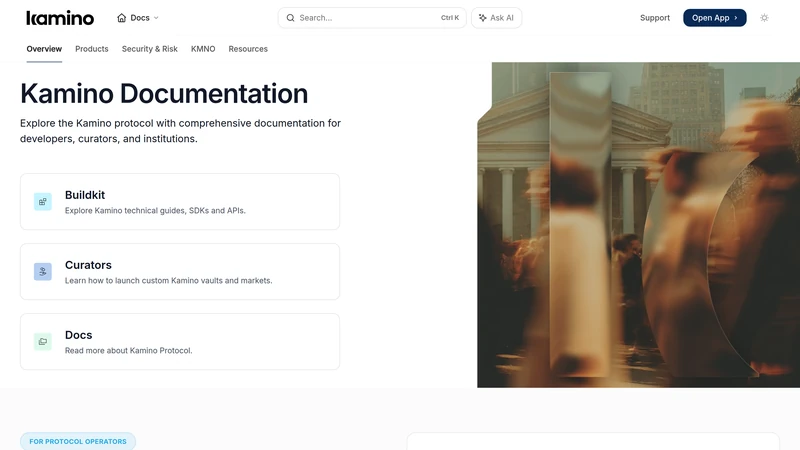
For vault questions, Kamino’s documentation is especially useful because it explains what the vault is automating for you and what receipt or position logic you should expect in return. In other words, troubleshooting gets easier when you know whether you are dealing with lending, borrowing, or an automated liquidity structure.
Frequently Asked Questions
Is Kamino Finance only for Solana?
Kamino is designed around the Solana ecosystem, so you should expect to use it with a Solana-compatible wallet and Solana-native operational habits.
What are Kamino liquidity vaults?
They are automated liquidity strategies built around concentrated liquidity DEX pools, with rebalancing and compounding handled for the user.
Can beginners use Kamino Finance safely?
Yes, but beginners should start small and begin with the simplest product surface that matches their goal instead of jumping straight into advanced strategies.
What is a kToken in Kamino?
The Kamino docs describe kTokens as deposit receipts for vault positions, which can also be used elsewhere in DeFi depending on the workflow.
Do I need to understand impermanent loss to use Kamino?
If you are using liquidity vaults, yes. You do not need to become an expert first, but you should understand the basic trade-off between yield and liquidity-strategy risk.
Is lending on Kamino usually simpler than using liquidity vaults?
Yes. For most beginners, lending is the cleaner first step because the risk model is easier to understand than a concentrated-liquidity vault strategy.
What should I monitor after depositing on Kamino?
That depends on the product. Lenders can usually focus on yield quality and asset fit, while borrowers and vault users need to monitor collateral, strategy behavior, and changing market conditions more closely.
Related reading
Disclaimer: This article is for educational purposes only and not financial, legal, or tax advice. DeFi yields and risks change quickly. Always verify product mechanics and your own risk tolerance before depositing capital.
Related Guides
- Pendle Finance Explained: Yield Tokenization, PT, YT and Fixed-Rate DeFi (2026)
- What Is Maple Finance? Institutional DeFi Lending Guide 2026
- What Is Frax Finance: Complete FXS & FRAX Stablecoin Guide (2026)
- What Is DeFi: Complete Guide to Decentralized Finance (2026)
- What Is Convex Finance? CVX & Curve Booster Guide 2026