How to Stake ETH on Coinbase: Beginner Guide 2026
— By AliceOnChain in Tutorials

Learn how to stake ETH on Coinbase in 2026: eligibility, reward flow, cbETH basics, account setup, and what beginners should know before they stake.
Staking ETH on Coinbase allows you to earn rewards by putting your Ethereum to work through the network's consensus layer. It's a reliable way to generate consistent passive income from your digital assets, and Coinbase makes the process accessible for both new and experienced crypto users, rather than letting your ETH sit idle in your wallet.
Intent check: This page is the beginner onboarding path for Coinbase ETH staking, focused on setup, rewards, and first-time decisions. If you need the operational guide for unstaking, cbETH exits, and withdrawal paths, read How to Stake and Unstake ETH on Coinbase.
How to Stake ETH on Coinbase: A Step-by-Step Guide for Passive Income
Are you holding Ethereum (ETH) in your wallet, waiting for the next market move? Instead of letting it sit idle, you could be putting your digital assets to work through the network's consensus layer. Learning how to stake ETH on Coinbase is one of the most reliable ways to generate consistent rewards in the crypto space, and the platform makes this process incredibly accessible for both newcomers and veteran traders. By participating in this ecosystem, you transform a static holding into a productive asset that compounds over time.
In this comprehensive guide, we will walk you through exactly how to earn rewards on your ETH, explain the underlying mechanics of the protocol, and cover the essential risks you need to evaluate before getting started.
What is Ethereum Staking?
Before we dive into the operational steps, it is vital to understand the "why." The network has fully transitioned to a Proof-of-Stake (PoS) consensus model. In this environment, the blockchain no longer relies on energy-intensive mining. Instead, "validators" commit their capital to propose and verify new blocks.
In exchange for this contribution to the network’s integrity, participants receive incentives in the form of newly minted tokens and a share of transaction fees. By using this exchange’s infrastructure to stake your ETH, you are essentially outsourcing the technical heavy lifting to a professional validator service.
Why Choose This Platform for Your Digital Assets?
While running a solo node requires a significant 32 ETH deposit and 24/7 technical uptime, centralized providers offer a streamlined alternative. Here is why many traders prefer this route:
User-Friendly Interface: A seamless "one-click" experience that bypasses complex command-line interfaces.
Accessibility: There are no high minimums; you can begin accumulating yield with a fraction of a coin.
Safety Standards: As a publicly-traded, US-regulated entity, the platform implements institutional-grade security protocols.
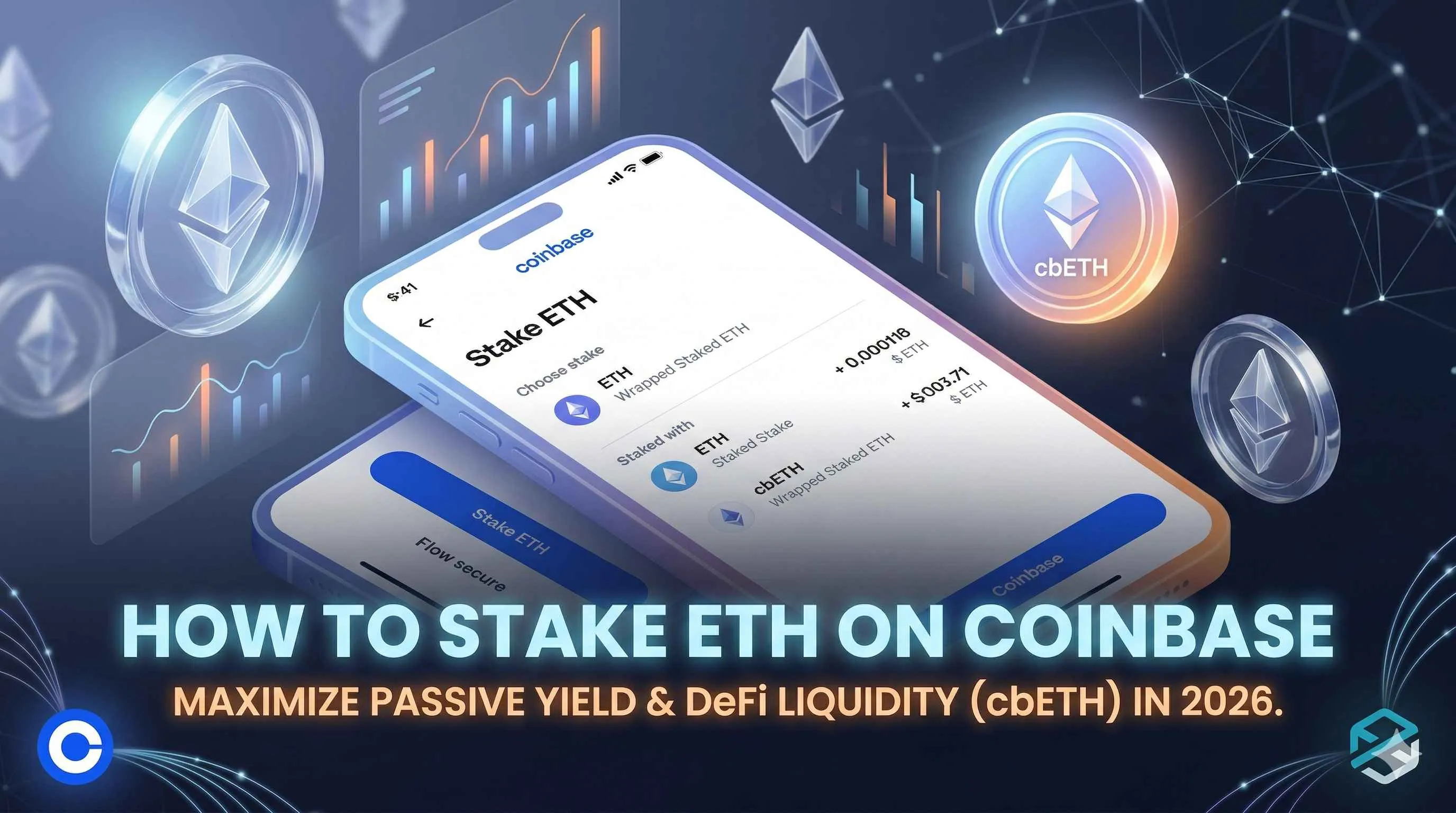
Liquidity with cbETH: Traditionally, staked assets are locked. However, the Coinbase Wrapped Staked ETH (cbETH) utility token allows you to maintain flexibility. You can trade, sell, or deploy cbETH in external decentralized finance protocols while your original deposit continues to accrue value.
Detailed Walkthrough: How to Stake ETH on Coinbase
1. Account Preparation and Funding
Log in to your verified account via the web portal or mobile application. To access earning features, ensure your identity verification (KYC) is complete and up to date. You must have Ethereum in your primary balance; you can acquire it directly via bank transfer or deposit it from an external hardware wallet or a DEX like Uniswap.
2. Locating the Earning Hub
Navigate to the "Earn" section or find the "Assets" tab. Within your Ethereum portfolio, look for a dedicated card or button labeled "Earn Rewards." Here, the platform will display the current estimated Annual Percentage Yield (APY), which reflects the real-time performance of the network and the current incentives for those who choose to stake ETH.
3. Executing the Transaction
Enter the specific amount you wish to commit. The interface will provide a transparent breakdown of the estimated rewards and the current state of the withdrawal queue. Review the terms carefully and click "Confirm." Once processed, your assets will begin contributing to the network's security immediately, and you will see your balance grow as rewards accrue.
Maximizing Utility with cbETH
One of the most powerful features of this ecosystem is the ability to "wrap" your position. When you opt for cbETH, you receive an ERC-20 token that represents your principal plus all accumulated incentives.
For active traders on platforms like DEXTools, this is crucial. It means your capital isn't "dead." You can provide liquidity on decentralized exchanges or exit your position during market volatility without waiting for the Ethereum protocol's unstaking period. This flexibility is a primary reason why many investors prefer to stake ETH on Coinbase rather than using less liquid alternatives.
Critical Risks and Market Considerations
No financial strategy is without risk. When participating in this yield-generating activity, keep the following in mind:
Liquidity Fluctuations: While cbETH offers an exit path, its market price may deviate from the underlying asset's value based on supply and demand.
Slashing Penalties: If a validator fails to perform its duties, the network can penalize the staked amount. Fortunately, the platform typically provides protection against these rare technical failures for those who stake their ETH through their service.
Platform Custody: Using a centralized exchange means you are trusting a third party with your private keys. While secure, it is a different risk profile compared to self-custody or hardware wallets.
Final Thoughts
Earning a yield on your Ethereum is a fundamental strategy for anyone looking to build a long-term position. By lowering the entry barrier and providing innovative liquidity solutions like cbETH, Coinbase has become a primary destination for passive income in 2026. Whether you are a casual holder or a DeFi enthusiast, putting your capital to work is a smart step toward maximizing your portfolio's potential. Ready to start? Follow the steps above and begin your journey into decentralized network security today.
--
Disclaimer: This article is for informational purposes only and does not constitute investment advice, financial advice, trading advice, or any other kind of advice. DEXTools does not recommend buying, selling, or holding any cryptocurrency or token. Users should conduct their own research and consult with a qualified financial advisor before making any investment decisions. Cryptocurrency investments are volatile and high-risk. DEXTools is not responsible for any losses incurred.
How to Use 1inch: Complete DEX Aggregator Swap Tutorial (2026)
Related Guides
- What Is Ethereum Staking? How It Works, Rewards and Risks (2026)
- How to Stake and Unstake ETH on Coinbase: cbETH, Exit Paths and Fees (2026)
- How to Stake Solana (SOL): Complete Staking Guide for Maximum Rewards (2026)
- Ethereum Staking Rewards, Risks and Unstaking Rules (2026)
- ETH Staking Calculator: Estimate Ethereum Rewards Live (2026)
Frequently Asked Questions
How does staking ETH on Coinbase work?
Staking lets you commit your ETH to help secure the Ethereum network and earn rewards over time, with Coinbase handling the technical process for you. In exchange for that convenience, the platform typically takes a portion of the rewards as a fee.
What is cbETH?
cbETH is a token that represents staked ETH on Coinbase and can be held or moved while the underlying ETH remains staked. It is meant to give holders flexibility, but its market price can differ from plain ETH.
Is staking ETH on Coinbase safe?
Staking through a regulated platform reduces some technical complexity, but it still carries risks including platform risk, reward variability, and potential lockup or unstaking delays. You should review the terms and understand that rewards are not guaranteed.
Can I unstake my ETH whenever I want?
Unstaking is generally possible, but it may involve waiting periods tied to the Ethereum network and the platform's own processes. Always check the current unstaking conditions before committing, since access to your funds is not always instant.