Liquidation Volume vs Bad Debt in DeFi Lending
— By Whatsertrade in Tutorials
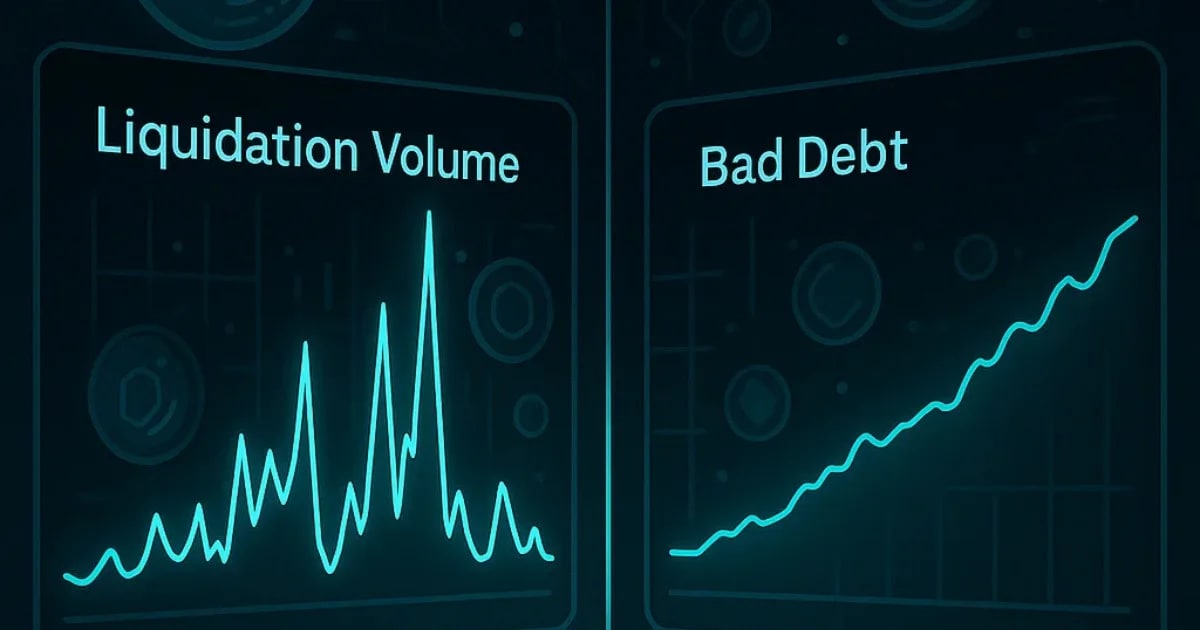
Liquidation volume vs bad debt in DeFi lending: learn which metric is the clearer indicator of protocol health and risk when lending markets get stressed.
Which Better Shows Lending Protocol Stress?
DeFi lending protocols depend on collateral. Users deposit assets, borrow against them and must maintain enough collateral to avoid liquidation. When markets move sharply, lending protocols can face stress.
Key Takeaways
- What Is Liquidation Volume?
- What Is Bad Debt?
- Liquidation Volume vs Bad Debt: The Key Difference
- Why High Liquidation Volume Can Be Healthy
- When Liquidation Volume Becomes a Warning Sign
- Why Bad Debt Is More Serious
Two important metrics for analyzing this stress are liquidation volume and bad debt. They are related, but they do not mean the same thing.
Liquidation volume shows how much collateral is being liquidated. Bad debt shows whether the protocol failed to recover enough value to cover borrowed positions.
For traders, comparing liquidation volume vs bad debt can help reveal whether a lending protocol is under control or facing deeper risk.
What Is Liquidation Volume?
Liquidation volume measures the total value of positions liquidated during a period.
When a borrower’s collateral falls below the required level, liquidators can repay part of the debt and receive collateral in return. This process helps protect the protocol.
High liquidation volume means many positions were forced to close or reduce exposure.
Liquidation volume can rise during market volatility, sharp sell offs or sudden asset crashes.
What Is Bad Debt?
Bad debt occurs when a borrower’s collateral is not enough to repay the debt.
This is more serious than liquidation volume. It means the protocol may have suffered an actual loss.
Bad debt can happen when prices move too fast, liquidity is too thin, or liquidations do not happen quickly enough.
A protocol can survive high liquidation volume if liquidations work properly. Bad debt shows that the risk system did not fully protect the protocol.
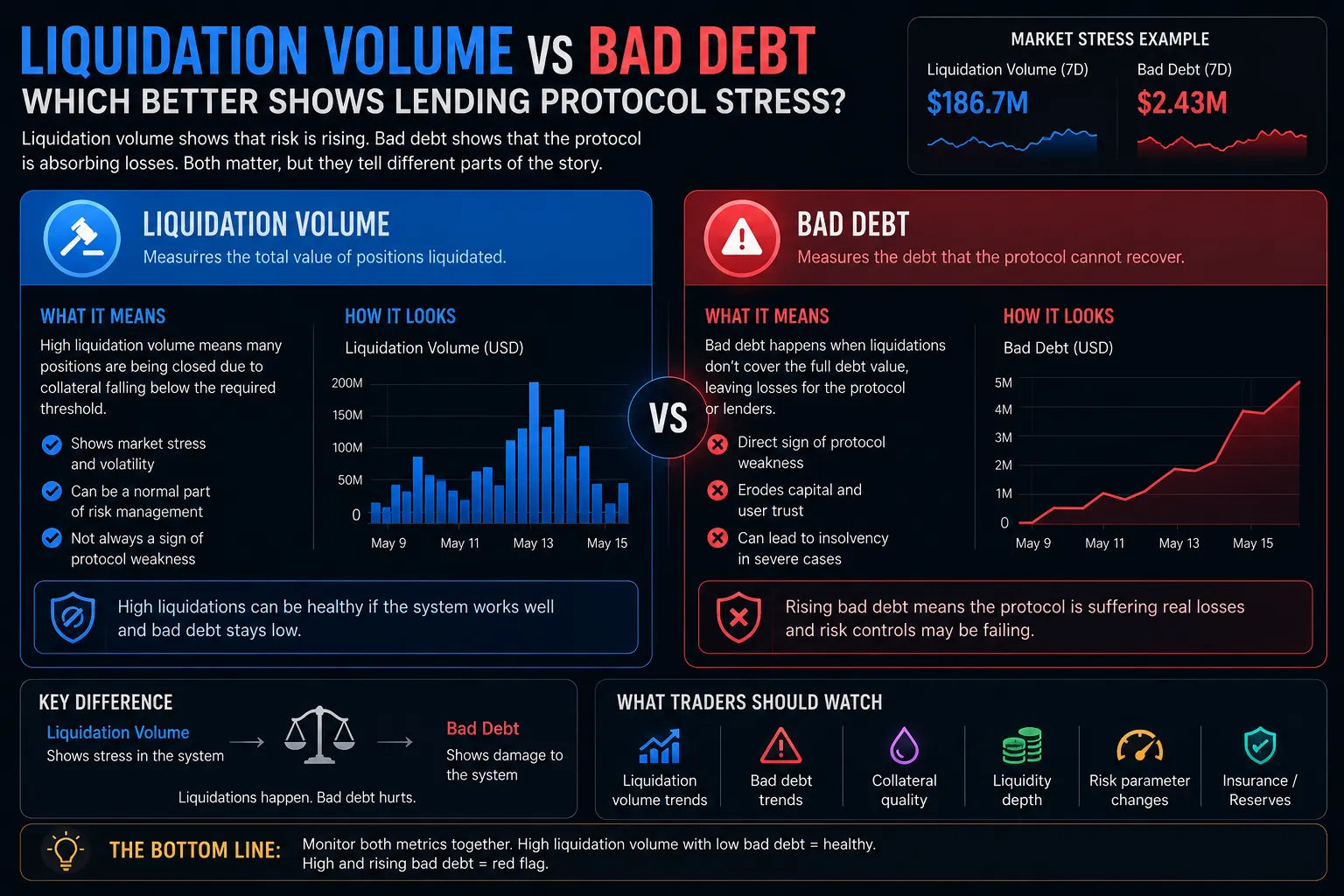
Liquidation Volume vs Bad Debt: The Key Difference
The key difference is stress vs damage.
Liquidation volume shows stress in the system. Bad debt shows damage to the system.
High liquidation volume is not automatically bad. It may show that the liquidation engine is working and risky positions are being cleared.
Bad debt is more concerning because it means losses may remain after liquidation attempts.
Why High Liquidation Volume Can Be Healthy
Liquidations can sound negative, but they are part of DeFi lending design.
When liquidations happen on time, they protect lenders and maintain protocol solvency.
A spike in liquidation volume during market volatility may simply show that the system is functioning as intended.
The key question is whether liquidations happen efficiently and without leaving unpaid debt.
When Liquidation Volume Becomes a Warning Sign
Liquidation volume becomes more concerning when it is combined with other risk signals.
These include falling liquidity, widening spreads, oracle stress, rising borrow rates and declining collateral quality.
If many liquidations happen at once, liquidators may not be able to absorb them efficiently. This can increase the risk of bad debt.
Large liquidation volume is especially dangerous when collateral assets are illiquid or highly volatile.
Why Bad Debt Is More Serious
Bad debt directly affects protocol health.
If a lending protocol accumulates bad debt, someone must absorb the loss. This may affect reserves, insurance funds, lenders, tokenholders or the protocol treasury.
Bad debt can also reduce trust. Users may withdraw funds if they believe the protocol cannot manage risk.
For traders, bad debt can be a stronger signal of real protocol stress than liquidation volume alone.
What Causes Bad Debt in DeFi Lending?
Bad debt can come from several factors.
One cause is fast price movement. If collateral drops too quickly, liquidations may not happen before the position becomes undercollateralized.
Another cause is low liquidity. If collateral cannot be sold efficiently, the protocol may not recover enough value.
Bad debt can also result from weak risk parameters, poor oracle design or excessive borrowing against volatile assets.
How Traders Should Compare Both Metrics
Traders should not look at liquidation volume or bad debt alone.
A protocol with high liquidation volume and no bad debt may be handling stress effectively.
A protocol with low liquidation volume but rising bad debt may have a hidden problem.
The best analysis asks:
Are liquidations happening on time?
Is bad debt increasing?
Are risky assets used as collateral?
Is liquidity deep enough to absorb liquidations?
Does the protocol have reserves or insurance?
Are risk parameters being adjusted?
These questions help traders understand whether stress is temporary or structural.
Why This Matters for Token Prices
Lending protocol tokens can react strongly to risk events.
If liquidations are high but the protocol remains solvent, the market may recover confidence. If bad debt grows, tokenholders may worry about governance actions, treasury losses or reduced user trust.
Bad debt can also affect narratives around protocol safety.
In DeFi, trust is a major part of value.
How DEXTools Can Help
DEXTools can help traders monitor token market reactions during lending stress events. If a protocol faces liquidations or bad debt concerns, traders can review liquidity, volume, price action and transaction flow.
This can show whether the market is pricing in fear, recovery or continued risk.
Live market behavior is important because protocol metrics and token trading do not always move at the same speed.
Final Thoughts
Liquidation volume and bad debt are both important, but they reveal different levels of risk.
Liquidation volume shows that positions are being closed under stress. Bad debt shows that the protocol may have failed to recover enough value.
For DeFi lending analysis, high liquidation volume is not always a problem. Bad debt is usually more serious.
Traders should compare both metrics to understand whether a lending protocol is managing risk or accumulating hidden losses.
How to Bridge Crypto Between Chains: Complete Cross-Chain Tutorial 2026 How to Use 1inch: Complete DEX Aggregator Swap Tutorial (2026) How to Use OKX Web3 Wallet: Multi-Chain DeFi Hub Guide (2026)Related Guides
- Loan Origination vs Outstanding Debt: Which Shows Real Lending Growth?
- Fake Volume vs Real Demand: How to Spot Artificial Momentum in DeFi Trading
- What Is TrueFi (TRU)? Uncollateralized DeFi Lending and Credit Guide 2026
- What Is Spark Protocol? Sky, USDS & DeFi Lending Guide 2026
- What Is Maple Finance? Institutional DeFi Lending Guide 2026
Frequently Asked Questions
What is the difference between liquidation volume and bad debt in DeFi lending?
Liquidation volume measures how much collateral is being sold off to repay risky loans, while bad debt is the value a protocol cannot recover even after liquidations. Liquidations are part of normal risk management, but bad debt represents an actual loss to the protocol.
Why does bad debt matter more than liquidation volume?
High liquidation volume can simply mean a protocol is managing risk effectively during volatility, whereas bad debt signals that the system failed to cover its loans. Bad debt is generally the clearer warning sign of protocol health problems.
How does bad debt form in a DeFi lending protocol?
Bad debt typically forms when collateral value drops faster than liquidations can occur, leaving loans undercollateralized and unrecoverable. Sharp price crashes, low liquidity, and delayed liquidations all increase this risk.
Is high liquidation volume always a bad sign?
Not necessarily, since liquidations are how lending protocols protect themselves and can spike simply because markets are volatile. The concern is when liquidations fail to cover the debt and bad debt accumulates instead.