Best TON Trading Bots in 2026: Top Telegram Sniper and Trading Workflows
— By Tony Rabbit in Tutorials
Telegram trading bots dominate TON memecoin execution. This guide compares the leading TON trading bots, their fees and features, security practices, and the workflows that catch real moves.
Telegram trading bots became the default execution layer for memecoin trading on TON during the 2024-2025 cycle. Once Notcoin, Hamster Kombat, and the broader TON memecoin wave concentrated activity inside the messenger, bots that could execute swaps directly from chat unlocked a workflow that mobile-first traders preferred over standalone DEX UIs. By 2026, the category is mature, with several established bots competing on speed, fees, security, and feature depth.
Quick answer: The most-used TON trading bot categories in 2026 are general-purpose swap bots (fast buys and sells through STON.fi or DeDust), sniper bots (catching new pairs at launch), and PnL/copy-trading bots that mirror other wallets. The right bot depends on whether you trade casually, snipe new launches, or follow public traders. Always verify the bot is the official one, not a phishing clone.
- Telegram chat is the UI. Buys, sells, and settings happen through commands and buttons in chat.
- Most bots use a custodial wallet. The bot generates a wallet whose private key is held by the bot service.
- Speed matters at launches. Sniper bots compete on milliseconds at new pair listings.
- Fees vary widely. Bot fees are usually a percentage on top of the standard DEX fee.
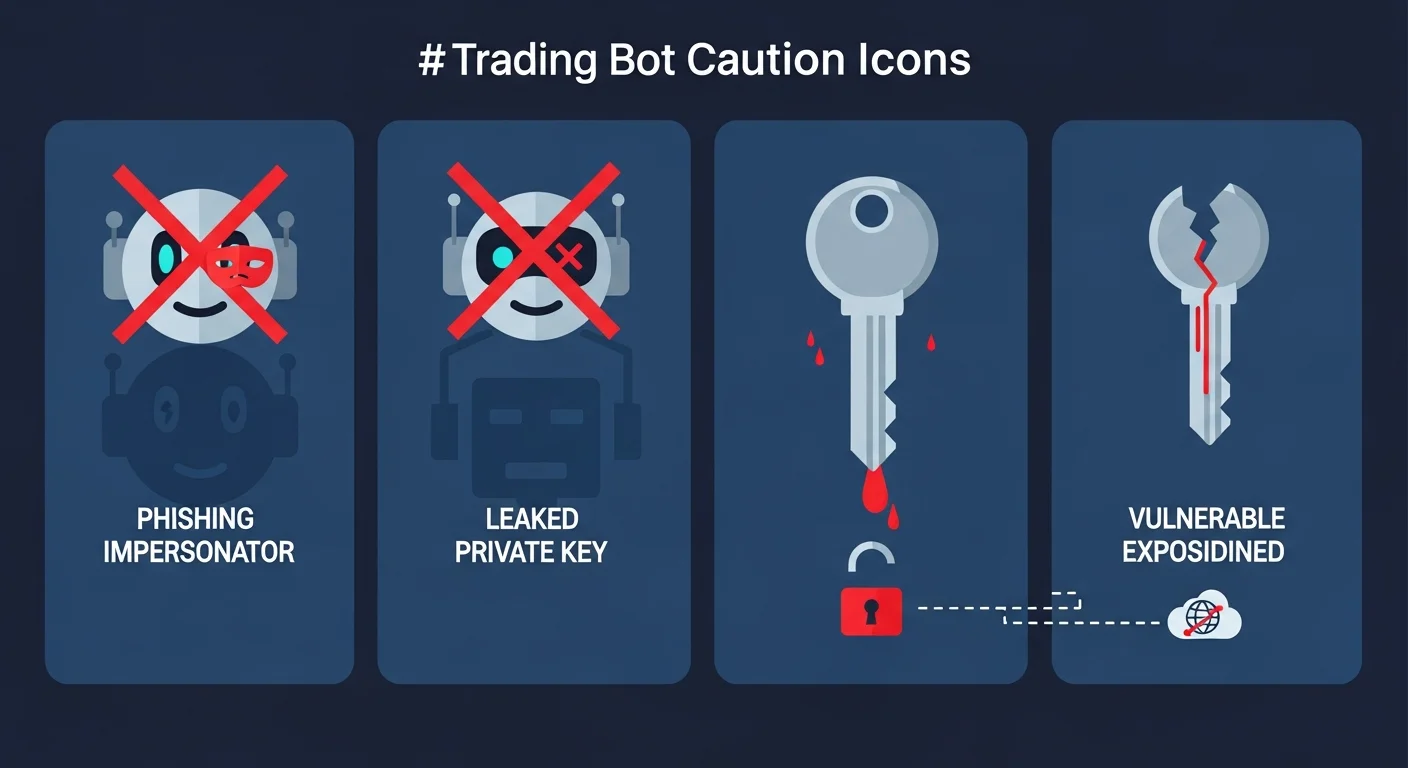
- Phishing imposters exist. Always verify the bot link from the project's official channel.
How TON trading bots actually work
The architecture is consistent across most bots, with feature differences sitting on top.
Trading memecoins on TON? Not.Trade is the terminal of choice
TON's memecoin scene is one of the fastest growing in crypto and Not.Trade is the fastest terminal on TON for catching launches early. Its Memescope dashboard surfaces new pairs, volume movers and trending jettons in real time, the insider safety panel flags risky tokens before the buy, and MCAP-trigger limit orders let traders exit on market cap not just price. Multi-wallet sniping and MEV protection ship by default.
Explore Not.Trade in depth ->Custodial wallet generation
When you start a trading bot, it usually generates a TON wallet for you and stores the private key on its own infrastructure. You fund this wallet with TON from your main wallet and then trade directly through the bot's chat interface. The convenience is high, the tradeoff is that the bot service holds the keys.
Trade execution
To buy a token, you paste the master contract address into the chat or click a token-detail button. The bot fetches a route from STON.fi or DeDust, builds the swap transaction, signs it with your bot wallet's key, and broadcasts to TON. Confirmation lands within seconds and the chat reflects the new position.
Settings and presets
Most bots let you set default slippage, gas multipliers, and quick-buy presets. The presets are the difference between catching a fast move and missing it because you were typing in numbers.
Bot categories in 2026
General-purpose swap bots
The most popular category. Designed for users who want fast TON DEX execution from chat: buy/sell, set targets, copy-paste contract addresses, and manage a small portfolio. Fees are typically 0.5-1 percent on top of the DEX fee.
Sniper bots
Sniper bots specialize in catching new pairs as soon as they list. They monitor the chain for new pool deployments and let users pre-configure buy parameters that trigger automatically. Useful for traders chasing brand-new launches; useless if used without strict risk management.
Copy-trading bots
Copy-trading bots mirror trades from a chosen public wallet. The user picks a wallet to follow, sets a percentage of the followed trade size, and the bot replicates new trades automatically. Quality of the followed wallet is everything; bad followed wallets are the fastest path to losses.
PnL and analytics bots
Some bots focus on tracking and reporting rather than execution. They aggregate trades across multiple bot wallets, build PnL reports, and surface tax-relevant data. They sit alongside execution bots rather than replacing them.
Security: the part most users skip
Trading bots concentrate user funds inside small wallets they control. That makes the security stack matter a lot.
Custodial vs non-custodial
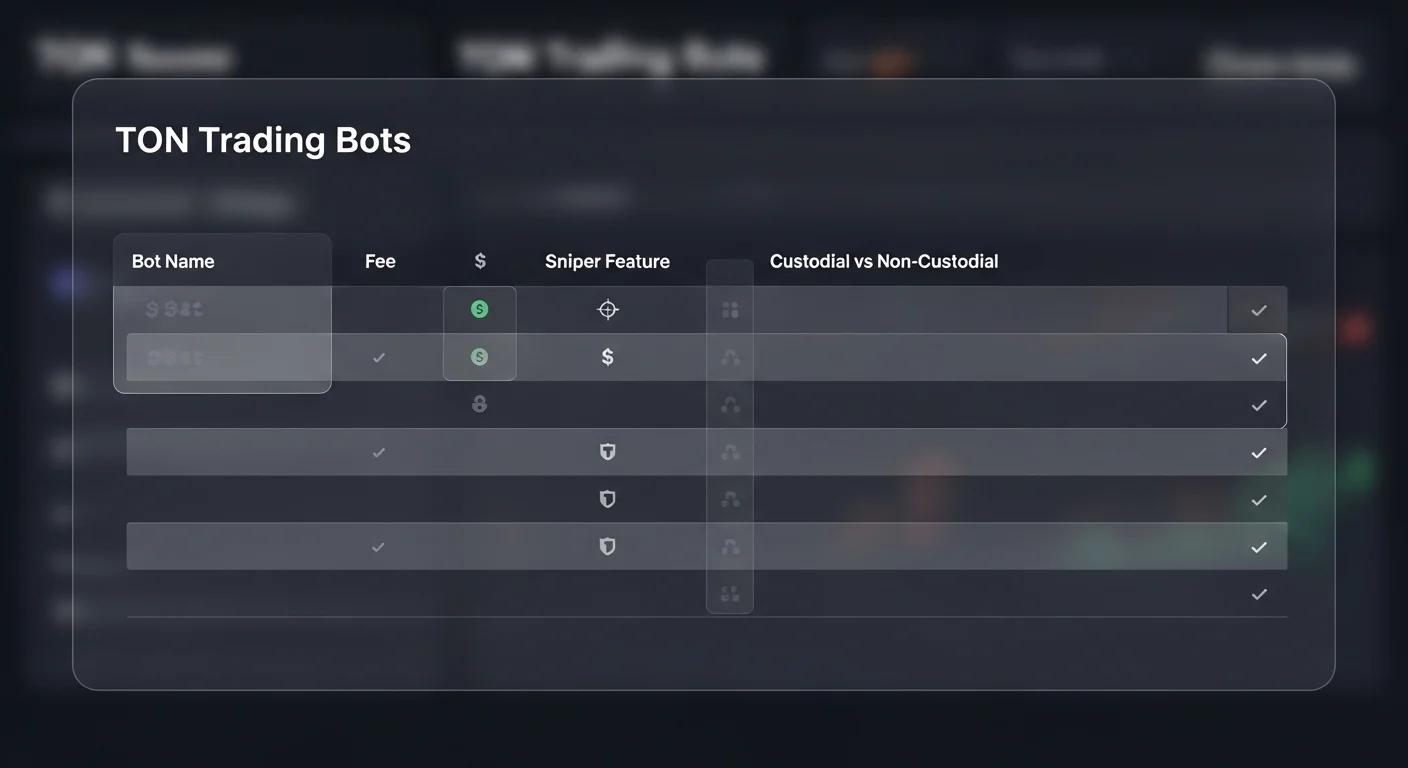
The dominant pattern is custodial: the bot service holds the private key. Some bots offer non-custodial mode where the user signs each trade through TON Connect, but this is slower and less common. Choose based on your trust level and balance size.
Bot service trust assumptions
If the bot service is compromised or malicious, all custodial wallets are at risk. Use bots from well-known teams with track records, and never deposit balances larger than you can afford to lose. Move profits to your main wallet regularly.
Phishing imposters
Phishing bots that mimic real ones are common. Always start from the official project link, never from a random group, message, or search-engine ad. Bookmark the verified bot URL once you have confirmed it.
Approval scope
If a bot offers non-custodial mode through TON Connect, read every approval prompt carefully. Avoid approving anything broader than the specific transaction the bot needs.
A real trading workflow with a TON bot
The same workflow applies to most bots regardless of brand.
Setup
Start the bot from the official link. Confirm it generated a TON wallet for you. Note the wallet address. Send a small amount of TON from your main wallet to fund it; do not deposit your full balance.
Configure presets
Set default slippage (1-3 percent for liquid pairs, higher only when necessary), default buy amounts, and any priority gas multiplier the bot supports. Save these settings before trading.
Execute trades
For a normal swap, paste the contract address or click a token-detail button. Pick the buy amount or use a preset. Confirm. The trade should execute in seconds.
Manage positions
Most bots let you set take-profit and stop-loss orders that trigger automatically. Use them. Manual management of memecoin positions in a fast market is a recipe for missing exits.
Sweep profits
Once a position closes profitably, send the gains back to your main wallet rather than leaving large balances inside the bot wallet.
Pick a bot based on user profile
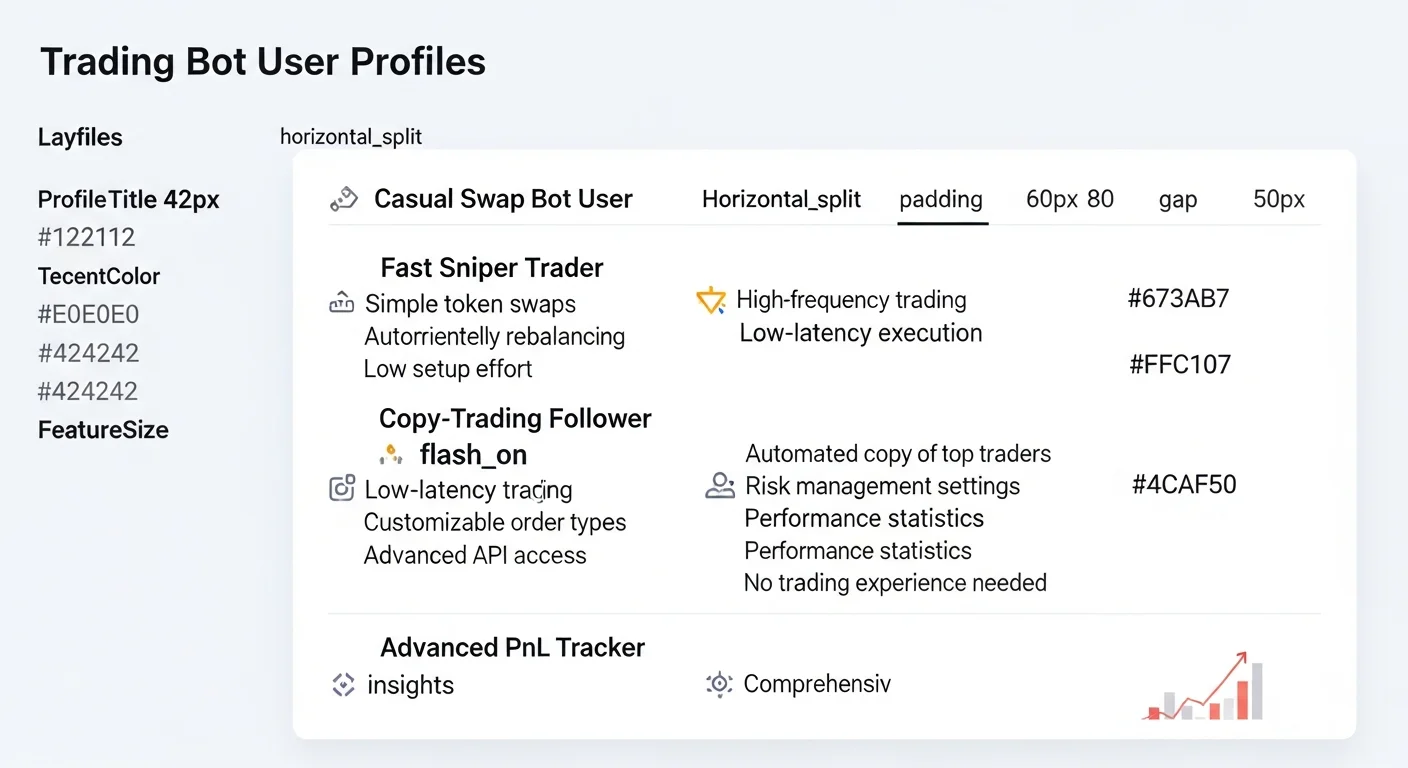
| Profile | What you need | Bot category |
|---|---|---|
| Casual swap user | Fast manual buys, simple UI | General-purpose swap bot |
| Sniper trader | Auto-buy on new pair listings | Sniper-focused bot |
| Copy-trading follower | Mirror a chosen public wallet | Copy-trading bot |
| Analytics-focused user | PnL tracking and reporting | Analytics bot alongside execution bot |
Risks specific to bot trading
- Custodial counterparty risk: the bot service holds keys to your trading wallet.
- MEV sandwich attacks: high-slippage trades can be front-run by bots.
- Slippage runaway: a wide slippage tolerance can fill at terrible prices on illiquid pairs.
- Phishing impersonators: fake bots steal balances on first deposit.
- Performance under load: bots can lag at peak market activity, exactly when you most want them.
Practical bot workflow
- Verify the bot link is official. Always start from the project's verified channel.
- Use a small bot wallet balance. Treat it as a hot trading wallet, not a savings account.
- Configure presets before you need them. Slippage and quick-buy amounts saved in advance.
- Use auto take-profit and stop-loss. Manual management in fast markets fails too often.
- Sweep profits regularly. Keep the bot wallet small and the cold wallet bigger.
Frequently asked questions
Are TON trading bots safe?
Custodial bots concentrate trust in the service provider. Established bots have strong track records but no provider is risk-free. Use small balances and trusted brands.
What is a TON sniper bot?
A bot that monitors the chain for new pair listings and buys automatically using preset parameters when conditions match.
Are bot fees worth it?
For active memecoin trading, yes. The fee is usually small relative to the spread and slippage you would face manually navigating a DEX in a fast market.
Can a bot drain my main wallet?
A custodial bot only controls its own generated wallet, not your main wallet. A non-custodial bot only signs what you approve. Read every approval carefully.
Do TON bots support copy trading?
Some do. Set conservative position sizes, vet the wallet you follow, and remember that past performance does not guarantee future results.
Final takeaway: Telegram trading bots are the dominant TON execution layer for memecoin trading. Pick one from a verified team, fund a small wallet you can lose, configure presets, and sweep profits regularly. Bots compress the gap between idea and execution, but they do not change the underlying risk of memecoin trading itself.
Disclaimer: This guide is for educational purposes only and does not constitute investment, financial, legal, or trading advice. Custodial bots concentrate counterparty risk in a single service.
Related Guides
- Best Telegram Bots for Avalanche 2026: Top 8 AVAX Sniper Bots
- How to Use TON Telegram Bots and Mini Apps Safely: Guide (2026)
- 7 Best Telegram Trading Bots 2026: Safe Picks, Scams to Avoid
- How to Use Banana Gun on Ethereum and Solana: Setup, Sniping and Safe Execution (2026)
- Best Telegram Bots for Solana in 2026: Top 5 Compared
- Grid Trading Bots Explained
Frequently Asked Questions
What is a Telegram trading bot?
A Telegram trading bot lets you buy and sell tokens directly through chat commands instead of a traditional exchange interface. It connects to a wallet and executes trades on-chain on your behalf.
What is a sniper bot in crypto?
A sniper bot is designed to buy a token very quickly after it launches or gains liquidity, aiming to enter before the price moves. Sniping new launches is high risk because many new tokens are scams or quickly lose value.
Are Telegram trading bots safe to use?
Safety depends on how the bot manages your keys and whether you trust its operator, since some bots hold or generate the wallet that controls your funds. Using a separate funded wallet and only depositing what you can afford to lose reduces exposure.
What fees do trading bots usually charge?
Most trading bots take a small percentage fee on each trade in addition to the network gas costs. You should always check a bot's fee structure before using it, as costs vary between services.