Best Telegram Bots for Avalanche 2026: Top 8 AVAX Bots
— By Tony Rabbit in Tutorials
Compare the 8 best Telegram bots for Avalanche in 2026, including Maestro, Banana Gun, and MevX, with routing, fees, and AVAX sniping tactics inside.
Avalanche has quietly become one of the most rewarding EVM playgrounds for Telegram trading bots in 2026. Sub-second finality on the C-Chain, gas fees that rarely break a few cents, and a memecoin culture that produced 100x runners like KIMBO and COQ INU mean snipers can actually convert speed into PnL. But not every Telegram bot treats AVAX as a first-class citizen, and the ones that do approach Trader Joe v2.2 liquidity book pools, GMX perps, and Pangolin routing in very different ways.
This guide ranks the eight most relevant Telegram bots for Avalanche in 2026, dissects their feature stacks, breaks down realistic fees, and walks through the exact workflow professional snipers use to enter low-cap AVAX tokens before the dump. It also covers the part most listicles skip: how Avalanche L1s (formerly Subnets) change which bots can actually reach the liquidity, and where bots still cannot follow.
You will get a comparison table, a step-by-step setup, two real sniping case studies on KIMBO and COQ INU style launches, and a clear breakdown of when a Telegram bot beats a polished UI like LFJ or Squid Router. By the end, you should know exactly which bot to load on your phone for Avalanche memecoin season and which to leave behind.
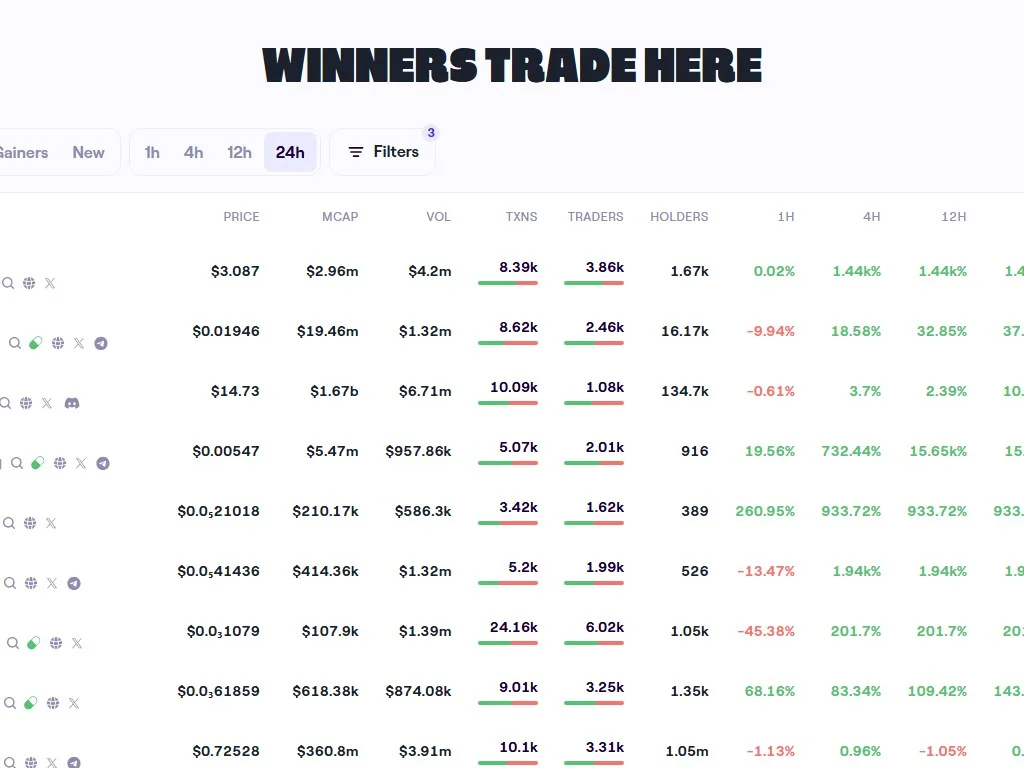
What Is a Telegram Trading Bot on Avalanche?
A Telegram trading bot is a chat-based wallet and execution engine that lets you buy, sell, snipe, and manage tokens on a blockchain directly from a Telegram conversation. On Avalanche, that means swapping AVAX, USDC, and any ERC-20 across Trader Joe (now LFJ), Pangolin, GMX, and other C-Chain DEXs without ever opening MetaMask. The bot generates a hot wallet, signs every transaction server-side, and sends back a receipt in seconds.
The TON-native answer: Not.Trade
If the bots compared here serve Solana, Ethereum or Base, the equivalent on TON is Not.Trade, a Telegram-native terminal positioned as the fastest on TON. It brings the same workflow that traders expect from BonkBot, Trojan or GMGN (sniper, copy trade, limit orders, multi-wallet) plus features Solana bots typically lack: MCAP-trigger limit orders and a built-in insider safety panel covering Top 10 holders, snipers, dev wallet movement, bundlers and LP lock status.
Open the Not.Trade complete guide →The point of using a Telegram bot instead of a browser DEX is speed and automation. You can paste a token contract, set slippage, and fire a buy in under three seconds. Sniper modes can pre-sign a transaction and broadcast the millisecond a liquidity pool opens, and limit orders, copy trades, and stop losses run 24/7 without you babysitting a tab. For Avalanche specifically, that latency advantage matters because fair launches on Trader Joe v2.2 often see the first 30 seconds decide who pays 0.1 AVAX per token and who pays 10.
Why Avalanche Is Built for Telegram Bot Trading
Avalanche is not just another EVM chain bots have bolted on as a checkbox. The architecture genuinely helps execution quality, and that translates directly into better bot performance. Four properties make the C-Chain attractive for sniping and active trading.
Snowman consensus gives Avalanche near-instant finality. Your buy tx is final in roughly 1 to 2 seconds, with no 12 to 13 second probabilistic wait like Ethereum.
C-Chain gas typically sits at 25 to 50 nAVAX. A bot swap costs a few cents, so even a 5 AVAX position is economically viable to scalp.
Solidity contracts, MetaMask seeds, and existing EVM tooling work out of the box. Any bot that supports Ethereum can support Avalanche with a chain ID change.
Trader Joe v2.2 liquidity books, Pangolin, GMX perps, and Benqi lending give bots multiple venues to route trades and arbitrage between.
The combination matters. A chain with cheap fees but slow finality is bad for snipers because confirmations stack up. A chain with fast finality but expensive gas is bad for scalpers because micro-trades bleed. Avalanche is one of the few L1s that gives both at once, which is why bots like Maestro and Banana Gun treat it as a tier-one network instead of an afterthought. If you want a deeper primer on the chain itself, our DeFi guide covers how the C-Chain fits the broader picture.
A Short History of Avalanche Bot Trading
The story of Telegram bots on Avalanche tracks the broader memecoin cycles of the chain. The first wave arrived in 2022 with simple multi-chain sniper bots that supported AVAX as one of many EVM options. None of them were optimized for Trader Joe v1 mechanics, and most traders preferred the browser route through joepegs and Avascan. Bot adoption stayed marginal because there was nothing to snipe.
That changed in late 2023 with the KIMBO launch. KIMBO was a fair-launch memecoin that ran from a fraction of a cent to over 0.025 USD in a matter of weeks. Snipers who hit the opening block of the Trader Joe pool made life-changing money, and word spread fast that bot speed mattered on AVAX. COQ INU followed in December 2023 with a similar trajectory, hitting a 500 million dollar market cap before correcting. Suddenly every serious AVAX trader wanted a sniper in their pocket.
By 2024, Maestro, Banana Gun, Trojan, and a handful of newer entrants like Shuriken and Bullx had built out proper Avalanche support, including liquidity-book aware routing and anti-MEV pathways. The 2025 to 2026 cycle has been about refinement: better mempool monitoring on AVAX, native LFJ v2.2 routing, and integration with Avalanche L1s for projects launching outside the main C-Chain.
How Telegram Bots Actually Execute on Avalanche
Understanding what happens between you typing a contract address and tokens landing in your wallet matters because it explains why certain bots are faster, cheaper, or safer than others. The flow looks simple from the chat window but involves several distinct steps under the hood.
The route discovery step is where bots differ the most. A naive bot will query a single DEX router, usually LBRouter on LFJ, and execute. A sophisticated bot will check Pangolin, GMX swap, and even cross-DEX aggregator paths through Paraswap or 1inch, then pick the route with the lowest combined slippage plus gas. Maestro and Banana Gun both run multi-route logic on Avalanche, while smaller bots often default to the first router they hit, which leaves money on the table for larger orders.
Trader Joe v2.2 Liquidity Book and What Snipers Need to Know
Trader Joe rebranded to LFJ and shipped v2.2 of its Liquidity Book, the concentrated-liquidity AMM that replaced the constant-product pools from v1. This matters more for snipers than people realize, because v2.2 introduces price bins, variable fees, and a totally different slippage curve than what bots originally optimized for.
In a v2.2 pool, liquidity is concentrated in discrete bins at specific prices, not spread across a curve. When you buy through a sniper bot, your order walks through bins from the bottom up. If the launch pool only has liquidity in the first three bins, a 5 AVAX buy might empty them all and leave you holding tokens priced at a level no one will sell into. The bot will return success, but your effective entry will be terrible.
For new pool launches on liquidity book v2.2, set your max slippage to the bin step times the number of bins you are willing to walk. A 25 bp bin step pool with 20 bins of tolerance means 5% slippage. Banana Gun, Maestro, and Bullx all expose bin-aware slippage on Avalanche. Generic EVM bots without LFJ-specific logic will misprice this.
Variable fees are the second wrinkle. LFJ v2.2 pools charge a base fee plus a volatility surge fee that increases when price moves quickly. For a sniper hitting the opening block, the surge fee can spike the effective swap fee from 0.3% to 2% or higher. Bots that report the quote based on the resting fee underreport your actual cost. Always check the post-trade receipt, not the pre-trade quote.
The Top 8 Telegram Bots for Avalanche in 2026
This ranking weighs Avalanche-specific routing quality, sniper latency on LFJ v2.2 pools, fee structure, multi-wallet support, and reliability across the 2024 to 2026 cycle. Bots that treat AVAX as a tier-one chain rank higher than bots that bolt it on as one of fifteen networks.
1. Maestro: Best Cross-Chain Continuity
Maestro keeps the top slot because it treats Avalanche with the same depth as Ethereum and BNB Chain. It supports LFJ v2.2 liquidity book routing, Pangolin fallback, GMX swap, and even auto-detects when a token has been bridged from Avalanche to another chain via Stargate. For a trader who actively rotates between AVAX memecoins, BASE launches, and Ethereum bluechips, Maestro removes context-switching friction entirely. The same command syntax, the same wallet model, the same limit-order engine.
Features that matter on AVAX include private TX routing through MEV-protected relays, copy trading with per-wallet AVAX caps, multi-wallet rotation up to ten wallets, and a sniper engine that monitors new LFJ pool deployments in real time. Fees sit at 1.0% per trade, which is on the higher end, but the routing quality and fewer failed transactions typically save more than the fee costs. Maestro lives at @maestro.
2. Banana Gun: Best for Memecoin Snipers
Banana Gun is the cleanest answer for someone who wants to snipe Avalanche memecoins specifically. The sniper engine is genuinely fast on AVAX because the team maintains dedicated RPC infrastructure for the C-Chain, not just a generic EVM endpoint. Anti-MEV protection through MEVBlocker-style relays cuts down on sandwich attacks during high-volume launches, which was a real problem during the COQ INU mania of late 2023.
The UI exposes auto-buy, manual buy, limit orders, copy trades, and a sniper queue that pre-signs your transaction so it broadcasts the instant liquidity is added. Fees are 1.0%, and the bot supports up to five hot wallets per Telegram account. Banana Gun is at @BananaGunSniper_bot.
3. MevX: Best Multi-Chain Aggregator
MevX positions itself as a low-fee, multi-chain bot with native aggregator routing. On Avalanche, that means it pulls quotes from LFJ, Pangolin, and GMX simultaneously and routes through whichever path gives the best post-fee output. Fees are 0.9%, slightly under Maestro and Banana Gun. The trade-off is that the sniper queue is less mature than Banana Gun on AVAX specifically, so MevX is a better fit for size trades on established tokens than for the first-block dive on a fresh launch.
4. Shuriken: Best Lean Workflow
Shuriken keeps the interface stripped down on purpose. There are no flashy stats screens, no copy-trade leaderboards, no unnecessary menus. Just paste, buy, sell. Fees are 0.85% which is among the lowest in the top eight, and Avalanche routing covers LFJ and Pangolin properly. Snipers who do their research outside the bot and only use the bot for execution often prefer Shuriken because the UI does not get in the way. Shuriken is at @ShurikenTradeBot.
5. SnipeOnDeath: Best for Fair-Launch Sniping
SnipeOnDeath is a specialist tool built around one job: hitting the first block of a Trader Joe Liquidity Book launch. The bot maintains aggressive monitoring of pending LFJ pool deployment transactions and pre-signs your buy with priority gas. For tokens that fair-launch with no presale and no team allocation, this is the kind of bot that makes the difference between buying at bin 0 and buying at bin 30.
The trade-off is that everything outside the sniper feature is basic. Manual buys, limit orders, and copy trades exist but are less polished than Maestro or Banana Gun. Treat SnipeOnDeath as a specialist tool you load alongside a generalist, not as your only AVAX bot.
6. AvaxBot: Best Avalanche-Native Option
AvaxBot is exactly what it sounds like, an Avalanche-only Telegram bot. The team optimizes purely for the C-Chain, so LFJ v2.2 routing, GMX integration, and Benqi position management get more attention than they would in a multi-chain bot juggling priorities. Fees are 0.8%, which is the lowest in this list. The downside is the single-chain focus: if you also trade Ethereum or Base, you will need a second bot, which usually means a second hot wallet and twice the operational surface.
7. Trojan: EVM Extension to Avalanche
Trojan started as a Solana-first bot and extended to EVM chains including Avalanche. The strength is the user base familiarity: traders who already use Trojan on Solana can paste an AVAX contract and execute with the same muscle memory. Routing covers LFJ and Pangolin, fees are 0.9%, and the copy-trade engine is one of the best in the market. The weakness is that Avalanche-specific optimizations lag behind Maestro and Banana Gun, so for pure AVAX power users it is a third or fourth pick rather than a default.
8. Bullx: Best Terminal-Style Interface
Bullx is technically a web terminal with a Telegram companion bot. The web side gives you a Bloomberg-terminal-style multi-chart view of Avalanche memecoins with live trade feed, holder analytics, and one-click buy. The Telegram bot mirrors the wallet so you can fire executions from your phone when you are away from the desk. Fees are 1.0%. Bullx makes more sense as a research-plus-execution hybrid than as a pure mobile sniper.
Step-by-Step: How to Start Trading on Avalanche with a Telegram Bot
Here is the exact workflow from zero to first trade. This assumes you have AVAX in a personal wallet ready to fund the bot. If you need to acquire AVAX first, our guide on how cryptocurrencies work covers the basics.
- Pick one bot from the top three. Maestro for cross-chain, Banana Gun for AVAX sniping, MevX for aggregated routing. Open the bot on Telegram and run /start.
- Generate an Avalanche wallet. The bot creates a C-Chain hot wallet automatically. Save the seed phrase offline. This is your only recovery path.
- Fund with a small test amount. Send 0.5 to 1 AVAX from your main wallet to the bot wallet. Never fund a bot wallet with more than you can lose in a single rug.
- Configure default settings. Set slippage to 5% for established tokens, 15% for memecoin launches. Enable anti-MEV if the bot supports it. Set priority gas to medium.
- Verify the contract on DEXTools. Paste the contract on DEXTools to check liquidity, holders, and volume before any buy. Bots are fast, but they do not protect you from a honeypot.
- Execute a 0.1 AVAX test buy. Confirm the receipt shows the expected token amount and that you can sell back to AVAX without revert.
- Scale up only after the test trades reconcile. If anything looks off, debug before adding more funds.
KIMBO and COQ INU Case Studies: Real Sniping Tactics
The two defining Avalanche memecoin launches of the 2023 to 2024 cycle illustrate exactly when a Telegram bot was worth the fee and when it was not. Both ran from sub-cent prices to massive market caps, but the sniping conditions were very different.
KIMBO: The Slow Burn Sniper Opportunity
KIMBO launched on Trader Joe v2 in late 2023 with a fair launch model: no presale, no team allocation, all supply in the LP. The first hour saw moderate volume but no real run. Snipers who tried to first-block the launch through Banana Gun or Maestro got fills around 0.0001 AVAX per token. The token then chopped for several days before catching its first major leg up.
The lesson: KIMBO was less about block-zero sniping and more about disciplined accumulation. Bots helped because they let you scale into position over multiple buys without manually re-confirming MetaMask each time. Limit orders set at 0.00008 and 0.00012 AVAX filled comfortably and let traders DCA into a 10x position. The trade was won by patience and bot-assisted limit orders, not by being first.
COQ INU: The Pure First-Block Sniper Race
COQ INU was the opposite. The launch in early December 2023 went vertical from minute one, driven by community coordination and the Avalanche memecoin narrative gaining mainstream attention. Snipers who hit the first three blocks of the LP got fills near 0.00000005 AVAX per token. By block 50, the same token was at 0.0000005, a 10x in under a minute. By the end of the first hour, it was 100x from launch.
The lesson: COQ INU was a pure latency race. Banana Gun and SnipeOnDeath users with pre-signed transactions and aggressive priority gas dominated the early bins. Traders using slow generic EVM bots missed by 30 seconds and paid 30x more for the same entry. Anti-MEV mattered too, because the sandwich attacks during the first ten blocks were brutal.
For every KIMBO and COQ INU, hundreds of fair-launch AVAX tokens rugged or never moved. Sniping is a probabilistic game. Even the best bot cannot turn a bad pick into profit. Always validate liquidity lock, contract source, and team wallet behavior before sizing up. Read our guide on avoiding crypto scams before any meaningful trade.
Avalanche L1s (Subnets): What Bots Can and Cannot Reach
Avalanche rebranded Subnets as Avalanche L1s in 2024 to reflect the architecture more accurately. An L1 on Avalanche is a sovereign chain that uses the Avalanche consensus protocol but maintains its own validator set, gas token, and rules. Examples include DFK Chain, Beam, and Dexalot. From a bot perspective, this matters because Telegram bots that say they support Avalanche almost always mean the C-Chain only.
If a project launches its token on an Avalanche L1 instead of the C-Chain, you will not be able to trade it through Maestro, Banana Gun, or most of the other bots on this list without bridging first. Bridging usually means moving liquidity through ICTT (Interchain Token Transfer), which adds latency and breaks the sniping use case entirely. For practical purposes, treat L1 launches as off-limits for bot sniping unless the project also lists on a C-Chain DEX.
There is a small but growing category of L1-specific bots, and the Avalanche team has signaled interest in standardizing bot infrastructure across L1s. But as of 2026, the safe assumption is: bot = C-Chain only. If you see an Avalanche tag on a token, check Avascan to confirm it is on chain ID 43114 (the C-Chain) before pasting it into your bot. Tokens on other chain IDs will either fail or, worse, get routed through a wrong pool and return garbage.
Telegram Bots vs UI-Based Tools: When to Use Which
Telegram bots are not always the right answer. Avalanche has excellent browser-based DEX aggregators including LFJ (formerly Trader Joe), Squid Router for cross-chain swaps, KyberSwap, and Paraswap. Each has its place in a serious workflow.
- Sniping a new pool launch
- Trading from mobile away from desktop
- Running copy trades on a watchlist
- Setting limit orders that fire 24/7
- Executing fast on memecoin volatility
- Trading 1000 USD or more in size
- Swapping across multiple chains via Squid
- Needing exact slippage and price impact preview
- Using your hardware wallet directly
- Adding or removing LP positions on LFJ
The honest answer for most active AVAX traders is both. Bot for speed and mobile. UI for size and precision. Keep the bot wallet small for hot trading, and route serious capital through your main wallet on the LFJ web interface where you can see the full quote, the bin breakdown, and the slippage curve before signing.
Fees, Referrals, and the Real Cost of Bot Trading
Every Telegram bot makes money the same way: a percentage fee on every trade routed through the bot wallet. On Avalanche, fees range from 0.8% on AvaxBot up to 1.0% on Maestro, Banana Gun, and Bullx. That fee is added on top of the DEX swap fee, which on LFJ v2.2 typically ranges from 0.05% to 0.3% depending on the pool, plus gas.
The all-in cost of a 100 AVAX trade on Banana Gun routing through an LFJ v2.2 0.3% pool looks roughly like this:
That 2.6 AVAX round-trip cost on a 100 AVAX trade is non-trivial. You need at least a 2.6% gross move just to break even, before slippage. Most bots offer referral discounts that knock 10% to 20% off the bot fee permanently. Sign up through a referral link if you have one, because over a year of active trading the savings compound to real money.
Risks Every AVAX Bot Trader Should Internalize
Telegram bot trading is convenient and fast, but it carries a stack of risks that browser-wallet trading does not. Knowing them up front lets you size positions appropriately and avoid catastrophic losses.
Your private key sits on the bot server. If the bot is compromised, your funds can be drained. Never keep large balances in a bot wallet.
Always verify the exact Telegram handle from the official site. Fake @maestro_official bots have drained thousands of users.
Bots execute what you tell them. If you snipe a honeypot, the bot will buy but cannot sell. Validate every contract before paste.
High-volume launches attract sandwich bots. Use anti-MEV routing where available and avoid extreme slippage settings.
Bot servers go down. If your sell order does not fire during a dump, you can lose unrealized gains. Always have a fallback path.
Custodial bot wallets sit in a regulatory gray zone in some jurisdictions. Know your local rules before relying on them for serious capital.
The single most important habit is wallet segregation. Your bot wallet should hold only the AVAX you are actively trading this week, never your long-term holdings, and never a position so large that a server compromise would change your life. Our guide on burner wallets for airdrops and meme coins covers the principle in depth.
Referral Systems and How Bots Actually Monetize
Every major Telegram trading bot runs a multi-tier referral program. You get a unique referral link, anyone who signs up through it becomes your referee, and you earn a percentage of their bot fees forever. Maestro pays 35% of fees from direct referrals plus 10% from second-tier referrals. Banana Gun pays 35% direct plus 10% second-tier. Most others sit in the 25% to 40% range.
For active traders, joining through a friend's referral link costs you nothing because the bot still charges the same fee, but the referrer earns a share. Some communities offer rebate programs where the referrer kicks back 50% of their earnings to the referee, which effectively reduces the bot fee from 1.0% to 0.825%. If you are going to trade significant volume, take the time to find a rebate program before signing up. The savings over a year are real.
2026 Avalanche Ecosystem Status: What Matters for Bot Traders
The Avalanche ecosystem in 2026 is in a stronger position than at any point since the 2021 to 2022 cycle. The Avalanche9000 upgrade dramatically reduced L1 deployment costs, which has pulled new projects onto the network. LFJ remains the dominant DEX on the C-Chain with multi-billion TVL across v1, v2, and v2.2 pools. GMX continues to run perps natively on Avalanche alongside Arbitrum. Benqi and Aave provide the lending infrastructure.
For bot traders, three trends matter. First, LFJ v2.2 has cemented liquidity-book mechanics as the default for new launches, which means bot routing logic has converged on bin-aware execution. Second, the rise of Avalanche L1s creates a two-tier market where C-Chain tokens are bot-accessible and L1 tokens are not. Third, the memecoin culture that produced KIMBO and COQ INU has stabilized into a more mature flow of mid-cap launches, which favors limit orders and copy trades over pure first-block sniping. The bots that adapted to all three trends are the ones that rank in the top three of this guide.
Best Practices for AVAX Bot Trading in 2026
- Hold no more than two weeks of trading capital in the bot wallet.
- Validate every contract on DEXTools before pasting into the bot.
- Set slippage based on pool depth, not a generic default.
- Use anti-MEV routing on launches where the bot supports it.
- Take profits in stages instead of trying to top-tick.
- Keep a fallback path through the LFJ web UI for when the bot goes down.
- Verify the bot Telegram handle from the official website every time you onboard a new device.
- Use unique passwords and 2FA on your Telegram account.
- Track every trade in a spreadsheet so you can backtest your own decision quality over time.
- Treat bot fees as a fixed cost of doing business and price them into your edge calculation.
Frequently Asked Questions
Q Q Q What is the best Telegram bot for Avalanche in 2026?
For most active AVAX traders, Maestro is the best all-around choice because it combines deep LFJ v2.2 routing, copy trading, multi-wallet support, and cross-chain continuity. If you focus almost exclusively on memecoin sniping, Banana Gun edges ahead because its sniper engine and anti-MEV routing on the C-Chain are slightly more aggressive.
Q Q Q Do Telegram bots support Avalanche L1s (Subnets)?
Almost no major Telegram bots support Avalanche L1s directly. When a bot says it supports Avalanche, it almost always means the C-Chain (chain ID 43114) only. Tokens launched on L1s like DFK Chain or Beam need to be bridged through ICTT before they appear on a C-Chain DEX, and that breaks the sniping use case.
Q Q Q How much do Telegram bots cost to use on Avalanche?
Bot fees range from 0.8% on AvaxBot up to 1.0% on Maestro, Banana Gun, and Bullx. That is on top of the LFJ v2.2 swap fee (0.05% to 0.3% depending on the pool) and C-Chain gas (a few cents). Plan for a round-trip cost of roughly 2.5% to 2.8% on a typical memecoin trade before any slippage.
Q Q Q Which DEXs do Avalanche Telegram bots route through?
The main routing venues are LFJ (formerly Trader Joe) v1 and v2.2 Liquidity Book pools, Pangolin, GMX swap, and occasionally KyberSwap or Paraswap when bots run an aggregator layer. Maestro and MevX support the widest set, while bots like AvaxBot stick to LFJ and Pangolin.
Q Q Q Are Avalanche Telegram bots safe?
They are custodial hot wallets, which means the bot operator controls your private key. The major bots have strong track records but are not zero-risk. Never fund a bot wallet with more than you can afford to lose, and always verify the bot Telegram handle from the official website to avoid phishing clones.
Q Q Q How do Telegram bots handle Trader Joe v2.2 liquidity book pools?
The best bots (Maestro, Banana Gun, Bullx) use bin-aware routing that calculates how many price bins your order will walk through and adjusts slippage accordingly. Generic EVM bots without LFJ-specific logic often use a flat slippage model that underprices the cost of walking through multiple bins on a thin launch pool, leading to bad fills.
Q Q Q Can I copy trade Avalanche wallets with a Telegram bot?
Yes. Maestro, Trojan, and Banana Gun all support copy trading on Avalanche. You provide one or more wallet addresses to mirror, set a per-trade AVAX cap, and the bot replicates buys and sells automatically. Always set a hard ceiling and skip tokens with no liquidity, because copy trading a wallet that snipes honeypots will replicate the loss.
Q Q Q What slippage should I set on a fresh Avalanche memecoin launch?
For a brand-new LFJ v2.2 launch with shallow liquidity, 12% to 18% slippage is reasonable for a first-block snipe. For established AVAX tokens with deep pools, 1% to 3% is usually enough. Slippage too high invites sandwich attacks. Slippage too low gets you reverted in fast markets. Calibrate based on pool TVL and price action.
Q Q Q Can I use a hardware wallet with a Telegram bot on Avalanche?
No. Telegram bots use server-side signing with hot wallets, which is fundamentally incompatible with hardware wallet signing. If you want hardware wallet security, use the LFJ web interface with your Ledger or Trezor connected. The bot wallet should be treated as a sacrificial hot wallet for active trading only.
Q Q Q How do I check if an Avalanche token is on the C-Chain or an L1?
Search the contract on Avascan or DEXTools and confirm the chain ID. The Avalanche C-Chain is 43114. Anything else is an L1 or a different network entirely. Bots will not be able to trade tokens outside chain ID 43114 unless they explicitly support that L1, which is rare in 2026.
Q Q Q What is the difference between Maestro and Banana Gun on Avalanche?
Both are top-tier with 1.0% fees and strong AVAX support. Maestro is broader: more chains, more wallets per account, more advanced limit-order logic. Banana Gun is more sniper-focused: faster pool-deployment detection, more aggressive priority gas, slightly better MEV protection on launches. Pick Maestro for multi-chain workflow, Banana Gun for memecoin sniping.
Q Q Q Will Telegram bots work during high-volume Avalanche launches?
Usually yes, but not always. The COQ INU launch in late 2023 strained several bots' RPC infrastructure briefly. The major bots have since invested in dedicated AVAX nodes and the problem is much less common in 2026. Always have a browser fallback ready for major launches just in case the bot UI lags or fails to broadcast.
Final Take: Pick One Bot and Master It
The biggest mistake new AVAX bot traders make is installing five bots, funding five wallets, and never learning any of them deeply. Pick one from the top three of this guide based on your dominant workflow. Maestro if you trade multiple chains. Banana Gun if you focus on AVAX memecoin sniping. MevX if you optimize for fee efficiency on aggregated routes. Then spend a week learning every command, every menu, every default setting. That muscle memory is worth more than 0.1% in fees.
Avalanche in 2026 is one of the more rewarding EVM environments for active trading. Fast finality, low gas, deep LFJ v2.2 liquidity, and a memecoin culture that still produces real runners. The bots are mature, the routing is good, and the workflow is well-documented. The only thing standing between most traders and consistent results is discipline, position sizing, and the patience to validate every contract before pasting it into the bot.
Use the bot for execution, not for analysis. Validate on DEXTools first. Keep the bot wallet small. Set slippage based on the pool, not a default. Take profits in stages. And remember that the fee is real: 2.5% round-trip means you need to be right more than 60% of the time at 1:1 risk-reward just to break even. Trade accordingly.
Sharpen the rest of your AVAX trading toolkit with these guides:
- What is DeFi: complete decentralized finance guide
- 1inch DEX aggregator deep dive
- Gas prices and gwei explained
- Crypto wallet security tips
- How to detect fake volume on crypto charts
- Understanding liquidation zones in crypto
- Long vs short positions in crypto trading
- Permit2 and safeguarding token permissions
Related Guides
- Best TON Trading Bots in 2026: Top Telegram Sniper and Trading Workflows
- Avalanche (AVAX) 2026: The Rise of Institutional L1s
- How to Use Banana Gun on Ethereum and Solana: Setup, Sniping and Safe Execution (2026)
- 7 Best Telegram Trading Bots 2026: Safe Picks, Scams to Avoid
- How to Use TON Telegram Bots and Mini Apps Safely: Guide (2026)