What Is an Evening Star Pattern in Crypto Trading? 2026 Guide
— By Tony Rabbit in Tutorials
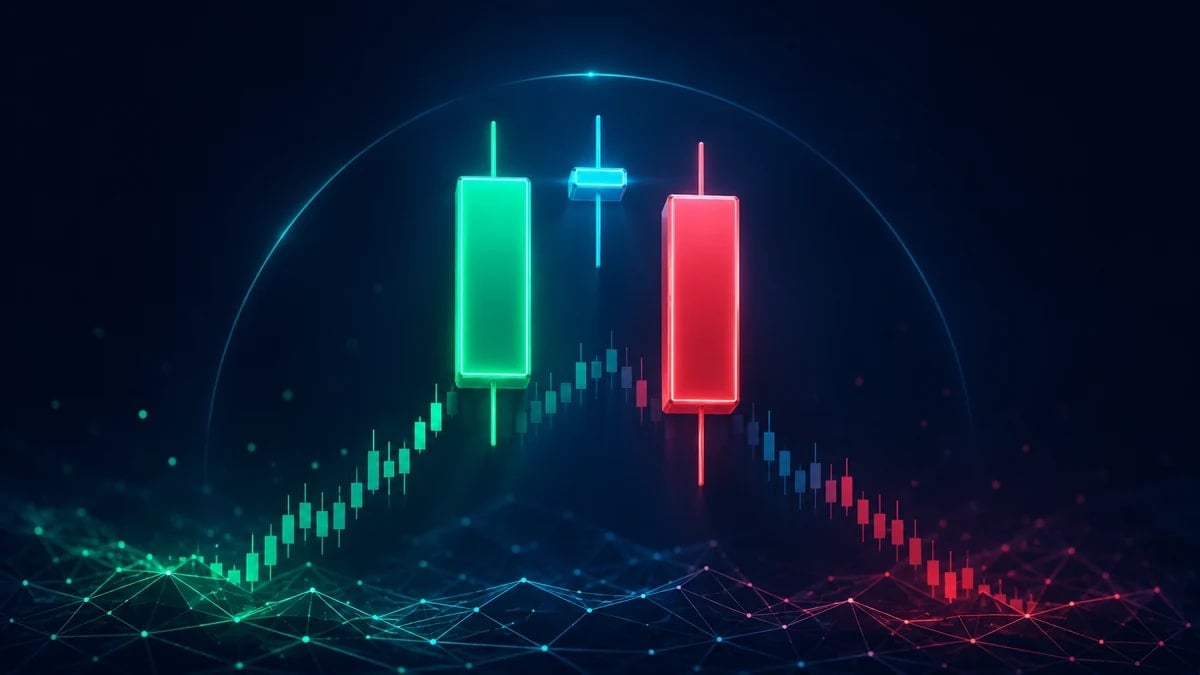
Learn how the evening star candlestick pattern signals bearish reversals in crypto, how to read its three candles, and how to confirm it before acting.
Candlestick patterns give crypto traders a fast, visual way to read the balance between buyers and sellers. Among the most respected bearish signals is the evening star, a three candle formation that often appears right when an uptrend is running out of steam. For traders who want to protect profits or spot a potential top, recognizing this pattern early can make a real difference.
In this 2026 guide we will break down exactly what the evening star pattern is, how its three candles form, why it signals a possible reversal, and how to confirm it before you act. We will keep things practical and beginner friendly while staying accurate to classic technical analysis. None of this is financial advice, and no pattern predicts the future with certainty.
What Is the Evening Star Pattern?
The evening star is a three candle bearish reversal pattern that forms at the top of an uptrend. Its name comes from the planet Venus, which appears in the evening sky just before darkness falls. In the same way, this pattern shows up as a bright bullish trend begins to fade into a bearish move. It is widely used by crypto traders to flag moments when upward momentum is weakening and sellers may be ready to take control.
Because it is a reversal pattern, the evening star is only meaningful when it appears after a clear advance in price. If the market has been moving sideways or already falling, the three candle shape carries far less weight. Context is everything, so the prior trend is part of the pattern itself.

The Three Candles Explained
The power of the evening star comes from the story its three candles tell together. Each one represents a different phase in the shift from buying pressure to selling pressure.
Candle 1: The Bullish Continuation
The first candle is a large bullish candle. It shows that buyers are still firmly in control and the uptrend looks healthy. At this point most traders feel confident, and there is little sign of trouble ahead. This candle sets the scene by confirming the prevailing upward momentum.
Candle 2: The Star of Indecision
The second candle is the star itself. It has a small body and often gaps higher away from the first candle, reflecting the way crypto can spike on enthusiasm. Despite the higher open, the small body shows that neither buyers nor sellers can push price decisively. This indecision is the heart of the pattern. When the middle candle is a doji, with an open and close that are nearly equal, the formation is called an evening doji star, a version many traders consider even stronger.
Candle 3: The Bearish Reversal
The third candle is a large bearish candle that closes well into the body of the first candle. This is the confirmation that sellers have taken over. The deeper this candle pushes into the first candle, the more convincing the reversal signal becomes. By the close, the optimism of candle one has been largely erased.
Why the Pattern Signals a Reversal
The evening star works because it captures a clear change in market psychology over three sessions. Candle one shows greed and confidence. Candle two shows hesitation as the rally stalls and traders question whether the move can continue. Candle three shows fear as sellers step in and drive price back down. Together they signal that buying pressure is fading and sellers are taking over.
This is also why the evening star is described as the bearish mirror of the morning star. The morning star marks a bullish reversal at the bottom of a downtrend with the opposite sequence of candles. Understanding both patterns helps traders read tops and bottoms with the same framework.
How to Confirm the Evening Star
No single pattern should be traded in isolation, and the evening star is no exception. Confirmation is what separates a reliable setup from a false alarm. Several factors strengthen the signal and are worth checking before you draw any conclusions.
First, look for a strong prior uptrend. The pattern only counts as a reversal if there is an established advance to reverse. Second, pay attention to volume. Strong volume on the third candle suggests genuine selling conviction rather than a brief pause. Third, wait for confirmation from the next candle or session. A continuation lower after the third candle adds weight to the idea that the trend has truly turned.

Many traders also combine the evening star with other tools such as support and resistance zones, moving averages, or momentum indicators like the RSI. When the pattern lines up with a known resistance level or an overbought reading, the case for a reversal becomes more compelling. Platforms like DEXTools make it easier to study these candle formations and volume in real time across decentralized markets.
Common Mistakes to Avoid
Beginners often spot a three candle shape and assume any cluster qualifies as an evening star. In reality the pattern requires the right context and the right proportions. A small first candle, a large middle candle, or a weak third candle that fails to close into the first body all reduce the validity of the signal.
Another frequent error is ignoring the broader trend and timeframe. An evening star on a very short timeframe may be little more than noise, while the same pattern on a daily chart can carry far more meaning. It is also risky to act on the pattern before the third candle has fully closed, since price can change direction quickly in crypto. Patience and confirmation protect you from acting on incomplete information.
Using the Evening Star in a Trading Plan
The evening star is most useful as one input within a complete trading plan rather than a standalone trigger. Traders often use it to manage risk on existing long positions, to tighten stops as a top forms, or to look for short opportunities when their wider analysis already leans bearish. The pattern flags where attention is warranted, but your plan should define how you respond.
Risk management remains essential. Because crypto markets are volatile and can reverse sharply, defining a clear invalidation level and position size in advance is far more important than any single candlestick. The evening star tells you that sentiment may be shifting, not what will happen next. Treat it as a clue, not a guarantee.
Conclusion
The evening star is one of the most reliable bearish reversal patterns in technical analysis, and it translates well to fast moving crypto markets. By reading its three candles as a story of confidence, indecision, and selling pressure, you can spot moments when an uptrend may be ending. Remember that the strongest signals come with a clear prior uptrend, strong volume on the third candle, and confirmation from the following session. Use it alongside other tools, manage your risk carefully, and let the pattern guide your attention rather than dictate your decisions.
Beyond the Pattern: Strategic Confirmation and Risk Management
While recognizing the Evening Star pattern is a crucial first step, its true power lies in its confluence with other technical indicators and a robust risk management strategy. A standalone Evening Star, particularly in volatile crypto markets, can sometimes be a false signal. Savvy traders understand that confirmation from multiple sources significantly increases the probability of a successful trade and reduces exposure to market noise.
The crypto landscape's inherent volatility means that even strong patterns can be invalidated by sudden news or whale movements. Therefore, a proactive approach to confirming the bearish reversal and defining clear exit strategies is paramount. This involves looking for reinforcing signals on higher timeframes and understanding the broader market sentiment surrounding the asset.
Integrating Confirmation Signals
- Volume Analysis: Look for a significant increase in selling volume accompanying the third bearish candle. This confirms strong selling pressure.
- Relative Strength Index (RSI): Check if the RSI is trending downwards or has recently crossed below 50, indicating weakening bullish momentum.
- Moving Average Crossovers: A bearish crossover of short-term moving averages below longer-term ones (e.g., 50-period MA crossing below 200-period MA) can reinforce the bearish outlook.
- Support and Resistance Levels: Confirm if the Evening Star forms near a key resistance level, indicating a potential rejection point for the price.
- Fibonacci Retracement: Use Fibonacci levels to identify potential price targets for the ensuing downtrend, or to confirm if the pattern is forming at a key retracement level.
By layering these confirmatory signals, traders can move beyond mere pattern recognition to a more comprehensive and higher-probability trading decision, always keeping risk management at the forefront of their strategy.
Related Guides
- What Is a Morning Star Pattern in Crypto Trading? 2026 Guide
- What Is a Shooting Star Candlestick in Crypto Trading? 2026 Guide
- What Is a Harami Candlestick Pattern in Crypto Trading? 2026 Guide
- What Is a Spinning Top Candlestick in Crypto Trading? 2026 Guide
- What Is a Hanging Man Candlestick in Crypto Trading? 2026 Guide
- What Is a Bullish Engulfing Candlestick in Crypto Trading? 2
- What Is a Falling Wedge Pattern in Crypto Trading? 2026 Guid
- What Is a Hammer Candlestick in Crypto? Trading Guide 2026
- What Is a Cup and Handle Pattern in Crypto Trading? 2026 Gui
- What Is a Bull Flag Pattern in Crypto Trading? 2026 Guide
- What Is a Descending Triangle Pattern in Crypto Trading? 202
- What Is a Double Top Pattern in Crypto Trading? 2026 Guide
- What Is a Double Bottom Pattern in Crypto Trading? 2026 Guid
- What Are Three Black Crows in Crypto Trading? Bearish Patter
- What Is a Head and Shoulders Pattern in Crypto Trading? 2026
- What Is a Dragonfly Doji Candlestick in Crypto Trading? (202
- What Is a Gravestone Doji Candlestick in Crypto Trading? (20
Frequently Asked Questions
What is an evening star candlestick pattern?
An evening star is a three candle pattern that appears after an uptrend and is read as a possible bearish reversal. It typically shows a strong up candle, a small bodied candle, and then a strong down candle.
What do the three candles in an evening star represent?
The first candle reflects continued buying, the middle candle shows hesitation as momentum stalls, and the third candle shows sellers taking control. Together they suggest a shift from buying to selling pressure.
How is an evening star different from a morning star?
An evening star signals a possible bearish reversal at the top of an uptrend, while a morning star signals a possible bullish reversal at the bottom of a downtrend. They are essentially mirror images of each other.
How do traders confirm an evening star?
Confirmation often comes from the third candle closing well into the body of the first, sometimes supported by higher volume or other signals. Waiting for follow through helps reduce the risk of a false reversal.