Top 5 Crypto AI Projects & Tokens to Watch in 2026
— By Tony Rabbit in Tutorials

The top crypto AI projects and tokens in 2026 by use case and traction. Compare leading AI agent and DeFAI tokens and track them live on DEXTools.
Top 5 crypto AI projects is one of the most competitive research queries in the sector now because it sits right at the intersection of two strong narratives: artificial intelligence and digital assets. The problem is that many lists stay superficial. They mention a few tickers, drop the words AI and blockchain into the same paragraph, and never explain what layer of the stack each project actually owns.
This version is built to be more useful and far more visual. It breaks the sector into categories, adds conceptual AI-generated illustrations to make the stack easier to understand, and ranks the projects that matter most in 2026 by a mix of scale, utility, and relevance to the decentralized AI thesis.
Quick answer
- NEAR, Bittensor, Render, FET/ASI, and Akash are the five crypto AI projects that matter most in 2026 if you want broad exposure to the main AI-on-chain narratives.
- Bittensor is the clearest pure-play bet on decentralized machine learning.
- Render and Akash are the most direct plays on AI compute demand.
- FET/ASI represents autonomous AI agents, while NEAR gives you AI exposure through a full Layer 1 with serious technical pedigree.
Why crypto AI projects matter in 2026
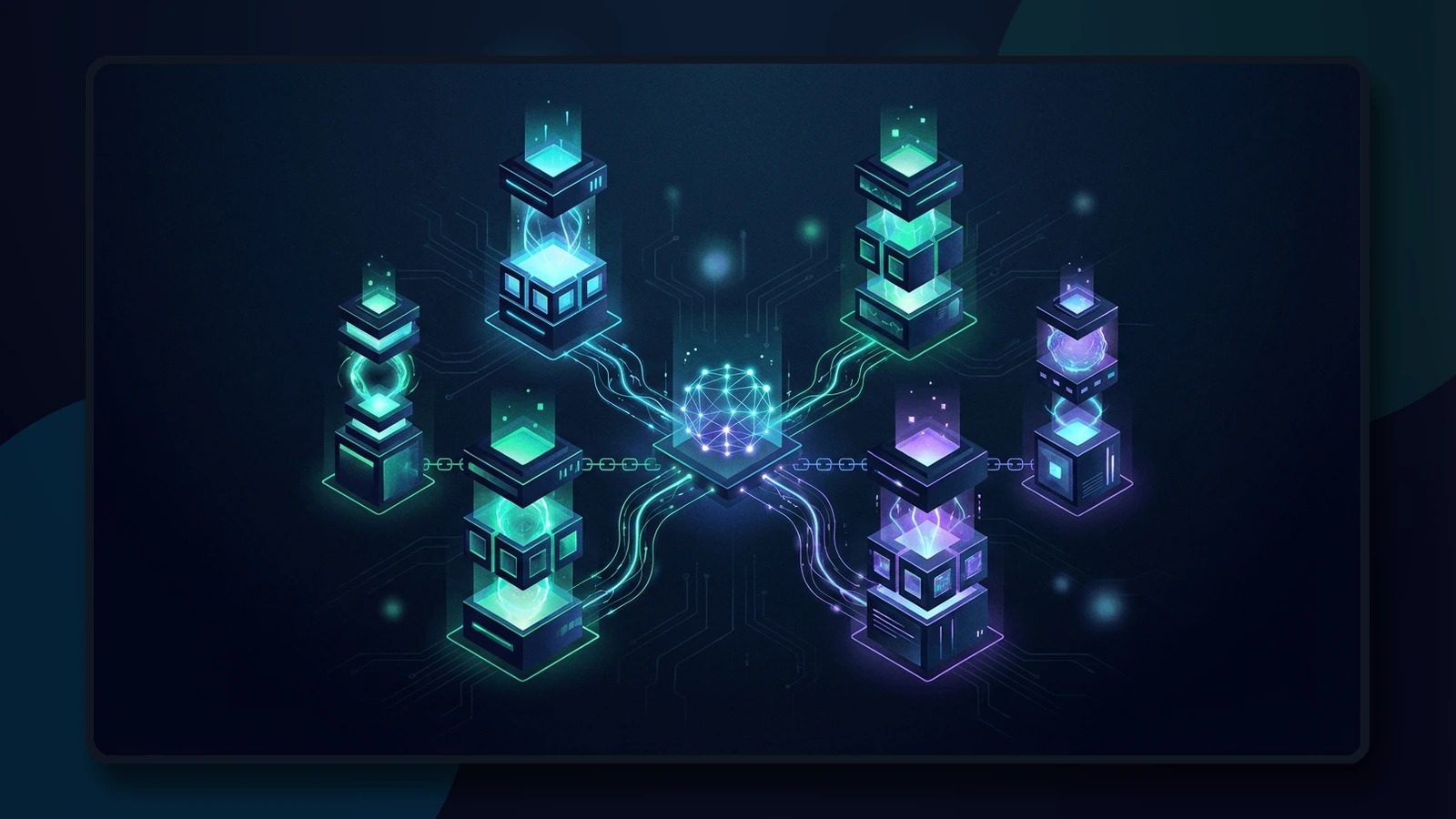
The AI x crypto sector is no longer a side narrative. By April 2026, the category had grown to roughly 919 projects and a combined market capitalization of around $22.6 billion. That does not mean all 919 deserve attention. Most do not. But it does mean the sector now has enough scale to matter, enough developer energy to stay relevant, and enough capital formation to create clear winners.
The key reason these projects matter is that they attack different bottlenecks in the AI economy. Some are about compute. Some are about model coordination. Some are about autonomous agents. Some are about making blockchain itself easier to use through AI. If you do not separate the sector that way, it becomes too easy to compare apples with oranges and call it analysis.
Top 5 crypto AI projects at a glance
Below is the cleanest way to think about the current leaders. NEAR is the biggest name here by market cap, Bittensor is the strongest pure-play decentralized AI network, Render and Akash are the clearest infrastructure bets, and FET/ASI is the most direct autonomous-agents narrative.
How these five projects map to the AI stack
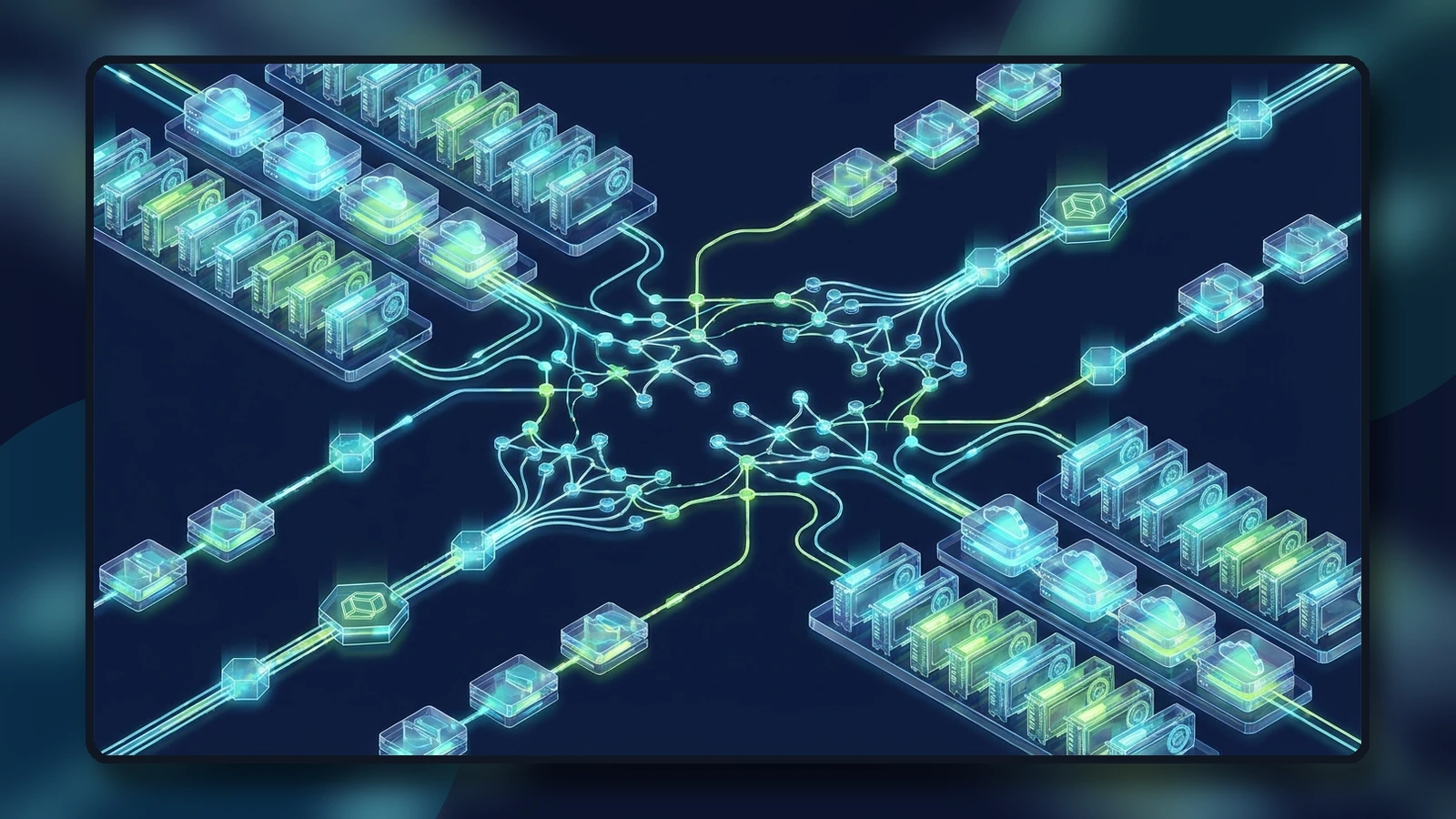
One reason the term top crypto AI projects creates confusion is that people use it as if every project were solving the same problem. They are not. NEAR is about an AI-enhanced chain and better user experience. Bittensor is about decentralized intelligence markets. Render and Akash are about access to compute. FET/ASI is about the agent layer. Once you separate those layers, the list makes a lot more sense.
That layered view is useful because it lets you build a cleaner thesis. You are not just buying "AI crypto." You are choosing which part of the decentralized AI economy you think will compound fastest.
1. NEAR Protocol (NEAR)
NEAR is not a pure AI token, and that is exactly why it stays near the top of this list. It combines a large existing blockchain ecosystem with a credible AI narrative, anchored by co-founder Illia Polosukhin, who co-authored the transformer paper that shaped the modern large-language-model era.
That background matters because it gives NEAR more than a marketing-level connection to AI. The chain has pushed hard into AI-oriented developer tooling, chain abstraction, and usability improvements that try to make multi-chain interaction simpler for normal users. In other words, NEAR is trying to use AI to make crypto infrastructure feel less fragmented and less hostile.
For investors and researchers, NEAR works as the broadest name on this list. You get AI exposure, but you also get a functioning smart-contract platform with DeFi, gaming, and developer activity. That means the token does not rely on one AI feature alone to justify its relevance.
2. Bittensor (TAO)
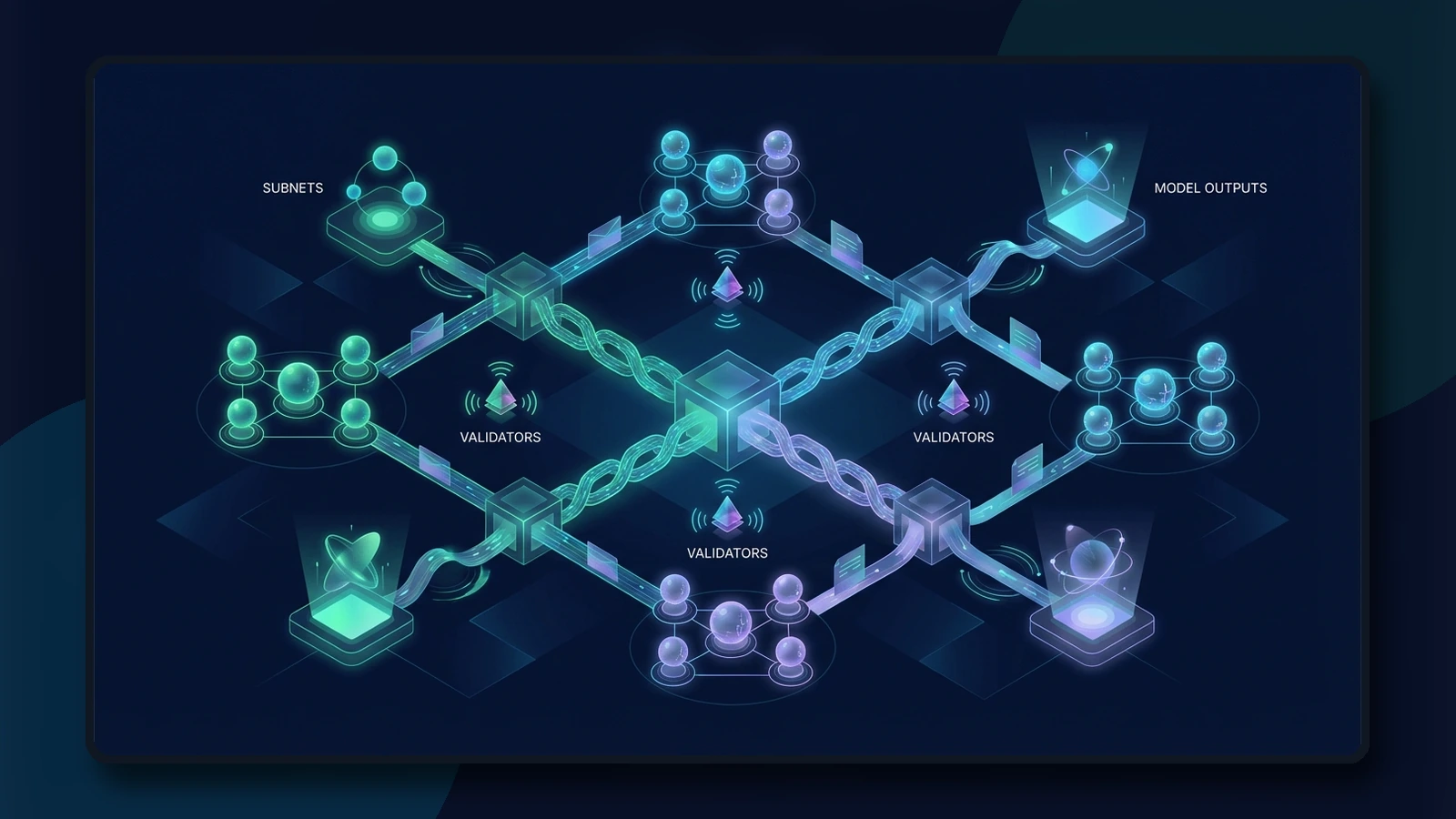
Bittensor is the strongest answer if someone asks for the most important pure-play crypto AI project in 2026. The network is built around the idea that intelligence itself can be rewarded and coordinated in an open market, with miners, validators, and subnet operators competing to produce useful outputs.
Its subnet architecture is the real differentiator. Instead of forcing everything into one giant model, Bittensor lets specialized markets form around different AI tasks, from language and vision to more niche workloads. That makes the ecosystem modular, competitive, and much more adaptable than a single monolithic protocol would be.
TAO matters because it sits right in the center of that incentive design. If you believe decentralized model markets will become a serious category rather than a curiosity, Bittensor is the clearest place to express that view. It is also one of the few projects in the sector that feels structurally native to AI rather than simply adjacent to it.
3. Render Network (RENDER)
Render is the cleanest way to connect the AI boom to one of its hardest bottlenecks: GPU access. AI training, inference, and advanced creative workloads all need graphics horsepower, and that hardware has been expensive, scarce, and increasingly strategic.
The pitch is straightforward. Instead of relying only on giant centralized cloud providers, Render connects demand for GPU power with distributed supply. That started in rendering and visual effects, but the logic extends naturally into AI workloads because both markets care about the same thing: fast, reliable, reasonably priced compute.
That makes Render one of the most intuitive crypto AI projects to understand. You do not need a complicated story about agent economies or abstract machine-intelligence markets. If global AI demand keeps climbing, decentralized GPU infrastructure stays relevant, and Render remains one of the first tokens people reach for in that category.
4. Artificial Superintelligence Alliance (FET)
FET, via the Artificial Superintelligence Alliance, is the most direct agent-driven thesis in this list. The alliance brought together Fetch.ai, SingularityNET, and Ocean Protocol, combining agent infrastructure, AI services, and data exchange under one larger umbrella.
The reason this matters is that autonomous agents are one of the most marketable and one of the most economically interesting ideas in the sector. If software agents can search, negotiate, route tasks, execute DeFi actions, or coordinate services without human micromanagement, then crypto becomes one of the natural settlement layers for that activity.
FET gives you exposure to that thesis in a more comprehensive way than a single narrow agent protocol would. It is not just about one app. It is about a broader network effect around agent tooling, marketplaces, and data rails, which is why it remains central to most lists of top crypto AI projects.
5. Akash Network (AKT)
Akash is the smaller-cap name in this group, but it deserves to stay on the list because the economic logic is so strong. AI builders need cheap compute, and centralized cloud pricing has become a serious constraint. Akash positions itself as a permissionless marketplace where spare compute can be rented more cheaply than on traditional clouds.
The GPU angle is what makes the project especially relevant to the AI conversation. As demand for training and inference capacity rises, a decentralized cloud with meaningful GPU supply becomes more than a niche crypto experiment. It becomes a practical pricing alternative in a market where access is often expensive and bottlenecked.
That is why AKT is interesting even at a lower market cap. It offers a more asymmetric way to play the compute thesis, especially for people who believe decentralized cloud supply can keep growing faster than the market currently prices in.
How to evaluate crypto AI projects before buying
Crypto AI is one of the easiest sectors to over-romanticize. A strong pitch deck and a clever token ticker can make almost anything sound inevitable. The only real defense is a framework.
Fast research checklist for top crypto AI projects
- Use DEXTools to compare price structure, relative strength, liquidity quality, and volume behavior before chasing a narrative.
- Separate pure-play AI tokens from broader platforms with an AI angle, because the market often values them differently.
- Treat compute tokens, agent tokens, and machine-learning tokens as different sub-sectors, not interchangeable bets.
- Watch whether the token benefits from actual network usage, not just social attention.
Biggest risks in the crypto AI sector
Even the best crypto AI projects can still disappoint. This is a volatile part of the market, and the sector invites hype because it merges two narratives that already attract speculation on their own.
How to track crypto AI projects on DEXTools
If you are actively monitoring this sector, DEXTools is useful because it helps you move from broad narrative talk to actual market behavior. Start with the chart and volume profile, then check liquidity quality, recent catalysts, and whether momentum is broad across the sector or concentrated in one token.
That matters more in crypto AI than in many other narratives because headlines can move faster than fundamentals. A token can trend simply because AI sentiment is hot. DEXTools helps you check whether the move is being supported by volume, market structure, and follow-through instead of only social excitement.
What could change this ranking later in 2026
- Faster real adoption in one sub-sector, such as AI agents or decentralized cloud.
- Token design improvements that make value capture much clearer for a protocol that already has product usage.
- Execution failures that weaken confidence in a project that currently enjoys strong narrative support.
- New data on actual workloads, subnet activity, or compute demand that changes how the market values infrastructure names.
If you want adjacent reading, our guides on how to use AI tools for crypto trading, AI agents in decentralized finance, what Web3 is, and what Solana is pair well with this sector overview.
Frequently Asked Questions
What are the top crypto AI projects in 2026?
The five that stand out most right now are NEAR Protocol, Bittensor, Render Network, the Artificial Superintelligence Alliance with FET, and Akash Network.
What is the best pure-play AI crypto project?
Bittensor is the clearest pure-play answer because its entire design is centered on decentralized machine learning, subnets, validators, and open intelligence markets.
Which crypto AI projects benefit most from rising GPU demand?
Render and Akash are the most direct beneficiaries if your thesis is that AI keeps increasing global demand for affordable GPU and cloud compute capacity.
Is NEAR really an AI crypto project?
NEAR is better described as an AI-enhanced Layer 1 rather than a pure AI token. It belongs in the conversation because AI is now central to its strategy and developer story.
Are crypto AI tokens a good investment?
They can offer strong upside, but they also carry major narrative, execution, and volatility risk. The better approach is to understand which layer of the AI stack you are buying and why that token should capture value if adoption grows.
Related DEXTools tutorials
Disclaimer: This article is for educational purposes only and does not constitute investment, tax, or legal advice. Market caps and project positioning can change quickly. Always verify live data and project documentation before making any financial decision.