How to Buy Bitcoin Safely: 2026 Security Guide
— By AliceOnChain in Tutorials
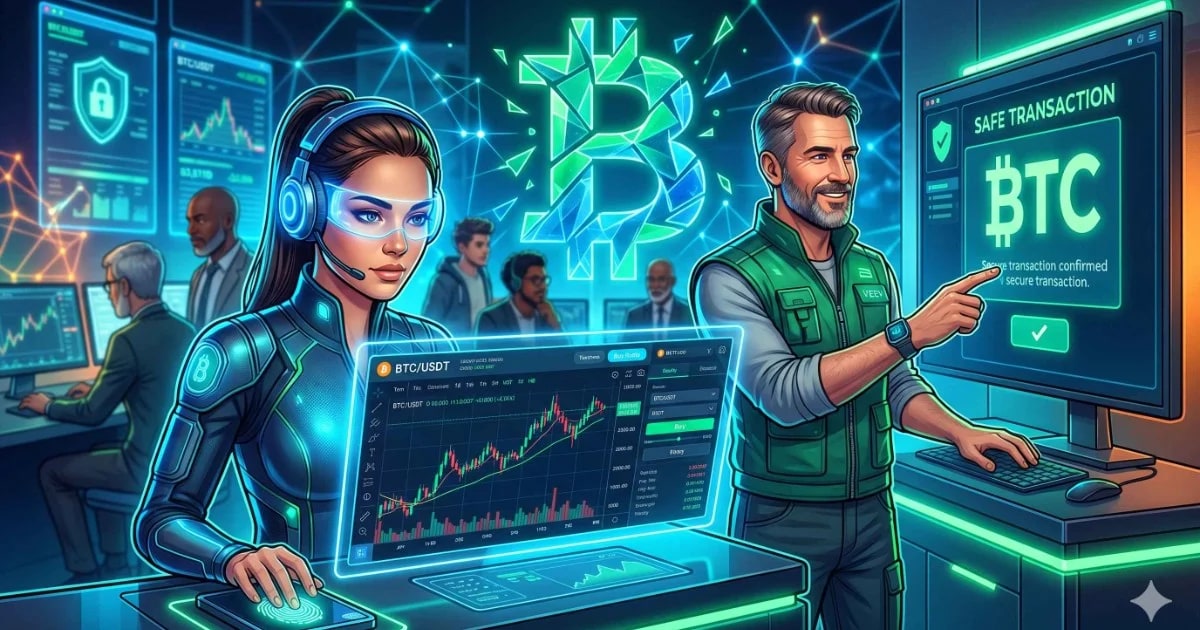
How to buy Bitcoin safely in 2026: exchange due diligence, scam checks, withdrawal hygiene, self-custody basics, and the mistakes that hurt beginners.
For the complete, up-to-date guide, read our full tutorial here.
Intent check: This page is the security-first angle, focused on scam checks, custody, and safe execution. If you want the broader beginner purchase flow with exchanges, ETFs, and DCA, read How to Buy Bitcoin in 2026.
This guide is specifically about how to buy Bitcoin safely. It is an onboarding and custody page, not a BTC price forecast.
How to Buy Bitcoin Safely: Step-by-Step Guide
For many investors, learning how to buy Bitcoin safely is the first step into a larger world of decentralized finance. While DEXTools is your go-to hub for tracking the latest DeFi pairs and micro-cap tokens, BTC remains the bedrock of any digital asset portfolio. However, with the landscape of 2026 becoming increasingly complex, security should be your absolute priority.
Acquiring your first satoshis is no longer just about clicking a button; it’s about choosing the right environment and securing your private keys. This guide provides a clear roadmap on safe Bitcoin investment practices while integrating the analytical edge that DEXTools provides to the modern trader.
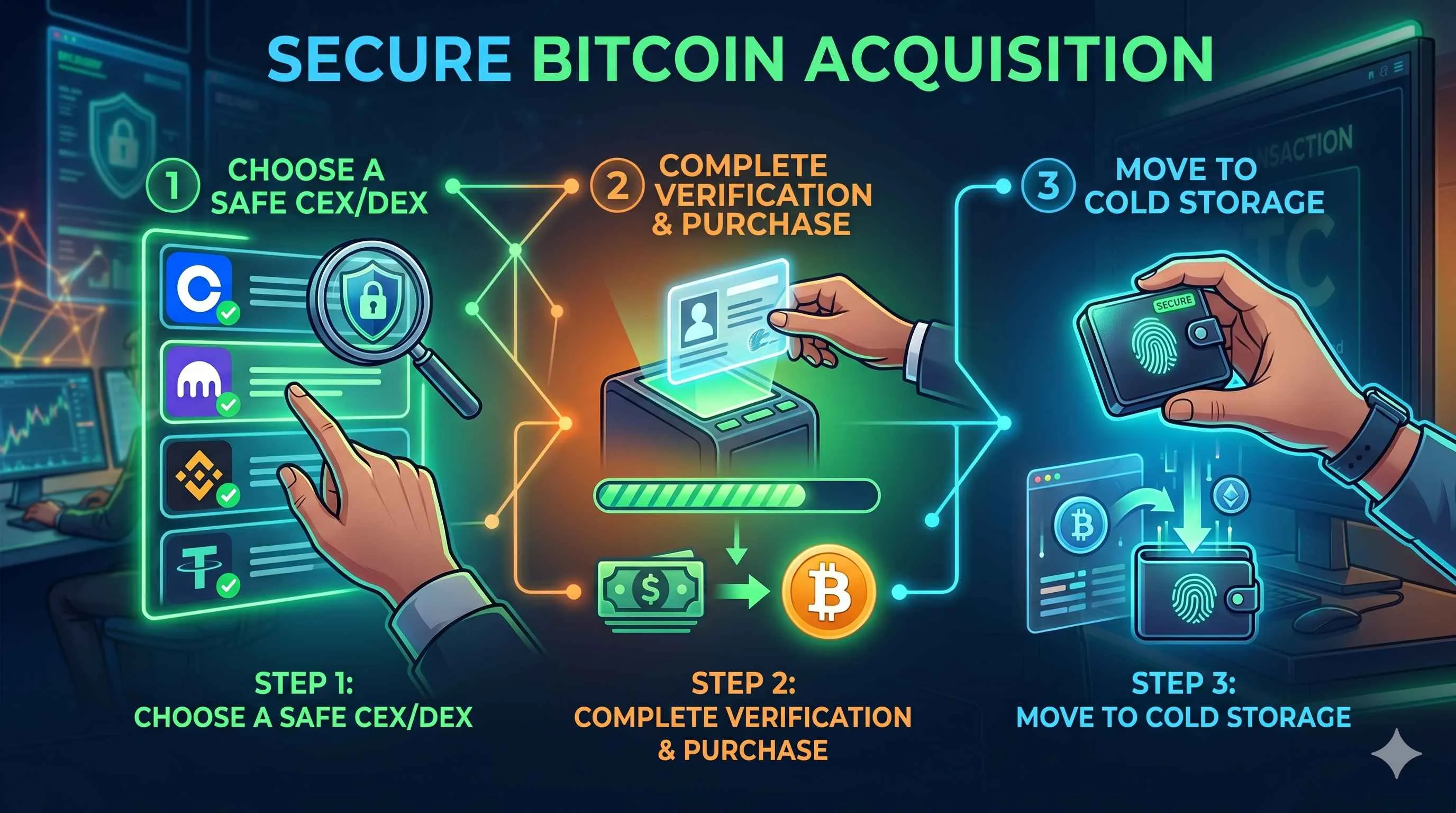
Step 1: Choose a Reputable Exchange
The first phase of the process involves selecting a platform with high liquidity and a clean security record. For beginners, centralized exchanges (CEXs) are the most common entry points for purchasing BTC.
Coinbase: Widely considered the best for newcomers due to its user-friendly interface and regulatory compliance.
Kraken: A favorite for those prioritizing robust security protocols and low fees.
Binance: Offers deep liquidity for those looking to move large volumes before swapping into other assets tracked on DEXTools.
When you decide to get Bitcoin, ensure the exchange offers Two-Factor Authentication (2FA) via an app like Google Authenticator rather than SMS, which is vulnerable to SIM-swapping.
Step 2: Verification and Account Funding
Once you've chosen a platform, you'll need to undergo KYC (Know Your Customer) procedures. This is a standard part of securing your crypto entry point in 2026. You will typically need a government-issued ID and proof of residence.
After verification, you can fund your account using:
Bank Transfers (SEPA/ACH): Usually the most cost-effective method for Bitcoin acquisitions.
Debit/Credit Cards: Fast, but often carry higher fees that eat into your initial capital.
Peer-to-Peer (P2P): Useful in specific regions, but requires extra caution to ensure the counterparty is reputable.
Step 3: Executing Your Trade with Precision
Navigating the trade interface can be daunting. To complete your purchase securely, you have two primary order types:
Market Order: Executes immediately at the current price. Best if you need the coins instantly.
Limit Order: You set the price at which you want the trade to execute. This is where DEXTools becomes invaluable; by monitoring the BTC/USDT charts, you can identify support levels and set your orders more effectively to avoid overpaying during a sudden spike.
Step 4: Securing Your Assets (Self-Custody)
The most important rule in crypto is: "Not your keys, not your coins." Leaving your funds on an exchange for long periods exposes you to unnecessary counterparty risk.
To truly protect your Bitcoin, move it to a non-custodial wallet:
Hardware Wallets (Cold Storage): Devices like Ledger or Trezor keep your keys offline. This is the gold standard for long-term asset protection.
Software Wallets (Hot Wallets): Mobile apps are convenient for daily use but slightly less secure than dedicated hardware options.
When setting up your wallet, never share your seed phrase. Write it on paper and store it in a physical safe.
Step 5: Monitoring the Market with DEXTools
After you successfully buy Bitcoin, your journey doesn't end there. Most investors use their BTC as a "home base" for trading other tokens.
By using the DEXTools Pair Explorer, you can track how BTC price movements influence the broader DeFi market. Does a sudden dip trigger a sell-off in your favorite altcoins? Having a Bitcoin price alert set on DEXTools allows you to react faster than the average retail trader.
Common Mistakes to Avoid
Buying via Public Wi-Fi: Always use a secure, private connection when logging into financial accounts to prevent data theft.
Falling for "Giveaway" Scams: If an offer sounds too good to be true, it’s a scam. No legitimate entity will ask you to send them BTC to receive more in return.
Ignoring Network Fees: Always check the "mining fee" when moving your assets from an exchange to your private storage.
Conclusion
Mastering how to buy Bitcoin safely is a skill that will serve you throughout your entire crypto career. By choosing regulated exchanges, utilizing limit orders with DEXTools data, and moving your assets to cold storage, you minimize risk and maximize your potential for long-term growth. Secure your foundation today, and you'll be better prepared to explore the high-reward opportunities found in the world of DeFi.
- How to Bridge Crypto Between Chains: Complete Cross-Chain Tutorial 2026
- How to Use 1inch: Complete DEX Aggregator Swap Tutorial (2026)
- How to Use OKX Web3 Wallet: Multi-Chain DeFi Hub Guide (2026)
Disclaimer: This article is for informational purposes only and does not constitute investment advice, financial advice, trading advice, or any other kind of advice. DEXTools does not recommend buying, selling, or holding any cryptocurrency or token. Users should conduct their own research and consult with a qualified financial advisor before making any investment decisions. Cryptocurrency investments are volatile and high-risk. DEXTools is not responsible for any losses incurred.
Related Guides
- How to Buy Bitcoin in 2026: 5-Step Beginner Guide, Fees and Wallet Setup
- What Is Wallet Poisoning? Crypto Security Guide 2026
- What Is Signature Phishing in Crypto? Complete Security Guide (2026)
- What Is Revoke.cash: Token Approvals, Permit Risks and Wallet Hygiene (2026)
- What Is OpenZeppelin: Smart Contract Libraries, Security and Access Control (2026)
Frequently Asked Questions
How do I buy Bitcoin safely?
Buying safely generally means using a reputable exchange, securing your account with strong passwords and two-factor authentication, and being cautious about scams. Many people also move larger holdings to self-custody after purchase.
Should I keep Bitcoin on an exchange or in self-custody?
Leaving coins on an exchange is convenient but means you rely on that platform's security and solvency, while self-custody puts you in direct control of your keys. Self-custody removes counterparty risk but makes you fully responsible for protecting your keys and backups.
What are common mistakes beginners make when buying Bitcoin?
Common mistakes include falling for scams promising guaranteed returns, reusing weak passwords, skipping two-factor authentication, and not backing up recovery phrases. Sending funds to the wrong address is another frequent and costly error.
How can I avoid Bitcoin scams?
Be skeptical of offers that promise guaranteed profits, pressure you to act fast, or ask for your recovery phrase, which no legitimate party should ever request. Verifying websites and addresses carefully before sending funds also reduces risk.