Ripple, BLOOM and RLUSD: Trade Finance Use Cases Explained
— By Whatsertrade in Analysis

Ripple's BLOOM initiative gives RLUSD a more specific trade-finance angle. Here is what that means beyond generic stablecoin expansion headlines.
RLUSD and Its Quest for Real Financial Infrastructure
For most crypto users, stablecoins still mean one thing: liquidity. They are the dollars traders park in between positions, the assets used to rotate capital, and the simplest tool for surviving volatility. But that view is starting to look outdated. Ripple’s latest move in Singapore suggests the next chapter for stablecoins is not just about exchange volume but real financial infrastructure. Ripple is pushing stablecoins into new realms.
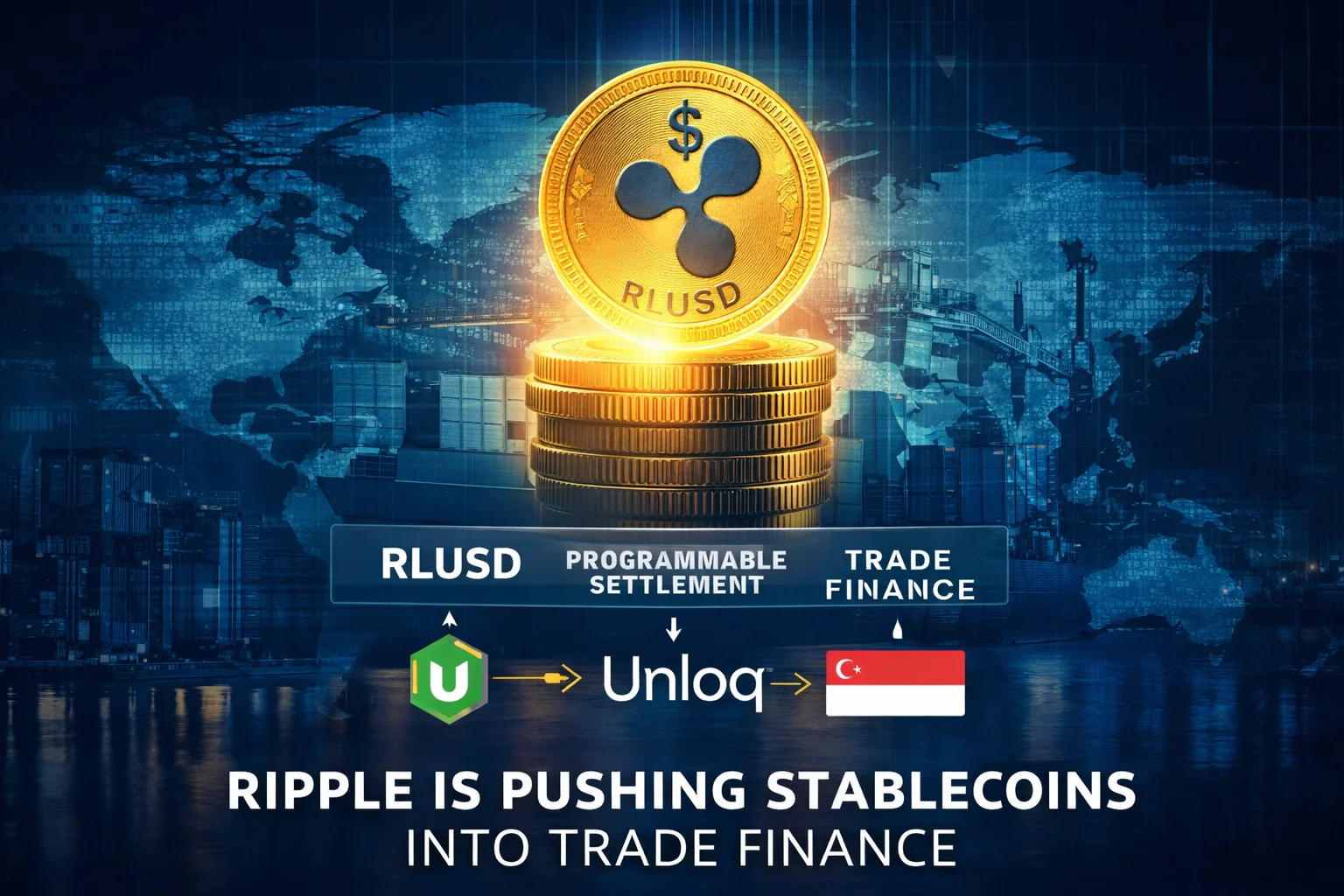
Ripple announced that it has joined BLOOM, an initiative by the Monetary Authority of Singapore, and that it will work with supply chain finance technology provider Unloq on a pilot focused on cross-border trade settlement. The project uses Ripple’s institutional infrastructure, the XRP Ledger, and RLUSD to test a programmable settlement model built for trade finance. This innovative approach showcases Ripple's aims.
That is what makes this story bigger than another stablecoin headline. Ripple is not pitching RLUSD as just another dollar token fighting for listings and volume. It is trying to place RLUSD inside a regulated framework for cross-border commerce, where payments can be triggered automatically once commercial conditions are met. Ripple is changing the game.
Implications for the Stablecoin Market
The biggest shift in crypto right now is that stablecoins are starting to move beyond pure trading use cases. BLOOM was created by MAS to extend settlement capabilities and enable the use of settlement assets such as tokenized forms of commercial bank money and stablecoins that meet regulatory expectations. This move by Singapore is groundbreaking.
For Ripple, that makes BLOOM the right stage for RLUSD. If a stablecoin can prove itself in a regulated settlement initiative, it stops being only a market product and becomes part of financial plumbing. That is a much bigger opportunity than competing only for exchange liquidity. Ripple's vision is set on a bigger picture.
Real Trade Finance with RLUSD and Unloq
According to Ripple, the pilot with Unloq is built to transform cross-border trade settlement. Unloq’s SC+ trade finance infrastructure brings trade obligations, settlement conditions, and financing workflows into one execution layer, while Ripple contributes its enterprise infrastructure, XRPL, and RLUSD. The result is a model designed to automate settlement rather than simply digitize the final payment step.
The structure is especially interesting because payments are released only when predefined commercial conditions are met, such as shipment verification. In other words, the stablecoin is not just moving money. It is being used as part of a programmable commercial workflow. Ripple says this approach improves risk transparency and can support better access to financing for small and medium-sized businesses.
That is exactly why this narrative works so well for a DEXTools audience. It shows stablecoins evolving from passive liquidity tools into active infrastructure for global trade. That is a more mature, more credible, and potentially much larger story than simple exchange adoption. Ripple is laying a new path forward.
Strategic Fit of RLUSD
Ripple has been positioning RLUSD as an enterprise-grade stablecoin rather than a retail-first token. On its official stablecoin page, Ripple says RLUSD is designed to maintain a constant value of one U.S. dollar, is natively issued on XRP Ledger and Ethereum, is fully backed by a segregated reserve of cash and cash equivalents, and is redeemable 1:1 for U.S. dollars. That positioning matters because it supports Ripple’s broader pitch around regulated payments and settlement.
In other words, RLUSD is not being framed as a speculative side product. It is being presented as a stable digital dollar built for enterprise use cases, especially where trust, compliance, and settlement reliability matter more than hype. That gives Ripple a cleaner angle in a crowded stablecoin market.
Singapore's Impact on the Stablecoin Narrative
The Singapore angle matters a lot. MAS has become one of the most important regulators for tokenization, digital settlement, and regulated experimentation in digital assets. BLOOM itself is designed around borderless, liquid, open, online, multi-currency settlement capabilities, which makes it one of the clearest official frameworks for testing how stablecoins and tokenized liabilities can work in practice.
That gives Ripple something many crypto projects do not have: a real use case, in a regulated sandbox-style environment, tied to a high-value financial workflow. This is not just a branding exercise. It is a test of whether stablecoins can become part of interoperable settlement infrastructure for global trade. This is Ripple's bold experiment.
The New Age of Stablecoins
The stablecoin market is becoming more segmented. Some products dominate because of liquidity. Others compete on transparency, compliance, or DeFi integration. Ripple appears to be betting that one of the strongest long-term opportunities will come from enterprise settlement and trade finance. This shift is pivotal for Ripple's strategy.
That is a smart narrative to chase. Trade finance still suffers from delays, fragmented processes, manual checks, and expensive cross-border coordination. If programmable settlement can reduce friction and automate payment release around real commercial milestones, stablecoins become much more than trading instruments. They become infrastructure. Ripple is paving the way for this evolution.
Ripple's Revolutionary Shift
Ripple’s move with RLUSD in Singapore matters because it reframes what stablecoin growth could look like. The next winners may not be defined only by exchange listings or daily volume. They may be defined by where they become useful in the real economy. Ripple's shift could redefine stablecoin utility.
RLUSD wants more than exchange liquidity. Ripple is pushing stablecoins into trade finance, and that is exactly the kind of shift the market should be watching. If this model gains traction, stablecoins could move from being the fuel of crypto trading to becoming part of the infrastructure behind global business itself. Ripple's vision is setting new standards.
FAQ
What is RLUSD?
RLUSD is Ripple’s U.S. dollar stablecoin. Ripple says it is issued natively on XRP Ledger and Ethereum, fully backed by a segregated reserve of cash and cash equivalents, and redeemable 1:1 for U.S. dollars.
What is BLOOM in Singapore?
BLOOM is an initiative by the Monetary Authority of Singapore designed to extend settlement capabilities using tokenized bank liabilities and stablecoins that meet regulatory expectations.
Why is this important for crypto?
It shows that stablecoins are moving beyond trading and into real business use cases like trade finance, cross-border settlement, and programmable payments.
Why is Ripple working with Unloq?
Ripple says Unloq’s SC+ platform helps integrate trade obligations, settlement conditions, and financing workflows into one execution layer, making it a good fit for programmable trade settlement using RLUSD.