Prediction Markets 2026: Boom or Bust?
— By Whatsertrade in Analysis
Prediction markets in 2026 are gaining momentum as ICE invests heavily, but new rules could change the landscape quickly.
Prediction markets have become one of the most talked about corners of the digital asset and trading world in 2026. They sit at the intersection of speculation, information, politics, sports, and market psychology. That alone makes them powerful attention machines. But this week, the sector showed both sides of the story at once. On one side, Intercontinental Exchange, the parent company of the New York Stock Exchange, said it invested $600 million in Polymarket as part of a previously announced plan to invest up to $2 billion. On the other, Kalshi and Polymarket tightened insider trading rules as bipartisan pressure in Washington started to rise.
For traders, this is more than just another headline cycle. Prediction markets are becoming a live battleground over who gets to monetize attention, how event based trading should be regulated, and whether these platforms are financial markets, information markets, or simply a new wrapper for online gambling. That is why the category suddenly looks both stronger and more fragile at the same time.
What happened this week
The biggest news was ICE’s $600 million investment in Polymarket. According to Reuters, the funding is part of ICE’s larger plan to invest up to $2 billion in the platform as it pushes deeper into event based trading. ICE also framed prediction markets as a fast growing segment that could attract more retail participation and open a new revenue stream for exchange operators facing intense competition in traditional futures and options.
At nearly the same time, Kalshi and Polymarket moved to harden their internal rules. AP reported that Kalshi said it would ban political candidates from trading on their own campaigns and would block people involved in college or professional sports from trading related contracts. Polymarket rewrote its policies to make clear that users cannot trade when they hold confidential information or have the power to influence an outcome, a standard that can apply to athletes, company officials, and policymakers.
The policy shift did not happen in a vacuum. Senators Adam Schiff and John Curtis introduced the Prediction Markets Are Gambling Act, a bill aimed at banning sports related contracts on prediction market platforms. AP also noted that several states have already moved against Kalshi and Polymarket, while the sector continues to face scrutiny over whether these products fall under federal derivatives law or state gambling law.
Regulatory pressure is also spreading beyond Congress. Reuters reported that California Governor Gavin Newsom issued an executive order barring state officials from using insider knowledge to bet on prediction markets like Polymarket and Kalshi. The move followed concerns that traders may have profited from non public information tied to high stakes geopolitical events.
Why prediction markets are so attractive to traders
The bull case is easy to understand. Prediction markets compress narrative, sentiment, and price discovery into one product. Instead of waiting for polls, pundits, press conferences, or earnings calls, traders can look at a live probability market and see what capital believes in real time. That is powerful because attention now moves faster than most traditional data feeds.
This is also why prediction markets fit the current internet better than many old financial products. They are simple to understand, easy to discuss, and naturally viral on social media. A sports contract, election contract, or geopolitical contract can travel across X, Telegram, Discord, and trading communities far more easily than a traditional macro hedge. In practical terms, prediction markets turn news into tradable sentiment. That makes them sticky for retail users and extremely interesting for platforms that want engagement. ICE’s investment is a strong signal that large financial firms see this potential too.
For crypto native audiences, the appeal is even stronger. Traders already think in probabilities, catalysts, and narrative timing. Prediction markets package all three into a format that feels closer to crypto than to traditional brokerage products. They also create a constant feedback loop between news flow and positioning. In a market where attention often becomes liquidity, that is a serious advantage.
Why regulators are getting nervous
The bear case is just as obvious. If traders can bet on politics, military action, sports, or corporate events before the public knows what is coming, the line between price discovery and abuse becomes very thin.
Reuters reported earlier this month that prediction markets faced sharp scrutiny after contracts tied to the ouster of Iran’s Supreme Leader and other geopolitical events drew accusations that some traders may have benefited from advance knowledge. Reuters also reported that an unknown trader had made more than $400,000 betting on the ouster of Venezuelan President Nicolás Maduro ahead of a U.S. operation to capture him. These episodes intensified the insider trading and ethics debate around the entire sector.
That is why this moment matters. The market is no longer being judged only on whether it is popular or useful. It is being judged on whether it can survive political scrutiny. Once lawmakers start asking whether a product creates incentives to exploit confidential information, shape outcomes, or bypass state gambling rules, the conversation changes very quickly. AP’s reporting makes clear that both parties in Washington are now showing skepticism, not just one side.
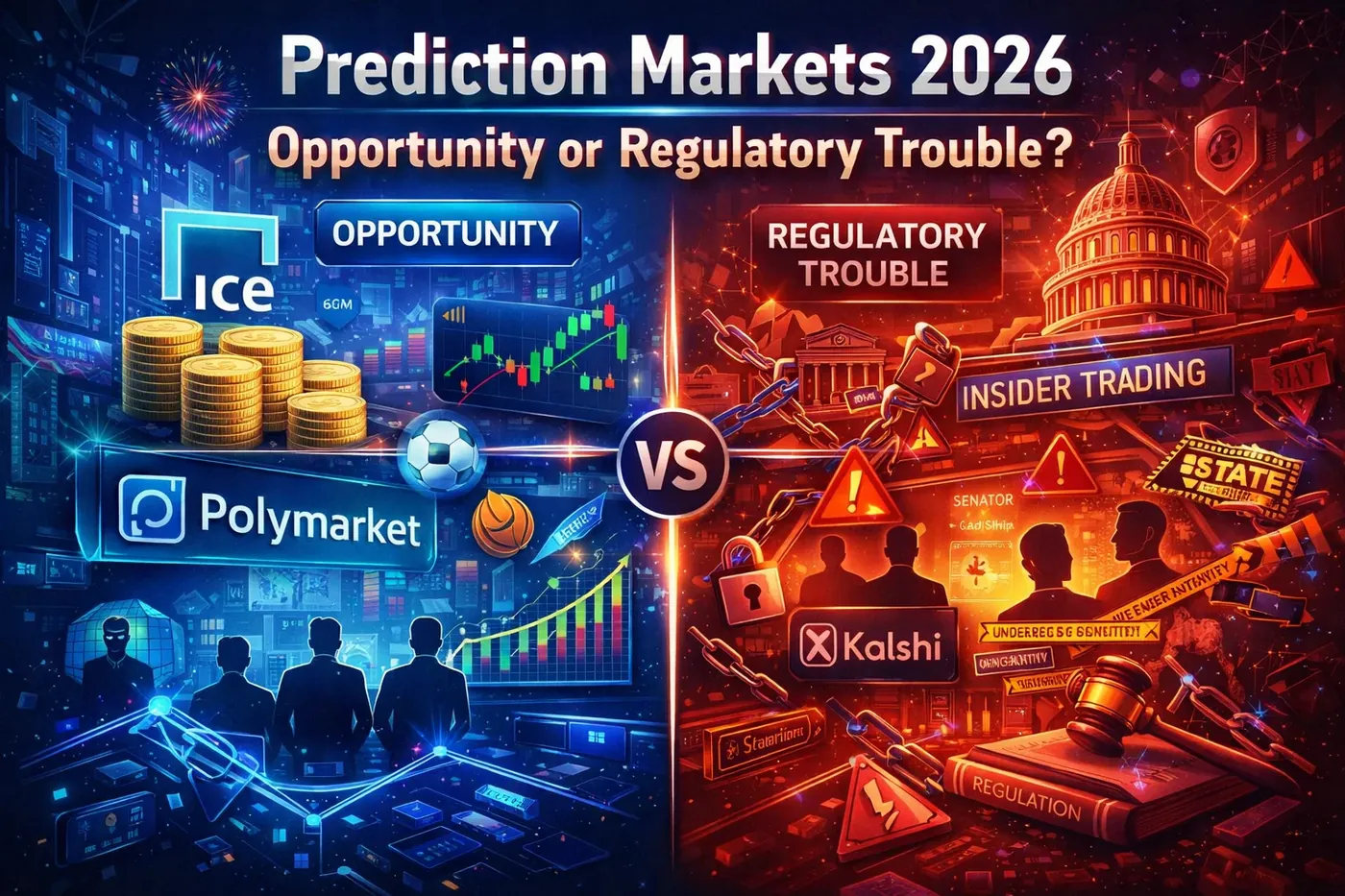
The real fight is not only about ethics
There is a deeper issue underneath the insider trading headlines. The real fight is about regulatory control.
Reuters reported that the CFTC is moving toward a rulemaking process for prediction markets, with Chairman Michael Selig saying the agency should establish a single national standard rather than push trading offshore. A CFTC statement published in February went even further, arguing that event contracts are legitimate financial instruments under the agency’s jurisdiction and criticizing state level attempts to block them. In that statement, Selig said the CFTC sees itself as the proper regulator of these products and noted that nearly 50 active cases are challenging prediction markets at the state level.
That means prediction markets are not just dealing with a compliance problem. They are stuck in a power struggle between federal regulators, state authorities, and lawmakers who want to redraw the boundaries of what these contracts are allowed to cover. Sports may be the first target, but the broader question is much larger. If Congress or state regulators successfully narrow the category, the industry could lose the very contracts that fueled much of its recent growth. AP specifically reported that sports has been a major growth area and that a ban there could severely damage future business prospects for Kalshi and Polymarket.
Why ICE’s move matters so much
That is what makes the ICE investment so important. It is not just capital. It is validation.
When the parent company of the New York Stock Exchange puts $600 million into Polymarket and frames it as part of a much larger strategic expansion into event based trading, it tells the market that prediction contracts are no longer a fringe experiment. They are now close enough to the financial mainstream that one of the largest exchange operators in the world wants exposure.
This changes perception in two ways. First, it tells traders that prediction markets may have real staying power. Second, it raises the political stakes because larger institutions entering the space makes it harder for regulators to ignore. In other words, the same investment that boosts legitimacy may also accelerate scrutiny.
Opportunity or problem? The answer is both
For traders and platforms, prediction markets are an opportunity because they combine liquidity, narrative, and engagement in a way few products can. They can become a powerful read on crowd positioning. They can pull in new users who may not care about traditional finance but do care about elections, sports, macro shocks, and cultural events. And they can turn a passive news cycle into an active market.
But they are also a regulatory problem in the making because the category touches exactly the areas that trigger backlash fastest. Politics, sports, military events, and insider information are not ordinary market topics. They are emotionally charged, legally sensitive, and politically explosive. Once those themes collide with fast moving digital platforms, the odds of a crackdown rise sharply.
What traders should watch next
The next phase for prediction markets will likely be decided by regulation, not hype alone. Traders should watch four things closely.
First, watch whether the CFTC’s rulemaking process moves toward a stable federal framework or becomes bogged down in political resistance. Reuters reported that the agency has already taken the first step by submitting an advance notice of proposed rulemaking.
Second, watch whether Congress expands from targeting sports contracts to broader categories like politics or military events. Right now, sports appears to be the immediate pressure point, but the political conversation is widening.
Third, watch whether platforms keep tightening their compliance systems. The recent rule changes at Kalshi and Polymarket suggest the industry understands it has to look more institutional if it wants to survive.
Fourth, watch whether attention keeps growing despite the backlash. ICE’s investment suggests that major financial players still believe the category can scale, even under heavier oversight.
Final take
Prediction markets are no longer a niche curiosity. They are becoming one of the most important attention driven products in modern trading. That is the opportunity. The problem is that they are growing fastest in exactly the areas regulators fear most.
So the right conclusion is not that prediction markets are doomed, and not that they are unstoppable. It is that they are entering their most important phase yet. If the sector can build trust, improve surveillance, and survive the coming political fight, it could become a permanent part of the trading landscape. If it cannot, then 2026 may be remembered as the year prediction markets got too big, too visible, and too controversial for regulators to leave alone
How to Use Polymarket: Complete Guide to Crypto Prediction Markets in 2026 Nasdaq, NYSE Owner Race to Put $126 Trillion Equity Market on Blockchain SEC and CFTC Sign Historic Agreement to Jointly Regulate Crypto Why Iranians Are Flocking to Bitcoin Amid Economic Turmoil