Crypto Market Crash: BTC Falls Below $69K as Fear and Greed Index Hits 13
— By Tony Rabbit in Crypto
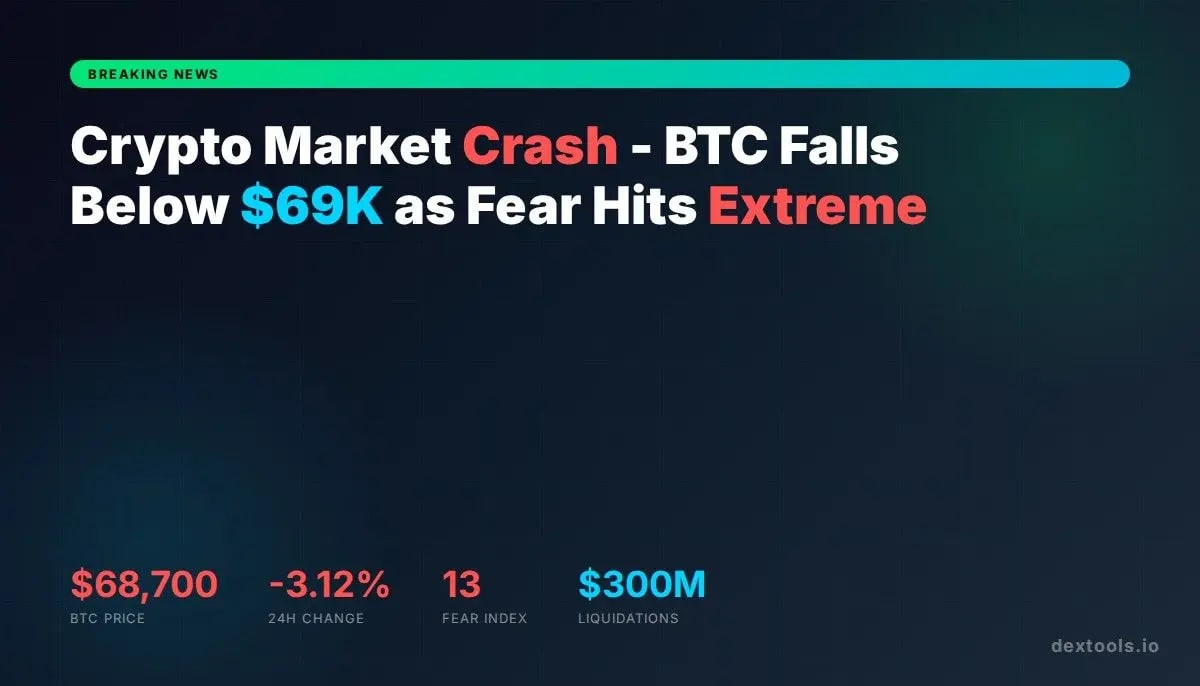
Bitcoin plunges to $68,700 amid $300M in liquidations, geopolitical tensions, and MARA's massive $1.1B BTC sale. Fear and Greed Index drops to 13 - Extreme Fear.
The cryptocurrency market is bleeding red on March 27, 2026, as Bitcoin crashed below the critical $69,000 support level, dragging the entire digital asset ecosystem into a sharp downturn. With the Fear and Greed Index plummeting to just 13 - deep in "Extreme Fear" territory - traders are bracing for what could be an extended period of volatility.
A Perfect Storm of Selling Pressure
Bitcoin is currently trading at $68,700, marking a 3.12% decline over the past 24 hours. But BTC is far from alone in its pain. Ethereum has dropped 4.45% to $2,070, while Solana took an even harder hit, falling 5.59% to $86.67. The total cryptocurrency market capitalization has shed 3.3%, now sitting at $2.43 trillion.
The carnage in the derivatives market tells an even grimmer story. Over $300 million in positions have been liquidated in the past day, with the overwhelming majority being long positions. Leveraged bulls who expected continued upside have been caught off guard by the sudden reversal.
What Triggered the Crash?
Several factors have converged to create this perfect storm of selling pressure:
Key Bearish Catalysts
- Geopolitical tensions - Escalating Iran/US friction has sent oil prices surging, creating a risk-off environment across global markets
- MARA's $1.1B Bitcoin sale - Mining giant MARA Holdings dumped 15,133 BTC between March 4-25, adding massive sell pressure
- Crypto czar exit - David Sacks left his role as White House crypto czar, creating regulatory uncertainty
- Leverage flush - $300M in liquidations cascading through exchanges, accelerating the decline
Geopolitical Headwinds Mount
The escalating tensions between Iran and the United States have rippled through every risk asset class, and crypto is no exception. Oil prices have surged on fears of supply disruption, pushing investors toward traditional safe havens like gold and U.S. treasuries. Bitcoin, often marketed as "digital gold," has failed to live up to that narrative during this particular crisis, instead trading in lockstep with risk-on assets like tech stocks.
MARA's Massive Sell-Off Compounds the Pain
Adding fuel to the fire, MARA Holdings - one of the largest publicly traded Bitcoin mining companies - sold approximately 15,133 BTC worth roughly $1.1 billion between March 4 and March 25. The company used the proceeds to repurchase convertible bonds maturing in 2030 and 2031, effectively choosing debt reduction over Bitcoin accumulation. While the move makes sense from a corporate treasury perspective, the timing could not have been worse for an already fragile market.
White House Crypto Czar Steps Down
In another blow to market sentiment, David Sacks has departed his role as the White House crypto czar. Sacks had been seen as a key advocate for pro-crypto policy within the administration, and his exit has left a void in terms of regulatory leadership. Traders worry that without a strong voice championing digital assets in Washington, the regulatory landscape could shift in an unfavorable direction.
Market Snapshot - March 27, 2026
- BTC: $68,700 (-3.12%)
- ETH: $2,070 (-4.45%)
- SOL: $86.67 (-5.59%)
- Total Market Cap: $2.43T (-3.3%)
- Liquidations: $300M+ (mostly longs)
Fear and Greed at Historic Lows
The Crypto Fear and Greed Index has plunged to 13, a reading firmly in the "Extreme Fear" zone. This is the lowest reading since the depths of the 2024 bear market correction and signals that retail sentiment has completely capitulated. Historically, readings this extreme have often preceded significant bounces - but they have also preceded further drops during prolonged bear phases.
What Comes Next?
Technical analysts are watching the $67,500 level as the next major support zone for Bitcoin. A breakdown below that could open the door to a test of $64,000. On the upside, reclaiming $70,000 would be the first sign that the selling pressure is exhausting.
For now, the market remains in a precarious position. With geopolitical risks elevated, institutional sellers active, and sentiment at rock bottom, traders should exercise extreme caution. The $300 million liquidation event suggests that the leverage flush may be nearing completion, but until the macro picture improves, rallies are likely to face stiff resistance.
Whether this marks a generational buying opportunity or the beginning of a deeper correction will depend largely on developments in the Iran-US situation and whether institutional selling - particularly from miners like MARA - continues at this pace. One thing is certain: the crypto market in March 2026 is not for the faint of heart.
Related Guides
- DDC Enterprise Adds 131 BTC, Treasury Hits 2,714 BTC
- Crypto Fear and Greed Index Sinks Into Extreme Fear
- Crypto Market Holds $2.37T as Fear Index Hits 9
- Nearly Half of All Bitcoin is Underwater
- AI Tokens Lead Crypto Recovery as TAO, RENDER and FET Surge
Frequently Asked Questions
What caused BTC to fall below $69K?
BTC's price decline was influenced by a broader market downturn and increased selling pressure from investors.
What is the Fear and Greed Index?
The Fear and Greed Index is a metric that measures two primary emotions driving investor behavior: fear and greed. A low score, like 13, indicates extreme fear.
How does a low Fear and Greed Index relate to market crashes?
A low Fear and Greed Index often coincides with periods of significant market corrections or crashes, as it reflects widespread investor panic and selling.
What are the typical investor reactions during a crypto market crash?
During a crash, investors often panic sell to cut losses, while some long-term holders may view it as an opportunity to buy at lower prices.
What are the potential short-term impacts of BTC falling below $69K?
A fall below this price point can trigger further selling as stop-loss orders are hit, potentially leading to increased volatility and a test of lower support levels.