As the CLARITY Act Advances, Crypto Projects Rethink Growth in a Fragmented Market
— By Tony Rabbit in News

As the CLARITY Act advances in the U.S. and MiCA reshapes Europe, crypto companies are rethinking advertising, distribution, and user acquisition strategies in a fragmented regulatory market.
Crypto regulation is usually framed as a legal story. For operators, growth leads, and founders, it has become a distribution story too.
Projects still need users, impressions, qualified traffic, and conversion. But those outcomes now depend much more heavily on where a company operates, how platforms interpret risk, and how much compliance friction sits between a campaign brief and a live launch. That is why the latest policy split between the United States and Europe matters so much for go-to-market planning.
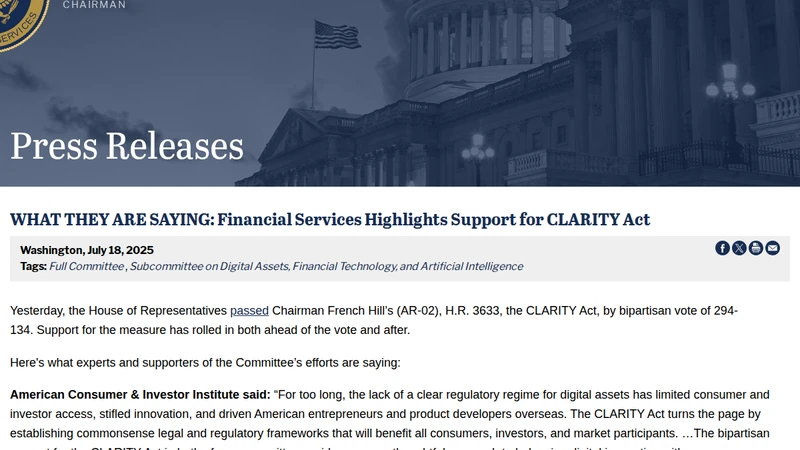
In the U.S., the House Financial Services Committee has highlighted support for the CLARITY Act, showing that the policy conversation is moving forward. In Europe, the Markets in Crypto-Assets framework, or MiCA, has helped create a more legible structure for how many crypto firms think about compliance and expansion. That sounds like progress, and it is. But it still leaves the global market fragmented enough that growth teams cannot operate as if the rules are settled everywhere.
Quick take
- Policy momentum is real, but it has not eliminated market fragmentation.
- Growth teams still face slower approvals, stricter platform scrutiny, and more complex cross-border campaign planning.
- That pressure is pushing more brands toward specialized crypto-native media and advertising infrastructure.

The Policy Gap Is Now a Growth Problem
For years, regulation and marketing were often treated as separate tracks. The legal team worried about rules. The growth team worried about scale. That split works poorly in crypto today.
Now the key questions are deeply operational. Can a campaign run in this market? Does the onboarding copy trigger extra review? Will the ad platform treat the product as a restricted financial service, an exchange, a wallet, or a higher-risk crypto advertiser? How much time should the team budget for compliance review before launch? Those are not abstract questions. They directly affect CAC, launch velocity, and channel mix.
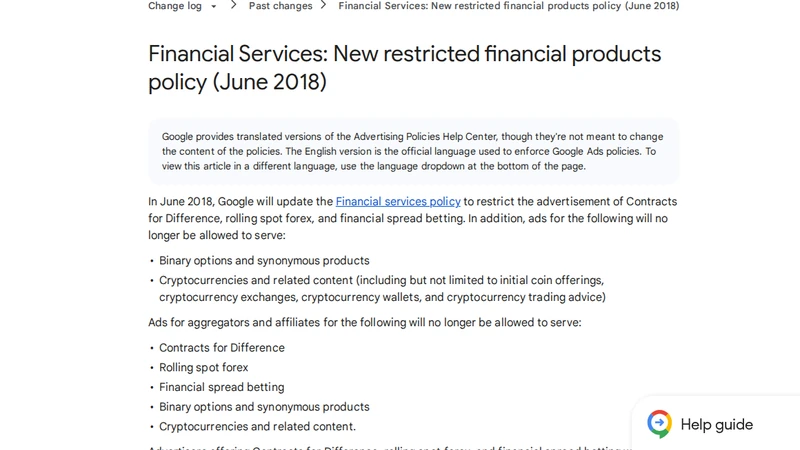
Mainstream platforms illustrate the problem. Google has maintained restrictions and certification requirements around financial and crypto-related advertising, including rules that can affect exchanges, wallets, and related services depending on advertiser status and jurisdiction. Even where access exists, the process is often more conditional and slower than what non-crypto growth teams are used to. That adds friction before a campaign has even generated its first qualified click.
Why the same policy story lands differently for operators
MiCA changes that conversation in Europe by giving many companies a clearer baseline for compliance and market planning. It does not make crypto growth easy. But it does make it more structured. That difference matters when teams are deciding where to launch, where to spend, and how much internal friction a market will create before scale becomes possible.
Why Mainstream Platforms Still Feel Fragile for Crypto
For a non-crypto brand, performance marketing often starts with a fairly stable assumption: if the creative is strong and the economics work, scaling is mostly a budget and optimization problem. Crypto projects do not get to make that assumption so easily. They often have to think about policy interpretation, regional eligibility, advertiser status, and landing-page language before they can even test whether the funnel converts.
That changes the operating rhythm of the whole team. Growth leads need closer coordination with compliance. Creative teams need more conservative messaging. Paid media managers need backup plans for when an approval slows down or a campaign structure stops being viable in a target region. This is why crypto user acquisition increasingly depends on channel resilience as much as on campaign creativity.
Where the friction usually shows up
None of that means mainstream platforms no longer matter. It means they no longer deserve to be treated as the only serious route to scale. In a fragmented regulatory market, overdependence on one platform can become a strategic weakness.
Why More Projects Are Shifting Toward Specialized Channels
Once broad distribution becomes inconsistent, specialized distribution becomes strategically important. That is the shift now underway in crypto marketing.
Projects are increasingly rebalancing their acquisition mix around category-aware media, publisher partnerships, sponsored content, ecosystem distribution, and crypto-native ad networks. The logic is straightforward. If mainstream reach is harder to scale cleanly, then the next best option is not simply buying smaller versions of the same traffic. It is finding better-context traffic.
This is where crypto-native infrastructure starts to look less like a niche extra and more like a core part of the stack. A platform such as Coinzilla is built around exactly that premise, namely that crypto and finance brands need distribution in environments where the audience already understands the category and where campaign structure can be tuned to industry-specific needs.

Coinzilla, by the numbers according to its homepage

What a Smarter 2026 Crypto Growth Stack Looks Like
Teams that win in this environment will probably not be the ones who simply outspend everyone else. They will be the teams that build for policy-aware resilience.
That means defining compliance-safe messaging early, narrowing distribution toward higher-intent audiences, measuring outcomes that matter beyond vanity clicks, and staying flexible enough to reallocate budget when policy or platform conditions change. It also means treating content as part of acquisition, not just top-of-funnel decoration.
Sponsored articles, publisher relationships, ecosystem placement, and targeted display can work together when the objective is not just reach, but believable reach. In other words, the growth stack needs to reflect the trust problem as much as the traffic problem.
A practical crypto growth stack in 2026
That is the deeper point behind the current moment. Regulatory clarity matters, but even meaningful progress does not automatically remove the day-to-day complexity of crypto distribution. Until that complexity shrinks, projects will keep favoring channels and partners built for category-specific growth rather than generic reach.
Content Distribution Is Becoming Part of Performance
Another shift is easy to miss if you only look at media buying dashboards. Crypto growth is becoming more content-dependent at the same time it becomes more policy-sensitive. Users are more cautious, compliance review is heavier, and many products need more explanation before a click turns into a funded account, a wallet install, or a qualified lead.
That is why sponsored articles, publisher partnerships, native placements, and research-led distribution are pulling more weight. They do not just generate top-of-funnel awareness. They help pre-sell the logic of the product, establish category context, and create a trust bridge between a brand and a skeptical user. In a market where raw ads can face restrictions or skepticism, explanation becomes part of acquisition.
Why content is now part of the funnel
That is one reason the line between media, education, and acquisition keeps blurring in crypto. A premium sponsored article is no longer just a branding asset. If executed properly, it becomes a sales-enablement asset for the wider funnel.
Frequently Asked Questions
Why does regulatory uncertainty affect crypto growth strategies?
Because it affects market access, ad approvals, messaging constraints, compliance reviews, and the speed at which a project can scale campaigns across jurisdictions.
Does progress on the CLARITY Act mean crypto companies can market freely in the U.S.?
No. Legislative progress matters, but growth teams still face platform restrictions, compliance friction, and operational uncertainty while the broader rule set remains uneven.
Why are crypto-native ad networks getting more attention?
Because they can offer category-aware publisher inventory, more relevant audiences, and distribution environments built specifically for crypto and finance brands.
What does MiCA change for crypto projects operating in Europe?
MiCA gives many companies a clearer framework for compliance and market planning, which can make launches and distribution strategy more predictable than in less settled jurisdictions.
What should a strong crypto growth stack include in 2026?
It should combine compliance-safe messaging, high-intent media distribution, measurable performance channels, and flexible infrastructure that can adapt as rules change.
Disclosure: This piece is intended as sponsored partner content. Readers should treat brand references as commercial context, not independent investment, legal, or financial advice.