BIS Warns on Stablecoin Fragmentation: Coordination Needed
— By Whatsertrade in Analysis

BIS warns that stablecoin fragmentation poses risk to regulatory frameworks and financial stability. Why global coordination is crucial.
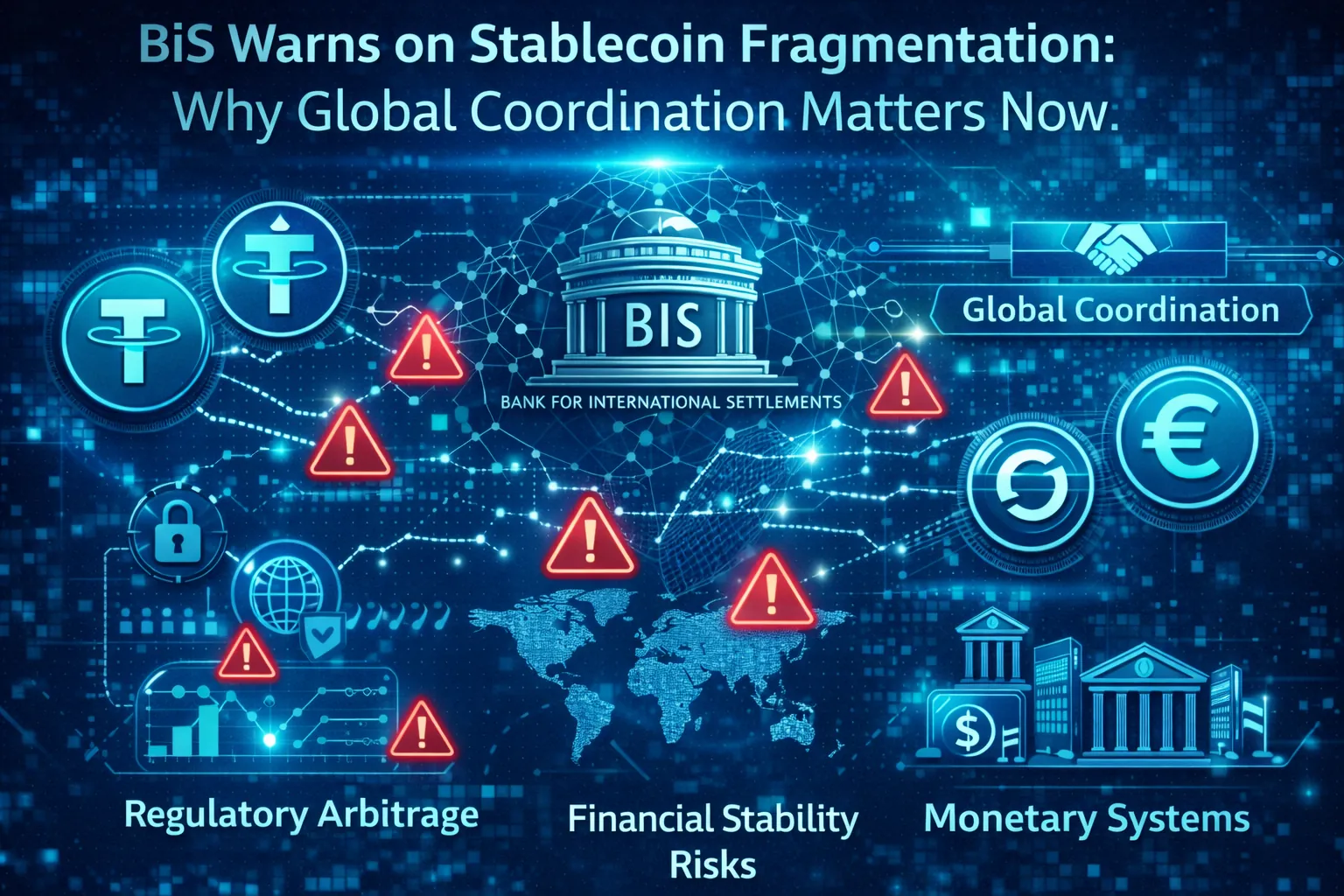
The Bank for International Settlements (BIS) has put stablecoins back at the center of the global financial debate. Its latest warning targets not only crypto volatility or isolated national regulation but also the broader issue of fragmentation. As stablecoins grow under inconsistent national rules, the result could be regulatory arbitrage, weaker oversight, and increased pressure on financial stability. This is precisely why global coordination on stablecoin policies is critical now.
Challenges Posed by Stablecoin Growth
Stablecoins were initially designed to offer price stability, faster payments, and efficient digital settlements. However, their growth presents cross-border challenges from a policy perspective. A stablecoin can circulate globally while being issued, managed, and regulated under vastly different legal frameworks. The BIS argues that this inconsistency breeds risk. If one jurisdiction enforces stringent standards while another provides a more lenient approach, issuers may favor the lighter frameworks while still servicing users globally. This is the core of the fragmentation issue occurring with stablecoins.
One primary concern is regulatory arbitrage. As rules differ across countries, firms might structure operations to exploit system weaknesses. For policymakers, this raises serious questions regarding reserve quality, redemption rights, anti-money laundering controls, and operational resilience. The BIS emphasizes that inconsistent frameworks can amplify instability, particularly as more regions develop domestic stablecoin rules at varying speeds.
Implications on Financial Systems
The BIS frames stablecoins as more than just a payments innovation. In recent comments from Japan, BIS General Manager Pablo Hernández de Cos highlighted that risks extend to monetary policy, overall financial stability, and combating illicit finance. These are important considerations since stablecoins now represent a significant part of broader financial infrastructure rather than mere niche crypto products.
Redemption Features and Market Perception
An additional point raised by the BIS is the nature of stablecoin redemption. Concerns were noted about how the redemption features of major issuers could lead stablecoins to behave more like exchange-traded products than money. This distinction matters because while users often perceive stablecoins as digital cash, regulators may view them as instruments with stability reliant on reserve management, market confidence, and redemption capacity. A decline in confidence could trigger rapid market distress.
Urgency of Global Standards
For these reasons, the call for global standards is increasingly pressing. While domestic regulations might suffice for locally-issued stablecoins, these currencies are inherently global by design. The BIS and other central banks are advocating for shared principles to mitigate market fragmentation. This means setting clear expectations regarding backing, disclosures, supervision, redemption, and handling of interest-bearing features. The objective is not merely to hinder innovation, but to avert scenarios where stablecoins outpace the regulatory frameworks meant to manage systemic risks.
The timing of this warning is also significant. Stablecoins are gaining central roles in trading, payments, and cross-border transactions. As governments worldwide attempt to balance innovation with regulatory controls, some have already established local frameworks while others are considering their level of permissiveness. This uneven adoption raises the probability of a fragmented market, subjecting issuers, exchanges, and users to geographically varied standards.
Crypto Industry's Path Forward
For the cryptocurrency industry, this situation presents both risk and opportunity. The risk is clear: enhanced coordination could result in stricter scrutiny, compliance requirements, and diminished leeway for regulatory exploitation. Conversely, the opportunity lies in establishing stablecoins with solid international standards, potentially enhancing their credibility for mainstream financial use. Trusted, consistent operational rules could stabilize stablecoin adoption in payments and settlement, making the regulation of stablecoins now pivotal to market structures.
Shaping Future Markets
The BIS's warnings hold significant weight for investors and traders since they could define the next stage of stablecoin competition. Future winners might not merely be determined by size or liquidity but by their ability to swiftly adapt to coordinated global standards. In a more regulated landscape, trust, reserve transparency, and jurisdictional alignment could become as crucial as user growth, reshaping how the market values stablecoin issuers and their surrounding ecosystems. These insights stem from BIS and central bank discussions around harmonized standards and regulatory arbitrage.
The BIS warning on stablecoin fragmentation signals a pivotal shift in the debate spanning beyond crypto to the heart of global financial policymaking. Stablecoins are now assessed by their integration into international financial systems rather than merely by utility or market cap. Disconnected rules could exacerbate fragmentation and increase risks. Conversely, improved coordination could strengthen stablecoin credibility and integration into mainstream finance, highlighting why this topic stands as a critical issue today.
How to Bridge Crypto Between Chains: Complete Cross-Chain Tutorial 2026 How to Use 1inch: Complete DEX Aggregator Swap Tutorial (2026) How to Use OKX Web3 Wallet: Multi-Chain DeFi Hub Guide (2026)