Top 5 Rug Pull Checker Tools 2026 (Avoid Scams)
— By Whatsertrade in Tutorials

The best rug pull checker tools in 2026 to scan tokens for scams before you buy. Compare honeypot and rug checkers and verify any token safely.
Rug pull checker tools analyze crypto tokens for hidden risks like bad liquidity, malicious contract behavior, honeypots, and proxy tricks. Top tools in 2026 include Rugcheck, GoPlus Security, Honeypot.is, TokenSniffer, and Quick Intel, each offering specialized detection to help users avoid fraudulent projects.
Rug pull checker tools matter because crypto risk often hides in plain sight. Bad liquidity, malicious contract behavior, honeypots and proxy tricks can all sit behind a token that looks exciting on the surface. The right tool will not make the market safe, but it can stop obviously bad ideas from reaching your wallet.
The five rug pull checker tools most worth comparing in 2026 are Rugcheck, GoPlus Security, Honeypot.is, TokenSniffer and Quick Intel. Each one helps in a slightly different way. Some are stronger for contract risk, some are stronger for honeypot detection, and some work best as a second opinion rather than a single source of truth.
Official websites worth checking
How this ranking was built
- Workflow fit mattered more than raw hype.
- We favored tools that actually improve decision quality, not just surface more noise.
- Screenshot quality was checked manually to avoid popups, captcha walls and broken pages.
- We weighted how well each tool fits a real crypto workflow in 2026, not just old brand memory.
Why this category matters in 2026
The reason top-5 comparisons still matter is simple. The crypto market keeps getting noisier, but user attention does not scale with it. Every category becomes more crowded over time, and that means the best tool is rarely the one with the loudest marketing. It is usually the one that shortens the path between question and answer. The stronger the market gets at producing noise, the more valuable clear tooling becomes.
A good comparison article also needs to do more than rank logos. It should explain why a category matters, which user each option fits, and how to use the ranking without becoming lazy. If a list does not change the reader's decision quality, it is just content filler. That is exactly what we are avoiding here.
That is also why screenshots matter in this batch. Real clean screenshots make the category easier to read and help the user understand whether the interface feels right before clicking through. Features, workflows and usability all become easier to compare when the visuals are honest and uncluttered.
Verified real screenshots
The screenshots below were checked to avoid the usual junk that lowers trust, including cookie walls, captcha blocks, blank states and broken pages. They are not decorative filler. They are there to make the comparison more practical.
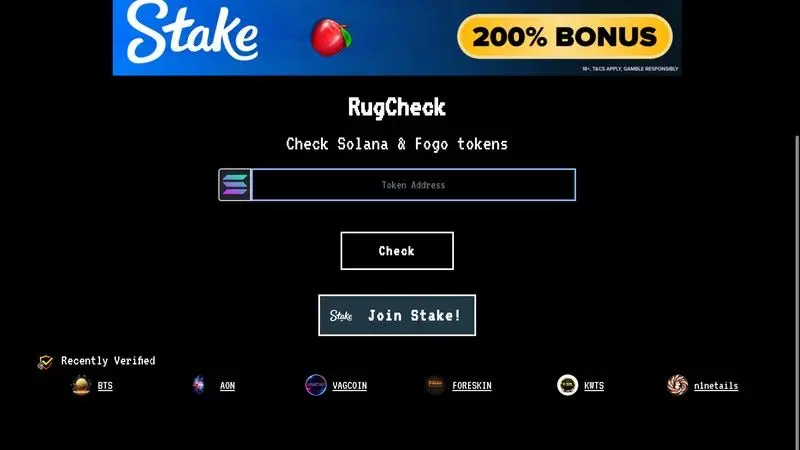
Rugcheck ranks first because it gives one of the clearest broad workflows for screening obvious token risk before a trade.
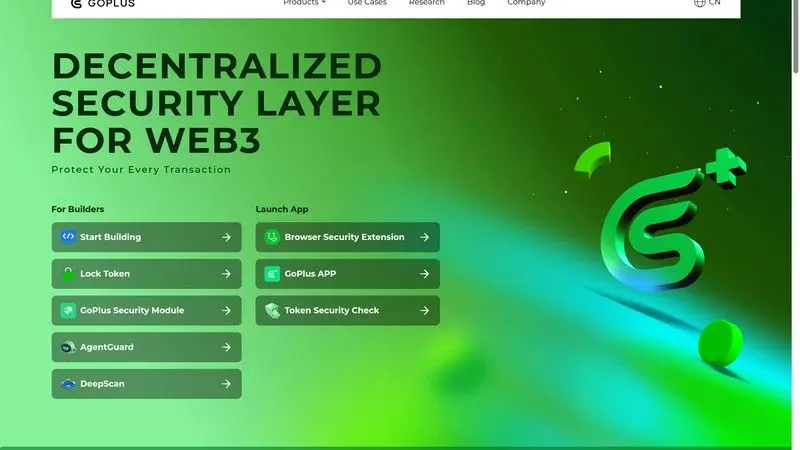
GoPlus stays high because security signals are more useful when they are easy to read and fast to apply.
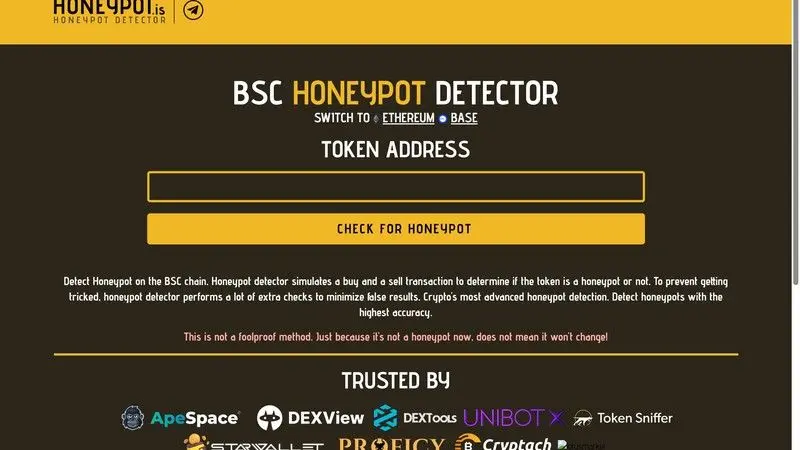
Honeypot.is remains essential because direct honeypot screening still saves users from one of the most painful basic mistakes.
More verified real screenshots
One weakness in the first pass of this batch was screenshot density. These extra real captures make the pages more practical and closer to how people actually compare tools before clicking through.

Quick Intel strengthens this comparison because good scam-checking workflows usually rely on a second or third verification layer, not one tool alone.
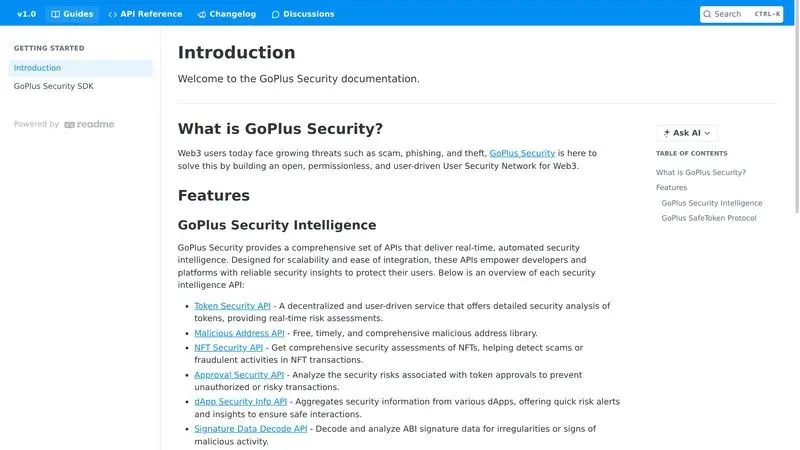
A docs or product view is useful here because security tools often matter as much for repeatable workflow quality as for the headline homepage promise.
The top 5 compared
1. Rugcheck
Rugcheck leads because it offers one of the best broad first-pass risk screens for modern token environments. It helps users avoid the most obvious low-quality setups without pretending to provide certainty.
Use Rugcheck if you want the best broad default for token scam screening. That is why the ranking is not just about brand size. It is about the type of workflow the tool supports under real pressure. Main tradeoff: The tradeoff is that you still need to interpret the output instead of using it blindly.
2. GoPlus Security
GoPlus Security stays near the top because a strong contract-risk layer matters when you are trying to cut obvious dangers before they reach your wallet.
Use GoPlus if you want a strong security-focused check in your workflow. That is why the ranking is not just about brand size. It is about the type of workflow the tool supports under real pressure. Main tradeoff: The tradeoff is that it is best paired with a second opinion, not treated as a final verdict.
3. Honeypot.is
Honeypot.is remains highly valuable because direct honeypot risk is still one of the easiest ways to get trapped. A focused tool for that problem still matters.
Use Honeypot.is when your biggest concern is whether the token will trap the exit. That is why the ranking is not just about brand size. It is about the type of workflow the tool supports under real pressure. Main tradeoff: The tradeoff is that it is more specialized than a full broad scam screen.
4. TokenSniffer
TokenSniffer stays relevant because many users still want a familiar contract-checking reference point in the workflow. Familiarity has real value if it improves consistency.
Use TokenSniffer if you want a known contract-risk check as part of a wider process. That is why the ranking is not just about brand size. It is about the type of workflow the tool supports under real pressure. Main tradeoff: The tradeoff is that it should never be the only check you run.
5. Quick Intel
Quick Intel rounds out the list because good security workflows usually include a second layer. Having another credible lens improves discipline.
Use Quick Intel when you want one more verification layer before committing capital. That is why the ranking is not just about brand size. It is about the type of workflow the tool supports under real pressure. Main tradeoff: The tradeoff is that it is not always the first-stop tool for most users.
How to use this ranking properly
The most common mistake people make with a top-5 article is treating rank one like a universal answer. That is not how good comparisons work. Rank one is usually the strongest broad default, not a permanent winner for every reader. The right way to use a ranking is to look at the first two or three options, decide what your actual workflow needs, and then test the best fit with a small amount of time or capital before committing to it as a routine.
Another mistake is confusing familiarity with quality. A known brand can deserve its position, but sometimes familiarity only explains why users start there, not why they should stay there. That is why each option above includes both fit and tradeoff. The goal is not to romanticize the list. The goal is to make the shortlist more honest.
And finally, remember that no top-5 article replaces direct verification. Interfaces change, pricing changes, supported chains change, and even good products can drift. Use the article to narrow the field, then verify current details directly on the platform before you build anything serious around it.
What separates a useful tool from a noisy one
The best crypto tools usually do three things well. First, they reduce search friction. Second, they make important context easier to read. Third, they fit naturally into the next step of the workflow. Bad tools often fail at one of those points. They either show too much, explain too little, or interrupt the next action the user needs to take. In crypto, where speed and context both matter, that weakness compounds fast.
The higher-ranked names in this guide tend to be there because they keep the workflow tighter. Even when two tools appear similar on the surface, the better one usually creates fewer unforced errors over time. That is an underrated edge. Cleaner decisions often come from cleaner tooling long before they show up in PnL.
Who should pick what
If you are newer to the category, the highest-ranked broad default is usually the safest place to start. If you already know your style well, then the better move is often picking the tool that matches the part of the workflow you care about most. Speed-focused users should not choose the same way as research-first users. Context-first users should not choose the same way as pure execution users. That is the whole point of making the tradeoffs explicit.
The best readers of comparison articles are not the ones who blindly copy the list. They are the ones who use the list to make a sharper shortlist. That is where this guide is trying to help.
How serious users actually work with this category
Serious crypto users rarely rely on one tool in isolation. They build stacks. A strong stack usually has one tool for broad discovery, one tool for deeper verification, and one tool for execution or monitoring. That pattern appears across almost every category in this article. The top-ranked options tend to be the ones that slot into a stack cleanly instead of demanding that they become the entire stack by themselves.
That point matters because many buying decisions in crypto tooling go wrong at the expectation stage. A user buys a platform hoping it will solve discovery, analysis, validation, alerts and execution in one shot. Then they get frustrated when it does not. The better move is to decide which exact part of the workflow you want the tool to improve, then judge it on that job. The tools that win in this list are usually the ones that perform their core job well enough to make the rest of the workflow sharper.
Another thing serious users do differently is they measure consistency, not just excitement. A tool that feels amazing for one day but creates low-grade friction every week is usually worse than a tool that feels calmer but works cleanly over time. That is especially true in crypto, where small workflow mistakes accumulate faster than people realize.
Common mistakes people make when choosing tools in this category
The first mistake is choosing by hype instead of fit. A tool can be famous and still be wrong for your workflow. Many traders and researchers lose time because they start with the loudest brand instead of the platform that best matches what they actually do every day. That is why this guide keeps returning to fit, tradeoff and practical use case instead of pretending every reader wants the same thing.
The second mistake is confusing speed with quality. Faster dashboards, louder alerts or more data points do not automatically produce better decisions. In many crypto workflows, more information simply creates more noise. The better tool is often the one that reduces the number of bad decisions, not the one that produces the most stimulation. Ranking tools by raw feature count usually leads to weak outcomes.
The third mistake is skipping verification after reading the comparison. Articles like this should narrow the field and improve your starting point, but they should not replace direct checks. Interfaces, plans, chain support, pricing and data depth can all shift. If a tool looks right in the article, the final step is still to verify the current version directly on the official site and test whether it fits your own workflow in practice.
Checklist before you commit to a tool
Before you adopt any platform from this list, run a simple checklist. First, define the exact job you want the tool to perform. Second, confirm the current pricing, limits and supported features. Third, make sure the interface feels clean enough that you will actually use it consistently. Fourth, pair it with the other tools your workflow still needs instead of expecting it to do everything. Fifth, test it with a small workflow before making it central to your routine.
If you follow that checklist, top-5 articles become much more valuable. They stop being content you skim once and forget, and become decision frameworks that help you choose faster with fewer mistakes. That is the real point of a comparison guide, especially in crypto where noisy decisions get punished quickly.
Fast checklist
- Know exactly what problem you want the tool to solve.
- Verify current features and pricing on the official site.
- Pair the tool with the rest of your workflow instead of expecting magic.
- Test the interface with a small routine before committing fully.
- Use DEXTools and other verification layers where they make the decision cleaner.
Frequently Asked Questions
What are rug pull checker tools?
Rug pull checker tools are software applications that analyze cryptocurrency projects for potential red flags indicating a scam or exit scheme.
How do these tools identify rug pulls?
They typically examine smart contract code, liquidity pool data, team transparency, token distribution, and social media sentiment to assess project legitimacy.
Are rug pull checker tools always accurate?
No, while helpful, these tools are not foolproof. They provide risk assessments based on available data, but new scam tactics can emerge.
What are some common indicators these tools look for?
Common indicators include low liquidity, locked tokens, unaudited smart contracts, anonymous teams, and sudden, unexplained price drops.
Can these tools prevent me from all crypto scams?
They can significantly reduce your risk by highlighting potential red flags, but they cannot guarantee protection from all forms of crypto fraud or market volatility.
Related Guides
- What Is a Rug Pull in Crypto: Complete Anatomy and Prevention Guide (2026)
- Liquidity Pull vs Slow Rug: On-Chain Warning Signs (2026)
- How to Spot a Rug Pull 2026: 12-Point Free Detection Checklist
- Rug Pull Checklist: 10 Pair Explorer Checks to Avoid Scams
- Rugcheck Tutorial 2026: Free Solana Token Risk Checker