How to Copy Trade Crypto - Complete Strategy Guide 2026
— By Tony Rabbit in Tutorials

Master crypto copy trading with this comprehensive guide covering CEX platforms like Bitget and Bybit, DEX wallet tracking tools like GMGN and Cielo, risk management strategies, and trader evaluation techniques.
What is Copy Trading in Crypto?
Copy trading is a investment strategy where you automatically replicate the trades of experienced and successful traders. In the crypto market, this approach allows retail investors to benefit from the expertise and strategies of professional traders without needing deep market knowledge or constant monitoring.
Intent check: This page is the practical workflow and strategy guide. If you need the concept first, read What Is Copy Trading in Crypto?. If you are shopping for providers, read Top 5 Crypto Copy Trading Platforms
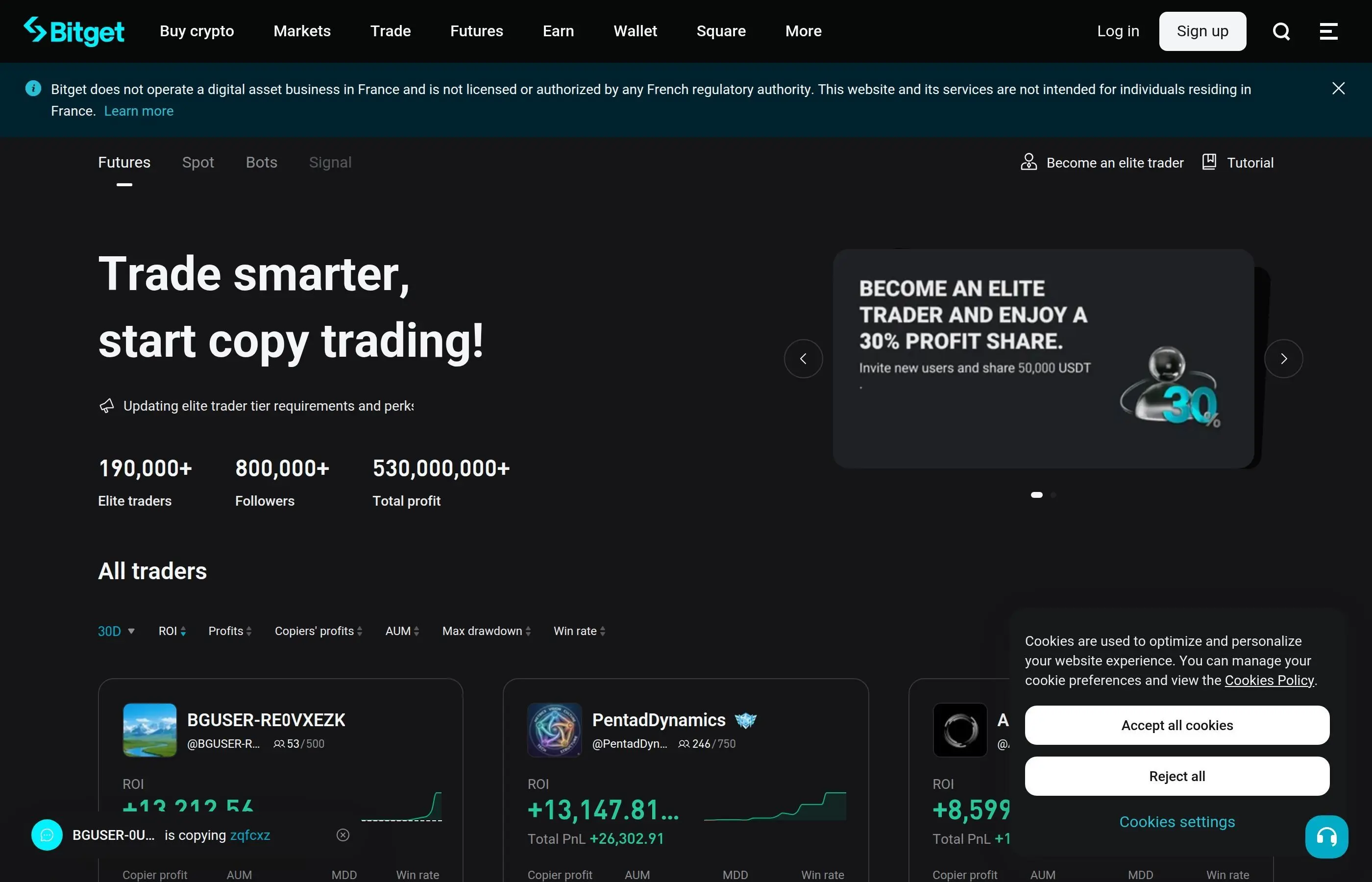
Unlike traditional copy trading in forex or stocks, crypto copy trading operates in a 24/7 market with extreme volatility and unique opportunities. The decentralized nature of crypto markets also enables innovative approaches like wallet tracking and on-chain copy trading that weren't possible in traditional finance.
Types of Crypto Copy Trading
There are two main categories of crypto copy trading, each with distinct advantages and implementation methods. Understanding these differences is crucial for choosing the right approach for your trading goals and risk tolerance.
1. Centralized Exchange (CEX) Copy Trading
CEX copy trading operates through established cryptocurrency exchanges that offer built-in copy trading features. These platforms provide user-friendly interfaces and a

Key Characteristics:
- Automated trade execution with configurable parameters
- Built-in risk management tools and position sizing
- Transparent trader performance statistics
- Regulated environment with customer support
- Limited to assets available on the specific exchange
2. Decentralized Exchange (DEX) Copy Trading
DEX copy trading involves tracking successful wallet addresses and manually or automatically replicating their on-chain transactions. This approach offers access to the entire DeFi ecosystem but requires more technical knowledge.
Key Characteristics:
- Access to all tokens and DeFi protocols
- Real-time on-chain transaction monitoring
- Higher potential returns but increased complexity
- Direct wallet-to-wallet interaction
- Requires strong understanding of blockchain technology
CEX Copy Trading Platforms
Several major centralized exchanges offer sophisticated copy trading systems with varying features and supported assets.
3. Setting Up Copy Trading on Bitget
Bitget is one of the leading platforms for crypto copy trading, offering comprehensive features for both copy traders and signal providers.
- Create and verify your Bitget account through the standard KYC process
- Navigate to the "Copy Trading" section from the main menu
- Browse the trader leaderboard and filter by performance metrics
- Analyze potential traders using the platform's analytics tools
- Select your preferred trader and configure your copy trading parameters
- Set your investment amount and risk management rules
- Activate copy trading and monitor performance regularly
Bitget Copy Trading Features:
- Smart Copy: Automatic position sizing based on your account balance
- Fixed Copy: Copy trades with predetermined position sizes
- Proportional Copy: Match the trader's position sizing relative to account size
- Risk Controls: Stop-loss, take-profit, and maximum drawdown limits
- Performance Analytics: Detailed statistics on trader performance and strategy
4. Bybit Copy Trading Implementation
Bybit offers a robust copy trading ecosystem with advanced features for professional traders and institutions.
- Complete account registration and verification on Bybit
- Access the "Copy Trading" section under the trading menu
- Use the advanced filtering system to find suitable traders
- Review detailed trader profiles including trading history and strategy explanations
- Configure your copy trading settings including investment allocation
- Set up comprehensive risk management parameters
- Monitor and adjust your copy trading portfolio as needed
5. OKX Copy Trading Features
OKX provides institutional-grade copy trading tools with sophisticated portfolio management capabilities.
- Register for an OKX account and complete identity verification
- Navigate to the "Trade" menu and select "Copy Trading"
- Explore the trader marketplace using advanced search filters
- Analyze trader performance using OKX's comprehensive analytics suite
- Configure your copy trading strategy with detailed parameter controls
- Implement multi-trader portfolios for diversification
- Utilize OKX's risk management tools to protect your capital
DEX Copy Trading and Wallet Tracking
Decentralized copy trading offers access to the full spectrum of crypto opportunities but requires more sophisticated tools and understanding.
6. Understanding On-Chain Wallet Tracking
Successful DEX copy trading begins with identifying and monitoring profitable wallet addresses across various blockchain networks.
- Research and identify successful traders through on-chain analytics platforms
- Verify the authenticity and consistency of wallet performance over time
- Set up monitoring systems to track new transactions from target wallets
- Develop criteria for deciding which trades to replicate
- Establish execution systems for timely trade replication
- Implement risk management protocols for position sizing and exit strategies
7. Using GMGN for Copy Trading Intelligence
GMGN.ai provides comprehensive smart money tracking capabilities essential for DEX copy trading.
- Create a GMGN account and familiarize yourself with the interface
- Use the smart money leaderboard to identify consistently profitable wallets
- Set up custom alerts for transactions from your selected wallets
- Analyze transaction patterns to understand each wallet's trading strategy
- Monitor new token discoveries and early investment patterns
- Track cross-chain activities for comprehensive market coverage
8. Implementing Cielo Finance for Advanced Analytics
Cielo Finance offers sophisticated tools for analyzing and replicating successful trading strategies on-chain.
- Connect your wallet to Cielo Finance platform
- Explore the platform's trader discovery and ranking systems
- Use advanced filters to find traders matching your risk profile
- Analyze detailed trading statistics and performance metrics
- Set up automated notifications for target wallet activities
- Utilize Cielo's portfolio management tools for diversified copy trading
9. Leveraging Arkham Intelligence
Arkham provides institutional-grade blockchain analytics for professional copy trading operations.
- Register for Arkham Intelligence access through their verification process
- Use entity identification features to track known successful traders
- Analyze wallet clustering to understand trading networks and strategies
- Monitor institutional wallet activities and investment flows
- Set up alerts for significant transaction patterns
- Leverage Arkham's data for comprehensive market intelligence
Essential DEX Copy Trading Tools:
- GMGN.ai: Smart money tracking and new token discovery
- Cielo Finance: Advanced on-chain analytics and trader ranking
- Arkham Intelligence: Professional blockchain analysis and entity tracking
- DexScreener: Real-time DEX trading data and token analytics
- Etherscan/Solscan: Direct blockchain transaction monitoring
Evaluating Traders for Copy Trading
Success in copy trading depends heavily on selecting the right traders to follow. This requires systematic evaluation of multiple factors beyond simple profit metrics.
10. Analyzing Trader Performance Metrics
Comprehensive trader evaluation involves examining multiple performance indicators over different time periods.
- Consistency Analysis: Review performance across multiple market cycles and conditions
- Risk-Adjusted Returns: Calculate Sharpe ratios and maximum drawdown periods
- Win Rate vs Average Win/Loss: Understand the trader's strategy profile
- Position Sizing Discipline: Evaluate risk management practices
- Market Condition Adaptability: Assess performance in different market environments
- Transparency and Communication: Review trader explanations of strategy and market outlook
11. Red Flags to Avoid
Identifying problematic traders early can save you significant losses and help you focus on quality opportunities.
- Inconsistent Performance: Large swings between profitable and losing periods
- High Maximum Drawdowns: Periods where the account lost >50% of value
- Overconcentration: Putting too much capital in single positions or asset types
- Lack of Transparency: Traders who don't explain their strategies or reasoning
- Recent Account Creation: New traders without sufficient track record
- Unrealistic Returns: Claims of consistently high returns without corresponding risk
12. Due Diligence Process
Implement a systematic approach to trader evaluation before committing capital.
- Analyze at least 6 months of trading history across different market conditions
- Calculate key performance metrics including returns, volatility, and drawdowns
- Review the trader's strategy explanations and market commentary
- Check for correlation with broader market movements and other traders
- Assess the trader's response to major market events and black swan scenarios
- Start with small allocations to test performance before increasing exposure
Risk Management in Copy Trading
Effective risk management is crucial for long-term success in copy trading, regardless of whether you use CEX or DEX approaches.
13. Position Sizing Strategies
Proper position sizing protects your capital while allowing for meaningful profit potential.
- Percentage-Based Allocation: Limit any single trader to 10-20% of your portfolio
- Kelly Criterion Application: Size positions based on win rate and average win/loss ratios
- Volatility Adjustment: Reduce position sizes for more volatile strategies
- Correlation Considerations: Avoid overexposure to similar strategies or market sectors
- Dynamic Rebalancing: Adjust allocations based on recent performance and market conditions
14. Setting Stop-Loss and Take-Profit Rules
Automated risk controls help protect against unexpected losses and lock in gains systematically.
- Set maximum drawdown limits for individual traders (typically 20-30%)
- Implement portfolio-wide stop-losses to prevent catastrophic losses
- Use trailing stops to protect profits while allowing for continued upside
- Set take-profit levels based on risk-reward ratios and historical performance
- Regularly review and adjust risk parameters based on changing market conditions
15. Portfolio Diversification Principles
Diversification across multiple dimensions reduces overall portfolio risk while maintaining profit potential.
- Trader Diversification: Follow 5-10 different traders with varying strategies
- Strategy Diversification: Include scalpers, swing traders, and long-term holders
- Asset Class Diversification: Combine Bitcoin/Ethereum with altcoins and DeFi tokens
- Time Frame Diversification: Mix short-term and long-term trading strategies
- Platform Diversification: Use multiple exchanges and protocols
Advanced Copy Trading Strategies
Once you've mastered the basics, advanced strategies can help optimize your copy trading performance and adapt to changing market conditions.
16. Multi-Platform Copy Trading
Combining CEX and DEX copy trading approaches maximizes opportunities while spreading platform risk.
- Allocate 60-70% to established CEX copy trading for stability
- Reserve 20-30% for DEX copy trading to access emerging opportunities
- Maintain 10% in cash for opportunistic investments
- Monitor performance across platforms and adjust allocations accordingly
- Use DEX insights to inform CEX trader selection and vice versa
17. Seasonal and Cyclical Adjustments
Crypto markets exhibit seasonal patterns that can be leveraged for improved copy trading results.
- Increase allocations to aggressive strategies during bull market phases
- Shift toward defensive traders during bear market conditions
- Monitor regulatory cycles and their impact on different trading strategies
- Adjust geographic exposure based on regional regulatory developments
- Consider tax optimization strategies for year-end portfolio management
18. Performance Monitoring and Optimization
Continuous monitoring and optimization ensure your copy trading strategy remains effective over time.
- Track performance metrics for all followed traders on a weekly basis
- Compare your results against relevant benchmarks and market indices
- Identify underperforming traders and implement replacement strategies
- Analyze correlations between traders to optimize diversification
- Document lessons learned and refine your selection criteria
- Stay informed about market developments that might affect trader performance
Common Copy Trading Mistakes
Learning from common mistakes can help you avoid costly errors and improve your copy trading outcomes.
19. Overallocation and Emotional Decision Making
- Putting too much capital with a single high-performing trader
- Chasing recent performance without considering long-term sustainability
- Stopping copy trading after short-term losses
- Switching traders too frequently without giving strategies time to work
- Ignoring risk management rules during periods of strong performance
20. Technical and Platform-Specific Errors
- Not understanding platform fee structures and how they impact returns
- Failing to set appropriate risk controls and position sizing
- Overlooking network congestion and gas fees in DEX copy trading
- Not maintaining adequate funding levels for consistent copy trading
- Ignoring platform-specific risks and regulatory considerations
Copy Trading Success Checklist:
- Diversify across multiple traders and strategies
- Implement strict risk management rules
- Start with small allocations and scale gradually
- Monitor performance consistently but avoid overreacting to short-term results
- Maintain detailed records for analysis and tax purposes
- Stay informed about market conditions and regulatory changes
- Continuously educate yourself about crypto markets and trading strategies
Copy trading represents a powerful way to participate in crypto markets while leveraging the expertise of successful traders. Whether you choose CEX platforms for their simplicity and built-in protections or DEX approaches for maximum opportunity access, success depends on careful trader selection, disciplined risk management, and consistent monitoring.
The key to long-term success lies in treating copy trading as a serious investment strategy rather than a passive income solution. This means doing thorough research, maintaining appropriate diversification, and continuously optimizing your approach based on performance data and changing market conditions. Remember that even the best traders experience losing periods, and your ability to weather these downturns while maintaining discipline will ultimately determine your success in crypto copy trading.
Building a Professional Copy Trading Portfolio
Portfolio Construction and Diversification Strategies
Copy trading isn't about finding one perfect trader to follow - it's about building a diversified portfolio of skilled traders with complementary strategies. Professional copy trading requires the same portfolio theory principles used in traditional investing.
Diversification Across Trading Styles
Different market conditions favor different trading approaches. A well-balanced copy trading portfolio should include:
- Scalpers (20-30% allocation) - High-frequency traders who profit from small price movements
- Swing Traders (30-40% allocation) - Medium-term traders holding positions for days to weeks
- Trend Followers (20-30% allocation) - Traders who ride major market movements
- Counter-Trend Traders (10-20% allocation) - Contrarian traders who buy dips and sell rallies
Geographic and Time Zone Diversification
Market dynamics change throughout the trading day based on regional participation. Consider following traders from different time zones:
| Region | Active Hours (UTC) | Market Characteristics | Best Trading Styles |
|---|---|---|---|
| Asia-Pacific | 22:00-06:00 | Lower volatility, trend continuation | Scalping, range trading |
| Europe | 06:00-14:00 | High volume, news-driven moves | Swing trading, news trading |
| North America | 14:00-22:00 | Highest volatility, institutional activity | Trend following, breakout trading |
Advanced Position Sizing and Risk Management
Dynamic Position Sizing Based on Trader Performance
Not all traders in your portfolio should receive equal allocation. Use a dynamic sizing model that adjusts based on recent performance:
- Base Allocation (10-15%) - Minimum allocation for newly added traders
- Performance Multiplier (1.0-2.5x) - Increase allocation based on:
- Sharpe ratio over last 90 days
- Maximum drawdown recovery speed
- Consistency of returns (avoid boom-bust traders)
- Performance during recent market volatility
- Risk Adjustment - Reduce allocation if:
- Drawdown exceeds your comfort level
- Trading frequency changes dramatically
- Risk-taking behavior increases significantly
When to Stop Copying a Trader
Knowing when to exit is just as important as knowing when to enter. Set clear criteria for stopping copy trading relationships:
Quantitative Exit Signals
- Drawdown Threshold - Stop copying if drawdown exceeds 15-20% from peak
- Performance Deviation - Exit if returns fall more than 2 standard deviations below historical average
- Risk Profile Changes - Stop if average position size increases by >50% without explanation
- Win Rate Decline - Consider exiting if win rate drops below 40% over 30+ trades
Qualitative Exit Signals
- Communication Changes - Trader becomes less transparent or stops sharing analysis
- Strategy Drift - Significant changes in trading approach without clear reasoning
- Overconfidence Signs - Increased position sizes, decreased risk management, dismissive of losses
- External Pressures - Trader mentions financial stress, life changes, or outside pressures
Tax Implications and Record Keeping
Tax Treatment Across Jurisdictions
Copy trading tax implications vary significantly by jurisdiction, but some general principles apply:
| Jurisdiction | Tax Treatment | Record Keeping Requirements |
|---|---|---|
| United States | Capital gains/losses per trade | Every transaction must be reported |
| European Union | Varies by member state | Generally detailed transaction logs |
| United Kingdom | Capital gains above annual allowance | Annual summary sufficient under allowance |
| Australia | Capital gains with 50% discount for >1 year holds | Detailed records for all transactions |
Essential Records to Maintain
Proper record keeping can save you thousands in taxes and accounting fees:
- Transaction Details - Date, time, symbol, quantity, price, fees for every trade
- Copy Trading Fees - Platform fees, success fees, subscription costs (often deductible)
- Trader Attribution - Which trades came from which copied trader
- Account Statements - Monthly statements from all platforms used
- Performance Analytics - P&L summaries, win/loss ratios, holding periods
Advanced On-Chain Copy Trading Tools
Nansen for Professional Copy Trading
Nansen provides institutional-grade blockchain analytics that can significantly improve your copy trading results:
Key Features for Copy Traders:
- Smart Money Tracking - Identify wallets belonging to successful traders
- Token God Mode - See all transactions for specific tokens in real-time
- Wallet Profiler - Analyze trading patterns and success rates of any wallet
- Top Traders by PnL - Leaderboards of most profitable wallets
- Fresh Wallets - Find new traders before they become popular
How to Use Nansen for Copy Trading:
- Identify high-performing wallets using the Top Traders feature
- Analyze their trading patterns and risk management
- Set up alerts for their new positions
- Copy their trades manually or through automation tools
- Monitor performance and adjust allocation accordingly
Zerion for Portfolio Management
Zerion serves as an excellent portfolio management tool for copy traders managing multiple positions across different protocols:
Copy Trading Applications:
- Portfolio Tracking - View all positions across multiple wallets and chains
- Transaction History - Comprehensive trade history for tax reporting
- Performance Analytics - Track ROI for each copied trader separately
- DeFi Position Management - Monitor yield farming and staking positions
- Real-time Notifications - Alerts for significant portfolio changes
DEX vs CEX Copy Trading Comparison
Centralized Exchange Copy Trading
Advantages:
- User-Friendly Interfaces - Easy setup and management for beginners
- Built-in Risk Management - Automatic stop-losses and position limits
- Performance Metrics - Detailed statistics on trader performance
- Regulatory Compliance - Often regulated and insured
- Fiat Integration - Easy deposits and withdrawals in local currencies
Disadvantages:
- Limited to Exchange Assets - Can't trade tokens not listed on the platform
- Counterparty Risk - Exchange controls your funds
- Higher Fees - Trading fees plus copy trading fees
- Less Transparency - Limited visibility into actual trading strategies
Decentralized Copy Trading
Advantages:
- Asset Access - Trade any token available on DEXs
- Transparency - All trades visible on-chain
- Self-Custody - You maintain control of your private keys
- Lower Fees - No platform fees, only network gas fees
- Innovation Access - Early access to new protocols and strategies
Disadvantages:
- Technical Complexity - Requires understanding of wallets, gas fees, etc.
- No Built-in Safeguards - Must implement your own risk management
- Higher Risk - Smart contract risks and potential scams
- Limited Analytics - Fewer built-in performance tracking tools
| Factor | CEX Copy Trading | DEX Copy Trading |
|---|---|---|
| Ease of Use | High - user-friendly interfaces | Medium - requires technical knowledge |
| Asset Selection | Limited - only listed tokens | Unlimited - any available token |
| Fees | Higher - platform + trading fees | Lower - only gas fees |
| Security Model | Custodial - exchange controls funds | Self-custodial - you control keys |
| Transparency | Limited - proprietary systems | Full - all trades on-chain |
| Risk Management | Built-in tools and limits | Manual implementation required |
| Regulatory Compliance | High - licensed and regulated | Variable - depends on jurisdiction |
Building Your Copy Trading System
Creating a Systematic Evaluation Process
Professional copy trading requires a systematic approach to evaluating and selecting traders. Here's a framework used by successful copy traders:
Phase 1: Initial Screening (5 minutes per trader)
- Minimum 6 months trading history
- Positive total returns
- Maximum drawdown under 30%
- Active trading (at least 20 trades per month)
- Transparent communication and reasoning
Phase 2: Detailed Analysis (30 minutes per trader)
- Risk-adjusted returns (Sharpe ratio, Sortino ratio)
- Consistency of strategy over time
- Performance during different market conditions
- Position sizing discipline
- Communication quality and frequency
Phase 3: Trial Period (1-3 months)
- Start with minimum allocation (5-10%)
- Monitor performance vs. expectations
- Evaluate risk management in practice
- Assess communication during losses
- Compare to other traders in portfolio
Copy trading success requires patience, discipline, and continuous learning. By building a diversified portfolio, managing risk properly, and staying informed about new tools and techniques, you can significantly improve your chances of long-term profitability in the dynamic world of cryptocurrency trading.
Related Guides
- Trojan Bot Tutorial 2026: Snipe & Copy Trade Solana Easily
- How to Trade Meme Coins: Pro Strategy and Risk Guide (2026)
- How to Trade Manually on DEXTools: A Complete Strategy Guide
- How to Day Trade Crypto: Complete Strategy and Risk Management Guide (2026)
- What Is Copy Trading in Crypto? Complete Beginner Guide (2026)
Frequently Asked Questions
What is copy trading in crypto?
Copy trading is a strategy where you automatically mirror the trades of another trader. It lets less experienced users follow more experienced ones, though it does not remove the risk of losses.
How does crypto copy trading work?
On centralized platforms you select a trader to follow and your account replicates their positions, while on-chain you can track and mimic a wallet's transactions using analytics tools. In both cases the followed trader's losses are also copied.
How do I choose a trader to copy?
Look at a trader's track record over a meaningful period, their risk management, drawdowns, and consistency rather than just headline returns. Past performance never guarantees future results.
Is copy trading profitable?
Copy trading can be profitable but it is not guaranteed, since you inherit the risks and mistakes of whoever you follow. Diversifying and only allocating funds you can afford to lose are sensible precautions.