How to Spot a Rug Pull: 2026 Checklist (Top Red Flags)
— By AliceOnChain in Tutorials
Learn how to spot a rug pull before you buy. A 2026 checklist of red flags in liquidity, holders, contract and team, plus tools to verify any token.
To spot a crypto rug pull, verify the smart contract for malicious functions, check liquidity locks and depth, analyze token distribution for concentration, and scrutinize team anonymity and social media activity. Unverified contracts, unlocked liquidity, and honeypot features are immediate red flags.
- Verify smart contract source code on block explorer.
- Check liquidity lock status, duration, and amount.
- Analyze token holdings for concentrated supply.
- Reverse image search team photos for anonymity.
- Detect sell restrictions (honeypot) in the contract.
In 2026, over 5,000 new tokens launch every single day across Ethereum, Solana, Base, and BSC. According to blockchain security firm Chainalysis, rug pulls accounted for over $2.8 billion in losses during 2025 alone. Learning to spot these scams before they happen is not optional - it is essential for survival in DeFi.
This tutorial gives you a complete, step-by-step framework to detect rug pulls using on-chain analysis, smart contract verification, and social signal assessment. Every method uses free tools you can access right now.
What Is a Rug Pull?

A rug pull is a type of crypto scam where developers create a token, attract buyers to pump the price, then drain the liquidity pool or dump their holdings, leaving investors with worthless tokens.
There are three main types:
- Liquidity theft: The developer removes all liquidity from the DEX pool, making the token untradeable
- Sell restriction (honeypot): The smart contract allows buying but blocks or heavily taxes selling
- Massive dump: Insiders hold a large percentage of supply and sell it all at once, crashing the price 90-99%
Red Flag 1: Unverified or Malicious Smart Contracts

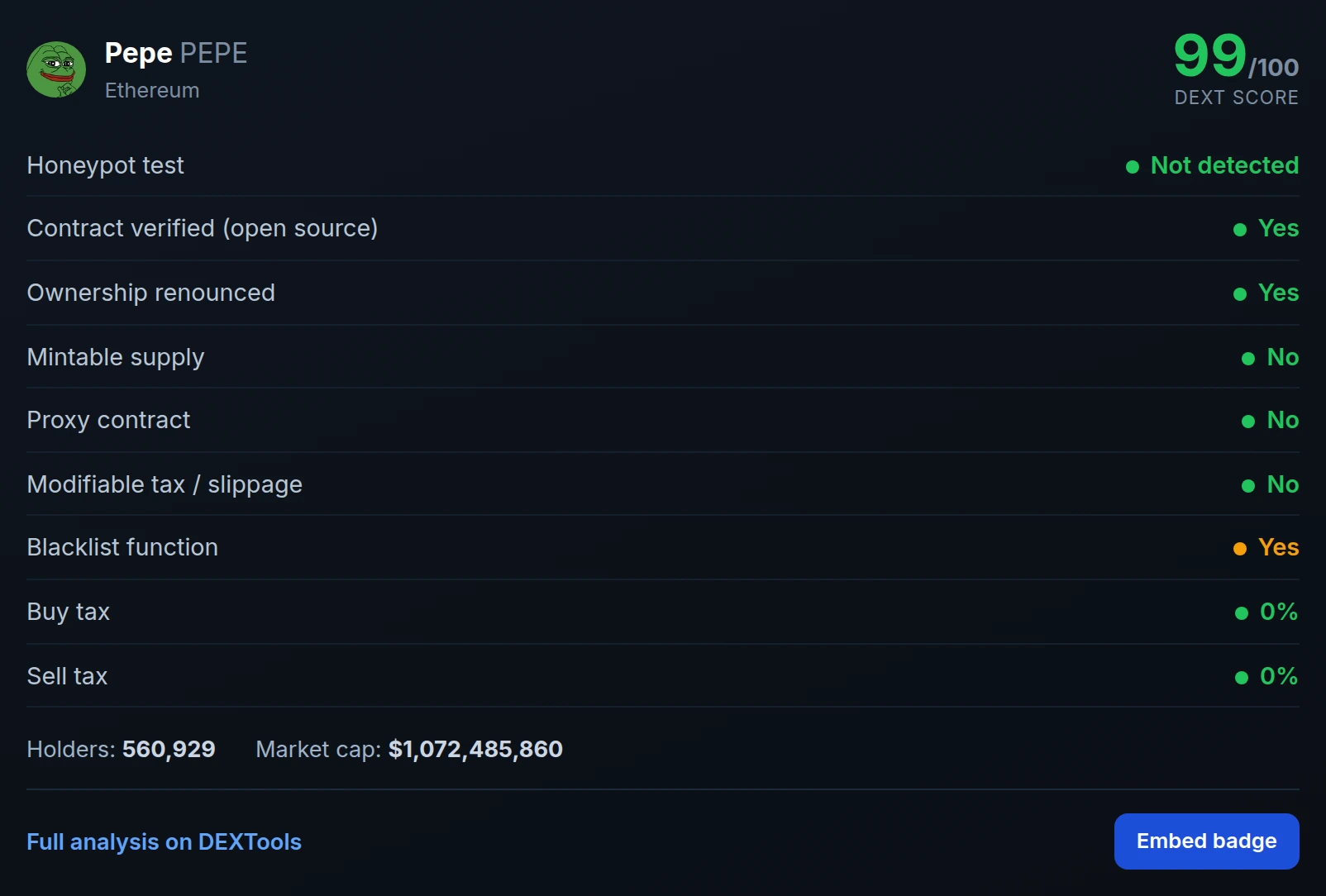
The smart contract is your first line of defense. Before buying any token, check these critical elements:
- Source code verification: Is the contract verified on the block explorer? Unverified contracts are an immediate red flag
- Owner privileges: Can the owner mint unlimited tokens? Pause transfers? Blacklist wallets? Change tax to 100%?
- Proxy contracts: Upgradeable proxy contracts allow the developer to completely change the contract logic after deployment
- Hidden functions: Look for
setFee,blacklist,pause,mint, orexcludeFromFee
Tools for Contract Analysis
| Tool | Chain | What It Checks |
|---|---|---|
| DEXTools | Multi-chain | Contract score, audit status, owner functions |
| Token Sniffer | EVM chains | Automated contract audit, scam detection |
| GoPlus Security | Multi-chain | Honeypot check, owner analysis, tax detection |
| RugCheck | Solana | Mint authority, freeze authority, LP status |
Red Flag 2: Unlocked or Insufficient Liquidity

If liquidity is not locked, the developer can remove it at any time, instantly making your tokens worthless.
- Is liquidity locked? Check on Team Finance, Unicrypt, or PinkSale
- Lock duration: Locks under 30 days are suspicious. Legitimate projects lock for 6-12 months minimum
- Lock amount: Is 100% locked, or just a small portion? Partial locks still allow rug pulls
- Liquidity depth: Extremely thin liquidity (under $10,000) means massive slippage
- Burned liquidity: Some Solana projects burn LP tokens - even more secure than locking
On DEXTools, check liquidity status directly on any pair page. Look for the lock icon next to the liquidity amount.
Red Flag 3: Concentrated Token Holdings

When a few wallets control most of the supply, a dump is inevitable:
| Metric | Safe | Warning | Danger |
|---|---|---|---|
| Top holder % | <5% | 5-15% | >15% |
| Top 10 holders % | <20% | 20-40% | >40% |
| Developer wallet | <2% | 2-5% | >5% |
| Unique holders | >1,000 | 200-1,000 | <200 |
Cluster Analysis: The Hidden Trick
Sophisticated rug pullers distribute tokens across dozens of wallets. To detect this, check if multiple top holders were funded from the same source wallet and use Bubblemaps for visual cluster analysis.
Red Flag 4: Honeypot Detection

A honeypot lets you buy but prevents selling. Before buying, use GoPlus or Honeypot.is to simulate whether selling is possible. Check buy vs sell tax, monitor sell transactions, and watch for dynamic taxes.
Pro tip: On DEXTools, if you see only green (buy) candles with no red (sell) candles, that is a classic honeypot signature.
Red Flag 5: Fake or Wash Trading Volume

Scammers inflate volume to attract traders. Spot it by looking for identical trade sizes, perfectly timed trades, volume vs holders mismatch, and checking unique buyers count.
Red Flag 6: Social Media Manipulation

- Paid influencer promotions: Multiple influencers promoting the same unknown token simultaneously
- Bot-filled groups: 10,000+ members but only 5 people chatting
- Fake partnerships: Claims of partnerships with major companies without proof
- Urgency pressure: "Buy now before it is too late!" bypasses rational thinking
Red Flag 7: Anonymous or Fake Teams
- Stock photo team: Reverse image search team photos on Google Images
- No GitHub activity: Empty or forked repositories
- KYC status: Check if team completed KYC via Assure DeFi or CertiK
The 30-Second Rug Pull Detection Checklist
If you answer "Yes" to two or more, walk away:
- Is the contract unverified or has mint/pause/blacklist functions?
- Is liquidity unlocked or locked for less than 30 days?
- Do the top 10 holders control more than 40% of supply?
- Does the honeypot checker flag sell restrictions?
- Is volume suspiciously high relative to holders?
- Was it heavily promoted by paid influencers?
- Is the team anonymous with no verifiable track record?
- Does the website look templated or copied?
What to Do If You Are in a Potential Rug Pull

- Test a small sell: Try selling a tiny amount first
- Check sell tax: If it increased since you bought, the developer may be preparing to rug
- Monitor liquidity: If decreasing, exit immediately
- Try alternative DEX aggregators: 1inch or Jupiter might find alternative routes
- Document everything: Screenshot the contract, team claims, and transactions
Real Rug Pull Case Studies
Case Study 1: The Classic Liquidity Pull
A Solana memecoin launched with $50,000 in locked liquidity. The lock expired after 7 days. On day 8, the developer removed all liquidity. Over 3,000 holders lost everything.
Case Study 2: The Slow Rug
An ERC-20 token with a "1% marketing tax" that the owner gradually increased to 49% sell tax over two weeks. The contract had an unprotected setFee function visible on Etherscan.
Case Study 3: The Coordinated Dump
A BSC token distributed 60% of supply across 47 wallets before launch. After pumping with influencer promotions, all 47 wallets sold within the same hour.
Tools Summary for Rug Pull Detection
| Check | Best Tools | What to Look For |
|---|---|---|
| Contract audit | DEXTools, Token Sniffer, GoPlus | Verified source, no dangerous functions |
| Liquidity lock | DEXTools, Team Finance, DexScreener | 100% locked, 6+ months |
| Holder analysis | DEXTools, Bubblemaps, Etherscan | No wallet clusters, distributed supply |
| Honeypot check | GoPlus, Honeypot.is, DEXTools | Sells work, low tax, no blacklist |
| Volume verification | DEXTools, DexScreener | Varied trade sizes, unique buyers |
| Social analysis | Twitter/X, TweetScout, LunarCrush | Organic growth, real engagement |
2026 Rug-Pull Tactics and the Numbers
The landscape of cryptocurrency scams is constantly evolving, with sophisticated tactics emerging to exploit unsuspecting investors. According to Chainalysis, rug pulls alone caused over $2.8 billion in losses during 2025, highlighting the significant financial risks present in the decentralized finance (DeFi) space. Understanding the latest methods employed by scammers is crucial for protecting your assets.
A common and particularly insidious trick observed in 2026 involves liquidity provision. Scammers will lock only a small percentage of the project's liquidity pool (LP), while keeping the vast majority unlocked and drainable. This creates a false sense of security, as investors see some LP locked, but the team retains the ability to pull the bulk of the funds at any time. Another sophisticated tactic involves spreading tokens across dozens of wallets, all funded from the same source. Tools like Bubblemaps can reveal these interconnected clusters, indicating a coordinated effort by a single entity.
The strongest predictor of a potential rug pull remains an anonymous team with no verifiable history. Often, such teams will have a GitHub repository created just days before launch, filled with forked boilerplate code. Furthermore, be wary of upgradeable contracts, which allow developers to change the contract's logic after deployment, potentially introducing malicious functions post-launch.
Free Tools to Vet a Token Before You Buy
Before committing your funds to any new cryptocurrency project, thorough due diligence is paramount. Fortunately, a suite of free tools is available to help you identify potential red flags and mitigate risks. These tools provide insights into contract security, liquidity, team transparency, and token distribution.
Leveraging these resources can significantly enhance your ability to spot scams like honeypots, which allow you to buy tokens but prevent you from selling them. Simulating transactions with tools like GoPlus or Honeypot.is can expose such traps before you invest real capital. Additionally, always check founders on LinkedIn and GitHub; a legitimate team will have a verifiable history, unlike rug pull teams that often have newly created, suspicious profiles and repositories.
A good rule of thumb for risk management is simple: if a project triggers three or more red flags across these vetting tools, it is strongly advised to skip it and seek safer investment opportunities.
Frequently Asked Questions
How common are rug pulls in crypto?
Rug pulls account for approximately 35% of all crypto scam losses. In 2025, over $2.8 billion was lost across all chains. The majority happen on Solana and BSC where deployment costs are lowest.
Can I recover money from a rug pull?
In most cases, no. Blockchain transactions are irreversible. However, some victims have traced funds through chain analytics and reported to law enforcement.
Are all anonymous teams scams?
No. Bitcoin itself was created by Satoshi Nakamoto. But anonymity combined with unverified contracts, unlocked liquidity, and aggressive marketing is a strong warning sign.
Does DEXTools help detect rug pulls?
Yes. DEXTools provides contract scores, holder distribution, liquidity lock status, and trade history. The pair explorer shows buy/sell ratios and top holder percentages.
What is the safest way to trade new tokens?
Use the DYOR checklist from our complete DYOR tutorial. Only invest what you can afford to lose. Start small. Set stop losses.
