Aave V4 Hub-Spoke Launch for RWAs and Institutional Lending - News 2026
— By Tony Rabbit in news
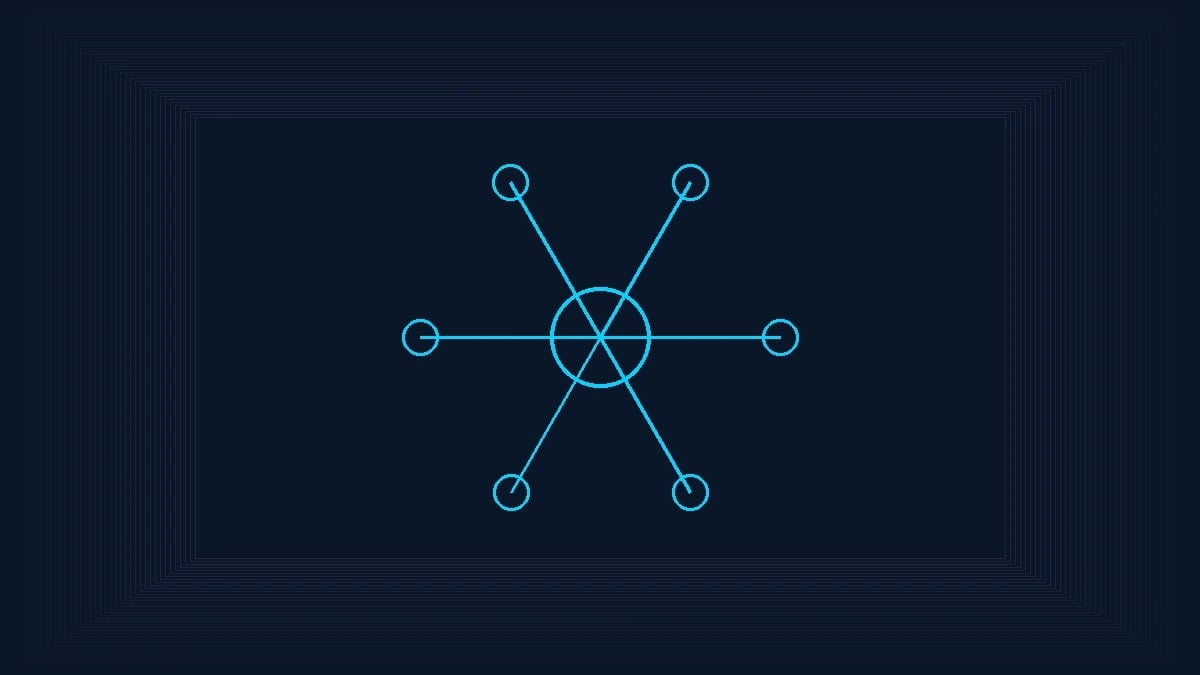
Aave V4 launched on Ethereum March 30, 2026 with modular hub-and-spoke architecture for real-world assets and institutional credit. Full breakdown of mechanics, TVL data and competitive impact.
Aave V4 is finally live on Ethereum mainnet. The hub-and-spoke architecture announced at EthCC 2026 in Cannes went into production on March 30, 2026, restructuring the largest decentralized lending protocol around modular markets designed explicitly for real-world assets and institutional credit. Adoption is still small, with V4 TVL at $2.66 million as of late May, but the protocol-level implications are larger than the headline figure suggests.
Quick read
Aave V4 introduces a hub-and-spoke design: central liquidity hubs supply customizable lending markets called spokes. The structure lets Aave serve real-world assets, institutional credit, and asset-specific risk parameters without fragmenting liquidity. V3 TVL still dominates at roughly $14.49 billion across Aave, but V4 is the structural future.
What happened
Aave V4 launched on Ethereum mainnet on March 30, 2026, two days after its formal announcement at the EthCC 2026 conference in Cannes. The upgrade replaces Aave's historically monolithic pool design with a modular hub-and-spoke system. Central liquidity hubs hold the underlying capital. Independent, configurable lending markets, called spokes, draw from those hubs to serve specific asset classes, risk profiles, or institutional use cases.
The architectural shift solves Aave's biggest historical constraint. In prior versions, listing a new asset meant adding it to a shared pool, which exposed every existing depositor to that asset's risk parameters. Conservative depositors blocked aggressive listings, aggressive borrowers found alternatives, and Aave's growth bumped against a self-imposed ceiling. V4 separates those decisions cleanly: hubs concentrate capital efficiency, spokes specialize on risk.
The migration is happening gradually. V3 still hosts the overwhelming majority of Aave's TVL, with the protocol's aggregate sitting at about $14.49 billion as of May 18, 2026. V4 mainnet TVL is $2.66 million, an early-adopter footprint. The pace is intentional. Aave's governance has been explicit about migrating users only as V4 demonstrates production stability.
How hub-and-spoke actually works
The hub holds liquidity. A hub is a smart-contract container that pools supply across an asset class, for example USDC or ETH. Hubs do not directly serve borrowers. They serve spokes.
A spoke is a configurable lending market with its own risk parameters, oracles, liquidation logic, and asset list. Each spoke connects to one or more hubs to draw liquidity. Spokes can specialize: one might serve high-grade collateral like ETH and stETH, another might serve tokenized Treasuries, another might serve credit-rated institutional borrowers under permissioned conditions.
The benefit is twofold. First, depositors in a hub can earn yield from multiple spokes simultaneously, without exposure to the riskiest spoke's collateral. Second, spoke operators can iterate on risk parameters quickly, because their changes only affect the borrowers in that spoke rather than the protocol's entire deposit base. The net effect is greater asset breadth without greater systemic risk for conservative LPs.
Why this matters for RWAs and institutions
Real-world assets have been the most-discussed unsolved problem in DeFi for two years. The challenge is not technical, it is structural: institutional borrowers want permissioned credit lines, asset-specific oracles, and bespoke risk parameters that retail-DeFi pools cannot accommodate without complicated workarounds. Hub-and-spoke is purpose-built for that.
A spoke can be permissioned at the borrower layer while pulling liquidity from a fully permissionless hub. Tokenized Treasuries can have their own oracle stack and liquidation rules. Credit-rated borrowers can interact with bespoke spokes without bringing institutional compliance overhead into the broader Aave protocol. The architecture lets retail depositors and institutional borrowers share the same liquidity pool while operating under different rules.
That is also why Aave is positioning V4 as the foundation for the next decade of decentralized credit. The protocol's leadership has framed the upgrade explicitly as institutional infrastructure, not just a performance optimization.
Key facts
- Launch date: March 30, 2026, Ethereum mainnet
- Architecture: Hub-and-spoke, modular liquidity and risk separation
- Aave aggregate TVL: ~$14.49B as of May 18, 2026
- V4 TVL: $2.66M, early adoption phase
- Primary use cases: RWAs, institutional credit, customized risk markets
- Migration approach: Gradual, V3 remains live alongside V4
Market impact
The immediate market reaction was muted. AAVE token traded modestly through the V4 launch window, in line with the broader DeFi correction that has dragged Aave's TVL down 52% from the November 2025 peak of $30.25 billion. The upgrade is a long-term thesis play, not a near-term catalyst.
Structurally, V4 should improve Aave's competitive position against newer entrants. Morpho's TVL has climbed to roughly $11.78 billion, narrowing the lead Aave once enjoyed, and the gap was partly driven by Morpho's modular architecture appealing to risk-specialized lenders. V4 closes that architectural gap. Where Morpho needed isolated markets to compete with monolithic Aave, V4's hub-and-spoke offers a similar isolation profile while retaining the liquidity advantages of a shared pool.
For DeFi yield strategies, the practical takeaway is that V4 spokes will start showing up as opportunities over the coming months. Early spokes targeting Treasury-backed assets and conservative collateral pairs are the most likely first cohort. Yield seekers should treat V4 as a parallel surface to V3, watching for spoke-level deposit rates that may exceed V3 base rates as spoke operators bootstrap.
Risk note
V4 introduces new smart-contract surface area. Modular protocols layer risk: hub bugs affect every spoke, spoke bugs are contained but more numerous. Early adopters should size positions modestly and prefer audited spokes with conservative collateral until adoption matures and the codebase battle-tests in production.
Context: Aave's position in DeFi
Aave remains the largest decentralized lending protocol by TVL, despite the year-on-year contraction. V3 dominates that TVL across 15+ EVM chains. The protocol's history of conservative governance and incremental upgrades has cemented its reputation as the blue-chip credit layer of DeFi.
V4 represents the most structural change Aave has shipped since V2 in 2020. V3 introduced efficiency mode and risk isolation. V4 introduces a fundamentally different architectural pattern. The pace of migration will say a lot about how quickly DeFi as a whole is willing to absorb modular designs.
The competitive landscape has also shifted. Morpho's lending markets crossed $11.78 billion. Spark, MakerDAO's lending arm, has scaled rapidly. Newer entrants like Euler V2 and Liquity V2 also pursue modular designs. V4 puts Aave on equal architectural footing with the modular cohort while keeping the deepest liquidity in the market.
How to track and verify
Aave V4 contracts are deployed on Ethereum mainnet and accessible through the official Aave frontend. DeFiLlama tracks V4 TVL separately from V3 and earlier versions, allowing direct comparison. Spoke-level data is available as new spokes deploy, and the protocol's governance forum publishes risk parameters for each spoke under formal proposals.
For AAVE token holders, the relevant signal is which spokes ship and how quickly TVL migrates. Sustained spoke launches at conservative risk levels will be a healthy growth signal. A spike in V4 TVL without corresponding spoke diversification would be a yellow flag.
Where to track
- Aave app for V3 and V4 market access
- DefiLlama Aave V4 for live TVL and version split
- Etherscan for hub and spoke contract verification
- DexTools News for ongoing coverage of DeFi credit infrastructure
FAQ
Is V4 replacing V3?
Not immediately. V3 continues to operate alongside V4. Aave governance has indicated a gradual migration path as V4 demonstrates production stability and spoke ecosystem maturity.
What is the practical difference between a hub and a spoke?
A hub holds liquidity. A spoke is a lending market that draws from a hub. Hubs concentrate deposits, spokes customize risk and asset configurations. One hub can serve many spokes.
Can institutions use V4 today?
Yes, but the ecosystem is still bootstrapping. Permissioned spokes designed for institutional credit are under development. Aave's leadership has framed V4 as institutional-ready infrastructure with full deployment over the coming quarters.
Should V3 users migrate?
Not yet. V3 remains the primary market with deepest liquidity and most diverse asset list. Migration will make sense as specific V4 spokes offer better rates or asset combinations than V3 equivalents.
Does V4 affect the AAVE token directly?
Indirectly. Token value accrual depends on protocol fees and governance utility. V4 expands the protocol's addressable market, which should support long-term fee growth, but the link is not immediate or mechanical.